|
A quarterly food safety newsletter brought to you by
Union County Environmental Health |
|
 |
Preventing foodborne illness is a crucial responsibility that Union County health inspectors take seriously. Their mission is to work behind the scenes with food establishments to maintain the highest standards of food safety.
Let’s meet one of the dedicated professionals working to protect our community.
Rob Irwin, Environmental Health Specialist

I’m Rob Erwin, and I’ve been working in Union County for two and a half years. I grew up in Moore County, NC, and I attended Western Carolina University, where I developed a passion for hiking and backpacking. So far, I’ve hiked over 300 miles of the Appalachian Trail.
My career in food safety began in Virginia, where I spent over 27 years working across the state from the Northern Neck to the mountains, including Fairfax County, located just outside Washington, D.C. Fairfax County was especially unique, with nearly 150 types of cultural cuisines. I didn’t need to travel the world — just visit the restaurants in my region. I’ve always viewed this work as more than just protecting public health – it’s an opportunity to learn from the operators I work with. I’m excited to bring that knowledge and experience to the establishments in Union County.
|
|
|
|
One of the most important things I’ve observed in food establishments is that risk factors matter more than what’s on the menu. The key to food safety is preventing foodborne illness. According to the Centers for Disease Control and Prevention (CDC), five primary risk factors contribute to foodborne illness in restaurants. These were identified through years of outbreak analysis. Food employees must understand and address these five risk factors to reduce the occurrence of foodborne illness.
1. Food From Unsafe Sources
- Always purchase food from safe, regulated sources such as permitted distributors or local grocery stores.
- Food prepared at home may not be used in establishments serving the public.
2. Improper Holding Temperatures
- Time/Temperature Control for Safety (TCS) foods must be kept at safe temperatures.
- Improper cold holding, hot holding, cooling, or reheating can lead to bacterial growth.
- Train staff to keep food out of the “danger zone” (41°F to 135°F). The longer food stays in this range, the higher the risk of illness.
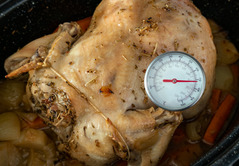
3. Improper Cooking Temperatures
- Cook foods to the proper internal temperature to kill harmful bacteria.
-
Always use a food thermometer— never rely on appearance alone to determine if food is fully cooked.
|
|
 |
4. Contaminated Equipment/Cross-Contamination
- Prevent cross-contamination by cleaning and sanitizing all food-contact surfaces and equipment between uses and at required frequencies.
- Never use the same cutting board for raw meats and ready-to-eat foods.
- Remove gloves, wash hands, and put on new gloves whenever switching tasks, such as between preparing raw animal foods and ready-to-eat foods.
5. Poor Personal Hygiene
- Wear clean clothing, keep fingernails trimmed, and use effective hair restraints.
- Wash hands after using the restroom, before and after food preparation, after handling raw meats, in between changing gloves or tasks, after eating/drinking/smoking, and when hands become soiled.
- Do not report to work when sick. Follow the requirements in your employee health policy.
- Do not touch ready-to-eat foods with bare hands.
My Approach to Inspections
I always use a risk-based approach when conducting inspections by:
- Taking temperatures of hot and cold foods.
- Verifying food is cooled using rapid cooling methods.
- Verifying cooking temperatures.
- Observing handwashing practices.
- Reviewing cleaning and sanitizing procedures.
- Reviewing food delivery invoices.
By focusing on these key areas, we can work together to prevent foodborne illness and ensure a safer dining experience for the public. If you have questions, your Union County health inspector is here to help.
|
|
|
|