A food safety newsletter brought to you by
Union County Environmental Health |
|
 |
Preventing foodborne illness is a crucial responsibility that Union County health inspectors take very seriously. Their mission is to work behind the scenes with food establishments to maintain the highest standards of food safety. Let’s take a moment to get to know one of these dedicated public health professionals and how their efforts benefit our community.

Pamela Mefferd, Registered Environmental Health Specialist
My name is Pamela Mefferd, and when I graduated from college, I vowed to be a student for life. Working as a Registered Environmental Health specialist supports my passion for life-long learning because there is always new food safety information to learn and use to keep retail food safe for the community. To satisfy my personal quest for knowledge, I am an active volunteer with several nonprofit organizations. Fortunately, my family supports my love for education at work and home. As a health inspector, I have learned the best way to acquire food safety knowledge is to listen and discuss daily operations with food handlers. Some days, I learn as much from the facilities I inspect as they learn from me. My goal to have a two-way partnership of sharing information with everyone I meet, especially when food safety is involved.
|
One of my favorite questions from the field was when an employee asked if the same food safety practices used in restaurants should also be used at home. I enthusiastically said yes and explained that risks of foodborne illness are as real at home as in a commercial kitchen. Germs are not selective, so anyone can become sick from poor food handling.
This is why I use the “three-legged stool” approach to educate my operators about foodborne illness prevention and encourage them to teach it to others. Each leg of the stool represents a key factor in preventing foodborne illness. Without all three, the risk of a foodborne illness outbreak increases.
- When, where and how to wash hands.
- No bare hand contact with ready-to-eat food.
- Employee health.
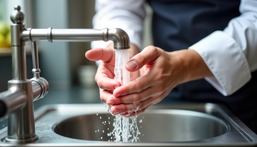
When, Where and How to Wash Hands
Food employees should know when, where and how they are required to clean their hands:
When:
- Immediately before engaging in food preparation including working with exposed food, clean equipment and utensils, and unwrapped single-service and single-use articles.
- After touching bare human body parts, other than clean hands and clean, exposed portions of arms.
- After using the toilet room.
- After caring for or handling service animals or aquatic animals.
- After coughing, sneezing, using a handkerchief or disposable tissue, using tobacco, eating, or drinking.
- After handling soiled equipment or utensils.
- During food preparation, as often as necessary to remove soil and contamination and to prevent cross-contamination when changing tasks.
- When switching between working with raw food and working with ready-to-eat food.
- Before donning gloves to initiate a task that involves working with food.
- After engaging in other activities that contaminate the hands.
|
Where:
- In a designated handwashing sink supplied with at least 100°F water, soap and a hand drying device.
How:
- Rinse under clean, running warm water.
- Apply the amount of cleaning compound recommended by the manufacturer.
- Rub together vigorously for at least 10 to 15 seconds, paying particular attention to removing soil from underneath the fingernails and creating friction on the surfaces of the hands and arms (or surrogate prosthetic devices), fingertips, and areas between the fingers.
- Thoroughly rinse under clean, running warm water.
- Dry hands immediately.
- Avoid re-contaminating hands by using a paper towel or other effective means to turn the faucet off.
No Bare Hand Contact With Ready-to-Eat Food
The number one way to stop the spread of foodborne illness is to prevent your hands from contaminating ready-to-eat food, which does not require cooking before serving.
One way to do this is by protecting exposed food from germs on your bare hands. Bacteria and viruses are so small that we cannot always see when our hands are dirty. Wearing gloves, using tongs or spatulas, and handling food with deli paper are great ways to protect ready-to-eat food from contamination.
Employee Health
Before preparing or serving food to someone else, it is critical to make sure you are not sick with an illness that can spread through food and beverages. All food employees must receive employee health training to ensure they know the symptoms that can lead to foodborne illness and when to report illnesses and exposures to their manager.
Reportable symptoms:
- Diarrhea.
- Vomiting.
- Jaundice (yellowing of the skin and/or eyes).
- Sore throat with fever.
- Infected cuts, wounds or lesions containing pus on the hand, wrist or an exposed body part (such as boils and infected wounds).

Reportable illnesses:
- Nororvirus.
- Hepatitis A virus.
- Shigella spp. infection (shigellosis).
- Shiga toxin-producing Escherichia coli (0157:H7 or other STEC infection).
- Typhoid fever (caused by Salmonella typhi).
- Salmonella (nontyphoidal).
|
Note: You should not prepare or handle food if you have any of these symptoms or illnesses.
Thank you for taking a moment to learn about food safety and the tools we use to prevent foodborne illness in our community. Strong partnerships and lifelong learning are simple and engaging ways to protect public health and promote healthy living. Let’s keep all three legs of the stool standing!
|