|
2026 RISE Tribal Education Summit Brings Together Native Youth
The RISE Native Student Leadership Group (RISE) brings Native students from across the state together to foster positive peer connections, celebrate Indigenous identities, share cultures, and prepare students to be leaders in their schools, communities, and in their lives after high school. In addition to bi-weekly virtual meetings, each year RISE students work with staff from the Tribal Student Achievement and Relations unit at the Office of Public Instruction to hold a yearly in-person summit.
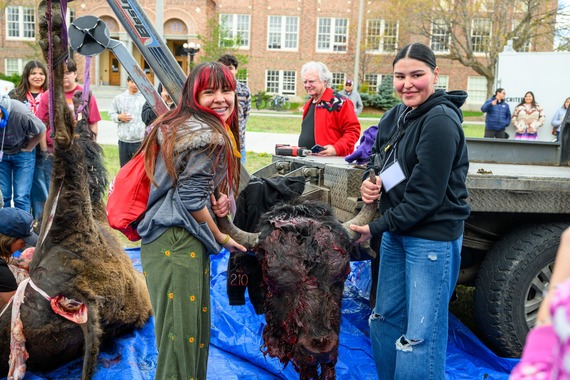
This year, the 2026 RISE Tribal Education Summit was held on the Montana State University campus in Bozeman, April 27-29. The Summit brought together approximately 170 students from 20 different schools located across the state. We were also honored to host ten Knowledge Keepers, who represent nearly every Montana Tribal Nation at the Summit. Knowledge Keepers play a vital role in engaging students and sharing cultural protocols and Indigenous knowledge to foster a positive self-identity and live a balanced, meaningful life.
There are several goals connected to all RISE Tribal Education Summits with the intention of preparing students for educational and lifelong success and providing holistic (spirit, heart, body, mind) student growth and wellness opportunities. These goals include: (1) Increasing student self-esteem; (2) increasing student feelings of self-efficacy to create positive change; (3) fostering new, positive relationships with other students and school staff; and (4) providing opportunities to strengthen cultural connections.
Post-Summit evaluations show after attending the 2026 RISE Tribal Education Summit:
- 77% of students report their self-esteem increased
- 67% of students report having a higher feeling of confidence (self-efficacy) to speak up about things that are important to them
- 92% of students report they had an opportunity to celebrate Indigenous culture and/or Native identity while at the Summit
- 88% of students said they formed new, positive relationship
- 77% reported learning skills or information that they will use later in life
Of the students who reported they gained skills or information they will use later in life, 30% said they would use cultural knowledge/teachings from a Knowledge Keeper while 16% reported they would utilize the growth of their own self-confidence after attending the Summit. When asked what the most meaningful part(s) of the Summit were, over half (60% of students) said the opportunities to participate in a cultural activity, including speaking with Knowledge Keepers, participating in a round dance, or participating in a bison harvest. An additional 53% of students said a new friendship or connection with a peer was the most meaningful part of the Summit. Below are some quotes from the students who attended the Summit (verbatim):
- I loved the knowledge keepers, being able to talk to a Cheyenne speaker opened my eyes about wanting to learn more, and to never be afraid to ask questions.
- Being able to make new connections and talk to elders
- When the knowledge keepers were just telling us the keep pushing and don’t give up, and just bringing all of our culture together
- Meeting new people and making stronger connections with people
- The knowledge the knowledge keepers were sharing to help me through life
- I will use what the knowledge keepers taught me about being kind and confident to one another.
We are grateful to all those who made the 2026 RISE Tribal Education Summit possible, especially the students who helped plan this year’s Summit and the Knowledge Keepers who provide meaningful content and connection. If you have questions about RISE or the Tribal Education Summit, please reach out to Michele Henson at 406-595-1058 or michele.henson@mt.gov.
Supporting School Improvement
As part of the Indian Education unit’s continued partnership with the Comprehensive School Improvement (CSI) unit, the TSAR Team continues visiting and supporting schools on and near Montana reservations. These visits continue to remind us of the strong relationships, care, and commitment that exist within Montana school communities.
This month, we partnered with Rocky Boy School staff to share and explore the principles of Wraparound Care. Together, we discussed relationship-centered approaches that strengthen support systems for students and families through collaboration, cultural responsiveness, and shared responsibility.
Rocky Boy staff brought enthusiasm and energy to the training, demonstrating strong teamwork, openness, and thoughtful engagement throughout the day. Conversations were engaging and meaningful, focusing on topics such as student voice and choice, learning about and honoring family culture, using team approaches to educational interventions, and providing unconditional care for students and families. Staff also discussed the importance of working alongside community partners, especially Indian Health Services, to support the whole learner. School leadership actively participated throughout the training, helping to create an atmosphere of collaboration, reflection, and shared purpose.
Experiences like this continue to reinforce the importance of relationships, community partnerships, and culturally grounded practices in creating the conditions where students can thrive.
Alternative Forms of Discipline
The TSARR Unit is currently exploring the development of an Indigenous-centered alternatives to discipline pilot program for Montana schools called Restoring Balance. This initiative comes from ongoing conversations about the disproportionate rates of suspension, expulsion, absenteeism, and school disengagement experienced by Indigenous students across the state.
The goal of this work is to explore more culturally responsive and trauma-informed approaches to student discipline that focus on accountability, healing, restoration, and student connection rather than exclusion alone. Many current disciplinary systems remove students from the classroom without addressing underlying factors such as trauma, grief, behavioral health needs, cultural disconnection, or historical inequities.
This proposed pilot would bring together schools, Tribal communities, educators, families, and behavioral health partners to identify supportive strategies that help students stay engaged and connected to school while maintaining safe learning environments.
Some of the ideas being explored include:
- Restorative practices and conflict resolution
- Indigenous mentorship and elder involvement
- Student regulation and reflection spaces
- Trauma-informed staff training
- Increased family and Tribal engagement in discipline processes
The vision is to support schools in creating environments where Indigenous students feel seen, supported, culturally connected, and empowered to succeed academically and socially.
The TSARR Unit is continuing to gather feedback, explore partnerships, and identify opportunities for future pilot implementation and collaboration across Montana communities.
Language and Culture
Amba daya!
We hope you are well wherever you are and that the school year is wrapping up nicely for everyone!
We wanted to send a reminder as calendars are being set for next year’s PIR days. Our team at Tribal Student Achievement and Relations are more than happy to assist in one or more of the following areas:
Strategies for Using American Indian Student Achievement Gap Funding to Improve Outcomes
- Designing Educational curriculums to fit the learning styles of American Indian students
- Developing place-based learning activities using the unique culture and language of the students and the relationships with the environment
- Incorporating language plans in the district and school that all staff uses such as command words or conversational phrases.
- Developing and implementing community-wide language plans that are connected to the district language plan
- Incorporating language into mainstream curriculum to further language acquisition
- Using language throughout the physical design of the school such incorporating dual language signs in restrooms, hallways, lunchrooms, classrooms.
- Purchasing tools and supports such as games and language kits that will assist teachers in language acquisition
- Using funds to hire elders or fluent speakers in the community to tell stories or teach language through ceremonies
Examples of Professional Development for Staff (PD/PIR)
- Instructional Strategies
- Utilizing Indigenous Language Immersion Program (ILIP) properly with your immersion program
- Understanding how to use Montana Indigenous Language Program (MILP) within your school system
- Development of Indigenous language curriculum
- Place-based learning activities in the classroom
- Social and emotional understandings and healing from historical and generational trauma
- Culture inclusion strategies and activities to utilize within the classroom
We look forward to seeing you at the upcoming Montana Early Childhood Tribal Language Summit and the OPI Summer Institute!
Pinamaya!
|