WELCOME! to the Coordinated School Health Unit!
The Coordinated School Health (CSH) Unit is pleased to welcome Dwight Nelson to our team as the Student Safety and Wellness Specialist. We are excited to have Dwight join us!
Throughout his career, Dwight has worked with students at every level, from PreK through college. He brings nearly two decades of experience in classroom instruction and educational leadership. In addition to his extensive teaching experience, he has served in a variety of administrative roles within Montana schools and at the state level. His background reflects a strong commitment to supporting educators, families, and school districts through practical guidance, collaboration, and solution-focused support.
In his new role, Dwight is dedicated to helping create safe educational environments where both students and educators can thrive and enjoy the journey of teaching and learning. He strives to be an approachable, dependable resource for advancing student and educator safety and wellness across Montana. WELCOME to CSH DWIGHT!
OPI Resources
Bullying Prevention
Drug and Alcohol Prevention
OPI Health Enhancement
Montana AED Reimbursement Program
In 2025, the Montana Legislature passed HB 869, (part of Title 10, Chapter 7, part 13, MCA) which appropriated a grant fund for school districts for reimbursement of the purchase and ongoing maintenance of automatic external defibrillators (AED).
The grant program shall provide a reimbursement of $1 for every $1 paid by a school district up to a maximum state contribution of $700 per AED. The funds will be disbursed on a first-come, first-served basis. AED maintenance and accessories can also be reimbursed.
This application period closes June 15th.
Application: https://montanaopi.sjc1.qualtrics.com/jfe/form/SV_9tRlBi8bjsV3t7E
Reimbursement requests will be reviewed monthly after the 15th of each month, with reimbursement sent to districts by the 15th of the following month. School districts will be notified of eligible or non-eligible reimbursement submissions.
Questions?
Christy Mock-Stutz, Assistant Chief Program Officer, christy.mock-stutz@mt.gov
Katie Bloodgood, Legislative Director, katie.bloodgood@mt.gov
All interested school staff are invited to join our next advisory meeting focused on advancing school safety and student mental health. The Montana Student Well-being Advisory Committee (MSWAC) and the Montana School Safety Advisory Committee (MSSAC) have merged their efforts into a one comprehensive bi-monthly meeting. Our next joint meeting will be held on:
If you are interested in attending or would like to learn more, please contact Sarah Music at sarah.music@mt.gov.
OPI Tobacco Use Prevention Education (TUPE)
-
OPI TUPE wants to visit your school in 2026 2027 school year! Please inquire here for the 2026-2027 school year to schedule a free tobacco use prevention educator visit for your students. The inquiry form collects details like your name, position, school name, city, county, TUPE preferred dates, student's grades for which you'd like TUPE, and number of expected students.
-
We have three age appropriate presentations for students: 4th - 6th, MS, and HS. They are approximately 50/55 minutes in length but we can tailor to your bell schedule. We look forward to visiting you!
-
We provide adult presentations too and can offer one PDU per hour.
Nicotine Use Prevention Resources for You
Nicotine Free Families!
MONTANA 21ST CCLC PROGRAMS CONTINUE TO MAKE A MEANINGFUL IMPACT
The 21st Century Community Learning Centers (21st CCLC) Grant is a federally funded program through the U.S. Department of Education that supports academic enrichment opportunities outside of regular school hours. The program helps students strengthen core academic skills in subjects such as language arts and mathematics while also promoting physical health and social-emotional well-being.
Many students who participate in their district’s 21st CCLC program come from underserved and underrepresented communities. Ensuring access to high-quality afterschool programming for all children is critical. Through this grant, students can participate in safe, structured, and engaging learning environments at no cost to families, helping foster both academic success and a stronger sense of community.
During summer 2024 and the 2024–2025 school year, 7,175 students participated in 21st CCLC programs across Montana.
The 2024–2025 Montana State Evaluation Report is now available. We encourage you to share the attached report with families, community members, school boards, and staff. More information on 21st CCLC can be found on the OPI21st Century Website.
Together, we are making a meaningful difference for students across Montana.
Click to edit this placeholder text.
HELP US MONITOR TEEN TOBACCO PRODUCT USE!
Funded by NIH and FDA, the Rutgers CRST seeks to better understand emerging tobacco and nicotine product use among teens.
If you work in a middle or high school, and have access to tobacco and/or
nicotine products that have been confiscated from students,
YOU CAN HELP!
Here's How:
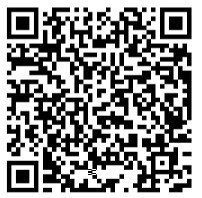
Scan the QR code and follow the instructions to upload a photo.
Your contributions directly help build the educational resources needed to protect our students.
The Youth Tobacco Monitoring Project maintains an online image library of confiscated tobacco and e-cigarette products from schools nationwide. This visual library is a powerful tool used to educate school leadership, parents, and community decision-makers on what modern tobacco products actually look like, as they are often disguised as everyday school supplies or tech gadgets.
We Encourage Schools to Collect Images of Confiscated Tobacco Products
As part of our ongoing commitment to keeping our school safe and healthy, we have an opportunity to contribute to a national effort to better understand and combat youth tobacco use.
Unmasking the Appeal: Protecting Youth from Nicotine and Tobacco Addiction [und.zoom.us] (May 27) – This webinar, hosted by the U.S. Department of Health and Human Services’ Addiction Technology Transfer Center Network, will provide an overview of trends in youth use of tobacco & other nicotine products and share how educators can apply evidence-based strategies to prevent nicotine addiction among youth.
New SchoolSafety.gov Issue Brief Shares Youth Substance Use Prevention Strategies [schoolsafety.gov] SchoolSafety.gov [schoolsafety.gov] published an issue brief [schoolsafety.gov] highlighting school-based strategies to prevent, reduce, & respond to substance use among K-12 students. Learn about what makes a young person susceptible to substance use, impacts of substance use on student health and safety, and resources to support prevention efforts. Find additional youth substance use prevention materials at SchoolSafety.gov [schoolsafety.gov].
Jeremy Bullock Safe Schools Conference Announces Call for Proposals
The Jeremy Bullock Memorial Trust will be hosting the 7th Jeremy Bullock Safe Schools Summit, August 4- 5th in Butte, MT. With a theme of Cultivating Hope, Safety, and Connection In Our Schools, this Summit is intended for K-12 educators and school staff, school administration, SROs and school-based law enforcement, school safety teams, mental health professionals, school nurses, community leaders, youth and affiliated professionals. The two-day Summit will be a mix of keynote speakers, panel discussions and workshops along with an exhibitor fair.
The 2026 Jeremy Bullock Safe Schools Summit Call for Presenters & Exhibitors Professionals in the field and other experts have the opportunity to serve as workshop presenters at the Annual Jeremy Bullock Safe Schools Summit in Butte, MT August 4-5, 2026. The 90 minute breakout sessions are a great way to share specialized knowledge, best practices, discover new methods, and improve the health and safety of Montana's schools.
Student Mental Health is a Matter of School Safety [schoolsafety.gov]
May is Mental Health Awareness Month [samhsa.gov]. This annual observation aims to increase awareness of mental health and its connection to overall personal well-being. K-12 schools play an important role in supporting student mental health, in part by identifying potential mental health conditions among students and by connecting young people and their families to appropriate services and supports. Explore resources [schoolsafety.gov] to support your school or district’s efforts.
Free Mind [cdc.gov]
This website contains information on the relationship between mental health conditions and substance use disorders, as well as tips for teens to prioritize their mental health.
The OPI is committed to providing reasonable accommodations to people with disabilities. If you need a reasonable accommodation, require an alternate format, or have questions concerning accessibility, contact the OPI ADA Coordinator, 406-444-3161, opiada@mt.gov, Relay Service: 711.
|