 The Coordinated School Health Unit and Project AWARE are excited to announce that registration is now open for the next Educator Wellness Workshop opportunity!
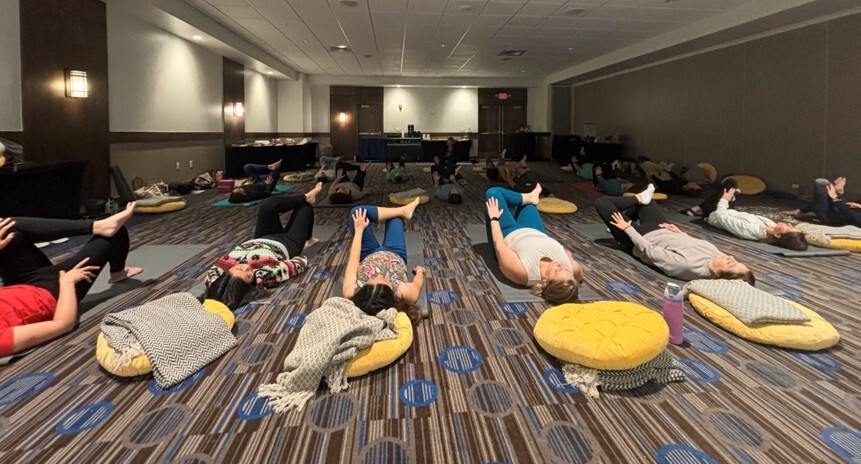
This opportunity, hosted through a partnership with Full Circle Wellness, is open to all educators within Montana who have not had the chance to participate in past workshops and is designed to provide a menu of mini-sessions meant to grow and care for educator’s minds, bodies and souls so they can persevere in growing and caring for the minds, bodies and souls of their communities. Protecting educator mental health and overall wellbeing is our top priority in creating a more resilient, responsive educational system for all involved. In this wellness workshop, educators will be submerged in several-evidence based and healing-centered practices. They will learn to cultivate these practices into everyday life, harnessing neuroplasticity and reaping many other positive benefits for themselves and their classrooms.
This partnership with Full Circle Wellness previously hosted workshops in Bozeman, Fairmont Hot Springs, Ft. Benton, and Glasgow, MT with wonderful feedback received from educators participating from across the state.
Here are just some highlights:
“This was the best educator gathering I have ever participated in. It is an experience I wish I could have every August prior to the start of the school year. What an incredible way to end the summer and prepare for the school year.”
“I am so grateful to have had this opportunity to engage with fellow educators. This was a much needed, relaxing and uplifting experience! My hope is that this opportunity is available every year!!!”
“This was the first training in 21 years that I left rejuvenated and ready to teach instead of exhausted and overwhelmed, THANK YOU!.”
“The Educator Wellness Workshop is the most impactful learning I have experienced as an educator. Not only did I calm my stress and refocus my intentions, I also gained tools that will provide lasting wellness to me and to those I share this practice and experience with.”
The next workshop is now open for registration. Capacity for this event is limited to 20 participants so please register early as previous workshops have filled quickly! Please note that the provided registration links are the only way to secure your participation. Registration is limited for this event to individuals who have not had the opportunity to register for previous workshops. If you have previously attended an Educator Wellness Workshop, your name will be moved to the wait list in order to give opportunities to those that have not attended previously. Previous attendees may also self-register for the waiting list utilizing the link below.
August 9th and 10th, 2025, Educator Wellness Workshop
Location: Kwataqnuk Resort, Polson, MT
Additional Information: Summer 2025 Workshop Flier
Full Agenda: Summer Workshop Agenda and Session Description
To Register for the Summer Workshop please complete all sections of the required Polson Registration Link.
To register for the waiting list: Waiting List Polson Registration
Renewal units for the workshop are available in addition to mileage and meal reimbursements at the state approved rate.
Any questions or issues with registration, please contact Courtney Hubbs, Project AWARE Program Manager or call 406-438-0473. For more information about the workshops, please contact Katie Mayfield with Full Circle Wellness at 406-539-7736.
Montana Student Well-being Advisory Committee (MSWAC) Advances Statewide Efforts for Safer, Healthier Schools
The Montana Student Well-being Advisory Committee (MSWAC) convened virtually on Wednesday, May 14th, for its latest meeting aimed at enhancing student mental health awareness, and collaboration. The committee is composed of educators, public health officials, and student advocates. The meeting highlighted programmatic efforts across Montana in tobacco and vaping use prevention.
Strengthening the Committee’s Mission
The goal of the MSWAC is to build and expand capacity at the state and local levels to make schools safer and improve school climate. MSWAC focuses on increasing awareness of mental health issues, connecting children with mental, emotional, and behavioral health issues with needed services. MSWAC strives to reduce duplication of services and increase collaboration at the local and state levels.
MSWAC meets bi-monthly throughout the year to discuss various topics around student wellbeing.
Key Highlights from the Meeting
Tobacco Use Prevention Kris Minard and Dr. Beth Dominicis, OPI Tobacco Use Prevention Specialists led a segment focused on tobacco and nicotine use among students. The presentation emphasized that tobacco use remains the leading preventable cause of death in the U.S. Youth vaping has also emerged as a significant and growing concern—especially in Montana, which has among the highest teen vaping rates in the country. While cigarette use among high school students has declined, vaping has surged, driven by flavored products and discreet devices that appeal to youth. The highly addictive nature of nicotine and its harmful effects on adolescent brain development were underscored, along with the fact that most vape products used by teens are not FDA-authorized.
Schools across Montana are responding with educational programs, in-school suspensions, vape detectors, and access to educational and cessation resources like “My Life, My Quit” and “Vaping: Know the Truth.” The presentation also highlighted the importance of community partnerships and shared success stories from schools using restorative practices and alternative discipline to support students in quitting.
To learn more about the OPI Tobacco Use Prevention team and the resources available, visit the website, OPI Tobacco Use Prevention.
Partner Program Spotlight: Riverstone Health & Billings Public Schools
Amy Queen, Health Promotion Program Manager and Kori Anderson, Prevention Health Specialist at Riverstone Health, provided an in-depth overview of a community-based youth tobacco prevention and intervention program led by RiverStone Health in Yellowstone County. Originally launched in the 2018–2019 school year in response to alarming youth e-cigarette use data, the initiative offers a restructured, one-day educational course as an alternative to suspension or legal citation for underage tobacco use. Utilizing the American Lung Association’s INDEPTH curriculum, the program engages students through interactive sessions covering vaping facts, nicotine dependence, stress management, and healthier life planning. Results show promising impact, with 87% of participants indicating a desire to quit or reconsider use.
Additionally, Krista Hertz, Billings Public Schools Grant Writer shared how grant funding was used to strengthen the school district’s partnership with RiverStone Health by providing professional development for over 100 staff, supporting INDEPTH program supplies and REACT clubs, and developing cessation education strategies across middle and high schools. Middle school students participate in REACT clubs to promote tobacco awareness and leadership.
To learn more about this program, visit Tobacco Use Prevention-Riverstone Health.
Student Voice: “Be the Change 406”
Erin Montgomery, Public Health Educator and Advisor for the Be the Change 406 Youth Coalition and REACT Club in Dillon, MT introduced initiatives in the community aimed at reducing tobacco use and elevating student advocacy. The Change 406 Youth Coalition empowers 58 youth across Dillon and Lima, to advocate for healthier communities and address pressing issues like vaping. With a focus on youth-led initiatives, the coalition has worked to pass local policies, including nicotine-free parks, and has played an active role in state legislation, notably testifying in favor of SB 390 to include e-cigarettes in Montana’s Clean Indoor Air Act. Their work demonstrates the power of youth voices in shaping policies that protect and support their generation.
MSWAC had the honor of hosting Adalis Chagua, a freshman at Beaverhead County High School, Be The Change 406 Youth Coalition Representative & Member of Youth Advocacy Committee. Ms. Chagua emphasized the prevalence of vaping among youth in her school and community and the efforts of the youth coalition to prevent nicotine use through peer advocacy and education. She also shared the success of their efforts to pass a policy making public parks nicotine-free, as well as the significance of their legislative testimony in advocating for the inclusion of e-cigarettes in the Clean Indoor Air Act. Ms. Chagua’s personal journey of learning about both the medical and legislative sides of health advocacy left her inspired to pursue a career in pediatrics and continue advocating for healthier communities.
The Office of Public Instruction would like to thank this month’s speakers for their valuable contributions to improving student health and wellbeing.
For more information about the MSWAC or to get involved in future meetings, contact Courtney Hubbs, Project AWARE Program Manager and Mental Health and Wellness Specialist or call 406-438-0473.
The next MSWAC Meeting is scheduled for 10 am on September 17th, 2025.
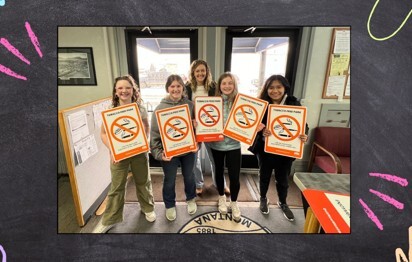
Beaverhead County Be The Change 406 Coalition
Tobacco Use Prevention Education (TUPE) staff have been busy visiting schools to wind-up the school year. If you would like to plan ahead, OPI TUPE wants to visit your school during the ‘25-’26 school year! Please contact us at: Vaping Prevention Presentation Inquiry '25-26 to schedule.
With deep gratitude and heartfelt celebration, Kris Minard is retiring after 13 impactful years with OPI TUPE. Kris is a source of unwavering and empathetic support and wisdom to countless students, schools, and colleagues. Her passion and compassion for youth tobacco use prevention and for educators implementing alternatives to out-of-school suspension will have a lasting impact. Let’s applaud Kris’s impact and wish her a retirement filled with joy and adventure!
This June Dr. Beth Dominicis is presenting Nicotine Addiction: Helping Students Steer Clear, to educators at the OPI Summer Institute in Bozeman, and The Harm of Vaping and Using Nicotine Pouches to young people at the HHS-MTUPP ReACT Summit in Helena. Here is the link to The 2025 OPI Summer Institute.
Please share your anecdotal accounts with others about what you are doing to identify potentially effective practices for overtaking the tobacco/nicotine epidemic affecting our children. We are collecting stories to help inspire schools and communities. Please read other’s accounts and share yours here: Success Stories in your school and community.
For more information, contact Dr. Beth Dominicis.
As summer draws near, we would like to remind you of resources available to schools on clean air. DPPHS in collaboration with OPI updated the Outdoor Air Quality and Activity guidelines for schools. This guideline provides helpful information to assist schools with determining if outdoor play is safe during wildfire season or other air events. You can view the guideline as well as other resources here: https://dphhs.mt.gov/airquality/SmokefromFires.
 For 16 years the Montana Office of Public Instruction and Montana Tobacco Use Prevention Program have recognized school districts that have gone above and beyond what's required by federal and state law to adopt comprehensive tobacco-free school policy. We are pleased to announce that 95% of Montana School Districts have done just that! Congratulations to these 375 school districts for checking all the boxes to become Montana Tobacco-Free School Districts of Excellence.
Tobacco use is still the leading cause of preventible death in our country; we lose almost a half million people every year due to cigarette, smokeless and other tobacco product use. Creating a healthy environment that reinforces why it's so important to stay tobacco-free is an easy goal for school districts to rally around, but it takes intentional and well thought out strategies supported by school policy to attain it.
If you'd like more information about how to get your school district added to this list, contact Dr. Beth Dominicis, OPI Tobacco Use Prevention Education Specialist.
Prep for School Safety this Summer
As we near summer, your school/district may be planning summer maintenance to keep your physical space safe and beautiful. Did you know you can EASILY incorporate safety practices into your summer maintenance?
An easy yet effective way to improve your school safety is through natural surveillance strategies. Natural surveillance means maximizing visibility at school by creating opportunities to see and be seen. There are many ways to increase visibility for school buildings and grounds, including:
-
Lighting — Use natural light to the extent possible and leverage artificial light to keep all areas inside and outside well-lit.
-
Windows — Construct windows when possible or ensure that existing windows are cleared of blockages to preserve views from inside to outside.
-
Landscaping — Plant low-lying ground cover or high-canopy trees to minimize obstructions.
-
Space — Organize space intentionally, through furniture or other interior design elements, to support observation and encourage guardianship. Make sure hallways are clear.
The Readiness and Emergency Management for Schools center has a fact sheet with more information.
For more information contact OPI School Safety Specialist, Dr. Burke Wallace (406) 594-0059.
The OPI is committed to providing reasonable accommodations to people with disabilities. If you need a reasonable accommodation, require an alternate format, or have questions concerning accessibility, contact the OPI ADA Coordinator, 406-444-3161, opiada@mt.gov, Relay Service: 711.
|