
 |
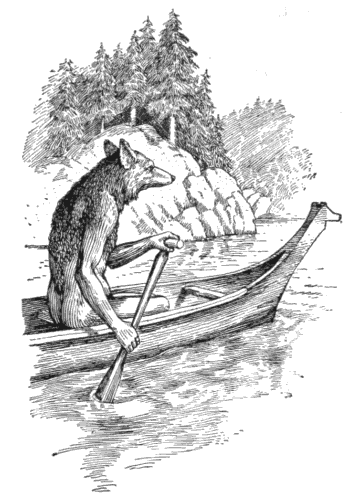
Ehanna – long time ago…there was an elderly Dakota woman out walking on the prairie and she heard a cry for help, and she looked around but did not see anybody so she kept on walking. After a few steps she heard someone say – help me Unci (grandmother). Hearing this she stopped and listened close, and she saw that it was a tiny frog calling out for help. She picked up the frog and it started talking and it said, “Unci, I am so happy that you found me. I am really a young Dakota man but earlier today I was turned into a frog by Iktomi (the trickster). I was praying that I could be more handsome and so Iktomi came to me and said he could help, and I foolishly agreed. He turned me into a frog and said that if I don’t find a Dakota woman to kiss me before the sun goes down that I will stay a frog forever. The young man told the grandma that if she kissed him and turned him back into a man that he would take good care of her the rest of her days and make sure that she always had what ever she needed to live a good life. Unci looked around and seeing no one she put the frog in a little bag she had with her. The man called out – Unci aren’t you going to kiss me and turn me back into a young man?” She thought about it for a bit and said, “No, at my age I’d rather have a talking frog.”
Going Beyond April Fools' Day
Native American humor is far more than just a source of laughter; it's a vital thread woven into the fabric of cultural survival. For generations, it's been a powerful tool for resilience, helping communities navigate historical trauma and build strength. Through storytelling and social commentary, humor exposes flaws, reinforces values, and even challenges authority. It's a way to keep traditions alive, passing down knowledge with wit and engaging future generations. Beyond its social function, laughter itself is recognized as a form of healing, strengthening bonds and promoting well-being. And importantly, Native humor actively combats stereotypes, allowing for the reclaiming of narratives and the assertion of authentic voices. In essence, it's a testament to the enduring spirit and vibrant culture of Native American communities.
While, you are likely reading this after April Fools' Day has passed, every day is a good day for humor. You may not get the same fun as you would have on April 1st, but here are a couple of articles from ICT News with some fun harmless Native themed pranks to pull on your family and friends.
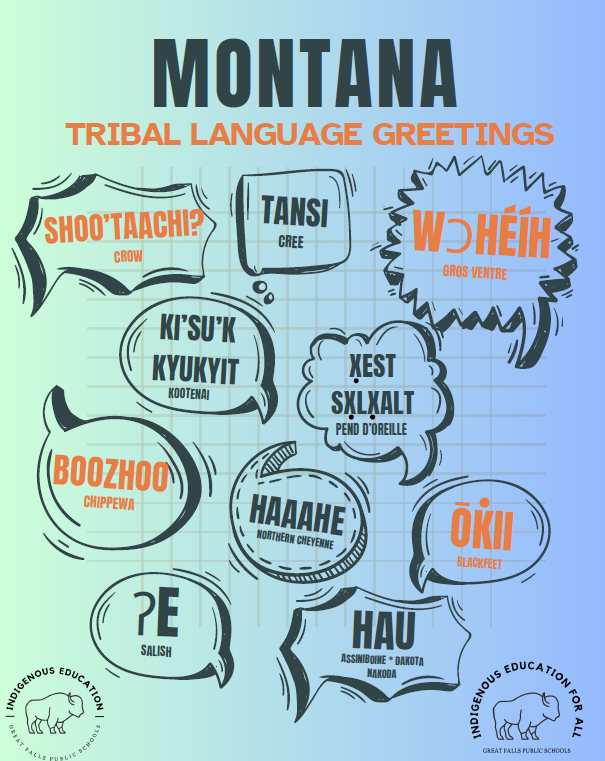
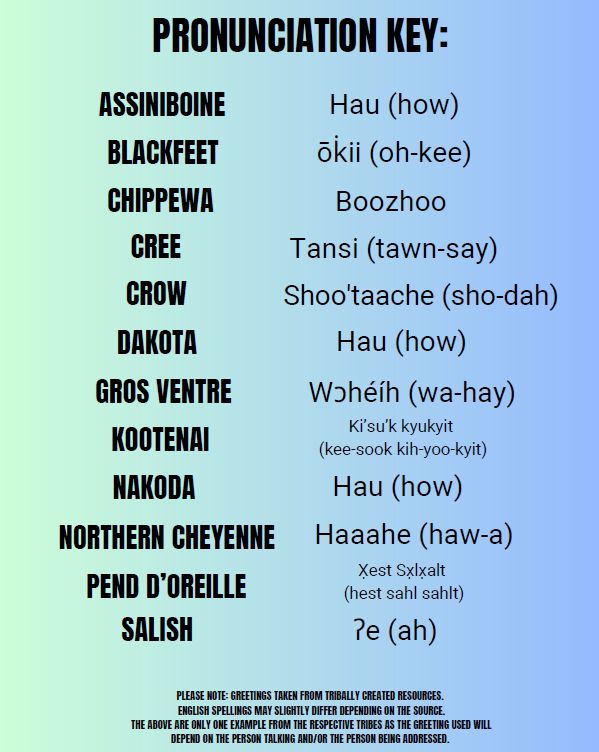
Incorporating Montana's tribal greetings into your daily interactions is a powerful way to honor and perpetuate the rich cultural heritage of our state's Indigenous nations. For Native students, hearing their ancestral languages and greetings acknowledged reinforces their cultural identity and belonging, fostering pride and connection to their heritage. For non-Native students, it's an opportunity to learn and appreciate the diversity of Montana's cultures, breaking down stereotypes and building bridges of understanding. This small act of cultural recognition not only keeps these vital languages alive but also encourages a deeper respect and appreciation for the unique contributions of Montana's tribal communities, enriching the educational experience for all. Big shout out to IEFA Instructional Coach Tawny Cale for this awesome graphic!
 |
 |
Discover the profound connection between air temperature data and Montana's seasons in this month's featured lesson, FUN-ology! Lesson 1. This lesson goes beyond basic science by introducing students to Salish seasonal rounds, emphasizing the critical role of phenological knowledge in various tribal cultures and how it has been shared across generations.
Students will have the opportunity to analyze temperature data using tables and create their own line graphs, while also exploring how Western scientific methods and traditional knowledge systems complement each other to enhance our understanding of the world around us. It's a fantastic way to integrate IEFA Essential Understandings into your science curriculum, fostering an appreciation for diverse ways of knowing and the importance of oral histories.
Find the Lesson Plan Here!
The IEFA Team would like educators to know that all the resources available on our webpage under Classroom Resources have been vetted for use in the classroom. Montana Tribal Nations were involved in this vetting process along with the Montana Advisory Council on Indian Education. These resources are there for implementation into your curriculum. If educators have any uncertainty in using these resources, please reach out to the IEFA Team. From our website:
OPI curriculum resources for Indian Education for All have been developed in conjunction with the advice and assistance of cultural consultants from Montana Tribal Nations. In addition, members from the Montana Advisory Council on Indian Education have provided input and review of tribal specific materials that are about the Tribal Nations they represent.
PLEASE use these resources.
The IEFA Team worked hard to put in place a new Online Survey tool through Qualtrics thanks to the support of the very awesome Tristen Loveridge. If your school would like the IEFA Team to support you in any way (working through the Framework developing policy, reviewing resources, curriculum mapping/scoping, etc.), please use the link in this section. Our goal is to use this information to provide individualized and relevant support to your district. Additionally, this support will be ongoing as we move away from a one-and-done model of delivery. This survey can also be found on our IEFA Website.
We look forward to working with you!
IEFA Professional Development Request Survey
IEFA Professional Development Opportunities 4p.m. - 5p.m.
- No registration required
- Earn 1 professional development renewal unit
- 1st and 3rd Tuesday of each month
Please stay warm and come to one of our virtual sessions to earn renewal units and increase your IEFA Knowledge!
IEFA Energize Webinars
1st Tuesday of each month
Join OPI's IEFA staff on the 1st Tuesday of every month to hear important announcements; dive into model lessons; learn about new resources, play games, earn prizes, and more!
IEFA Across the Content
3rd Tuesday of each month
Indian Education for All implementation strategies provided by K-12 educators both on and off-reservation. Content areas covered: ELA, Math, Science, Social Studies, Health Enhancement, FCCS, CTE, Music, and Art. These webinars are recorded and available to watch on our IEFA YouTube channel, too!
|
|
YouTube Channel
Are you looking for engaging and informative resources to improve your IEFA background knowledge and improve your teaching? Check out our YouTube Channel for engaging IEFA content and a wealth of classroom materials to deepen understanding and enhance your teaching.
|
IEFA Finance Reporting Update FAQ
IEFA ANB Reporting Guide
HOW TO - IEFA PAYMENT: REPORTING GUIDE
If you have any questions, please reach out to one of the IEFA team members. Contact information can be found here.
The OPI is committed to providing reasonable accommodations to people with disabilities. If you need a reasonable accommodation, require an alternate format, or have questions concerning accessibility, contact the OPI ADA Coordinator, 406-444-3161, opiada@mt.gov, Relay Service: 711.
|


