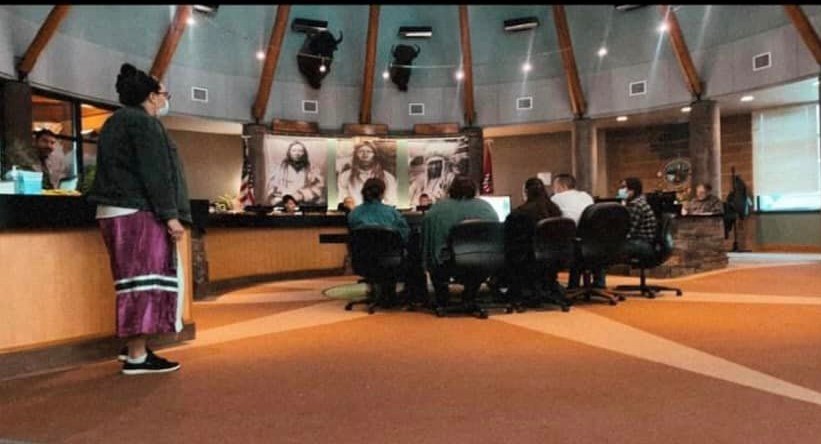
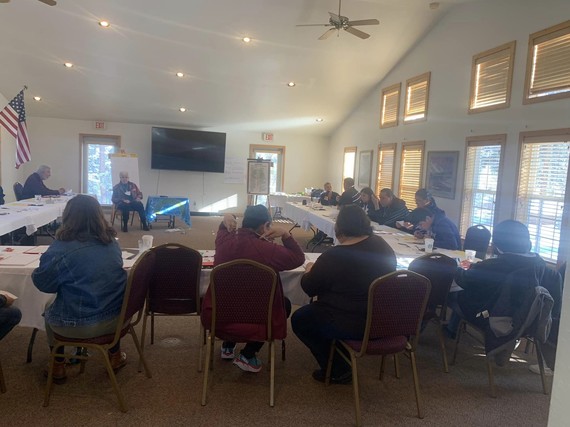
 Oki. Our team has been involved in exciting work the past few weeks. We were invited out to meet with the Confederated Salish and Kootenai Tribes the first week of November to conduct tribal consultation and seek support and collaborative initiatives going forward. Their Tribal Education department was accommodating and gracious in their guidance as we worked with their staff, their schools, students, communities and tribal departments. We worked together for a full day gathering of over 100 people in those categories to speak of needs and solutions. The highest in attendance was the youth! The administrators took in what the youth spoke and support teams were developed for each school in attendance! Members on these teams included teachers, administrators, parents, tribal education reps, tribal council members and tribal elders and knowledge keepers. The students expressed their gratitude and felt heard, protected and important.
This is the direction we seek as we continue to build relationships through authentic consultation with our Tribal Nations.
We held another consultation meeting with the Apsáalooke (Crow) Tribal Nation where their Executive Board and Legislators sat with our team as we shared information on where their voice is needed. We discussed the need for their guidance as we look to support our tribal youth in the school systems they attend. The combined resources from the Tribe and School can truly make a difference in a student's life, especially within their educational journey. Self-identity is a huge piece to their success. We spoke of incorporating language and traditional knowledge into a students learning and we will continue to meet and work together to improve these efforts.
We are developing the Articles of Association for our Knowledge Keepers of Indigenous Nations (KKIN) and worked through the first draft this week. This will provide guidance to any unit or department seeking guidance from KKIN. It is groundbreaking work.
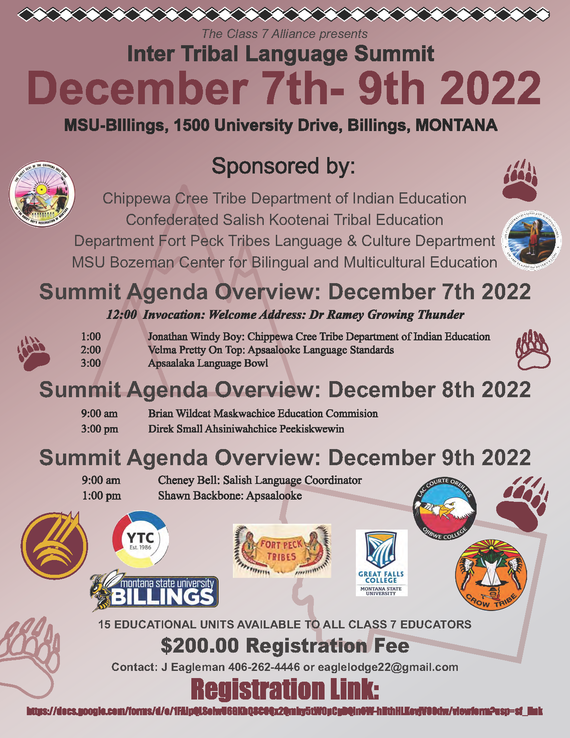
Next month we will be working on our various team projects. There will be a language conference in Billings as well.
Language and Culture
Amba Daya (Good Day) everyone!
We hope you are all having a good start to the holiday season. In Nakoda, we call December Wicogandu-sungagu, Center Moon’s Young Brother. January is considered the Big Moon.
Our team has been busy engaging in consultation with tribes from both sides of the state. We have gathered language and culture specialist along with our youth and resiliency coaches to gear our education efforts in meaningful ways. The language grants have opened up and some communities should be seeing some augments to their language revitalization efforts soon! If you haven’t yet, please see our webpage to see the list of language apps available for download.
Pinamaya everyone.
Matt Bell
matthew.bell@mt.gov
 Mental Health and Wellness
This month Crystal Hickman, School Mental Health Coordinator, and the Tribal Relations and Resiliency team helped organize a Virtues Project retreat for school staff and students. In spite of the retreat beginning during the first state-wide snow storm and terrible road conditions, the show did go on. Virtues Project founders, Dan and Linda Popov joined those who braved the storm in two separate sessions; adults and youth. The Virtues Project training was a transformative experience for those who attended. These two days brought together educators and students committed to addressing the mental health crisis and reducing youth suicide in Montana. The Virtues Project addressed how to companion others through dark moments leading up to, and including, the ideation of suicide. The Virtues Project utilizes five powerful strategies to improve the strengths, social-connectedness, mental wellness, and self-efficacy of our Montana students and school staff. It’s greatest strength is the simplicity with which it can be practiced, and, over time, deepened into a mastery of seeing our youth wholly and beautifully. I was an excellent experience on being a compassionate human being that we look to expand in our work.
 Youth Leadership
We traveled to Polson and attended the CSKT Summit in early November. Youth from Polson, Ronan, Two Eagle, Arlee and Mission schools were in attendance. We held a “world cafe” where the youth wrote down and answered questions pertaining to what change they wanted to see in their school and towards the end how they can change it. We held a healing circle where the youth were in the middle and our knowledge keepers were outside. Our youth shared their ups and downs and in the end we had some knowledge keepers “adopt” a school, where if a student had hardships they can always go to our leaders in the community to help. The circle was so powerful for all in attendance. We also assisted the schools and students to bring back the FYI (Flathead Youth Initiative) Program. FYI is youth led and brings all schools in their region together to join in initiatives to help their school, their community and their tribe while using their voice and perspective. The youth have had ideas for this group to have in-person meetings, learn language, do cultural projects and plan to host a community wide powwow. Our first follow up meeting was November 17th and it was a big success! FYI is growing!
We recently held a youth panel at the High School Forum in Great Falls where we met with many strong youth leaders from Great Falls High, Paris Gibson and Heart Butte. We had a youth panel that answered questions about their school and how they wanted to help implement positive change. We heard many great answers on questions pertaining to wellness, diversity, identity and connection. The youth were super courageous and passionate. They are ready for change and they have the power to do so much.
Contact info for our Youth Coordinators:
Alicia Doney, Tribal Youth Coordinator at alicia.doney@mt.gov
Anna Marsicano, AmeriCorps Planning Grant Coordinator at anna.marsicano@mt.gov.
The OPI is committed to providing reasonable accommodations to people with disabilities. If you need a reasonable accommodation, require an alternate format, or have questions concerning accessibility, contact the OPI ADA Coordinator, 406-444-3161, opiada@mt.gov, Relay Service: 711.
|