Everyone within a school and community plays an important role in maintaining safety and supporting the well-being of students. Educators, caregivers, and members of the community can help prevent students’ acts of violence and suicide by recognizing concerning behaviors and responding to them promptly and properly. Recognizing and Responding to Concerning Student Behaviors is a guide developed to help adults recognize student behaviors that may indicate a cause for concern and provide direction on how to respond to a student who may be in crisis.
For more information, please contact Michele Henson at michele.henson@mt.gov or 406.595.1058 or visit the OPI’s School Violence Prevention website.
The Montana Meth Project continues to sign up educators to lead student teams in this exciting art contest. Teachers from nearly all 56 counties have signed up! Just a few spots remain to hold a $250 art supply stipend for student team entries.
Learn more about this important drug prevention initiative, get inspired, and sign up now to reserve your stipend at PaintTheState.org
In a national poll, nearly 50% of educators reported feeling high levels of daily stress. Educator stress and burnout are strongly related to increased job demands related to student achievement, managing classroom behaviors, and responding to varying and changing student needs. Prioritizing educator well-being is an essential part of staff retention and student support.
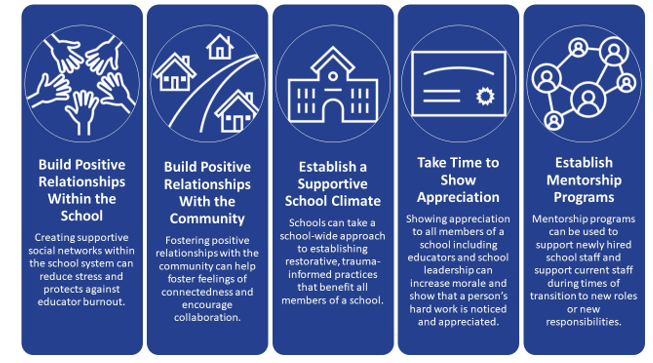
To support educator wellness and resilience, the Office of Public Instruction, in partnership with the Montana Safe and Supportive School workgroup, identified five strategies schools may consider adopting as part of their efforts to support educators. These include:
- Building positive relationships within the school by creating supportive social networks
- Building positive relationships with the greater community by promoting community engagement and collaboration
- Establishing a supporting school climate by implementing restorative and trauma-informed practices that benefit staff and students
- Taking time to show appreciation to all members of a school community
- Establishing a mentorship program to support newly hired school staff and support current staff during times of transition
To learn more, please check out this informational one-pager. You can also find additional information and resources on the OPI’s Educator Wellness webpage, including on-demand training for supporting Educator Resilience and Trauma-Informed Self-Care.
For more information, please contact Michele Henson at michele.henson@mt.gov or 406.595.1058.
The OPI Tobacco Use Prevention Education Program is offering to provide vape prevention education presentations to your middle and/or high school students in a classroom setting. There is no cost to you or your district, other than the class time taken to enhance your tobacco use prevention curriculum. Scheduling will depend upon requests received and associated travel.
We can provide middle and/or high school presentations during the school day as well as a staff/parent presentation after school which qualifies for one OPI renewal unit for attendees.
These presentations take 30 to 40 minutes of class time, depending on student engagement. They have been well received by middle and high school students and teachers alike. Education remains and will always be key to preventing and reducing youth tobacco use. Click this link to inquire about presentations for your school.
For more information contact Kris Minard at kminard@mt.gov or 406.444.0785
The Montana Tobacco Use Prevention Program has once again dedicated $40,000 to the OPI to provide grants to Montana schools for implementing strategies to reduce youth tobacco use. Grant recipients will be awarded up to $10,000 per school or up to $20,000 per school district to support student tobacco use prevention strategies. Previous awardees have used these funds to purchase vape detectors, to provide educational programs as alternatives to suspension, and to enhance school-wide tobacco use prevention education programs.
More information about this grant is provided here, or contact Kris Minard at kminard@mt.gov or 406.444.0785
The OPI is committed to providing reasonable accommodations to people with disabilities. If you need a reasonable accommodation, require an alternate format, or have questions concerning accessibility, contact the OPI ADA Coordinator, 406-444-3161, opiada@mt.gov, Relay Service: 711.
|