|
The OPI is providing this newsletter to legislators every six weeks to keep you updated on current events and ongoing education-related issues in Montana. The next Navigator will be sent to you on June 24, 2022. Keep informed of our new developments and tribal specialists.
For more information, please contact Government Liaison Tara Boulanger at tara.boulanger@mt.gov or 406-422-6958.
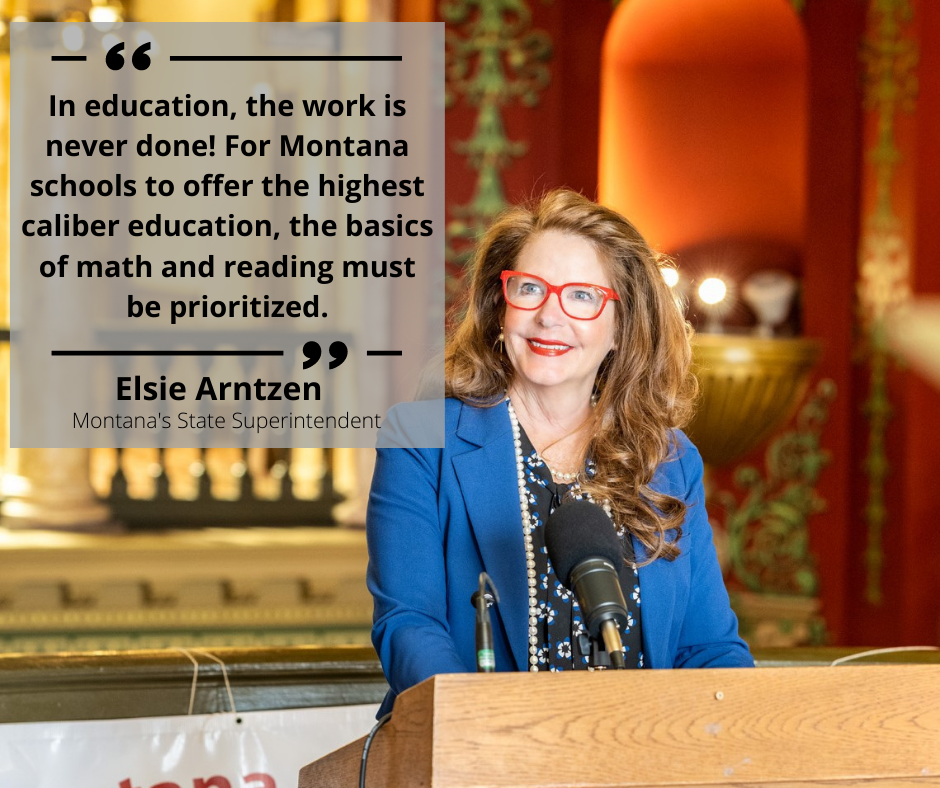 Please read the Superintendent’s Monthly Message: Let’s Get Back to Basics
Watch the Superintendent's Monthly Message here https://youtu.be/e8WEdt_Lexo
State Superintendent's Message:
Graduation is nearing and the closure of this great 2021–2022 year of learning. Join all Montana graduates as they are celebrating being Montana Ready!
Superintendent Arntzen’s Innovative Teacher Licensing Rules Adopted with Flying Colors:
The Montana Board of Public Education (BPE) voted to finally adopt Superintendent Arntzen’s innovative, recommended changes to educator licensing. The BPE voted unanimously this afternoon during their monthly meeting, which was held at the Montana School for the Deaf and Blind in Great Falls.
“I thank the Board of Public Education for their support of all our Montana teachers through the adoption of my flexible recommendations to educator licensing rules,” said Superintendent Elsie Arntzen. “These innovative rules will maintain teacher quality while opening the door for the wider recruitment of educators in Montana and across the United States. Montana students’ futures are brighter because of the unanimous decision today.”
The transparent process of revising the Chapter 57 educator licensing rules began in November of 2020. This long and engaging two-year process included Montana educators and community leaders representing our state’s unique populations. The recommended revisions were open for public comment through the Montana Administrative Procedure Act (MAPA) process. The flexible licensing revisions will be submitted to the Secretary of State for publication in Montana Administrative Register, at which point they will become effective.
Some of the flexible licensing revisions include:
- Creating pathways to allow an educator to add additional endorsements to their license
- Defining military dependent to include in licensure reciprocity for military spouses and dependents
- Defining approved educator preparation program, as an umbrella term for traditional and alternate educator preparation programs
- Returning the unusual cases authority to the State Superintendent
- Keeping the words “credible source” as a rule to ensure members of the public are able to file a complaint about official misconduct
- Expanding pathways to licensing beyond the Praxis including GPA, portfolio, and experience
- Increasing access for expired licensees to reenter the classroom
- Increasing career technical educators by accepting diverse degrees, allowing associate degrees, and work experience equivalencies
- Allowing school counselors to pursue administrative licenses
- Recognizing licenses for nationally board-certified teachers
“I am thankful to the Board of Public Education for their final vote to adopt my flexible recommendations to revise educator licensing rules in Chapter 57. I appreciate all the work that our dedicated staff did to help accomplish this great lift”.
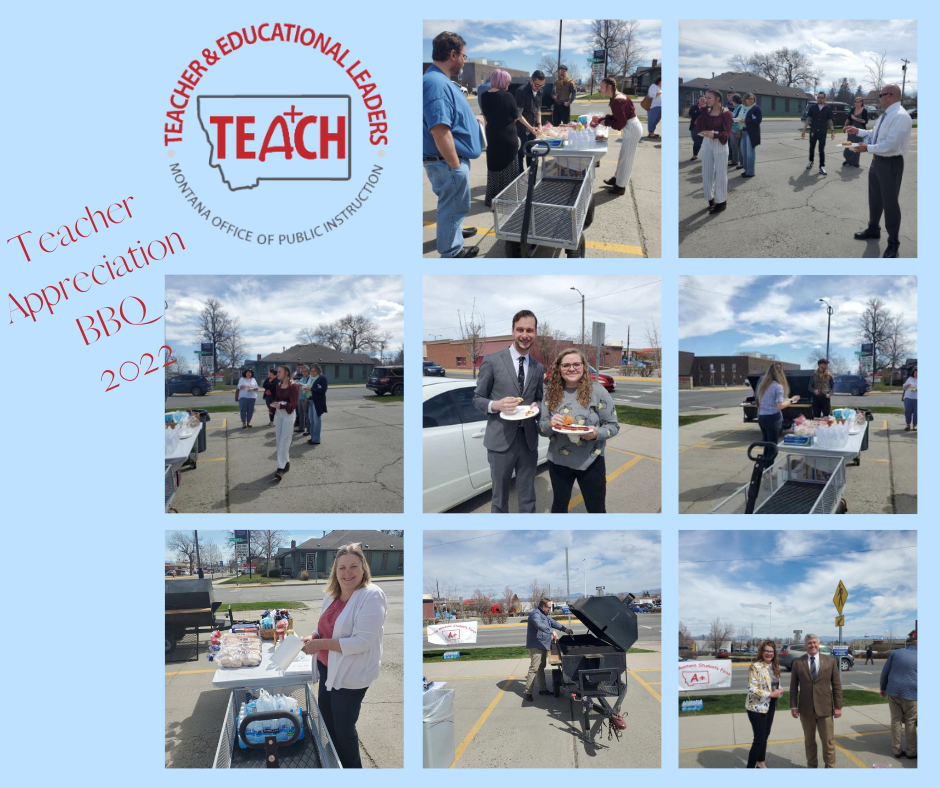 During Teacher Appreciation Week, we celebrate our 2022 Montana Teacher of the year Bill Stockton, and all our Montana Teachers.
2022 Montana Girls and Boys Club Youth of the Year:
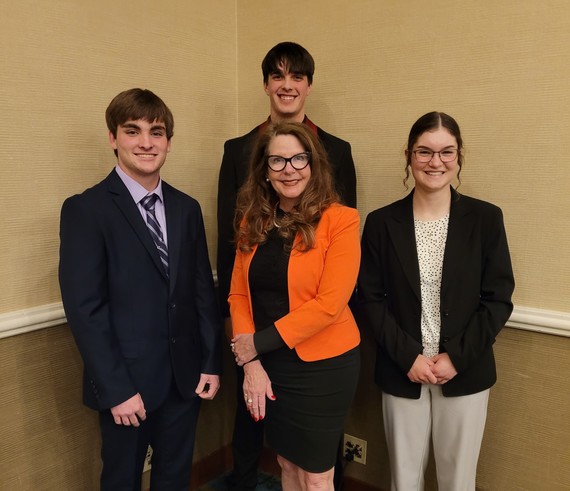 It was wonderful to see all the young leaders in our state at the 2022 Montana Youth of the Year Celebration Dinner for the Montana Boys and Girls Club. Congratulations to Kasey Reed, 2022 Yellowstone County Youth of the Year, Jesse Richey, 2022 Montana Non-Military Youth of the Year, and Sarah Faulk, 2022 Montana Military Youth of the Year.
Releases from the Montana OPI:
CSCT, Student Mental Health - Number of Schools on MOU (Memorandum of Understanding) Update:
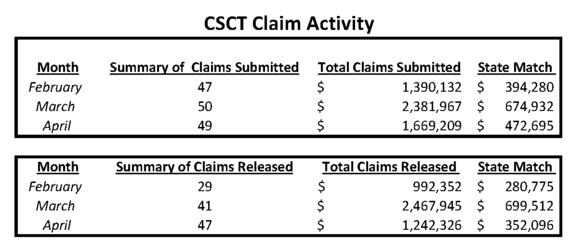
As of May 11, 2022, 57 school districts have signed the MOU.
In February, 47 claims were submitted, and 29 claims were released.
In March, 50 claims were submitted, and 41 claims were released.
In April, 49 claims were submitted, and 47 claims were released.
|
 As of February 28, 2022:
- Number of students in CSCT: 2,315
- Number School Districts: 54
- Number of CSCT Teams: 203
For more information, please contact Deputy Sharyl Allen at sharyl.allen@mt.gov or (406) 444-5648.
OPI’s New Chief Information Officer:

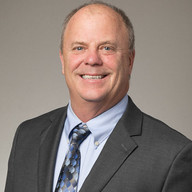
Leading Data Modernization from HB 630 and HB 632. Superintendent Elsie Arntzen welcomes Chris Sinrud as the Office of Public Instruction’s (OPI) Chief Information Officer. Chris is very excited to be a part of the OPI team. He plans to hit the ground running to improve the tools used for our students, educators, and administrators across the State of Montana. Improvements will align with the goals of Hope, Teach, Learn, and Ready.
Chris grew up in Hamilton Montana, graduated from Carroll College with a business/computer science degree in 1989, and completed a stint in the United States Army where he realized he truly loved Montana; Montana is his home. Chris has three sons with which he is grateful to have great relationships. Family means the world to him. Professionally, Chris has been a part of some amazing teams writing software, building world-class networks, and having built and maintained lifelong relationships along the way. Chris learned that he loves working in the tech industry which is ever-changing. He is excited to expand his career so that he can make an impact on the next generation.
|
Montana Ready Coordinator:
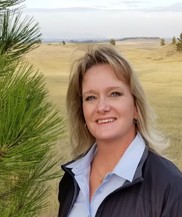
Superintendent Elsie Arntzen welcomes Mary Heller as the Office of Public Instruction’s (OPI) Montana Ready Coordinator. Montana Ready is one of four initiatives that Superintendent Arntzen championed when she was elected as state superintendent in 2016. Montana Ready focuses on Career and Technical Education (CTE) to create partnerships with industries, the military, and the university system to develop Montana’s workforce.
The Montana Ready Coordinator will help strengthen the Workforce Learning Program in CTE at the OPI. Other duties include working closely with the Governor’s office, Department of Labor and Industry, and stakeholders to grow workforce development in our K-12 schools. The coordinator will focus on building relationships between the public and private sectors.
Mary has been a secondary education teacher, an administrator for state and federal regulations at oil refineries, and a Legislative Assistant in the United States Congress. Mary has also been the Director of the Career Center and Industry Relations at Montana State University-Northern, the State Director for SkillsUSA Montana, and a member of the Montana Board of Public Education. Mary will start her new position in June.
|
Montana Alternative Assessment Testing Program (MAST):
The Montana Alternative Student Testing (MAST) Pilot Program is an initiative taken by the Office of Public Instruction (OPI) to radically modernize, improve, and ease federally mandated end-of-year student assessments. The Federal Government requires that all school systems conduct student assessments with a single massive end-of-year assessment which occurs each spring.
The MAST program is developing pathways to modernize the traditional testing system while preserving local control, easing the burdens on teachers and administrators, and ensuring that the federally mandated summative assessment can provide both flexibility and actionable data. The OPI is developing future pilots through contracts with New Meridian, the Center for Assessment, and Education First. The goal of the MAST Program is to provide a complete methodology for developing a summative assessment system more amenable to our school system, and that will pass federal peer review.
The MAST program includes several phases of piloting, peer review, analysis, and study. Ultimately, the program will develop a peer-reviewed defensibility proposal for the Federal Government that will:
- utilize a through-course model of student testing
- break up the single end-of-year-summative into an autumn, winter, and spring assessment
- measure student growth, development, and maintain scholastic standards that we Montanans can be proud of
The OPI is seeking stakeholder input and support to develop new innovative assessment methods that will improve our student and teacher learning experience. This new school year, in the Fall of 2022, the pilot system will be used in select districts and reviewed by the United States Department of Education.
For more information, please contact Dr. Trenin Bayless, Project Manager, at trenin.bayless@mt.gov or (406) 444-3449.
|
School Enrollment 2021-2022:
The 2021-2022 enrollment data is finalized on the Enrollment Dashboard of GEMS. From 2010 to 2020, Montana public schools have seen consistent growth in enrollment. The 2020-2021 school year had a 2.38% reduction in Montana public school enrollment due to COVID. The 2021-2022 school year official fall enrollment numbers showed that students returned to the public school system. Public school enrollment has increased to pre-COVID levels with a total of 149,198 students enrolled, which is a 2.45% increase. K-8 enrollment is at 103,836, which is a 2.60% increase from the 2020-2021 school year. High School enrollment is at 44,588, which is a 2.33% increase from the previous school year.
For more information, please contact the GEMS Helpdesk at opigemshelpdesk@mt.gov or (406) 444-5222.
Hot Topic, Lead Remediation in Schools:

You may have seen stories in the news recently about lead testing water supplies in public schools. The Montana Department of Public Health and Human Services (DPHHS) and Department of Environmental Quality (DEQ) would like to provide a status update and direct you to important sampling and communication resources. As a reminder, all accredited K-12 schools in Montana are required to conduct periodic lead testing under Administrative Rule 37.111.832, adopted into law on January 17, 2020. The initial round of testing was to be completed by December 31, 2021.
Why Test for Lead?
Lead is a poisonous heavy metal that can affect almost every organ and system in the human body, often with irreversible effects. The Center for Disease Control, American Academy of Pediatrics, and World Health Organization all state that there is no safe level of lead exposure. High lead levels can cause multiple and irreversible health problems, which include learning disabilities, attention deficit-hyperactivity disorder (ADHD), developmental or cognitive delays, growth stunting, seizures, coma, or, at high levels, death. Exposure to even low levels of lead can cause reduced IQ, hearing impairment, reduced attention span, and poor classroom performance.
Testing water in schools is important because students spend a significant portion of their days at school, and likely consume water in this location. Many schools and childcare facilities are housed in old buildings with aging plumbing fixtures, fittings, pipes, and solder that contain the lead, which can leach into the drinking water. Even new plumbing may not be entirely free of lead.
What Have Tests Shown So Far? As of April 2022, just over 60% of schools have conducted their first round of sampling, with many more in the process. Overall, test results have revealed that about 9% of samples have been in “Bin 1” – the highest concentrations – and have had to be immediately shut off. Another 20%, in “Bin 2,” have needed repairs or upgrades. Of the schools that have submitted official results, 78% found at least one exceedance. Elevated lead concentrations have been found in different types of fixtures ranging from classroom sinks and kitchen sinks to drinking water fountains, bathroom sinks, and various miscellaneous fixtures.
Resources DEQ has put together a step-by-step guide to testing which can be found on their water quality website, https://deq.mt.gov/water/programs/dw-lead. Additional resources include, but are not limited to, parent newsletters, a press release template, and guidance on developing a flushing program. Technical assistance to help identify plumbing inventory and draft a floor plan is available through two contractors, Montana Rural Water Systems and Midwest Assistance Program. Contact Greg Montgomery with DEQ to inquire about these technical assistance opportunities.
Funding
DEQ has a grant from the Environmental Protection Agency to cover the laboratory costs from the initial testing. The laboratories send the invoice directly to DEQ for payment. There is also funding available for lead remediation. The Office of Public Instruction manages a lead remediation reimbursement program that schools can apply to get up to $1,000 per school. Funding is limited and is first come/first serve. Elementary & Secondary School Emergency Relief funding can also be used to address lead remediation activities (fixture replacement, filters, etc). DEQ has received notification that additional remediation funding is coming from the EPA. A timeline and amount is yet to be determined.
For more information on testing and reporting, contact Greg Montgomery, DEQ Lead Reduction in School Drinking Water Rule Manager.
Greg Montgomery (406) 444-5312 DEQleadinschools@mt.gov
For more information, please contact Chief Financial Officer Jay Phillips at jphillips3@mt.gov or (406) 444-4523.
|
USDA Foods for the Summer Food Service Program:
Superintendent Elsie Arntzen Ensures School Meal Assistance
HELENA – Superintendent Elsie Arntzen and the Office of Public Instruction (OPI) are continuing to offer students nutrition assistance programs. The state-administered National School Lunch and Breakfast Programs and the Summer Food Service Program (SFSP) are federally funded by the United States Department of Agriculture.
Since 2020, the onset of the pandemic, OPI sought and was granted waivers to provide lunch and breakfast school nutrition regardless of income eligibility. These federal waivers conclude at the end of this school year.
Beginning in June, SFSP will continue nutrition services without income eligibility requirements. SFSP sites may include pools, parks, community centers, or schools. Eligible sponsors include private or nonprofit schools, organizations, and local government agencies. No application is necessary; when children arrive at a community SFSP site, they receive a free meal. Site sponsors are reimbursed at a set rate for meals served to children.
“We are appreciative of the many partnerships with Montana communities that provide our children and families’ nutrition during the summer,” said Superintendent Elsie Arntzen. “This summer program continues to serve all of our Montana students.”
|
International Blackfoot Research Conference:
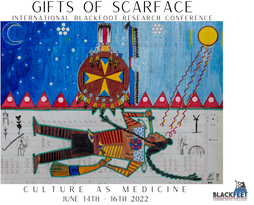
Blackfeet Community College will be hosting an International Blackfoot Research Conference, on June 14th-16th, 2022. The theme for this year's conference is "Gifts of Scarface - Culture as Medicine."
This conference will feature the traditional research processes of the Blackfoot, while also honoring Westernized (and other) methods of research. The conference is an opportunity for the Blackfoot Confederacy to unite and celebrate educational sovereignty, through the sharing of knowledge among bands, yet under the unification of one nation.
To register, please click here.
For more information, please contact Dr. Karla Bird, President of Blackfeet Community College, at karla.bird@bfcc.edu or (406) 338-5441 Ext. 2202.
|
Tribal Regalia at Graduation:
As graduation approaches, I would like to remind everyone that in 2017 SB 319 was passed. This bill allows tribal regalia to be worn during graduation ceremonies in our public schools.
§2-1-315. Tribal regalia and objects of cultural significance — allowed at public events.
(1) The purpose of this section is to help further the state's recognition of the distinct and unique cultural heritage of the American Indians and the state's commitment to preserving the American Indians' cultural integrity as provided in Article X, section 1(2), of the Montana constitution.
(2) A state agency or a local government may not prohibit an individual from wearing traditional tribal regalia or objects of cultural significance at a public event.
(3) For purposes of this section, the following definitions apply:
(a) "Individual" means a human being regardless of age.
(b) "Local government" has the meaning provided in 2-2-102.
(c) "Public event" means an event held or sponsored by a state agency or a local government, including but not limited to an award ceremony, a graduation ceremony, or a public meeting.
(d) "State agency" has the meaning provided in 1-2-116.
History: En. Sec. 1, Ch. 229, L. 2017.
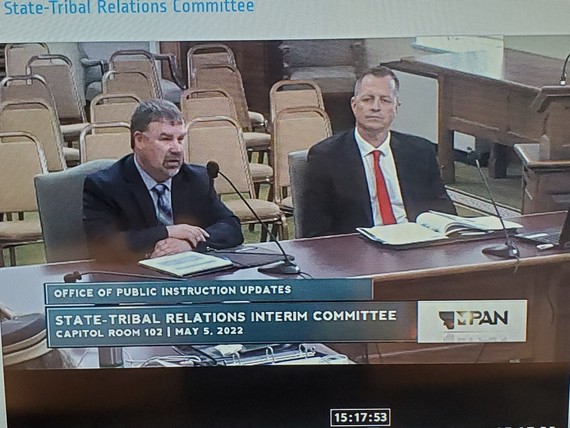 Zach Hawkins, Director of IEFA program at OPI, and Donnie Wetzel, Tribal Liaison at OPI updated the State-Tribal Relations Committee on May 5, 2022.
You can watch the State-Tribal Relations Committee, our updates start at:
- 15:15:55 -Update from the Office of Public Instruction (OPI) - Zach Hawkins, Director of IEFA program at OPI
- 15:27:58-Update on Indian Education For All continued - Donnie Wetzel, Tribal Liaison at OPI
Virtual Professional Development Offerings for teachers on IEFA
|
PD Event
|
# Live Sessions
|
# Completers
|
# Surveys Received
|
Rating
|
|
Building Your IEFA Mindset Facilitated Hub Course
|
2
|
27
|
27
|
3.81 out of 4
|
|
Ethnobotany Webinar Series
|
6
|
874*
|
630
|
4.63 out of 5
|
|
Ethnobotany Workshop Series
|
2
|
69
|
66
|
4.91 out of 5
|
|
Advocacy Award Winners Webinar Series
|
6
|
854*
|
307
|
4.42 out of 5
|
*Live completions only. Recordings also offered for renewal units on the OPI IEFA website
In-Person School Events for this School Year on IEFA
|
School
|
Topic
|
|
Corvallis K-12
|
IEFA Overview and Resources
|
|
Ray Bjork Elem. (Helena)
|
Traditional Games
|
|
Smith Elem. (Helena)
|
Traditional Games
|
|
Project for Alternative Learning HS (Helena)
|
Traditional Games
|
|
Frazer K-12
|
IEFA Overview/Culturally Responsive Practices
|
|
Harlem K-12
|
IEFA Overview/Culturally Responsive Practices
|
|
Crow Agency K-5
|
IEFA Overview/Culturally Responsive Practices
|
|
Frenchtown K-12
|
IEFA Overview and Resources
|
|
Whitefish 7-12
|
IEFA Overview and Resources
|
|
Colstrip K-12
|
IEFA Overview and Resources
|
|
West Yellowstone
|
IEFA Overview and Resources
|
|
Stevensville
|
Traditional Games
|
|
Helena K-5
|
Native Ethnobotany Lessons
|
Other Initiatives
- Bainville K-5 Social Studies lesson pilot project
- Elk Morning publication purchase and lesson plan contest
- 2022 Virtual IEFA Best Practices Conferences May 14th & 15th.
Broadband Update:
Emergency Connectivity Fund Third Filing Window
AT&T is participating in the FCC’s Emergency Connectivity Fund (ECF), which is an approximately $7.17 billion program that helps schools and libraries provide the tools and services their communities need for remote learning. ECF is providing relief to millions of students, school staff, and library patrons and will help close the Homework Gap for students who currently lack necessary Internet access or the devices they need to connect to classrooms.
For eligible schools and libraries, the ECF Program covers reasonable costs of:
- laptop and tablet computers
- Wi-Fi hotspots, modems, routers, and broadband connectivity purchases for off-campus use by students, school staff, and library patrons.
The FCC announced a third application window in the Emergency Connectivity Fund to help schools and libraries in the upcoming school year. The third application window will open on April 28 and close on May 13.
The third application filing window will provide ECF support for eligible equipment and services received or delivered between July 1, 2022, and December 31, 2023, to help address the unmet connectivity needs of students, school staff, and library patrons during the upcoming school year.
The Universal Service Administrative Company (USAC) is the administrator of the ECF Program and will review applications. Interested schools and libraries can find more information and apply at www.emergencyconnectivityfund.org [emergencyconnectivityfund.org] or www.fcc.gov/emergency-connectivity-fund [fcc.gov]. [fcc.gov]
For assistance, please an AT&T education expert at ECF@att.com.
|
ESSER and EANS Updates:
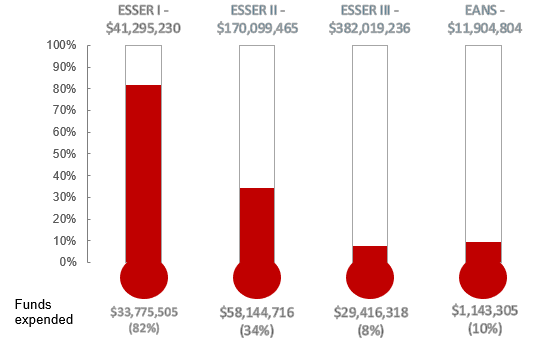
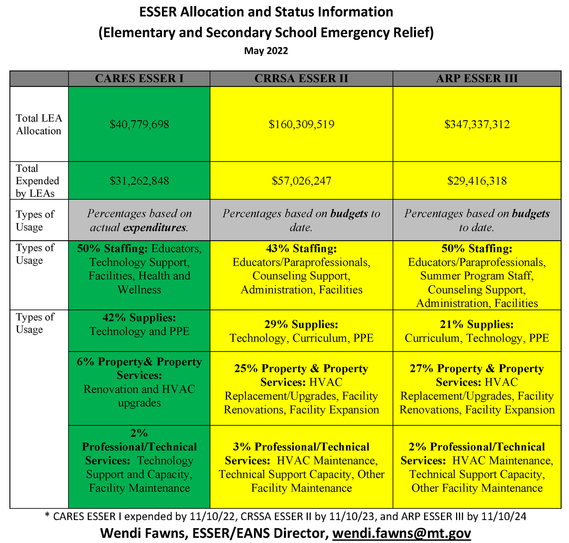
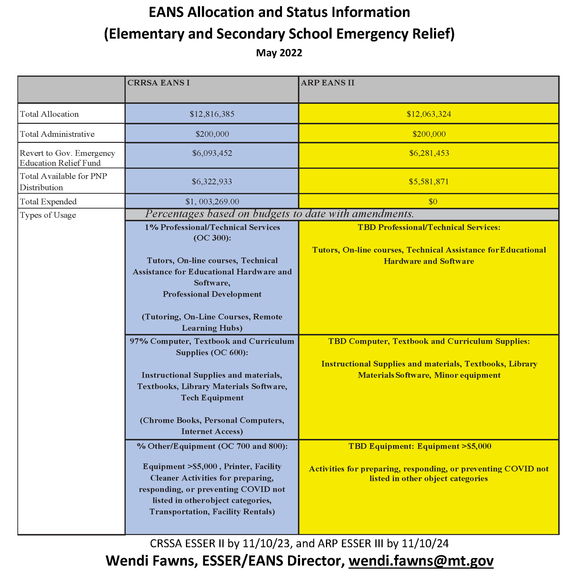
ESSER_I_II__III Allocations.pdf (mt.gov)
School allocations are what is given to schools so they can budget allowable uses for federal approval as of May 2022
ESSER
EANS
More information will be available per school district allocation for your legislative purposes.
For information contact Wendi Fawns at wendi.fawns@mt.gov. 406-437-8595.
The Montana Youth Challenge Academy held an Educator Airlift to strengthen partnerships with education leaders in Montana. What a great opportunity to see firsthand how the Academy is preparing their cadets to be Montana Ready!
Legislative Updates:
HB 246 - Revise education laws to enhance local control and opportunities for pupils

Representative Marta Bertoglio’s HB 246 amended several education statutes to increase learning opportunities for students. Among the amendments, § 20-7-118(d), MCA, now allows students to attend school in a nearby district offering offsite instruction when the student’s home district does not provide offsite instruction in an equivalent course. This flexibility, when approved by the offering district’s trustees, benefits both students and districts through greater course involvement. “Montanans resolved during the pandemic to find innovative ways for students to further their educational opportunities,” Superintendent Arntzen stated. “I very much appreciate Representative Bertoglio’s commitment to enshrining that flexibility into state law.”
|
State Diploma Steering Committee
The 2021 Montana Legislature passed HB 556 (2021) establishing a Montana proficiency-based diploma for Montana residents who require an alternative path to completing their education.
Superintendent Elsie Arntzen filed a notice of proposed rulemaking with the Secretary of State’s office regarding a Montana State diploma. Then, public comment was received. OPI has drafted with minor changes and will file a completed adoption notice the week of May 17th, with publication by May 27th. The effective date will b on June 10th.
“The new Montana state diploma will create an innovative approach for students to become Montana Ready,” said Superintendent Elsie Arntzen. “The state diploma does not replace the traditional high school diploma but offers another opportunity to showcase learning success. This diploma will support the unique learning and life experiences of individuals.”
|
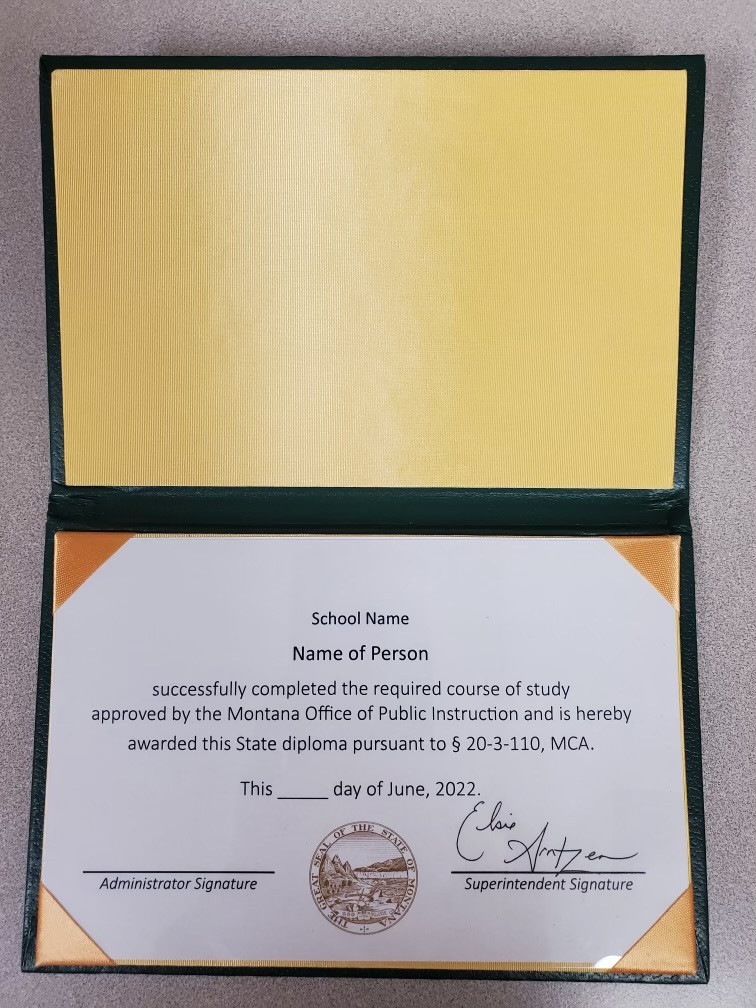 Prototype of the MT diploma
Celebrating Senator Mark Sweeney:
Events and Updates:
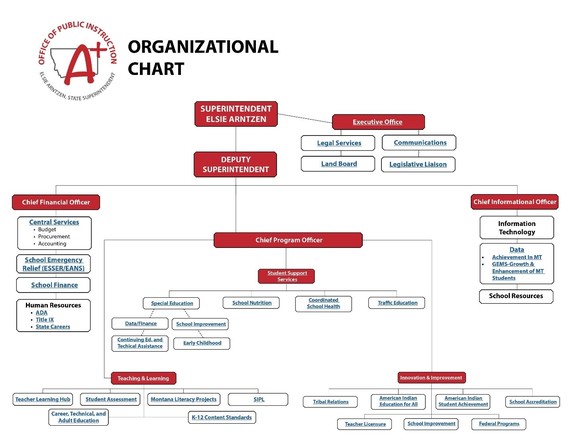
OPI Organization Chart:
Welcome to our OPI organization chart, choice of location of work is being offered, as 60% of our employees are choosing to telework.
Thank you to our Montana families and school families for supporting the 2022 graduates. May your families be blessed during these exciting times in our Montana children’s lives.
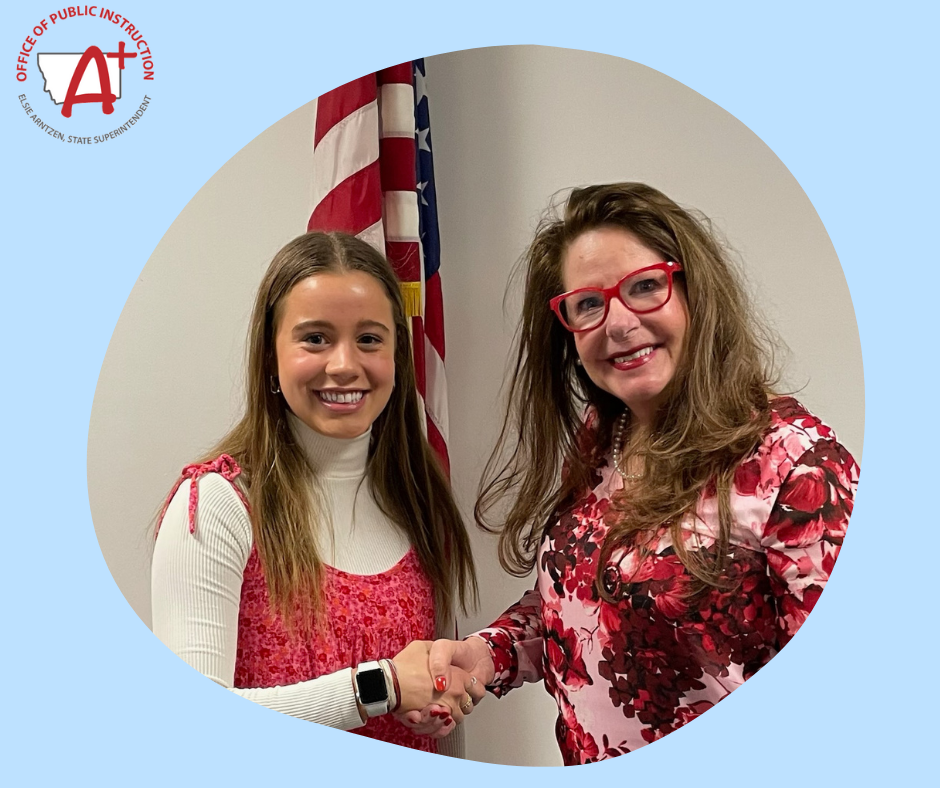 Thank you to Paige Lepard, for her 2 years of service as the student representative on the Montana Board of Public Education. We must always listen to our students’ voices. Best of luck in your future, Paige, as you graduate from Great Falls.
Questions? Contact:
Brian O'Leary, Communications Director, (406) 444-3559
Tara Boulanger, Legislative Liaison, (406) 444-2082
The OPI is committed to providing reasonable accommodations to people with disabilities. If you need a reasonable accommodation, require an alternate format, or have questions concerning accessibility, contact the OPI ADA Coordinator, 406-444-3161, opiada@mt.gov, Relay Service: 711.
|