 Week 17 of the 69th Montana Legislature
 Montana Legislature Concludes 69th Session, Prepares for Interim
On Wednesday, the Montana Legislature finished its business for the 69th session as both chambers adjourned "sine die."
Senate Republicans had an extraordinary session despite some adversity, handling more bills than in any session since the one following Montana's constitutional convention.
This newsletter will continue into the interim, but on a monthly rather than weekly basis. Stay tuned for plenty more updates to come!
Keep reading to recap many, albeit still a small portion, of the important bills we passed the last several months:
 Montanans sent us here this session with one goal top of mind – lowering taxes. It took a lot of drafting and a lot of debate, but the legislature ultimately passed legislation to deliver both property tax and income tax relief to Montanans:
-
SB 117 (Sen. Zolnikov): mandates local governments put part of their newly taxable value toward property tax relief, ensuring existing residents benefit from new construction being added to the tax base. Additional property tax bills were still receiving final votes as of the drafting of this newsletter.
-
HB 337 (Rep. Ler): lowers everyone's income taxes while prioritizing relief for the middle class by letting hundreds of thousands of more Montanans pay the lower income tax rate, as well as cutting the higher rate.
Senate Republicans are committed to finding ways to deliver lower taxes and promote true fiscal responsibility through the interim and into next session.
 Montana's kids are the future of our state, so we passed legislation this session to ensure our schools are educating them to the best of their ability:
-
HB 252 (Rep. Jones): the STARS Act provides schools with incentives to raise teacher pay and attract quality educators.
-
SB 177 (Sen. Vinton): expands funding sources for the Community Choice School Commission.
-
SB 369 (Sen. Yakawich): provides low- or no-cost suicide prevention training options for schools and bolsters youth suicide prevention policies.
-
HB 28 (Rep. Bedey): clarify public charter school laws by setting clear approval timelines, funding rules, and renewal processes.
-
HB 357 (Rep. Tilleman): provides funding for career and technical education in middle schools.
-
HB 745 (Rep. Tilleman): requires school districts to adopt stronger student protection policies with mandated background checks for people who have unsupervised contact with students.
 Montana is more popular than ever, and that has made finding housing around the state more difficult than ever. This session, we continued our work from last session on the "Montana Miracle" to grow our state's housing market and make homes more affordable and accessible:
-
SB 532 (Sen. Mandeville): requires counties to allow at least one accessory dwelling unit by right on single-family lots.
-
SB 213 (Sen. Zolnikov): allows certain residential buildings to be constructed with only one stairway so long as it meets other fire safety requirements, allowing more affordable units by lowering construction costs.
-
SB 214 (Sen. Hertz): revises zoning laws to favor property owners in cases of zoning interpretation.
-
SB 243 (Democrat Sen. Boldman): prevents cities from limiting building heights to less than six stories in downtown commercial and industrial zones.
-
HB 492 (Rep. Zolnikov): limits excessive parking mandates in urban areas, ensuring regulations cannot require more than one space per residential unit.
To learn more about the legislature's work on housing in recent years and the positive impact Montana has already seen, check out this article from national outlet Reason.
"Montana's zoning reforms are notable both for their sweep and their simplicity. Contra the typical California zoning reform, Montana's bills are all a few pages long, and refreshingly free from endless carve-outs and caveats about labor standards and affordability mandates. That leaves less room for local governments to exploit loopholes and makes the bills more intelligible and usable for developers."
 Montana was recently rated the best state in the nation for business startups, and we've strived this session to keep it that way:
-
HB 336 (Rep. Schomer): establishes a framework for apprenticeship programs leading to licensure in various professional fields.
-
HB 329 (Rep. Byrne): bolsters ammunition component manufacturing in Montana through tax exemptions.
-
HB 210 (Rep. S. Fitzpatrick): delivers tax relief to Montana businesses by reforming the state's unemployment insurance program.
In combination with our tax relief, we're making it easier than ever for hardworking Montanans to launch a business, earn a paycheck, and keep their money.
 We came into this session aiming to safeguard the power of the legislative branch and rein in the overreaching judicial branch. Although some proposals from the Select Committee on Judicial Oversight and Reform were shot down, we nevertheless managed to put some meaningful guardrails on the courts:
-
SB 45 (Sen. McGillvray): creates the Judicial Performance Evaluation Commission to assess the performance of judges and justices and release key information to the public in an effort to enhance judicial accountability.
-
SB 40 (Sen. Hertz): requires that closed deliberation meetings of the Supreme Court be recorded electronically and documented in writing for public inspection after a case finalizes.
-
SB 41 (Sen. Emrich): requires the random selection of new district court judges when the initial judge is substituted or disqualified for cause, enhancing fairness and impartiality by ensuring the unbiased selection of replacement judges.
-
SB 48 (Sen. Glimm): allows citizens to publicly share complaints about judicial officers brought to the Judicial Standards Commission.
-
SB 457 (Sen. Vinton): strengthens the enforcement of legislative subpoenas by establishing a clear process for addressing non-compliance at all times, including when the legislature is not in session.
-
HB 531 (Rep. S. Fitzpatrick): provides that the legislature has sole power and discretion to make, enforce, interpret, suspend, repeal, or waive rules for its proceedings.
Our work on judicial reform this session is intended to ensure that critical pieces of legislation desired by Montanans aren't unduly blocked by activist judges, and that the legislature itself doesn't have its constitutional powers taken by other branches of government.
 Conservative Senate Republicans did everything in our power to deliver the fiscally responsible budget Montanans deserve, but Senate Democrats and their allies took control and ownership of the budget, blowing it out of balance and carelessly spending taxpayer money. Regardless, we succeeded elsewhere to make our government more efficient:
-
HB 834 (Rep. Mercer): establishes a Government Evidence and Impact Commission responsible for developing a system to help policymakers identify inefficient, redundant, and antiquated programs in state government, kicking off a DOGE-style effort in Montana.
-
SB 232 (Sen. Regier): updates exemptions under the Montana Procurement Act to provide more transparency and accountability into state contracts, including closing the "lottery loophole" that was accidently created in the 2023 session.
 Montanans send us here to represent them in government, including representing their values:
-
HB 300 (Rep. Seekins-Crowe): prohibits educational institutions from allowing males to compete in female-designated athletic programs and ensures the privacy of biological women in restrooms, locker rooms, and sleeping quarters.
-
HB 121 (Rep. Seekins-Crowe): requires public buildings and domestic violence shelters to designate bathrooms, changing rooms, and sleeping areas for either men or women based on biological sex.
-
SB 437 (Sen. Glimm): revises the definitions of sex, male, and female in Montana law to clarify that sex is defined by biological characteristics, not gender identity.
-
HB 400 (Rep. Mitchell): establishes the "Free to Speak Act," protecting students, government employees, and contractors from being forced to use pronouns or names inconsistent with a person's biological sex.
-
HB 388 (Rep. Regier): prohibits state and local governments from regulating pregnancy centers based on their opposition to abortion.
 The legislature has not only made it cheaper and easier to live in Montana, but also safer:
-
SB 296 (Sen. Yakawich): establishes "Alan's Law" to increase penalties for crimes committed against a vulnerable person while working or volunteering at a caregiving facility.
-
SB 19 (Sen. Usher): bolsters public safety by increasing penalties for theft and ensuring no thieves go unpunished for their crimes.
-
SB 101 (Sen. Beard): creates new laws to define and address unlawful squatting and fraudulent property sales or leases, making squatting without consent a misdemeanor.
-
HB 208 (Rep. Overstreet): allows municipalities to regulate sleeping, camping, and the storage of personal property on municipal property.
-
HB 82 (Rep. Love): creates the new offense of "grooming of a child for a sexual offense" and strengthens law enforcement's ability to pursue and prosecute crimes involving minors.
-
HB 267 (Rep. Mitchell): establishes the offense of aggravated vehicular homicide while driving under the influence and enhances penalties for repeat DUI offenders, dubbed "Bobby's law."
-
HB 214 (Rep. C. Hinkle): allows the state to criminally prosecute a person detained for a federal immigration violation for a criminal act committed in Montana.
Workers also officially broke ground on an expansion of the Montana State Prison, which was funded by the legislature in 2023. That expansion will add 117 beds to prison capacity and new funding authorized in this 2025 legislative session will continue the buildout of correctional facilities.
 We're also making it safer for Montana's to engage in the digital world, protecting their freedoms during rapid advancements in technology while also making sure our state is open to the benefits of cutting edge innovations:
-
SB 163 (Sen. Zolnikov): expands Montana's Genetic Information Privacy Act to cover neurotechnology data, requiring clear privacy notices, informed consent, and strong data security for the collection and storage of Montanans' literal thoughts, brainwaves, and other neural data.
-
SB 410 (Sen. Zolnikov): prohibits medical and research facilities in Montana from using a genetic sequencer or sequencing software produced by a foreign adversary, such as China, Russia, Iran, or North Korea.
-
SB 364 (Sen. Bogner): prohibits remote deactivation of devices like cellphones or vehicles using a "kill switch" without a court order or warrant, with exceptions for non-payment on subscriptions, memberships, or leases.
-
SB 212 (Sen. Zolnikov): establishes the first-of-its-kind Right to Compute Act, which protects the right to own and use computing tools and technologies in Montana.
-
SB 265 (Sen. Zolnikov): establishes the Financial Freedom and Innovation Act, blocking restrictions on the use of digital assets in Montana and creating laws pertaining to network tokens.
All in all, we're letting Montanans prosper from the best of technological advancement while protecting privacy and safety.
 Of course, the big healthcare news of the session was renewing Medicaid Expansion. Although we would have loved to see more work done to ensure Montana's finances are kept safe amid potential changes in federal policy, we still passed legislation to improve the health policy in our state:
-
HB 740 (Rep. Bertogolio): revises laws related to pharmacies and pharmacy benefit managers to ensure pharmacies are reimbursed at least the national average drug acquisition cost plus a $15 dispensing fee, adjusted annually.
-
HB 807 (Rep. J. Hinkle): prohibits vaccines allowed under an emergency use authorization or undergoing safety trials from being required by authorities.
-
HB 888 (Rep. J. Hinkle): prohibit local boards of health from requiring a person to receive a vaccine, medication, supplement, or other drug treatment as a condition of release from isolation or quarantine.
 Safeguarding the integrity of local, state, and federal elections is of paramount importance to the legislature, so we passed bills this session to do exactly that:
-
SB 276 (Sen. Cuffe): strengthens Montana's voter ID laws by requiring photo IDs that are current, valid, and readable.
-
SB 226 (Sen. Cuffe): requires signature gatherers to submit an affidavit affirming the validity of signatures.
-
SB 57 (Sen. Cuffe): requires boards of county canvassers to compare the number of votes case to the number of electors and the number of persons who voted, mandating an investigation if there is a discrepancy.
-
SB 58 (Sen. Cuffe): requires election administrators to conduct an investigation when the counting board cannot reconcile the total number of ballots prepared for counting with the record of ballots accepted.
-
HB 201 (Rep. Mitchell): requires that paid signature gatherers verbally and visually disclose their status and provide their state of legal residence.
 Senate Republicans take seriously our responsibility for protecting Montana's unique natural beauty and resources. This session, much of our work in this area went towards responding to the absurd ruling in the Held v. Montana "climate kids" case:
-
SB 221 (Sen. Galt): reaffirms the legislature's authority over environmental reviews under the Montana Environmental Policy Act (MEPA), clarifying when an assessment is required and limiting review to proximate environmental impacts and adverse effects.
-
HB 285 (Rep. Ler): reinforces MEPA's role as procedural guide rather than a regulatory tool, streamlines environmental reviews, and clarifies the intent of MEPA as a tool to inform decision-making.
-
HB 270 (Rep. Zolnikov): amends MEPA to streamline environmental reviews, clarifying that reviews are for legislative evaluation and public information, removing agencies' ability to regulate beyond statutes, and excluding greenhouse gas emissions from reviews unless federally required.
-
HB 291 (Rep. Oblander): limits the authority of the Department of Environmental Quality and local air control programs from adopting air quality standards that are more stringent than federal requirements.
-
HB 466 (Rep. J. Fitzpatrick): revises MEPA to allow for categorical exclusions from environmental review requirements, granting specific exemptions to the Department of Administration for state land projects and to the Department of Commerce for historic preservation grants.
We also helped support Montana's strong agriculture community through bills like:
-
HB 356 (Rep. Tilleman): expands the Livestock Loss Reduction and Mitigation Program to include black bears, allowing ranchers to receive compensation for livestock losses and apply for grants to prevent bear-related predation.
-
HB 504 (Rep. Tilleman): expands livestock loss reimbursement eligibility to include domestic bison.
-
HB 401 (Rep. Mitchell): prohibits the manufacture for sale, sale, or distribution of cell-cultured edible products, i.e. lab-grown meat, in the state.
Additionally, we set the stage for Montana to become a leader in nuclear energy:
-
HB 623 (Rep. Parry): authorizes the storage of spent nuclear fuel in Montana but does not permit bringing in spent fuel from other states.
-
HB 696 (Rep. Parry): establishes a framework for approval of uranium conversion and enrichment facilities in Montana.
 In addition to helping protect our farmers, ranchers, and natural resources, we've also worked hard this session to responsibly protect Montana's wildlife and outdoor spaces:
-
HB 130 (Rep. Jones): requires the state to engage in wildfire suppression efforts regardless of land ownership when federal responses are inconsistent with existing laws, as well as authorizes the state to bill federal agencies for suppression costs when applicable.
-
HB 259 (Rep. Fielder): permits the use of thermal and infrared scopes for wolf hunting, allows looser harvest regulations in areas with higher wolf populations, and grants landowners the ability to take wolves threatening safety or livestock without a specific license, subject to reporting requirements.
-
SB 106 (Sen. Loge): revises state laws regarding the use of aircraft for animal control and hunting to cover the use of drones.
-
SB 83 (Sen. Loge): allows the Fish and Wildlife Commission to enforce rules created by landowners for public use of private property opened up through access agreements.
-
SB 441 (Sen. Loge): establishes the Montana Block Management Enforcement Network to help landowners enforce compliance with hunting rules and state laws on block management lands.
 Montana has one of the highest rates of military service in the country, so we're committed as Senate Republicans to supporting our veterans and active-duty servicemembers:
-
SB 95 (Sen. Yakawich): provides funding for grants related to suicide prevention activities for military servicemembers, veterans, and families.
-
SB 93 (Sen. Fuller): ensures more veterans and their families receive tax exemptions on military pensions, survivor benefits, and retirement income.
-
HB 553 (Rep. G. Nikolakakos): requires educational faculty to give students serving in the military extra time to complete coursework if they provide proper notice for the training interfering with their studies.
 This session, we doubled down on our constitutional duty as the Senate to confirm nominees to critical state government positions. For the first time in state history, we thoroughly vetted candidates regardless of whether they were new or returning to the role. In doing so, we ensured Montanans can have confidence in our state officials.
 The "Montana Majority Report" podcast is a new way to stay up to date on the Montana Legislature's work – directly from the source. You can subscribe to the podcast on YouTube, Spotify, Apple, and Amazon.
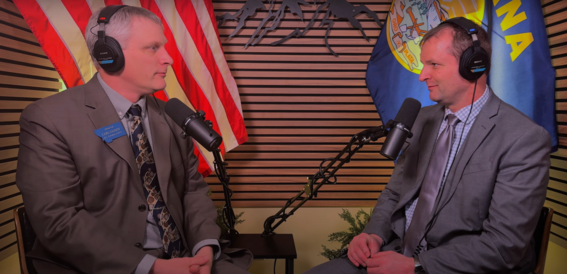
This week on the Montana Majority Report, Senate President Matt Regier (R-Kalispell) sat down with Senator Carl Glimm (R-Kila) to discuss the craziness surrounding this session's state budget. Learn more about how Montana's massive surplus turned into a billion-dollar misalignment by watching the full episode here.
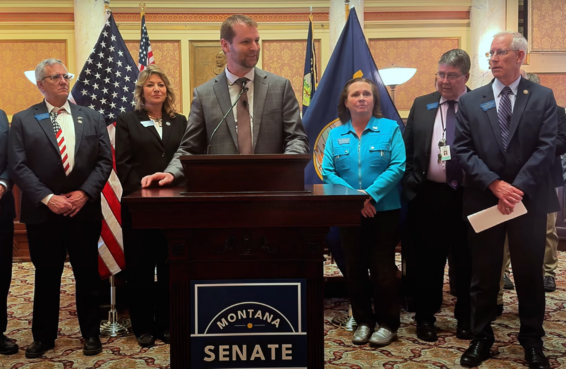
 Also, check out the full end-of-session press conference from Senate Republican leadership here.
 Unlike Washington, D.C., and many bigger states, Montana has a part-time citizen Legislature. Legislators are not professional politicians, they're small business owners, farmers and ranchers, blue collar workers, retirees, and others who take time out of their normal lives to serve you in Helena.
That means voicing your opinions has a real impact. Learn how to contact your legislators, testify at a committee hearing (in person or remotely), and otherwise participate in the legislative process here. Don't know who represents you in the Legislature? You can enter your address in the interactive map here to find out.
 This newsletter is from Senate Republicans in the Montana Legislature. Please encourage your friends and colleagues to sign up for this newsletter and follow our caucus on Facebook, Instagram, and Twitter/X.
|