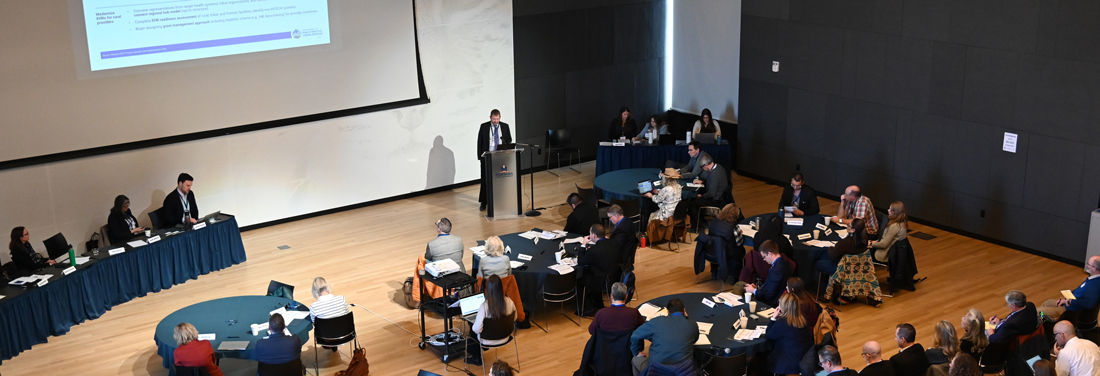
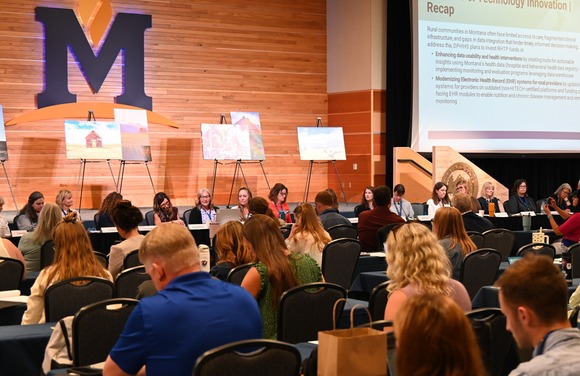
 Stakeholder Advisory Committee, Bozeman, August 2026
 Stakeholder Advisory Committee, Bozeman, August 2026
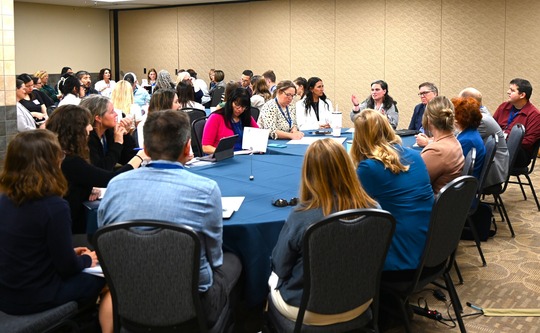 Breakout session, Stakeholder Advisory Committee, Bozeman, August 2026
 Grants will allow rural communities to more effectively serve their residents.
EMS Equipment Grant Awardees to Be Announced in September
The state made $4 million in first-year grants available to help strengthen EMS across rural Montana as part of the RHTP.
Funding proposals were accepted from July to mid-August and were open to EMS agencies located in or serving rural areas of Montana to upgrade ambulances and equipment. Eligibility was based on need, such as age, model, or operational status of current equipment; gaps in patient care; and level and type of service provided by the requesting agency.
Applicants will receive a notification of decision in September. DPHHS plans to issue additional grant opportunities within the next year. Information about RHTP grants is available on the RHTP Grants page.
Statewide Funding Opportunity
DPHHS has published an RFP for qualified vendors to provide a statewide EMDS solution. The state has identified technology innovation and innovative care models as core RHTP initiatives, along with sustainable access, workforce development, and community health and prevention.
A statewide Emergency Medical Dispatch System (EMDS) can support those initiatives by improving rural access to timely emergency response, standardizing call triage and pre-arrival instructions, and strengthening emergency medical coordination across Montana’s geographically dispersed communities.
Currently in Montana, 35 public safety answering points (PSAPs) provide emergency medical dispatch using a state-sponsored system, but that system will soon be obsolete and must be replaced. There are 58 PSAPs in Montana, although the exact number that will participate in the replacement system is unknown at this time.
-
The RFP was posted at bids.mt.gov, Emergency Medical Dispatch, DPHHS-RFP-2027-0692AB.
-
It will be open until Sept. 22, 2026, 2 p.m. MDT.
This procurement is intended to result in a single contract for software, implementation, integration, training, support, maintenance, and related services, subject to the terms of the RFP and available RHTP funding.
RHTP Center of Excellence Advisory Council Appointments Made
RHTP CoE Advisory Council appointments were made in early July after a highly competitive process.
A broad geographic representation was prioritized to ensure voices from across Montana are at the table. Membership was structured to include robust participation from critical access hospitals, recognizing their central role in delivering rural health care, oftentimes in partnership with larger facilities and systems.
The CoE Advisory Council will ensure that Initiative 2 priorities reflect the unique rural needs and opportunities at the county, tribal, and facility level. Initiative 2 priorities include optimizing population health clinical infrastructure while leveraging remote care services and rural provider partnerships to protect and expand access in rural communities.
The CoE Advisory Council will collaborate closely with the selected CoE Strategy and Analytics vendor, providing critical provider and community perspectives, feedback, and recommendations informed by their expertise and first-hand experience with the realities of rural health care delivery in Montana. Members' tenure will last through 2028.
A complete list of council members is available on the RHTP website.
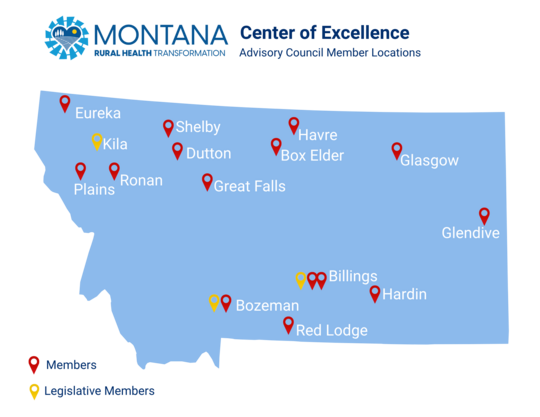 A broad geographic representation ensures voices from across Montana are heard.
RHTP Annual Report Vital to Year 2 Funding
DPHHS submitted the state’s Non-Competing Continuation (NCC) application for Year 2 funding on Aug. 31, per CMS requirements. The annual report is a key input into CMS's decision on Montana's 2027 (Year 2) award amount.
As a recipient of federal financial assistance from the U.S. Department of Health and Human Services (HHS) and CMS, Montana had to demonstrate compliance and accountability for federal funds. The report documents the use of funds by initiative, progress against the state’s metrics and milestones, evidence for completion of program checkpoints, success stories, and sustainability planning.
A major component of the annual report is determining the next year’s funding amount, as the state's award for the next budget period is re-scored annually based on demonstrated progress. The annual report ensures CMS has the relevant data to make funding decisions for subsequent budget periods, which is why it is bundled with the Year 2 budget.

UPDATE
Another successful webinar with statewide workforce stakeholders was held on July 16, 2026. To view past Workforce Stakeholder webinar sessions, please visit the RHTP Communications page.
The next quarterly webinar will be held on Oct. 13, 2026, from 9:30 – 10:30 a.m. Anyone interested in health care and workforce topics is encouraged to register to attend.
In addition to the stakeholder sessions, DLI has opened a Request for Information (RFI) on Health Care Provider Mental Health and Workplace Wellness for Rural Health Workforce Development. Responses to the RFI were due before Aug. 31, 2026. The full RFI can be accessed at bids.mt.gov or on the RHTP RFP page.
RECENT PRESENTATIONS
RHTP MATERIALS
STAY INFORMED
The Rural Health Transformation Program is supported by the Centers for Medicare and Medicaid Services (CMS) of the U.S. Department of Health and Human Services (HHS) as part of a financial assistance award totaling $233,509,358.76 with 100 percent funded by CMS/HHS. The contents are those of the author(s) and do not necessarily represent the official views of, nor an endorsement, by CMS/HHS, or the U.S. Government.
|