Education and Training
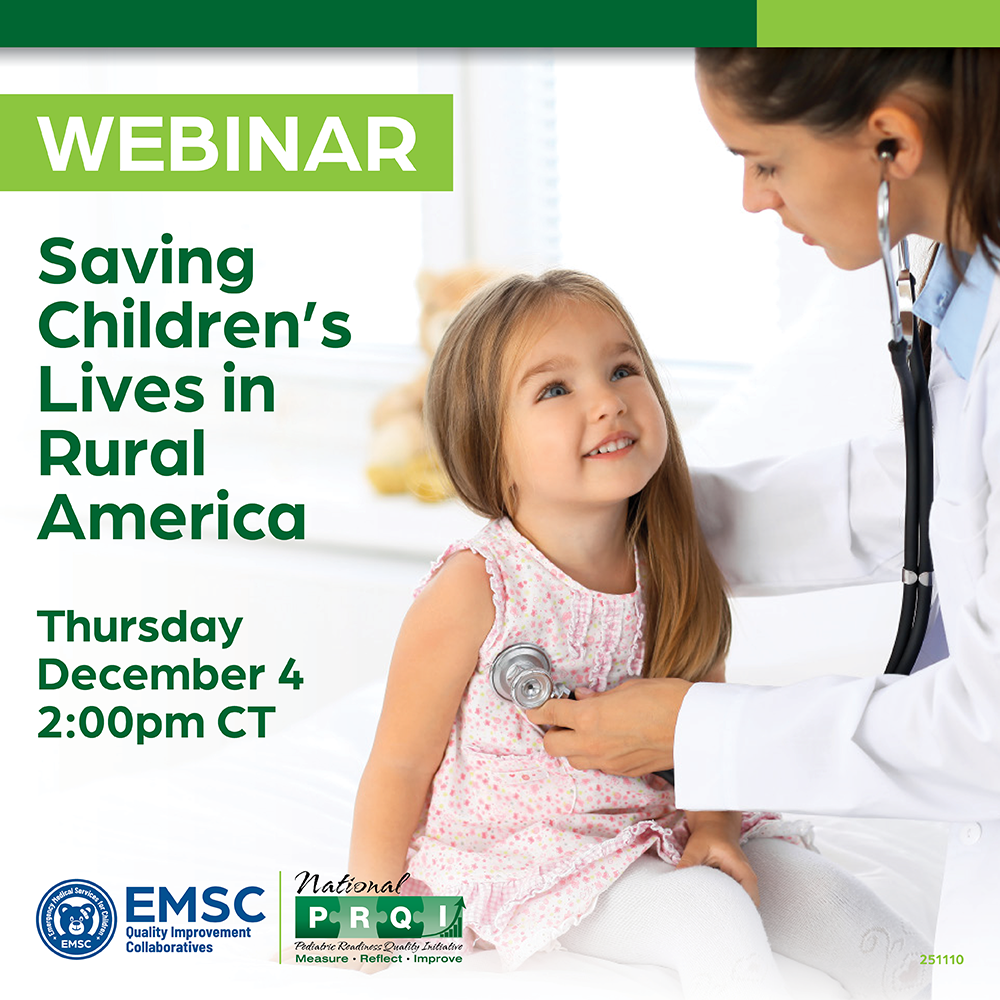
The EMSC Program is launching the next cohort of the National Pediatric Readiness Quality Initiative (NPRQI) Collaborative (formerly known as the Pediatric Readiness Quality Collaborative or PRQC). This FREE collaborative will help ED-based teams develop or strengthen existing pediatric QI plans and, in doing so, improve their Pediatric Readiness — just in time for the 2026 National Pediatric Readiness Project Assessment! The collaborative kicks off in January and is designed specifically for smaller EDs. Participating sites will gain access to NPRQI, a user-friendly platform that tracks 28 pediatric quality metrics, along with expert QI coaching, tailored intervention bundles, and practical tools to support initiatives in head trauma, pain assessment, suicide screening and management, and abnormal vital signs reassessment.
To learn more or register, visit emscimprovement.center/collaboratives/nprqi/.
FDA Recall of Broselow Tapes produced by AirLife Medical
The new Version 3 of 2025 Broselow tape has the following errors in the "CALCULATION BASIS" (found November 2025).
- Flumazenil dosing on one of the dosing tables towards the beginning of the card lists the dose as 0.1 mg/kg. (the dose should be 0.01 mg/kg).
- Vecuronium on one of the dosing tables towards the beginning of the card, for the "Pre-RSI" indication, lists the dose as 0.1 mg/mL (should be mg/kg).
- The Vec dose under the Post-RSI is correct, right below it.
** NOTE: It appears that the calculated dosing in the color tables based on patient weight is correct.
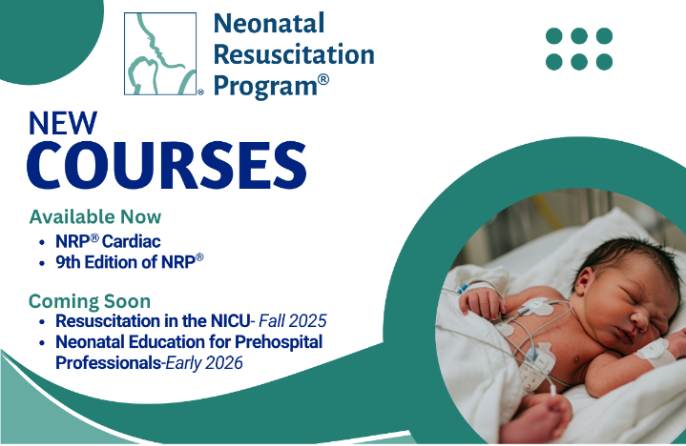
The American Academy of Pediatrics (AAP) will be launching several new courses. The first of these is the 9th Edition Neonatal Resuscitation Program (NRP®) course, which was recently launched in October.
Additionally, another highly anticipated new eLearning course is expected to launch in early 2026. The Neonatal Education for Prehospital Professionals course was designed for prehospital professionals to enhance their knowledge and confidence in assessing and managing neonatal emergencies in the field. This course complements the AAP’s Pediatric Education for Prehospital Professionals (PEPP) program.
Keep an eye out on the Neonatal Education for Prehospital Professionals website for full course details, registration info, and release dates, as great learning opportunities are just around the corner.
Collaborative Strengthens Pediatric Preparedness
The Pediatric Pandemic Network’s Disaster Response Collaborative (DRC) is enhancing pediatric disaster preparedness by helping children’s hospitals refine plans, share best practices, and strengthen coordination across local, state, and regional systems. Building on the Disaster Networking Collaborative, the DRC now includes 100+ hospitals in 40 states and one territory, focusing on key areas from the EMSC’s Checklist of Essential Pediatric Considerations [trm4toyab.cc.rs6.net]: evacuation, pediatric patient tracking and reunification, surge capacity, and triage/infection control.
A “fireside chat” series complements these efforts with expert-led discussions on topics like disaster preparedness and care for children and youth with special healthcare needs (CYSHCN) and children with medical complexity (CMC). All are welcome to attend. Recent and upcoming sessions include:
-
15: Prioritizing CYSHCN and CMC in Disasters
-
18: Managing Pediatric PTSD in Disaster Response
-
19: Disaster Planning for CYSHCN and CMC
View recordings and register for upcoming sessions. [trm4toyab.cc.rs6.net]
Upcoming Meetings & Conferences
December 2nd, 2025
10 am-12 pm MST
The EMSC Advisory Committee is responsible for overseeing the Montana EMSC program, which works to enhance pediatric readiness in emergency departments and EMS/fire agencies across the state.
December's topics:
Trends in Violence among Montana’s Pediatric Population
Lauren Marshman, EMSTS, Research Analyst and Hannah Yang, EMSTS Epidemiologist Supervisor
Montana’s results from the 2024 Prehospital Pediatric Readiness Project Assessment
Kelly Little, EMSC Program Manager
In the News

Mary Fallat, MD, FACS, Urges National Action on Pediatric Trauma Readiness
Are U.S. hospitals truly ready to care for injured children? This critical question took center stage as Mary E. Fallat, MD, FACS, delivered the Scudder Oration on Trauma, “Optimizing Strategies to Improve Trauma and Burn Care for U.S. Children,” as part of the American College of Surgeons (ACS) Clinical Congress. Drawing on decades as a pediatric surgeon and trauma leader, Fallat spotlighted how America’s fragmented trauma and burn systems leave children vulnerable, particularly in rural and underserved areas, and outlined actionable solutions to close those gaps.
At the heart of her message is Pediatric Readiness: ensuring every trauma center, ED, and EMS team is equipped, trained, and connected to provide lifesaving care to children, wherever they are. Read more about the presentation from ACS.
|
Resources
|