|
July 2025 Quarterly Newsletter |
|
Upcoming Events
Diabetes Professional Conference
Where: Helena, MT @ The Delta Hotel
When: October 16 &17, 2025
Register: Montana Diabetes Professional Conference | University of Montana
Online Resources
MT DPHHS Diabetes Hub: MT diabetes maps, stats, content, and more.
MT DSMESSite: A great page created by the MDP to explain diabetes care and education.
MT DPP Site: Learn about pre-diabetes and diabetes prevention. Also, refer to a MT DPP Program.
MT Diabetes Pharmacy Newsletter Published quarterly with content about diabetes medications, technology, and more.
MDP Resources
Statewide access! The Diabetes Prevention Program is available virtually. New cohorts begin monthly. To take the quiz for eligibility and to enroll in an virtual DPP program.
Electronic Diabetes Quality Care Management System (eDQCMS): Ongoing site recruitment. This is a free web-based system to track and enhance your data collection for patients with diabetes and ensure guidelines-based care. Assistance from DPHHS in reporting and throughout the process. Contact Will Gardner for more information.
CONNECT Electronic Referral System: This free bidirectional referral system can enhance your current referral practices. Refer to food banks, safe exercise, and more! Perfect for pharmacists, DCES professionals, LPNs, RNs, and more. Contact Alison Fuller for more information.
Reach out to the MDP
Learn more about our program.
We can offer assistance and education about
Prediabetes
Diabetes Care and Education
Quality Improvement
Electronic documentation
Montana-specific diabetes facts, figures, and stats
Mapping, tracking and additional resources to help you reach patients and participants
Marketing, advertising, and communications related to diabetes and prediabetes

|
Diabetes Care and Education
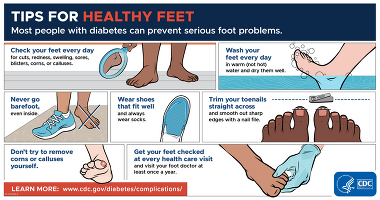
Summer Foot Care Tips for People with Diabetes
Summer can be hard on your feet when you have diabetes. The heat, humidity, dehydration, and even blisters or cracked heels can quickly become serious problems if not treated properly. Paying extra attention to foot care in the summer is especially important.
Diabetes can lead to poor blood circulation and nerve damage which makes it harder for your body to feel pain and to heal wounds. You may not notice small cuts, blisters, sores or infections until they become serious.
In summer, the risks increase due to:
- Walking barefoot or in poor footwear (sandals or flip flops) causing blisters or injuries
- Dehydrated, cracked skin
- Sweaty feet, fungal infections
Tips for caring for your feet:
- Inspect your feet every day to look for any issues. Use a mirror or ask for help if you can’t see the bottoms of your feet.
- Wash and dry your feet well.
- Keep your skin moisturized. Avoid using creams between toes.
- Wear breathable, supportive footwear. Avoid walking barefoot.
- Stay hydrated.
- Trim toenails carefully. Cut toenails straight across. If you have poor flexibility or poor vision, ask for professional assistance.
- Use sunscreen on feet.
- Change socks regularly. Wear cotton socks and change when your feet become sweaty. Moisture-wicking socks are even better on hot days.
Making these simple tips part of your summer diabetes self-care routine will help you to have fun, stay healthy and avoid foot complications. Your Feet and Diabetes | Diabetes | CDC
 Diabetes in the News

Automated Insulin Pump in Type 2 Diabetes
1 in 10 people in the United States have type 2 diabetes and the number continues to increase among children, teens, and young adults. Adults with diabetes have struggled to lower their glucose and A1C levels, with only 50% reaching the recommended goal. Treatment for type 2 diabetes varies and insulin is prescribed within a year of diagnosis in 12.3% of patients.
While new technology has shown to improve outcomes in people with type 1 diabetes, the use of devices such as automated insulin delivery (AID) pumps and continuous glucose monitoring (CGM) is still catching up in people with type 2 diabetes.
A recent clinical trial examined the use of AID in individuals with type 2 diabetes who require insulin therapy. Compared to participants who continued their pretrial insulin-delivery method, those who received AID showed improvement in their A1C, increased time spent in the target glucose range of 70 to 180 mg per deciliter, and decreased their total insulin dose each day. Find more on this study by visiting Automated Insulin Pump in Type 2 Diabetes | New England Journal of Medicine.
|
Diabetes Prevention

On Your Way to Preventing Type 2 Diabetes
Summertime is a perfect time to refresh your eating habits with healthy, seasonal choices that nourish your body and keep you energized. Whether you are firing up the grill, lounging poolside, or packing for a picnic there are plenty of opportunities to eat well and feel great.
Staying hydrated is crucial during hot months. Instead of sugary high calorie drinks try some infused water (add slices of cucumber, lemon, or berries). Eat water-rich fruits like watermelon, strawberries, and cantaloupe.
Savor seasonal produce by visiting your local farmers market, or growing your own. Even a small garden or a few pots on a patio can provide a steady supply of herbs, tomatoes, peppers, or leafy greens. Gardening is not only rewarding but also a great way to stay active and save money on groceries. If you have more than you can eat you can try food preservation by freezing, canning or dehydrating.
Watch out for sneaky sugar in summer treats. Some treats like popsicles, ice cream, and cocktails can sneak in extra sugar. Some better options are frozen fruit bars, homemade smoothies and fresh fruit skewers.
Keep it fun & mindful. Healthy eating doesn’t mean missing out! Try new recipes, invite friends for a healthy BBQ, or host a salad potluck. Focus on balance not perfection.
Remember prevention is powerful. Join a National Diabetes Prevention Program, a proven lifestyle change program that helps participants:
- Lose Weight
- Improve eating Habits
- Increase physical activity
This yearlong program is led by trained lifestyle coaches and offers group support, goal setting, and tools that last a lifetime.
|
Smart Steps

Smart Steps to Get More Exercise
It can be challenging to find time to exercise when juggling a busy schedule, but there could be opportunity to incorporate exercise into your day-to-day activities.
Whether using the stairs instead of the elevator or taking family time outdoors, there are many great ways to get more exercise when feeling limited on time. For more ideas visit No Time for Exercise? Here Are Seven Easy Ways to Move More! | American Heart Association.
Smart Steps for Nutrition Label Reading
Tracking carbohydrates, fiber, added sugar, protein and sodium are essential to balancing meals and making healthy choices.
In the beginning reading Nutrition Facts labels can feel overwhelming and even confusing. Taking small steps to learn this skill can help you make informed food choices essential to preventing and living well with diabetes. Find tips for beginner label reading by visiting How to Read Nutrition Labels: Carbs, Fiber, and Total Carbohydrates.
|
|
|
|
|
|