Churches and Houses of Faith Have a Role in Mental Health
Churches and houses of faith play a vital role in society and in our communities. The nature of that role often depends on whether attendees desire to actively engage with their community rather than simply exist within it.
A Lifeway Research article from December 11, 2020, titled “Mental Health Declines Among Americans, Except Weekly Churchgoers,” states that Gallup has been polling Americans since 2001, and by 2020, self-reported emotional well-being had declined by 34%. I fear that a current post-COVID poll would reveal an even more concerning picture of mental health in America.
The article also notes that “65% of churchgoing family members of those with mental illness want their church to talk openly about mental illness.” In contrast, 49% of pastors say they never or rarely speak to their congregations about mental illness. I'm not highlighting this as a criticism of pastors—I'd likely have to count myself among them when I was in full-time ministry.
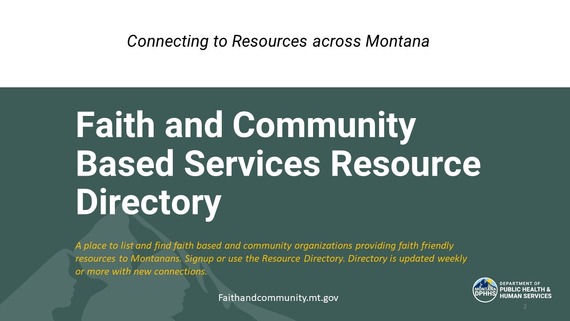
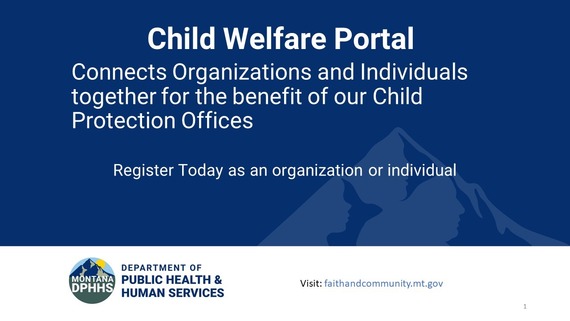
Mental health challenges are part of our society. Whether or not we believe these issues are being addressed appropriately, nearly every person attending a house of faith is affected in some way. The Office of Faith and Community Based Services (OFCBS) is committed to bringing resources to houses of worship to help address these pressing social issues impacting Montanans.
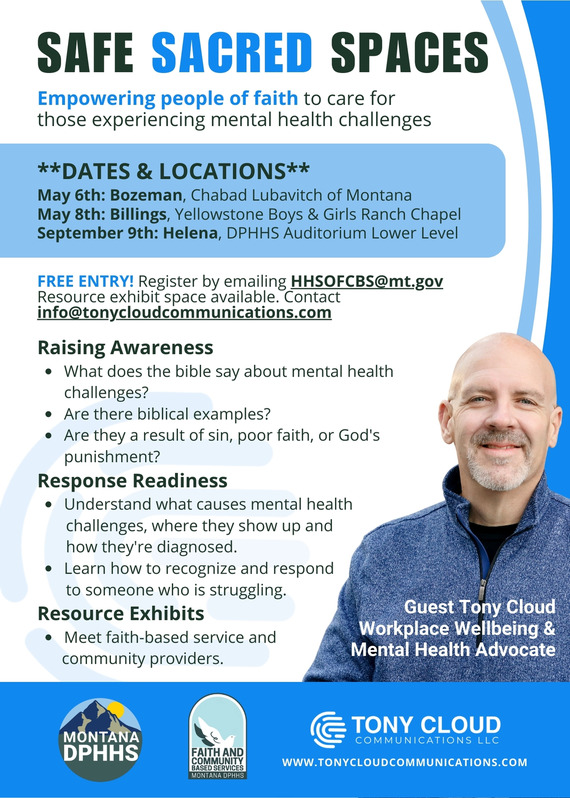
Mental health is an area where churches, houses of worship, and faith-based nonprofits can make a real difference in meeting the needs of their communities and congregations. To that end, OFCBS has partnered with Tony Cloud and Tony Cloud Communications, LLC to bring a four-location tour to Montana. This focused tour is designed to empower people of faith to care for those experiencing mental health challenges.
Rob Lawler, HHSOFCBS@mt.gov
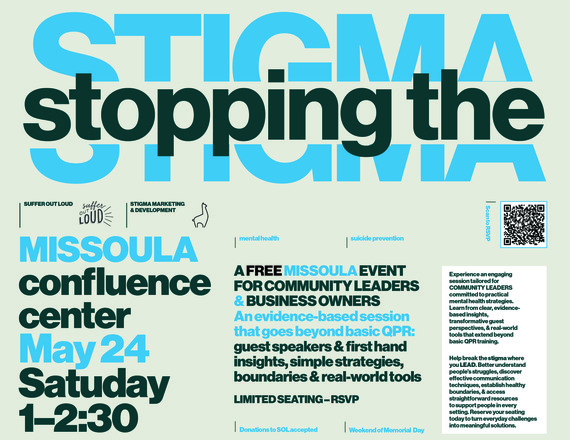
Check out and sign up for your free training below.
|