FROM THE FCBS COORDINATOR
May was a busy month as I toured Montana hosting a series of six regional summits in western Montana with goals of introducing this new office, creating a space to network and share resources, and gathering feedback from participants about the needs facing local communities. There were over 200 attendees present during these summits, who shared some common themes including:
- A desire to know about events, trainings, programs and services across Montana. The newsletter, website and training calendar are a great way to stay informed and please continue to share your events, trainings and services with the Office of Faith and Community Based Services so they can be shared out to others!
- A need for more training in mental health/suicide prevention and postvention. The office is currently working with a mental health provider to offer a series of trainings targeted specifically for faith communities to address this request. More information found later in the newsletter!
- A request to make the summits an annual event to continue the networking and resource sharing within communities with a topical focus for each summit to allow for a deeper dive into the issue and resources. Annual summits will also support the office's commitment to identifying successful faith and community-based models and ensuring that organizations and communities are aware of what's working across Montana.
- A request to know about community and statewide resources, with an option for a searchable database and inventory of resources that can help identify statewide resource gaps.
- A new understanding of how connecting with statewide systemic programs and supports helps local communities maximize their local resources.
- As communities work to recover from the social, physical, mental and economic impacts from COVID 19, there is a desire for training and supports in trauma and secondary trauma.
- A desire to learn from other communities on strategies to address housing insecurity and homelessness. If you are part of a workgroup or initiative in your community that is working to address this issue, we would love to hear from you so we can share with other communities.
Do you have a program or activity you would like to implement, but need resources, ideas or volunteers? Are you looking for resources or training to better equip yourself to provide local ministry to those in need? Do you have a question about a health-related topic impacting your community and need resources? Do you have a successful model in your community that can be replicated elsewhere? Reach out and let me know how I can help you find and connect with the resources you need to carry out your human service missions.
Finally, please note: all information, resources and links shared in this newsletter and on the website can be copied and used in your own communications with your congregations and organizations. The contents of this publication function as a tool for each of you to serve the people in your communities.
Contact
Tracy Moseman
Faith and Community Based Services Coordinator
Montana Department of Public Health and Human Services
(406) 202-9465
tracy.moseman@mt.gov
|
Mental Health Training Available for Faith Communities Across Montana!
One in four people in America will go to their spiritual leader before a professional when they are experiencing a crisis. Do you know the questions to ask to determine if someone is suicidal? Do you know how to access the Montana Crisis Hotline to get someone connected with resources in Montana?
The Montana Department of Public Health and Human Services has recently awarded funds to Guided Healing Trails located in Missoula Montana for the purpose of providing evidenced based training to faith leaders in Montana to equip them to respond to mental health crisis.
Question, Persuade, Refer (QPR) Training is a three step process used to intervene in a mental health emergency. Just like CPR, this 90 minute course equips attendees to have the skills to respond to a crisis and get the person referred to help. There are two options for participation in this training:
- Contact Alicia Kuhlman, ght.alicia1@gmail.com or 406-540-4120 to schedule a training for members of your faith community. You will need to coordinate logistics and marketing within your faith community for this free event.
- Register to attend one of the following virtual sessions open to faith communities across Montana by using this link: bit.ly/QPR_registration
Sessions will be held on the following dates from 11:30 AM – 1:00 PM
2022 Dates: Aug. 18, Sept. 15, Oct. 20, Nov. 17
2023 Dates: Jan. 19, Feb. 16, Mar. 16, April 20, May 18, June 15, or July 20
|
Registration NOW Open for Virtual Round Table Discussion for Organizations Serving Native Americans in Montana
August 4, 2022 11:30 Am - 1:30 PM-Virtual Event
The new Office of Faith and Community Based Services (FCBS) was created in January 2022 to serve as a conduit between DPHHS, faith communities and community-based organizations to support communication and service delivery. This round table discussion will focus on organizations specifically serving Native American populations with the goals of sharing about this new office, and also hearing from participants about how FCBS can support their work.
As we look to expand upon programs and services across Montana – as well as identify those that are working in your communities and could potentially be replicated – you have valuable insights to share as we continue to stand up this new office. We hope you will join Chief of Staff, Charlie Brereton and Tracy Moseman from the Office of Faith and Community Based Services for this conversation.
If you have questions, or would like to register for the virtual event, please contact Tracy Moseman at tracy.moseman@mt.gov .
IN THE NEWS
State, Local Official Raise Awareness About Elder Abuse
According to the Department of Public Health and Human Services (DPHHS), about 4,900 Montanans were victims of elder abuse in 2021, an increase from 4,500 Montanans in 2020. Faith and community organizations can play a critical role in helping prevent elder abuse in their local communities, and to report it to officials when they suspect abuse is occurring.
Elder abuse refers to intentional or negligent acts by a caregiver or trusted individual that causes harm to an older person. It takes many forms, including neglect, physical, sexual or emotional abuse, and financial exploitation. Adult Protective Services (APS) is an investigation unit designed to protect vulnerable adults, and provide protective services through support by local, county and state programs.
Physical signs of abuse and neglect include isolation from friends and other family members, unexplained bruising, burns, or scars, dirty appearance or changes due to medication. One significant sign is the way a caregiver/family member treats the elder in public, such as pressuring to pay for items or speaking to the elder in a demeaning manner. “We need to educate and encourage the public to report such signs to APS or law enforcement,” said Barb Smith, Administrator, DPHHS Senior and Long Term Care Division. “Knowing the signs can protect someone from further abuse or even death.”
APS investigates cases involving adults aged 60 and older and adults with disabilities age 18-59. While neglect and self-neglect are both investigated and substantiated most often, financial exploitation is also on the rise nationally and in Montana.
Officials say the following measures can help prevent elder abuse:
- Review all legal documents, especially estate planning documents with a legal professional.
- Make sure to have a valid, and protective Health and Financial Durable Powers of Attorney. Creating specific, limited and well-drafted documents can help protect you against financial exploitation and make it easier to honor your wishes, when you are not able to speak for yourself.
- Draft a detailed plan and communicate it with friends and family members. This is a vital step to prevent future abuse, as well as ease strain on your family and caregivers.
- Estate planning documents should be reviewed periodically, but especially anytime there is a death of a named person, a divorce, a new decade passes, a new diagnosis is received or there is any significant decline in physical or mental well-being. For assistance with legal documents, Montanans are encouraged to contact the Legal Services Developer Program.
AARP has also made available a Montana-specific tip sheet with valuable elder abuse prevention information.
To report abuse, neglect or exploitation call Adult Protective Services intake at 1-844-277-9300 or go to www.aps.mt.gov.
Visit here for the complete press release from DPHHS.
|

Launch of New Montana 988 Suicide Prevention and Mental Health Crisis Lifeline
Montana 988 is part of the National 988 Suicide & Crisis Lifeline network of over 200 local, independent crisis centers equipped to help people in mental health related distress or experiencing a suicidal crisis 24 hours a day, 7 days a week, across the U.S.
Calls made to 988 in Montana are routed to one of three independent crisis call centers: Voices of Hope in Great Falls, The Help Center in Bozeman, and the Western Montana Mental Health Lifeline Call Center in Missoula.
“Together, these crisis call centers provide coverage to every county in Montana,” DPHHS Director Adam Meier said. The call centers are staffed with trained mental health and crisis counselors who work in Montana.
The 988 Lifeline will launch Saturday, July 16, 2022. Veterans who dial 988 will be given a prompt to dial “1” to be routed to the Veteran Crisis Line.
Over the past three years, the Montana crisis call centers have averaged about 10,000 calls per year. More than 90 percent of the calls made in Montana are answered in Montana, with fewer than ten percent sent to another call center in the national network backup system.
According to the National Association on Mental Illness, about 163,000 Montanans have a mental health condition, and more than 573,000 Montanans live in an area where there is a shortage of mental health professionals.
According to the Centers for Disease Control and Prevention, Montana is third in the nation in per capita suicides, and suicide is one of the leading causes of death in our state.
More details on the 988 Suicide Prevention and Mental Health Crisis Lifeline.
You can read the full 988 launch press release here.
|
FAITH AND COMMUNITY
IN ACTION
The Phoenix needs your help expanding to create a supportive recovery community across Montana!
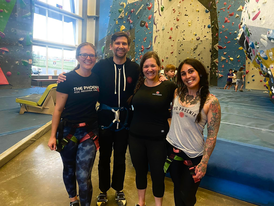
The Phoenix is a nonprofit organization that fosters a supportive community for individuals recovering from substance use. The Phoenix offers free programs to provide critical support and connection to individuals in recovery from substance use. All programs are free, and the only requirement to participate is 48 hours of continuous sobriety. The Phoenix offers programs to the public as well as private partnerships between detention facilities and treatment centers. Since 2006, The Phoenix’s free sober active community has inspired more than 100,000 people across America to believe they have the strength to rise from the ashes of addiction through the support of those who are walking that very same path. Through its brick-and-mortar locations in major municipalities across the United States, such as Boston, MA, and Denver, CO, along with an extensive online offering of live-stream and virtual programming, the nonprofit organization aims to redefine the addiction recovery process through its innovative model that is designed to facilitate human connection in a supportive environment and eradicate the stigma of substance use. Physical and other group-focused activity is the mechanism through which The Phoenix introduces individuals and families to the safe and supportive ‘sober active community’ at the heart of the program’s success.
There is a Phoenix gym in Billings but, most local businesses donate space to offer free Phoenix programs. Staff and volunteers are currently leading runs and walks at the Rattlesnake trailhead in Missoula, basketball at City Life Community Center in Missoula; yoga at Black Orchid and Bootcamp at Yellowstone Fitness in Billings; indoor climbing at Spire in Bozeman; cardio kickboxing at the Livingston Civic Center, yoga at the Movement Collaborative in Livingston, and CrossFit at CrossFit Livingston.
All our events are led by a volunteer or staff member trained in CPR, naloxone use and trauma informed practices. We are always looking to train volunteers to grow programs within their local communities. At the Phoenix, we know there is no one right way to recovery and programming can vary across different regions. Although The Phoenix began as a sober active community, we welcome individuals interested in starting music groups, coffee meetings and art sessions as well as our traditional programming.
Anyone can start a program in their local community by signing up to be a volunteer on the website, or by emailing Kelly Miller. Once someone signs up to be a volunteer, they will be contacted by a staff member to walk through the process of starting a local program in your community. To learn more about programs or how to get involved, email Montana’s Program Manager, Kelly Miller at kmiller@thephoenix.org visit www.thephoenix.org.
|

DID YOU KNOW?
College students from across Montana can benefit from Bounty of the Bridgers Food Pantry at Montana State University!
The Montana State University Food Pantry, also known as Bounty of the Bridgers, is a nonprofit, on-campus food pantry that was started by students in 2017 to battle food insecurity. It has since grown to a fully developed program housed within the Office of Health Advancement and provides supplemental and emergency food assistance to students as well as faculty, staff, and family members of university affiliates.
Since 2017, new food security programs have been established within the Bounty of the Bridgers program including Food Security Scholarships, which offer a 25-swipe commuter meal plan to students who are food insecure, and the Grab ‘N Go Snack Program which provides 13 offices around campus with free snacks throughout the year so that a hungry student in need is always near a food resource to get them through the day.
This year Margaret Davies, an alumna of Montana State University, took over the operations of the food pantry and its related services. She hopes to expand the Bounty of the Bridgers program into a basic needs hub on campus, assisting students with broader food security resources including Supplemental Nutrition Assistance Program (SNAP) application assistance, Medicaid assistance, low-income housing service navigation, and more.
To learn more about the Bounty of the Bridgers program, donate, or volunteer, visit: Bounty of the Bridgers.
|
RESOURCE OF THE MONTH
Montana Kinship Navigator Program
- Are YOU caring for another relative’s child?
- Do you SUPPORT caregivers who care for other relative’s children??
- Do you KNOW someone who could use a hand navigating resources for kinship caregivers??
- If you and answered YES to any of these, then the Montana Kinship Navigator Program may offer solutions!
Kinship Caregivers are people who have taken on the responsibility of temporarily or permanently raising their relatives’ children. This is often grandchildren, nieces, nephews, siblings, cousins, or other close relationships. In 2002, the Montana Grandparents Raising Grandchildren Project began a 17 year program designed to provide support, referrals, and connect resources to Montana’s kin grandparent caregivers. In 2019, the project was expanded to include any kin structures raising their relative children, and rebranded ourselves as the MT Kinship Navigator Program. We strive to connect relative caregivers to resources, services, and research-based education.
If you or someone you know is caring for another relative’s child, you can use our new Montana Kinship Navigator Referral Form, or send the caregiver's contact information to Program Manager – Heidi Lester.
Our Navigators work closely with family systems already in place to help caregivers obtain, utilize, and sustain the support and help they may need. Questions, or to gain access to the Referral Link, Contact Heidi at Heidi.lester@montana.edu, or leave a voicemail at 406-600-2880.
|