FROM THE FCBS COORDINATOR
Spring is my favorite time of year to travel across Montana. While the white snow still blankets the mountain tops, the green pastures full of baby animals span for miles and remind me why I am so fortunate to call Montana home.
During my travels in April and May, I visited with over 400 faith leaders, community organizations, tribal leaders, and state policy makers. I heard leaders talk about issues facing the people they serve including mental health and substance abuse, housing insecurity and homelessness, violence and trauma, child welfare issues and food insecurity to name a few. One theme that repeated across Montana was the stress many pastors, rabbis, priests, reverends, deacons, elders, and other spiritual leaders are shouldering as a result of their unwavering dedication to provide spiritual care to their communities through the past two years of the pandemic. Their heart for the people they serve finds them now helping families process grief and loss from a death that occurred months ago, but because of the pandemic they are just now able to gather for the memorial service.
Faith leaders in Montana are tired, and like educators and those in health care, I'm hearing of high rates of retirements and people ready to leave the profession. But now, more than ever, Montanans need these leaders for direction and support. One theme that emerged through these visits? Collaboration and coordination between faith communities, local and state health departments, non profits, and faith based organizations is crucial to support the faith communities who are supporting the health and safety needs of thousands of people in Montana communities.
Beyond the spring travel, you have a commitment that the Office of Faith and Community Based Services is here to support you in connecting, collaborating, coordinating, and resourcing, together with others across Montana in your service to your community. You also have a commitment that we will continue to listen and learn about what is working well in your communities, the resource gaps that exist, and how DPHHS can help fill these voids by better adapting to the needs of your organization.
Do you have a program or activity you would like to implement, but need resources, ideas or volunteers? Are you looking for resources or training to better equip yourself to provide local ministry to those in need? Do you have a question about a health-related topic impacting your community and need resources? Do you have a successful model in your community that can be replicated elsewhere? Reach out and let me know how I can help you find and connect with the resources you need to carry out your human service missions.
Finally, please note, all information, resources and links shared in this newsletter and on the website can be copied and used in your own communications with your congregations and organizations. The contents of this publication serve as a tool for each of you to serve the people in your communities.
Contact
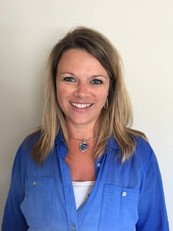
Tracy Moseman Faith and Community Based Services Coordinator
Montana Department of Public Health and Human Services
(406) 202-9465 tracy.moseman@mt.gov
|
IN THE NEWS
The Angel Initiative Creates New Partnerships to Increase Access to Treatment
Data tells us one in four individuals will go to their faith leader when they are experiencing a crisis before they go to a professional for help. As a result, it is critical for those of you serving on the front lines providing spiritual and pastoral care to your communities to know about the newly launched Angel Initiative initiative in Montana.
A collaborative effort among Gov. Gianforte, DPHHS, participating local law enforcement agencies, and treatment providers, the Angel Initiative allows an individual struggling with addiction and substance use to go into any participating law enforcement office and receive assistance to get connected with treatment.
A toll-free number, the Angel Line, connects law enforcement to a treatment provider within the closest proximity to assess the level of care a participant may need. If the participant meets criteria for residential treatment, the Angel Initiative will assist in evaluating transportation needs with the goal of getting the participant to treatment as soon as possible.
Sheriff Linder said the impact of substance use touches all of Montana, and Yellowstone County is no different. “The impacts are far reaching, but providing an additional pathway to treatment is crucial,” he said. “We're optimistic about the potential the Angel Initiative brings to the table.”
DPHHS has worked with the Behavioral Health Alliance of Montana to enroll substance use treatment providers. Kosovich, who joined the governor, director, and sheriff at today's event, is one of 10 participating providers that collectively serve 33 counties. You can read the press release here.
Information about the new program is available at angelinitiative.mt.gov.
|
FAITH AND COMMUNITY
IN ACTION
CHUNCH - It’s What’s For Lunch!
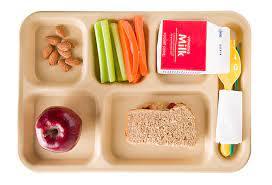
At 7:00 AM each Friday morning, a group of volunteers at Belgrade Alliance Church begin preparations for Chunch. For almost ten years, high school students from Belgrade High School have anticipated their famous mac and cheese or sloppy joes for lunch. With 180-200 kids eating lunch each week, this project has grown so large that Chunch now has a line item in the church budget.
What started partially in response to the cafeteria at the high school being too small to accommodate all students at lunch, Belgrade Alliance Church started Chunch, an opportunity for students to come to the church for a free lunch. While the original purpose was to ensure no student went hungry, the program has evolved into much more.
“We want our facility to be a place where kids feel cared about and connect with caring adults, regardless of their beliefs,” says Millie Veltkamp, Children’s Director and secretary for the church. “The people that cook and serve are mostly retired, and they build relationships with the kids. They are not seen as an authority figure because of the age difference, and kids see them more as mentors.
The volunteers get to know the kids and ask them about their sports, what they did on the weekend, and just use it as a time to check in. We don’t preach or provide lessons because we don’t want them feeling coerced or trapped, but we want to be the light in the community and don’t want kids going hungry. We do have a prayer basket set out that kids can put requests in if they wish.”
Chunch had to take a hiatus during COVID, but plans are underway to resume at the start of the 2022 school year. If your faith or community organization is interested in learning more, Millie Veltkamp would welcome a conversation to share their successes and lessons learned. She may be reached at 406-388-6030.
|
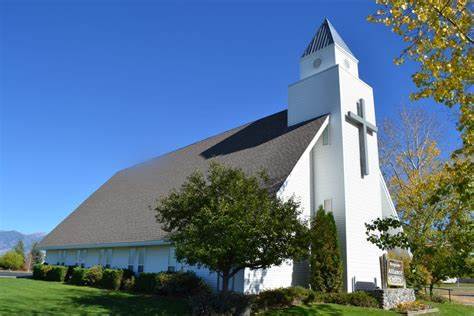 |
Belgrade Alliance Church, where students gather for Chunch.

DID YOU KNOW?
LIFTS: a new parenting tool for Montanans
LIFTS, or Linking Infants and Families to Supports, was created to link Montana families who are expecting or raising young ones to supports, resources, and other families.
The LIFTS magazine can be viewed on the website, hmhb-lifts.org. The publication contains true stories about parenthood, to help readers feel more connected to the incredible families and resources across Montana.
The website also includes a searchable resource data base for programs and services in your area along with an events calendar.
If you would like assistance, call their anonymous warmline at (406) 430-9100, Monday through Friday, from 9:00 am to 5:00 pm. If you call after hours, leave a message and they will return your call within 1-2 business days.
|
RESOURCE OF THE MONTH
Montana 2-1-1 provides information and connects people to resources for non-emergency needs, via an easy-to-remember phone number (2-1-1) and a website (monana211.org).
-
Website: Montana211.org is a mobile friendly website that can be easily searched for your city's non-profit and government services. Search by organization name or keyword, based on the services you need.
-
By phone: The 2-1-1 phone number works in some areas of Montana. When dialing 2-1-1 in those areas a trained resource specialist will help you navigate services in your area.
- Montana 211 is part of a national network.
- 36 out of 56 counties in Montana have 211 call service available.
- As of 2017, more than 240 Call Centers operate 211 programs in all 50 states, Washington D.C., and Puerto Rico.
- As a network, 211 responds to over 16 million requests for help with connections to human services, and on average provide returns of 136% to 260% on every dollar invested (through connection to the right services at the right time).
- 211 Centers undergo rigorous accreditation by the Alliance for Information and Referral Systems (AIRS).
- Montana 211 was established in Montana Code Annotated in 2005 to provide easy, single point access to health and human service resources for Montana citizens, and to provide coordination and information in times of disaster
- 211 is operated in Montana by four nonprofits, each covering a region. See Contact Us Page

|