Montana Diabetes Program Updates
We're back!!
Mark your calendars, October 7-8, at the Double Tree by Hilton in Billings, MT for our upcoming, 24th Annual Diabetes Professional Conference. The conference will be held in person with a virtual option available.
Please join us! More information is available and registration will open August 2nd.
Award Nominees Requested
We are looking for nominations! Do you know an individual who has gone above and beyond in the area of diabetes prevention or diabetes management? Perhaps a facility that has made great efforts towards improvements related to their diabetes care? We want to hear from you! Please reach out to Melissa for a nomination form and join our annual conference in October to celebrate the winners.
Health Behavior Change Webinar
In case you missed the recent webinar sponsored by the Montana Asthma Control Program, Health Behavior Change and the Transtheoretical Model, the recording is available until August 13th. This has great content to understand stages of change and how to help others into the next stage of positive change. To receive 1 CE approved by the MT Board of Pharmacy (also applicable for nurses) for this webinar please complete this evaluation.
Diabetes Care and Education
2021 marks the 100th anniversary of the discovery of insulin, a truly landmark moment in medical history that has transformed diabetes from being a death sentence into a chronic and manageable condition. We are celebrating this milestone by continuing to advance awareness of recognizing the signs and symptoms of Type 1 diabetes in order to save lives and reduce the dangerous health consequences of unrecognized type 1 diabetes.
Recognizing the Symptoms of Type 1 Diabetes Can Save a Life!
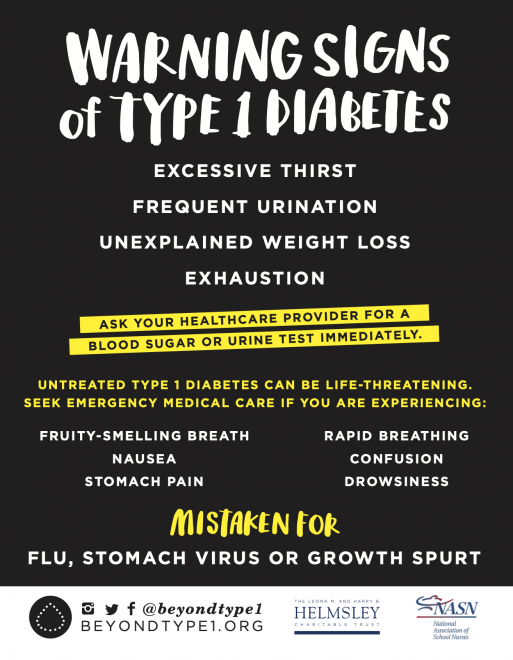 Type 1 diabetes can occur to anyone – at any age – and is an autoimmune condition where the body’s own immune system attacks the insulin-producing beta cells of the pancreas. Type 1 diabetes usually develops gradually as the body’s insulin production decreases, but symptoms may appear quite rapidly when blood sugar levels rise and insulin production is outpaced. Symptoms can be mistaken for the flu and delayed diagnosis can have serious health consequences.
Early Symptoms of Type 1 diabetes include:
- unquenchable thirst
- frequent urination
- in babies and toddlers, heavy, wet diapers
- in children with no previous concerns, sudden bedwetting
- weight loss (despite an increased appetite)
- exhaustion and decreased energy levels
- blurry vision
- a fruity smell to the breath
More advanced symptoms include:
- stomach pain
- fatigue or weakness
- nausea or vomiting
- rapid, heavy breathing
- loss of consciousness
New diagnosed cases of type 1 diabetes in the US have significantly increased. Data from the SEARCH for Diabetes in Youth Study indicated that during 2014–2015, the estimated annual number of newly diagnosed cases in the United States included:
- 18,291 children and adolescents younger than age 20 years with type 1 diabetes.
- 5,758 children and adolescents age 10 to 19 years with type 2 diabetes
For more information on statistics related to type 1 diabetes, please see this 2020 report from the Centers for Disease Control and Prevention.
What can you do? Be aware of the warning signs of type 1 diabetes and encourage individuals, parents, families to seek immediate medical care if these symptoms are present in someone they know and love. Don’t delay – it could save a life.
Diabetes Prevention Program
The Unfortunate Rise of Type 2 Diabetes in American Youth
Type 2 diabetes was once referred to as “adult-onset diabetes” because it was such a rare occurrence in youth. Unfortunately, the incidence of type 2 diabetes in children and adolescents has dramatically increased in the last 20 years. It is estimated that 5,000 new youth cases are diagnosed per year in the US with prevalence increasing with age, tripling from age 10-14 years to 15-18 years and with 60% higher prevalence in adolescent girls. Youth-onset type 2 diabetes consensus report
According to the CDC National Center for Health Statistics (NCHS) data brief, one third of American youth are overweight or obese, a risk factor associated with type 2 diabetes in youth.
 Obesity rates for children and adolescents aged 2-19 years in 2017-2018:
- About 14.4 million children and adolescents were obese.
- Obesity prevalence was 13.4% among 2- to 5-year-olds, 20.3% among 6- to 11-year-olds, and 21.2% among 12- to 19-year-olds.
- Obesity prevalence was 25.6% among Hispanic children, 24.2% among non-Hispanic Black children, 16.1% among non-Hispanic White children, and 8.7% among non-Hispanic Asian children.
What’s the connection between type 2 diabetes and overweight/obesity?
People (adults and youth) who are overweight, especially if it is belly fat, are more likely to develop insulin resistance; a condition where the body either does not produce enough insulin or the cells are no longer sensitive enough to insulin to maintain normal blood glucose levels. This condition can set the stage for developing type 2 diabetes.
Additional risk factors for youth and type 2 diabetes include
- having a family member with type 2 diabetes
- being born to a mom with gestational diabetes
- being African or Asian American, Hispanic/LatinX, Native American/Alaskan Native, or Pacific Islander
If a child is overweight and has any of the risk factors above, talk to their doctor about getting their blood sugar tested.
 Want to learn more? Click the image to watch a short video on youth and diabetes.
Quality Improvement

The U.S. Department of Education reports that 130 million Americans read below a sixth grade level. This equals more than half (54%) of adults in our country.
Using plain language is a key way to improve audience understanding. This is especially important when communicating with children. Some tips for plain language include:
- Important messages come first
- Substitute words
- Give examples in your explanation
- Avoid jargon or other technical terms
- Keep the flow of information logical
Literacy levels are not always obvious. Both children and adults may have well-honed coping skills to hide a low literacy level. Applying plain language through all communications, both written and verbal, is a great way to ensure your audience receives the message you intend.
|
|