Montana Diabetes Program Updates
In case you missed it!
Watch Dr. Neil Kaminsky's webinar on COVID-19, Diabetes, and Metabolic Syndrome.
Click the image to link to the video.
|
Epidemiology Supervisor, Hallie Koeppen, has left the MDP to pursue an exciting, different path in her career. We wish her well in her new endeavors. If you have any questions about diabetes and data please consider reaching out to epidemiologist, Erika Karcher.
Diabetes Care and Education
Diabetes Care and Education Specialists (DCES)
This is the new title for professionals that used to be referred to as ‘diabetes educators.’ It aligns better with the work that DCES’s do – both providing tailored education and clinical care to meet the individualized needs of those with diabetes and also the whole spectrum of cardiometabolic conditions – obesity, prediabetes, diabetes, and co-existing complications or conditions. They are experts in diabetes self-management, care, education and support, and they are critical member of the care team serving people with diabetes.
Diabetes Self-Management Education and Support (DSMES) is the collaborative and ongoing process of facilitating the knowledge, skill, and ability necessary for diabetes self-care. DSMES is included in the American Diabetes Association (ADA) Standards of Medical Care for Diabetes, and has been shown to:
- Provide critical education and support for implementing treatment plans
- Reduce emergency department visits, hospital admissions, and readmissions
- Reduce hypoglycemia
- Reduce all-cause mortality
- Reduce A1C by up to 1%
- Promote healthy behaviors
- Address weight maintenance or weight loss
- Enhance self-efficacy and empowerment
- Decrease diabetes distress
- Improve quality of life

What can providers and care team members do to help their patients receive DSMES?
There are 4 critical times to assess and refer to DSMES*:
- At diagnosis
- Annually, and when treatment goals are not being met
- When diabetes treatment changes, complications develop, or when there are other changes that impact diabetes management
- When there are life changes (changes in living arrangements, provider, insurance, etc)
Have a positive conversation with your patients and their family members about the importance of DSMES to their treatment plan. Discuss that it’s part of providing quality diabetes care, and that it is an ongoing process (not a one-time thing). It can make a huge difference in whether a person chooses to make that appointment to see a diabetes care and education specialist.
|
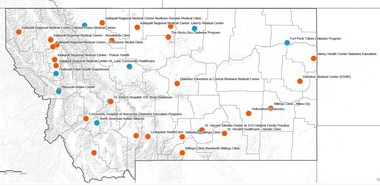 Where do I find a Diabetes Self-Management Education Program for my patients?
The Montana Diabetes Program online Hub has many resources, including an interactive map, showing the locations of DSMES programs throughout Montana. Keep clicking on the community on the map to click through and view all the programs available including telehealth options.
Contact Marci for any assistance or questions about DSMES
Diabetes Prevention Program
Do you know someone who may benefit from participation in a Diabetes Prevention Program (DPP)? While patients can self-refer, they may be more serious about participating if referred by their healthcare provider.
Eligibility criteria to participate in the National DPP lifestyle change program:
Adults aged 18 years or older with BMI of 25 or greater (23 or greater if Asian).
Plus
One or more of the following risk factors for cardiovascular disease and type 2 diabetes:
Fasting glucose of 100-125 mg/dL
A1C between 5.7% and 6.4%
Blood pressure of at least 130/80 mmHg or treatment
Triglycerides greater than 150 mg/dL
LDL cholesterol greater than130 mg/dL or treatment
HDL cholesterol less than 40 mg/dL for men, less than 50 mg/dL for women or treatment
History of gestational diabetes mellitus
Screen positive for prediabetes based on the Pre-Diabetes Risk Test
 |
|
Please feel free to reach out to Sonja for more information. We also encourage you to considering adding this self-referral widget to your website. |
 Click the link to watch a great video about one woman's successful pre-diabetes journey.
Quality Improvement
You're already an expert!
Consider the last challenge you encountered. You probably planned how you would move past this challenge, tried your approach, then either adjusted accordingly or considered the approach a success. That is a Plan Do Study Act Cycle (PDSA)!
PDSA cycles can be large or small and encompass entire organizations or a small fraction of an individual's day. This technique is fundamental in quality improvement work and can be used to create a culture of quality at your workplace.
If you have a challenge, large or small, that you would like to overcome regarding diabetes care and education consider reaching out to Jennifer and the Montana Diabetes Program. We are here to help!
|
Please share this newsletter with friends and colleagues, encourage them to
|