Flying a Plane Without Lessons
In order to fly an airplane or even drive a car one needs to learn what buttons to punch and pedals to push before the journey begins or it probably won’t end well. Healthy living with diabetes requires, at a minimum, some knowledge of the condition, hard work, a good diabetes care team, and support of loved ones, family members, or peers with diabetes. In the end, the buck stops with the person with diabetes. Without initial and ongoing education, the management of this multifactorial condition remains a mystery for most people, no matter their level of commitment to good health. Diabetes Self -Management Education Services (DSMES) is not a new concept.
Foundations of Diabetes Education
 |
|
“the [person with diabetes] who knows the most lives the longest”
With this blunt yet accurate quote, Dr. Elliot Joslin was the first doctor in the United States to specialize in treating diabetes. As the founder of the Joslin Diabetes Center, he was also, arguably, the first person to talk about diabetes as a self-managed condition. In the 1920s, he and his staff became the first diabetes educators, teaching self-management techniques. (Image source)
|
Current Education
The American Association of Diabetes Care and Education Specialists (ADCES) recommends that people with diabetes focus on seven health care behaviors, beyond the “education” part of diabetes management. These practices, the importance of person-centered care, and quality life are stressed the AADE7 Health Care Behaviors.
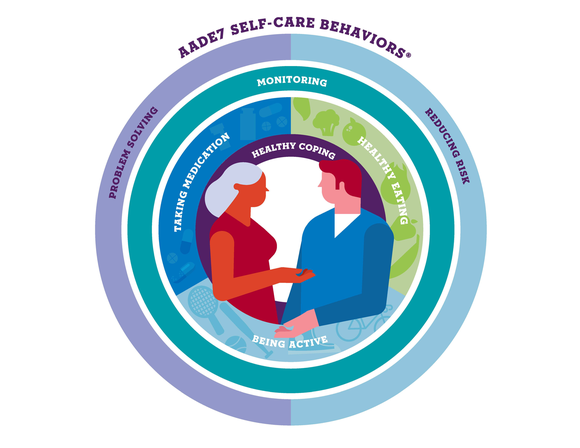
“In accordance with the national standards for diabetes self-management education and support, all people with diabetes should participate in diabetes self-management education and receive the support needed to facilitate the knowledge, decision-making, and skills mastery necessary for diabetes self-care.”
-The 2021 American Diabetes Association Guidelines for Diabetes Care
Community Pharmacy's Role in Diabetes Education

Community pharmacists are already an integral part of the diabetes care team in several key areas. Addressing adherence issues, educating patients by answering questions about their medications, furnishing blood glucose monitors and supplies, and working through issues during MTM consults are all part of duties of the diabetes team. In the future, perhaps some of us will decide to move toward some form of diabetes specialty practice. At this time, we have at least one independent pharmacy with a formal ADCES Recognized Diabetes Self-Management Program in Montana. What else can we do?
-
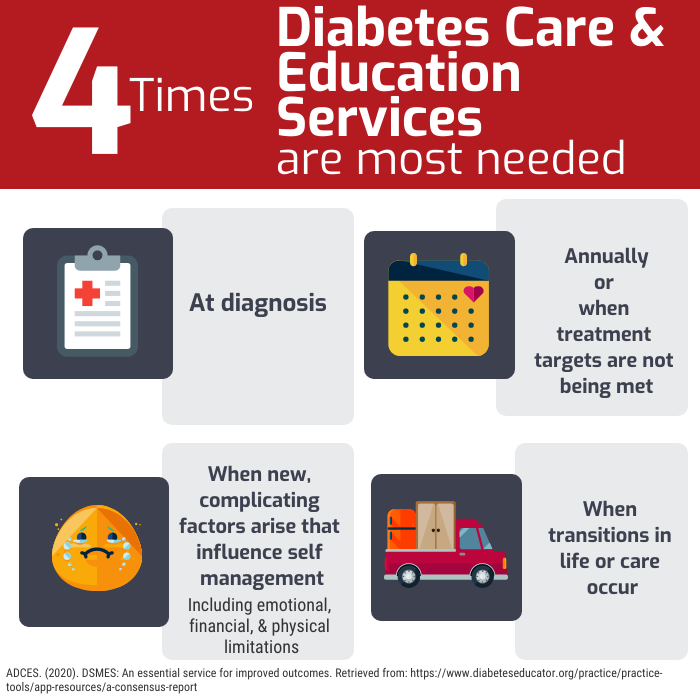
Refer for diabetes education: we can question our patients about whether they have seen a Diabetes Care and Education Specialist or attended a DSMES program and suggest a referral according to the four critical times listed by the ADA and ADCES.
-
Access the AADE7 list and find where your expertise lies: looking at medications for diabetes according to guideline directed management therapy could be the starting point. Blood glucose and blood pressure monitoring are areas where success depends on proper use so patient training is needed. Newer technologies such as pharmacy apps, CGM, and insulin pumps can help selected patients cope with diabetes.
-
Get to know a Diabetes Care and Education Specialist: there may be a nearby DSMES program that would allow you to visit in person or virtually to see what they do.
-
Get to know a dietitian, preferably one who specializes in diabetes: Medical Nutritional Therapy can do wonders for people with diabetes who struggle with meal planning, co-conditions, and/or weight issues.
-
Find the DSMES programs near you: we have about 60 DSMES sites in Montana. Listings can be found at the Montana Diabetes Program’s Community Hub. Click on DSMES tab to take you to the map of sites.
-
Is there a BC-ADM (Board Certified-Advanced Diabetes Management) practitioner in your area? That could be a pharmacist, dietitian, registered nurse, physician assistant, or physician with high level of expertise in diabetes management. More information is available.
|
Positive Potential

In a recent conversation with one of the pharmacists participating in our Diabetes Pharmacy Program, the subject came up about how little most people know about their diabetes. I’m sure most pharmacists who have counselled their patients with diabetes would agree. Although we now have diabetes self-management services available in or near most communities, very few people ever see a Certified Diabetes Care and Education Specialist or attend a DSMES program. Estimates based on insurance claims note that less than 5% of Medicare and 7% of privately insured patients received DSMES in the first year after diagnosis. This lack of knowledge or worse, the misconceptions and biases about the aspects of diabetes care, demands that we all take action to help our patients make informed decisions about their diabetes.
Community pharmacists can advance the care of people with diabetes and prediabetes by being proactive on their behalf. Critical in preventing the complications of diabetes is getting started early in the diagnosis by giving the patient information to make informed decisions about their health.
James Bennett BsPharm, BCGP, CDCES
Bozeman MT
|
Please share with your colleagues and encourage them to click to subscribe
|