Continuous Glucose Monitoring: CGM
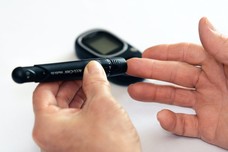
Imagine you are a person with Type 1 diabetes who strives to maintain tight control, with an A1c under 7%. To minimize wide swings in blood glucose, your life from day to day is consumed with balancing blood sugar with food intake, insulin, activity, and stress. There is a constant need to avoid hypoglycemia. Before the advent of CGM, this type of control required frequent self-monitoring blood glucose (SMBG) finger sticks during the day and periodically in the middle of the night. For this population, taking care of their diabetes is one of the hardest things they do every day.
 |
|
The American Diabetes Association 2020 guidelines state that for people with Type 1 diabetes the average person may need to use SMBG 6-10 times daily in order to assess control and adjust therapy. People with Type 2, who take multiple daily doses insulin, might be expected to use SMBG multiple times daily as well. For this population, CGM offers many advantages over standard finger stick monitoring. |
A recent study estimates that about a third of patients with type 1 diabetes have never heard of or know very little about CGM. We as pharmacists and pharmacy technicians should be able to discuss these CGM options with our patients who use multiple daily insulin dosing or insulin pump therapy.
Monitoring in Today's World
Three methods of determining blood glucose (BG) control are available:
- The A1c gives an average of the levels over the past three months but gives no information on episodes of high or low blood sugar (Figure 1).
- Standard finger stick blood glucose monitoring shows the BG level at a particular point in time but can miss undetected highs and lows.
- CGM takes glucose readings every few minutes and, depending on the device, may provide the user with trend data, alarms and hypoglycemia warnings.
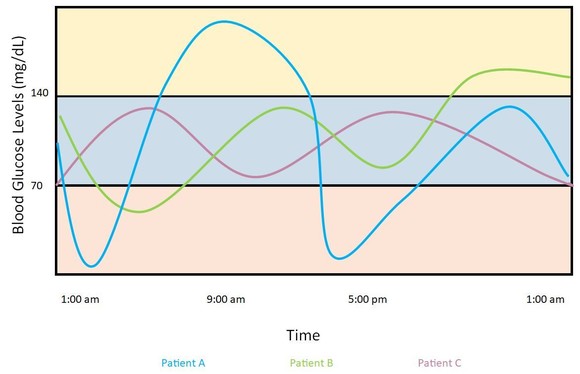 In this figure, patient A has wide variability in blood glucose, patient B medium, and patient C a low glucose variability yet all have the same A1c.
How Does a CGM Work?
Currently available CMG systems do not directly measure blood glucose but instead measure interstitial glucose levels via a tiny sensor inserted through the skin. Interstitial glucose correlates with capillary glucose. Interstitial glucose readings lag behind blood glucose levels by approximately 10-15 minutes so this lag time has to be accounted for. The most accurate CGM systems have succeeded in using proprietary software algorithms to make the displayed readings closely match the actual capillary glucose.
Accuracy
The first CGM systems appeared nearly 20 years ago. These early devices were plagued by accuracy issues and were not reliable enough to trust without verification by finger stick. Today, thanks to technological improvements, some of the devices can be trusted enough that one can administer an insulin dose based on the CGM reading alone. The accuracy of CGM devices is measured a different way than standard SMBG devices. That measure is the mean absolute relative deviation or MARD. For instance a MARD of 10 means that on average there can be a plus or minus 10% difference between the CGM and the matched reference glucose reading. SMBG devices have much more stringent accuracy requirements.
Components
Current CGM systems consist of three basic components:
-
sensor, inserted into the subcutaneous area
-
transmitter, attached to the skin
- receiver
An inserter is used for all but the Eversense CGM.
The devices are categorized as either:
-
real time CGM (rtCGM), these display glucose readings automatically. Dexcom G6 is an example.
-
intermittently scanned (isCGM), readings are displayed only when the transmitter is scanned by the receiver as seen with the Freestyle Libre.
Currently Availabe
isCGM
Freestyle Libre and recently approved Libre 2 sensor that lasts 14 days. FDA approved for insulin dosing without verification by SMBG.
rtCGM
Dexcom G6: sensor lasts 10 days. FDA approved for insulin dosing without verification by SMBG.
Medtronic Guardian Connect: sensor lasts 7 days. Must be regularly calibrated with SMBG and not approved for insulin dose changes without SMBG verification.
Eversense: implantable sensor that is inserted in the physician’s office and lasts 90 days. Must be regularly calibrated with SMBG and not approved for insulin dose changes without SMBG verification
CGM supplies are a potential revenue source for pharmacies.
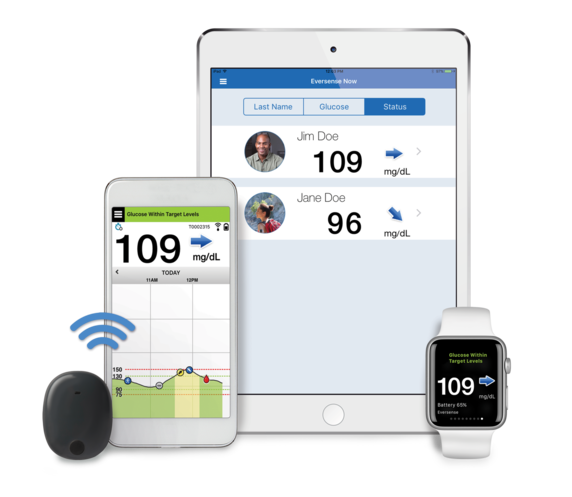 Image courtesy of Eversense Press Kit
Insulin Dosing Systems Based on CGM
Let’s narrow the discussion to the two systems that allow a user to dose insulin based solely on the readings from the CGM. Both of these systems are standalone devices but the Dexcom G6 is able to integrate with the Tandem t:slim insulin pump. Both the G6 and the Freestyle Libre 2 have plans to integrate with the Omnipod Horizon insulin pump, once FDA approved. The integration feature for these sensors is called iCGM and is necessary for them to be used with closed loop systems, such as the Tandem Control-IQ. In a closed loop system, the pump automatically adjusts insulin dosing based on data received from the CGM device. When properly utilized, this feature has several benefits including avoiding hypoglycemia, reducing glucose variability, and lowering A1c.
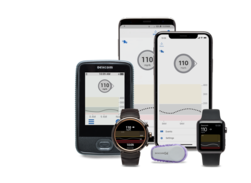
The G6 is indicated for adults and children over 2 years of age. There are no known substances that interfere with its functionality. This device is very accurate and comes factory calibrated so, unlike the Eversense and Medtronic Guardian, there is no requirement to do finger stick SMBG to calibrate the device on a daily basis or to verify readings before dosing insulin. It is customizable, allowing the patient to set glucose ranges at which the alarm system is activated. The G6 reader displays trend arrows showing whether glucose is going up, down, or remaining steady as well as how rapidly any changes are happening. So, for example, if the trend arrow indicates a rapid decline in glucose levels, a carbohydrate snack can be consumed before hypoglycemia occurs. In addition to the Dexcom reader, the device is compatible with certain other smartphone devices and watches. The Dexcom Clarity app allows the stored data from the G6 to be downloaded and generates many useful reports, including time in range (TIR), patterns and trends, a standardized report called the ambulatory glucose profile (AGP), and others than can be used by the patient and shared with the health care provider. The device is has an overall MARD of 9%.
|
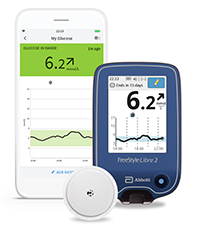
Several aspects of the Libre 2 are improved compared to the original Freestyle Libre. It is also available to pharmacies at the same cost as the original. Now recommended for adults and children over four years of age, the Libre 2 has added Bluetooth connectivity and can send alarms for high or low readings to the reader. The sensor must still be scanned with the reader to gather data and scanning should occur at least every eight hours or more often to produce valid reports. The reader will display 8 hours of data, so trends can be visualized if frequent scanning has been done. The sensor lasts for 14 days, as with the original Libre, and is said to be more accurate than the original, especially at lower glucose ranges. Consumption of high doses of vitamin C can raise the readings and aspirin can lower the readings. It has a 14 day MARD of 9.4%.
|
Key Takeaways
- CGM can take the mystery out of diabetes management by giving immediate information on the effects of food, exercise, stress, and medication.
- CGM trends and reports allow confident and competent medication adjustment to obtain stated goals and reduce hypoglycemia.
- Studies show CGM can reduce glucose variability, increase time in range, reduce incidence of hypoglycemia, and reduce A1c in patients using multiple daily doses of insulin or insulin pumps.
- CGM devices and supplies are covered by most commercial insurance plans including Medicare for people with Type 1 and Type 2 diabetes who are using multiple daily insulin doses and meet certain other requirements.
- Direct to consumer advertising is making it necessary that we be conversant in the subject of CGM.
Things are changing rapidly in the field of CGM. New devices and upgrades of existing devices are in the pipeline and there is an effort to make this technology affordable for more people. Keep your eyes open for more opportunities at the community pharmacy level to get involved in this aspect of diabetes care.
Image sources: Abbott and Dexcom media libraries.
Not a subscriber yet? Click to subscribe for MDP monthly diabetes pharmacy newsletter and updates.
|