|
The Montana Department of Natural Resources and Conservation’s Rangeland Resources Program (RRP) promotes and advocates for healthy, sustainable rangelands that support people, wildlife, recreation, clean water, and the natural scenic beauty of Montana. The Rangeland Resources Committee provides guidance to the Rangeland Resources Program and is administratively attached to DNRC.
News
 Working Lands Internship: Update
Written by: Tim Bedell, 2026 Intern
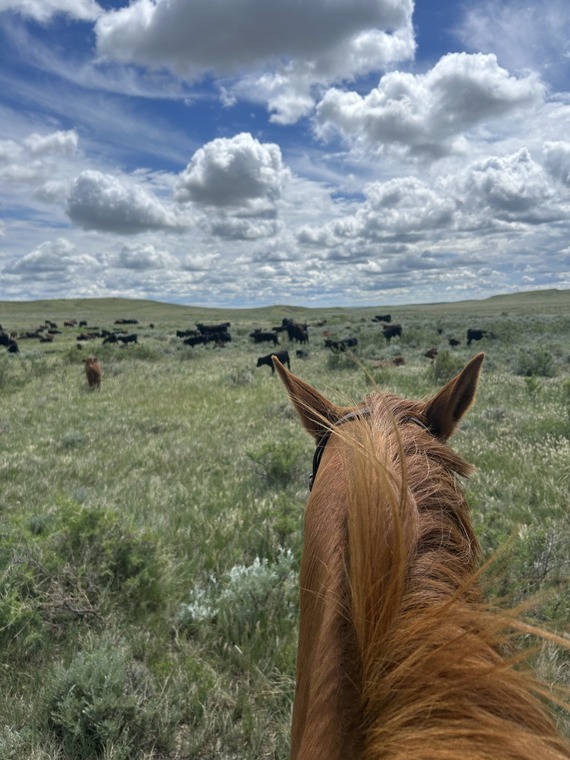
The Working Lands Internship Program has been a great experience for me so far. As of writing, I have spent three weeks in Malta with the French’s and two weeks in Bozeman at the Flying D Ranch. While in Malta I got the chance to work with electric fence, attend multiple brandings, and learned how the French’s manage their herd. The view on the prairie was beautiful, but the gumbo mud was definitely a challenge that I did not expect. I learned a whole lot about electric fencing and its role in the French’s grazing management plan. I’ve had the opportunity to see lots of different places through this internship, and I’ve met some amazing people. Through this internship I have gained a variety of experience that I know will help me in my future career path.
406 Grazing Academy:
The Next Bite
Dates: August 18-20, 2026
Location: Lewistown/Stanford/Hilger, MT
Hotel: The Calvert
Registration Cost: $150
**ONLY 3 SPOTS LEFT!!!**
Registration closes 8/6/2026
Contact Shantell at shantell.frame-martin2@mt.gov or
406-531-4584 to register!
Pheasants Forever, by: Rachel Holt
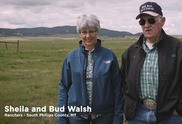
On the northern plains of Montana, where sweeping grasslands meet coulees and prairie potholes, rancher Kyle Wasson is investing in a future he hopes will benefit both his family and the wildlife that call the region home.
Last fall, Wasson reseeded 1,202 acres of former cropland on his ranch in Phillips County back to native grassland through Pheasants Forever's Montana reseeding program. The program helps landowners restore marginal cropland to native prairie habitat that benefits wildlife, soil health and grazing operations.
The project, supported by multiple conservation partners, will eventually become part of a larger grazing system, while expanding important grassland habitat along the edge of one of Montana's remaining core grassland landscapes.
Half of Americans Know Little About Grasslands - But Awareness Changes Everything
America's Grasslands Coalition
A recent national survey from the America’s Grasslands Coalition highlights an important opportunity to increase awareness about one of our nation’s most valuable ecosystems. The survey found that while many Americans know little about grasslands, learning more about their importance significantly changed how people viewed these landscapes.
Creating Firebreaks With Targeted Grazing
Texas A&M AgriLife Extension
Using livestock to create firebreaks is an effective strategy for managing vegetation, reducing wildfire risk, and supporting prescribed fire operations. Known as targeted grazing, this approach uses grazing behaviors of livestock (such as goats, sheep, or cattle) to strategically remove fine fuels like grasses, brush, and shrubs that carry fire across the landscape.
DNRC Releases Summer 2026 Montana Drought and Water Supply Outlook
Montana DNRC
The Montana Department of Natural Resources and Conservation (DNRC), on behalf of the Governor’s Drought and Water Supply Advisory Committee (DWSAC), has released the Summer 2026 Montana Drought and Water Supply Outlook , an annual report that evaluates drought and water supply conditions across the state for the rest of the year.
As summer begins, many regions of Montana are entering their sixth consecutive summer with moderate to extreme drought, while northwest Montana is currently drought-free. Approximately 75 percent of the state is in moderate to extreme drought and another 10 percent is abnormally dry, reflecting long‑term moisture shortages since 2020. Above‑average temperatures and below‑average May precipitation reduced high‑elevation snowpack and accelerated runoff, leading to daily all‑time low flows on the Big Hole, Jefferson, Musselshell, Yellowstone, and Powder rivers by mid‑June.
Experts warn of ways screwworm could spread in the US and new difficulties in keeping it at bay
Scientists worry that current eradication efforts won’t be able to contain parasitic infestation pushing into US
The Guardian, by: Melody Schieber
When conservationists set up cameras in remote regions of Central American forests, they wanted to monitor illegal cattle movement, which can lead to deforestation. But in recent months, they discovered another alarming development: wildlife rapidly infected with the new world screwworm.
It’s a warning sign of how the fly could spread in the US – and it signals new difficulties in pushing it back south, a process that will probably take years, experts say.
“We got a really unique perspective throughout the beginning of the process,” said Jeremy Radachowsky, director of the Mesoamerica and Caribbean program at the Wildlife Conservation Society, which recently released a study on the phenomenon.
International Year of Rangelands and Pastoralists: Celebrating grassland ecosystems
Tri-State Livestock News, by: Ruth Wiechmann
The U.S. House and Senate have expressed bipartisan support for resolutions designating 2026 as the International Year of Rangelands and Pastoralists. Senators Lummis (R-WY) and Luján (D-NM) and Representatives Maloy (R-UT) and Costa (D-CA) provided leadership on the resolutions.
The Society for Range Management believes pastoralists and ranchers play a critical role as land stewards, applying generational knowledge and science-based grazing to sustain healthy, resilient rangeland ecosystems. Rangelands cover nearly one-third of the United States, providing food and fiber, wildlife habitat, water resources, carbon storage, recreation, and energy, while anchoring rural economies and cultures.
|