|
Don't Move Firewood
Protect the trees you love from tree-killing bugs
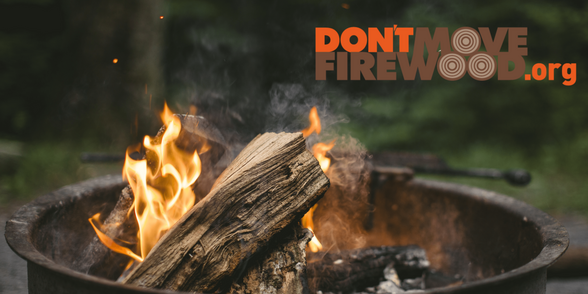 Transporting firewood when camping means you risk carrying tree-killing insects inside the firewood. The insects can crawl out and begin to destroy the trees and forest at the campground or park.
Prevent the movement of tree-killing pests by buying firewood near where you’ll burn it, buying certified heat-treated firewood ahead of time, or gathering firewood on site where permitted. The same goes in reverse -- don’t bring firewood back home from where you visited or camped.
Emerald ash borer (Agrilus planipennis Fairmaireis) is one of the greatest threats to tree health in North America. Unlike many other wood boring beetles, emerald ash borer (EAB) aggressively kills healthy and stressed trees; many dying within two to three years after becoming infested. The larvae feed on the inner bark of ash trees, disrupting the tree's ability to transport water and nutrients.
 |
|
EAB has not been found in Montana but poses a major threat to both planted and native ash.
Up to 30% of city-owned trees in Montana are ash. Additionally, green ash draws are one of the rarest woodland types in the state but provide some of the most important wildlife habitat in eastern Montana.
|
Discover which trees are in your community by viewing the Montana Department of Natural Resources and Conservation (DNRC) interactive Tree Inventory at https://experience.arcgis.com/experience/d5a887577acc4669965642969afaf5dc/ and the urban forestry fact sheets at https://dnrc.mt.gov/Forestry/Resources/statewide-tree-inventories.
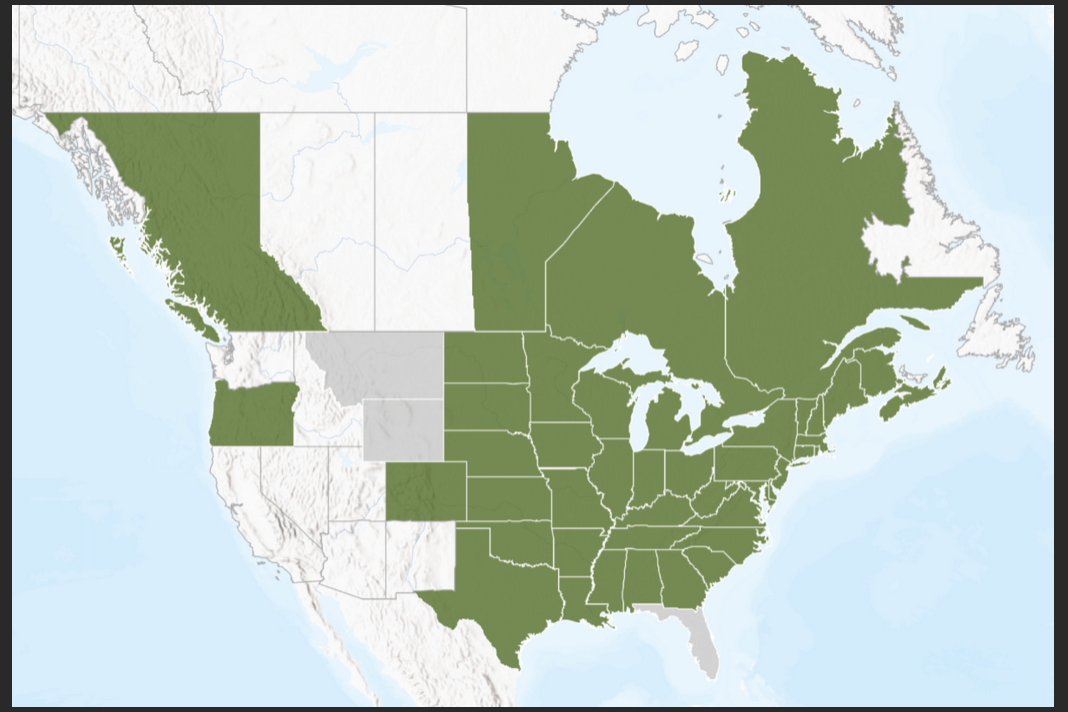 Map of current EAB infestations in North America. EAB is established in 38 states and six provinces. Image from Emerald Ash Borer Information Network https://www.emeraldashborer.info/
Watch the Don’t Move Firewood campaign webinar recordings for Emerald Ash Borer Awareness Week at https://www.dontmovefirewood.org/eabweek2026/
- Resistance to EAB is real – here’s what we can do to help restore ash in the future
- Ash-kicking outreach in Oregon and Washington
- EAB from crisis to opportunity: managing & growing a resilient urban forest in Minneapolis, MN
NEWS
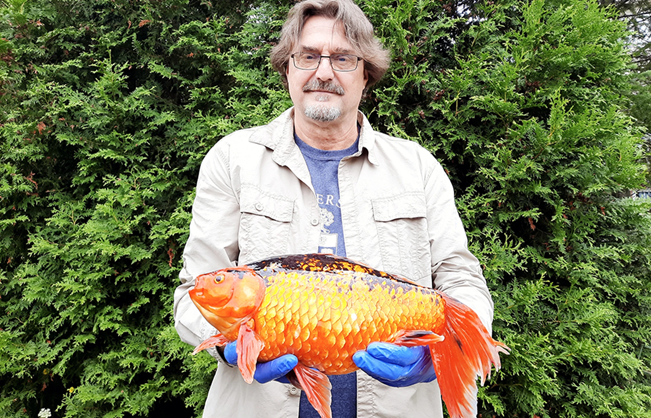 Prof. Nicholas Mandrak, from the Univeristy of Toronto, with a giant goldfish. "if they weren't so dangerous, they 'd be pretty impressive," he says. Photo by Nicholas Mandrak
Wild pigs, giant goldfish and bugs that won't die: Invaders 'absolutely everywhere' in Canada
By Zack Metcalfe, Special to National Post
Invasive species are imported as livestock, pets and attractions in zoos. Some hitch rides on plants, on the bottom of a boot, in the ballast of ships. Then they wreak havoc. Here's how we're tackling three of them.
More News
-
Montana Fish, Wildlife & Parks (FWP) - The annual application period for FWP’s Wildlife Habitat Improvement Program (WHIP) will open May 18 and close on June 19. WHIP is a state-funded grant program for projects that enhance, restore, improve or rehabilitate degraded wildlife habitats across Montana.
-
North American Invasive Species Management Association (NAISMA) - NAISMA Annual Awards recognize individuals and organizations that have gone above and beyond to improve invasive species management in North America. The nomination deadline is May 31, 2026.
-
DOI.gov - The Department of the Interior has released a new report highlighting five years of progress in preventing, detecting and controlling invasive species across the nation’s public lands and waters. The report outlines coordinated efforts with states, tribes, territories, local communities and federal partners to slow the spread of harmful invasive plants and animals that threaten ecosystems, infrastructure and the economy.
-
Pacific Northwest Economic Region (PNWER) - The Saskatchewan Ministry of Trade and Export Development in partnership with PNWER, convened about 50 state, provincial, and federal leaders from across the region to assess current mussel prevention and inspection efforts, review lessons learned from infested jurisdictions, and identify opportunities to strengthen regional coordination. Discussions reinforced that aquatic invasive mussels pose a substantial threat to regional hydropower, irrigation, municipal water systems, trade infrastructure, cultural sites, and aquatic ecosystems.
-
Bureau of Reclamation - The Bureau of Reclamation is sponsoring a 3-phase prize challenge for innovative solutions to eliminate the risk of aquatic invasive species (AIS) being transported in raw water entering and exiting watercraft ballast compartments. The goal is to identify novel approaches that can kill, exclude, or inactivate AIS such as quagga, zebra, and golden mussels, thereby protecting Reclamation’s water delivery and hydropower infrastructure. The competition is open to US-based individuals, academia, non-federal government entities, small businesses, start-ups, entrepreneurs, and other inventors who are interested in coming up with innovative ideas on AIS detection or decontamination technologies.
-
North Dakota Game and Fish - The North Dakota Game and Fish Department, in cooperation with state and federal partners and local stakeholders, plan to re-treat Smishek Lake in May and June to eradicate the remaining zebra mussel population in the lake.
-
Wyoming Game & Fish Department - Wyoming Game and Fish Department aquatic invasive species inspectors recently intercepted a high-risk watercraft traveling from Oklahoma to Montana in a multi-state coordination effort to prevent the spread of invasive mussels in Wyoming and neighboring waterways.
-
MSN - California is offering up to $200,000 to anyone who can stop these invasive mussels form spreading through its waterways
-
PBS – Invasive golden mussels threaten California’s water system.
-
Alberta Invasive Species Council (AISC) - The Government of Alberta has recently revised the Weed Control Regulation https://open.alberta.ca/publications/2010_019, which falls under the authority of the Weed Control Act https://kings-printer.alberta.ca/1266.cfm?page=W05P1.cfm&leg_type=Acts&isbncln=9780779859085. These regulatory updates are designed to strengthen Alberta's defense against invasive species and better protect the environment and agriculture.
Evaluating Biocontrol: What Happens to Biocontrol Agents after Release?
By Jill Leblow and Melissa Maggio - Montana Biocontrol Project - https://mtbiocontrol.org/
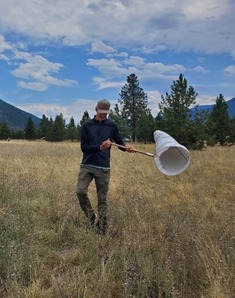
Biocontrol agent populations can be assessed through site evaluations which are a quick way to inform management decisions. Evaluating biocontrol sites will help answer the most common questions – Are biocontrol agents established? Is the biocontrol agent collectible? Are my release practices working?
Are Biocontrol Agents Established?
We consider biocontrol agents to be established if any number of the biocontrol agent is present five or more years following release. This indicates they have produced new generations and are capable of surviving at a site.
|
|
|
Play Clean Go Awareness Week - June 6-13
PlayCleanGo Awareness Week is returning June 6–13, 2026, bringing together partners across North America, including Invasives Canada and CONABIO, to help prevent the spread of invasive species.
This year’s theme, “We protect the places we love,” highlights the shared role we all play in keeping our favorite outdoor spaces healthy. We’ll be offering a full lineup of ways to get involved, including webinars, a photo contest, and a PlayCleanGo Awareness Week Toolkit with multilingual social media graphics and messaging, a press release, and a draft proclamation to support local outreach.
Learn more at https://playcleango.org/take-action/playcleango-awareness-week/
Montana Noxious Weed Awareness Week - June 7-13
Celebrate Montana’s Noxious Weed Awareness Week (MNWAW), a statewide event held every year during the first full week of June.
MNWAW exists to raise awareness of what noxious weeds are, how they spread, and how they affect Montana’s ecosystems, agriculture, recreation, and communities. By learning to identify, prevent, and report infestations, every Montanan can play a role in protecting the places we love. Throughout the week, the Montana Department of Agriculture will share daily educational topics!
- Sunday, June 7: KNoweeds, Weed of the day - oxeye daisy
- Monday, June 8: Prevention, Weed of the day - rush skeletonweed
- Tuesday, June 9: Cultural Control, Weed of the day - common buckthorn
- Wednesday, June 10: Mechanical Control, Weed of the day - spotted knapweed
- Thursday, June 11: Biological Control - Weed of the day - whitetop
- Friday, June 12: Chemical Control - Weed of the day - leafy spurge
- Saturday, June 13: Reporting Weeds - Weed of the day - blueweed
Learn more at https://agr.mt.gov/Topics/N-P/Noxious-Weeds-Pages/NW-Awareness-Week
Columbia River Basin (CRB) AIS Team Meeting - June 23-24 in Missoula
The CRB AIS Team will meet at the Residence Inn in Missoula. Several Montana AIS managers will be presenting at the meeting.
See the agenda and registration information at https://www.westernais.org/regional
|
|
Play Clean Go Awareness Week - June 6-13
Invasives Canada, NAISMA and CONABIO invite you to join PlayCleanGo® Awareness Week 2026, taking place from June 6–13 across North America. Outdoor enthusiasts, land managers, and recreation partners across Canada, the United States, and Mexico take part in this annual campaign, which empowers everyone who enjoys the outdoors to take simple, effective actions to prevent the spread of invasive species and protect the places we love!
- June 3: Behavior Change Training: Supporting PlayCleanGo Outreach and Action
- June 8: Saving the Sagebrush Sea
- June 10: What’s on Your Boots?
- June 11: Communicating strategies for the prevention of IAS in two countries in Latin America
|
|
Forest Pest and Pathogen Short Course
The Forest Pest and Pathogen Short Course is a professional, online, asynchronous program designed to help learners understand and apply core concepts related to forest pest and pathogen prevention, detection, and management.
Rather than focusing on memorizing facts about individual species, this course emphasizes foundational concepts and transferable strategies that can be applied across species, forest types, and jurisdictions. Forest pests and pathogens will change over time and vary by location, but the underlying approaches to prevention, early detection, response, and long-term management remain relevant.
|
|
|
|
|