|
|
The Montana Department of Natural Resources and Conservation’s Rangeland Resources Program (RRP) promotes and advocates for healthy, sustainable rangelands that support people, wildlife, recreation, clean water, and the natural scenic beauty of Montana. The Rangeland Resources Committee provides guidance to the Rangeland Resources Program and is administratively attached to DNRC.
News
Montana Range Tour Registration Deadline Extended!
The deadline to register for the Montana Range Tour has been extended to 6/9/2026. Use the link below to sign up today!
Grazing away wildfire risk? Congress considers cattle for wildfire suppression
Montana Free Press, Written by: Robert Chaney
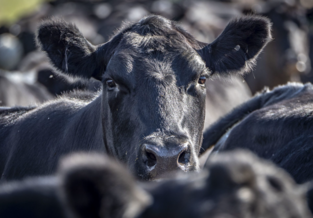
More than 1,000 cows and sheep died when the 2024 Remmington fire scorched almost 200,000 acres in south-central Montana. If proposed federal grazing policies become law, those livestock could be considered firefighters instead of fire victims.
Under federal proposals floated by both Congress and cabinet agencies this spring, livestock could become major players in wildfire suppression efforts by literally eating the fuel before it burns. However, current research indicates the results could vary widely depending on what landscape and climate are involved.
|
Gov. Gianforte Announces USDA Designates Drought in Montana Counties
Montana Department of Agriculture, Written by: Logan Kruse
Governor Greg Gianforte today announced the U.S. Department of Agriculture (USDA) designated ten Montana counties as primary natural disaster areas due to drought.
In a letter received from USDA Undersecretary Brooke Appleton, the governor was notified that the following counties were designated, having experienced severe or extreme drought during the growing season: Beaverhead, Cascade, Chouteau, Glacier, Hill, Liberty, Madison, Pondera, Teton, and Toole.
The disaster designation makes farm operators eligible to be considered for Farm Service Agency (FSA) emergency loan assistance, provided eligibility requirements are met. FSA considers each emergency loan application on its own merits, taking into account the extent of production losses on the farm and the repayment ability of the operator.
Additional counties were designated as contiguous to the primary counties impacted, including: Blaine, Deer Lodge, Fergus, Flathead, Gallatin, Jefferson, Judith Basin, Lewis and Clark, Meagher, Ravalli, and Silver Bow. These adjacent counties also qualify for the federal emergency agricultural aid.
Diversify Your Forage Base for Drought Flexibility
Angus Beef Bulletin, Written by: Kim Ricardo, South Dakota State University
Periods of dry conditions often bring renewed interest in alternative forages, annual crops and cover crop mixes to maintain feed supplies and reduce reliance on perennial pasture alone. While no single strategy eliminates drought risk, diversifying the forage base can function as a practical “insurance policy” by spreading risk across species, planting windows and rooting depths.
Rather than relying on a single forage system, producers can improve resilience by incorporating a combination of perennial forages, annual crops and strategically selected cover crops that respond differently to moisture stress and temperature variability.
Liver Flukes Continue to Expand Across U.S. Cattle Regions
RFD TV, Written by: Neal Burnette-Irwin
Large animal veterinarians are warning producers about liver flukes, a parasite they say is quietly impacting cattle herds across much of the country.
Dr. Jody Wade with Boehringer Ingelheim says liver flukes have now been found in animals across more than half of U.S. states, including places where producers historically did not have to worry about them.
“They actually call it the fluke signer. It’s a diagnostic test that we can submit when we do routine fecal exams. So, if we’re looking for nematodes, we can also check the box and ask them to look for flukes while they’re there as well. It’s interesting where we’re seeing it. We’re seeing it show up in a number of places where we really haven’t seen it before, because in the haven’t seen it before. Because in the past, you know, most folks thought it was a gulf coast type issue or a northwest top issue, where we knew that, because of the weather conditions, that liver flukes are prominent.”
Useful apps for regenerative ranching
Noble Research Institute
For many ranchers, sale day is their primary marker of progress. But the price called after the gavel drops or you shake hands on the deal doesn’t always tell the full story.
Noble Research Institute’s regenerative ranching manager Josh Gaskamp says a handful of simple, free smartphone applications can help streamline monitoring and measurement efforts on your way to your regenerative ranching goals.
“A lot of these are tools ranchers can use to track their progress,” Gaskamp says. “You get a snapshot in time that tells you what plants you’re seeing in your pasture, when you moved those cattle to what paddock, what the condition of your soil was before you started a new management practice.”
Whatever that data point is, if it is stored in your smartphone or a digital app, it’s easily accessible and searchable to track progress over time.
Gaskamp and several Noble regenerative ranching advisors share how they use these (mostly) free apps on the ranch.
GBN News, Written by: By Ed Griffiths
Cattle possess the remarkable ability to identify human faces they know and connect those faces with corresponding voices, according to new research.
The study reveals cows do not view all people as an indistinguishable group but can instead pick out individuals they have encountered before.
The researchers concluded: "Our findings suggest that cows are capable of processing human cues and that they do not perceive all humans as a single, undifferentiated category, but are instead capable of distinguishing and recognising individuals they have previously met."
Scientists from France's National Research Institute for Agriculture, Food and the Environment conducted their investigation with 32 Prim'Holstein cows.
Revision of Regulations for Grazing Administration, BLM Is Proposing Rule Changes
Federal Register
The Bureau of Land Management (BLM) and Office of Hearings and Appeals (OHA) are proposing to revise the grazing regulations, Grazing Administration—Exclusive of Alaska, to establish a new part addressing land health management, with certain provisions relocated from existing regulations, and to make conforming updates to the regulations that govern administrative appeals of BLM grazing decisions to OHA's Departmental Cases Hearings Division (DCHD). We solicit comment on all aspects of this rule.
|
|
Conservation & Partnerships

 What Are Mesic Resources?
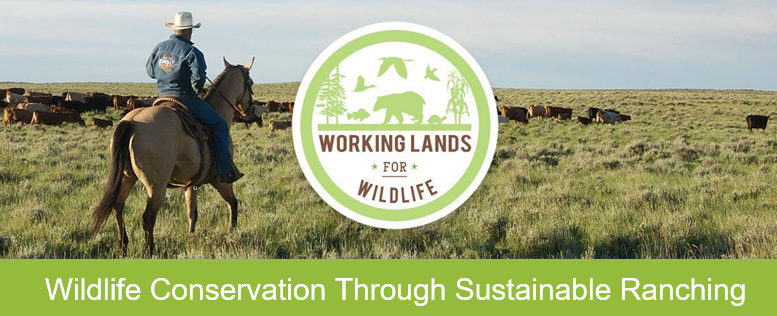
Working Lands for Wildlife
Mesic areas are the wet, green places where water meets land. This includes riparian areas along streams and rivers, wet meadows, springs and seeps, irrigated fields and high-elevation habitats. In these mesic areas, the soils have a well-balanced supply of moisture throughout the growing season, allowing plants to grow longer into the dry months.
Education on Rancher-Selected Topics Now Available Online
Ranchers Stewardship Alliance (RSA), a rancher-founded nonprofit serving the region for more than 20 years, has wrapped up its 2026 Rural Resilience webinar series, bringing together producers and partners for four evenings of practical, producer-driven learning. The series reflects RSA’s ongoing work to equip ranchers with the tools they need to make informed decisions for their operations, land, and livestock.
This year’s series drew 209 participants from multiple states and into Canada, highlighting continued interest. RSA appreciates those who joined the sessions live and encourages anyone who missed a webinar, or would like a refresher, to watch the recordings on their YouTube channel: youtube.com/RanchersStewardshipAlliance. Recognizing this is a busy season on the ranch, audio versions of each session are also being added to the Ranch Stewards Podcast, available on all major platforms and online at RanchStewards.org/podcast.
 Looking to buy or sell hay or straw? Need to lease pasture or have some available? Mountain West Grazing is here to help! With the launch of the grazing connection, you can easily post listings FOR FREE to connect with others in the ag community - this is your go-to resource.

Agency Updates
Funding Available Now!
Multiple Grant Opportunities
DNRC administers a wide range of grants and loans for Montana, assisting cities and towns, conservation districts, private landowners, and other groups in managing natural resource issues at the local level.
The Ranchland Stewardship Program (RSP) aims to expand and increase the use of technology to improve grazing management planning and adaptive strategies that enhance soil health. The RSP plans to use data-driven adaptive management decision-making tools to increase carbon storage in the soil, thereby increasing soil carbon sequestration on Montana’s expansive and diverse rangelands.

BLM reminds public lands visitors to be Bear Aware as spring and summer bear activity increases
The Bureau of Land Management is reminding visitors to take extra precautions in bear country after recent bear incidents in several national parks.
Spring and early summer are periods of increased bear activity. Bears may be moving through habitat, searching for food or protecting cubs. Public lands visitors can reduce the chance of a dangerous encounter by staying alert, hiking in groups, making noise in low-visibility areas, storing food and trash properly and never approaching bears.
“Public lands managed by the BLM are wild places, and wildlife safety is visitor safety,” said BLM Acting Director Bill Groffy. “Simple actions, like giving bears space, securing food and knowing what to do before you enter bear country, can protect visitors and bears.”
 Director Streit Highlights Innovation at Living Sky Grains
Montana Department of Agriculture, Written by: Logan Kruse
Director of Agriculture Jillien Streit continued her focus on highlighting businesses across Montana modeling innovative practices and adding value to the state’s agricultural ecosystem where she visited Living Sky Grains in Three Forks.
“Implementing new practices is not for the faint of heart, especially in agriculture,” said Director Streit. “Learning about the Groeneweg’s passion and focus for soil health, human health, and growing a direct-to-consumer family business is vital to the progression of our agricultural ecosystem here in Montana.”

Dalmatian and yellow toadflax biocontrol agents look nearly identical. Both are stem weevils in the genus Mecinus, but they are specific to their respective host. Dalmatian stem weevils (M. janthiniformis) are 3-6mm long and yellow stem weevils (M. janthinus) are 2.4-3.4mm long. There can be overlap in size, so size alone cannot be utilized to separate the two species. In general, species are differentiated based on the toadflax they are collected from.
 FWP Public Notices & Opportunity for Comment
Podcast Corner

Mark Moritz on Pastoralist Mobility, Land & Water Security
Pastoral mobility is crucial for both the sustainable management of rangelands and the economic viability of pastoralism. It is key to livestock productivity, because it enables herds to reach resources that are unevenly dispersed across space and are often short-lived in highly variable environments.
|
Ep 252: Are You Managing the Market… or Is It Managing You? w/ Abby Greiman
This week Abby Greiman of Ever.Ag joins us for a practical conversation on cattle marketing, breakevens, risk management, and why surviving cattle cycles often isn’t about swinging for the fences. We discuss understanding your costs, putting a marketing plan in place, and utilizing tools that can help protect operations when markets eventually turn.
|
Research Center
To make the 406 Rangelands newsletter more reader friendly, the "Research Center" section has been permanently moved to the Rangeland Resources Program website. You can access it here.
June
-
2-4 - 406 Grazing Academy (Emigrant, MT)
-
-
-
15-17 - Farm Bureau Conference (Kalispell, MT)
-
-
-
July
August
September
-
13-15 WSE Expanding Markets Conference (Columbus, MT)
November
-
6 - SMR IMS Fall Meeting (Vermillion, Alberta)
-
16-18 - StrongHER Together Conference (Fort Benton, MT)
December
-
-
23 - Governor's Summit on Local Food & Ag (Helena, MT)
Contacts
Stacey Barta, State Coordinator for Rangelands
(406) 594-8481
SBarta@mt.gov
Rangeland Resources Committee:
Diane Ahlgren, Chair
Perri Jacobs, Vice Chair
Steve Carey
Sigurd Jensen
Jim Anderson
Ryan Green
|
|
|
|
|