|
|
The Montana Department of Natural Resources and Conservation’s Rangeland Resources Program (RRP) promotes and advocates for healthy, sustainable rangelands that support people, wildlife, recreation, clean water, and the natural scenic beauty of Montana. The Rangeland Resources Committee provides guidance to the Rangeland Resources Program and is administratively attached to DNRC.
News
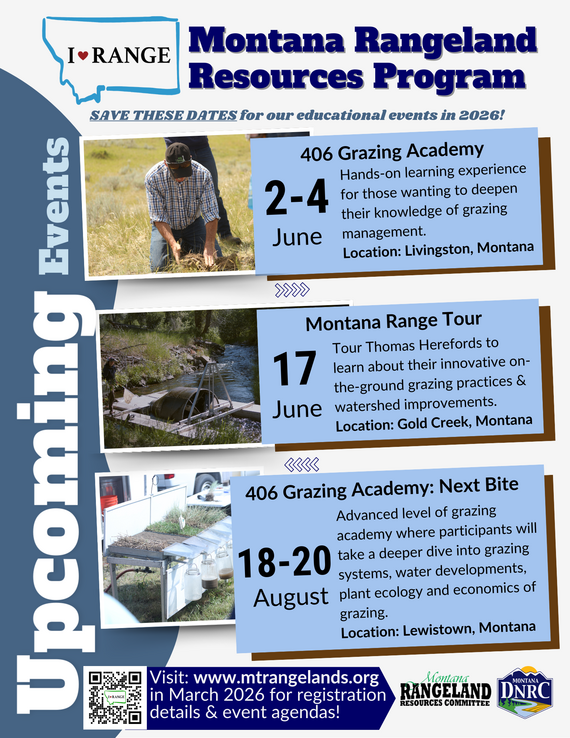 SPOTS ARE FILLING UP QUICKLY... DON'T MISS OUT ON THESE EVENTS!
Working Lands Internship Program Selections for 2026
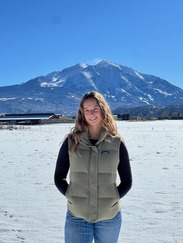
Brenna Ritchie, Montana State
I'm Brenna Ritchie, a current Rangeland ecology student at MSU. After spending the past two summers doing wildland fire back home in Carson City, Nevada, I'm excited to experience new landscapes with different land management considerations in Montana. Growing up in the backcountry of the Sierra Nevadas and expansive Nevada public lands, I am passionate about the crossover of conservation and working lands. Outside of plant ID, soil, ecology, and livestock classes, I'm quite busy as the president of the Alpine Club Ski Team and involved in the MSU Range Club. I also act as an ambassador for the College of Ag, through which I got to attend National FFA convention last year.
|
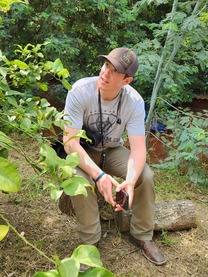
Tim Bedell, Montana State
My name is Tim Bedell and I’m a freshman at Montana State University. I grew up in Steamboat Springs Colorado helping my father manage a small herd of 50 black angus cows. I was very involved in my county’s 4-H program holding multiple club and county officer positions. During high school I served as the president of my FFA chapter and wrestled. In my free time I enjoy hunting and playing for the MSU Polo Club. I am also enrolled in the Army ROTC program. I am very excited and look forward to working in the Working Lands Internship Program.
|
|
 |
The Nutrient Cycle: Part 2
Where the Wild Atoms Are
Understanding Ag, Written by: Kyle Richardville
Learning the story of nutrient cycling is a necessary first step to memorizing the nutrients and how to manage them appropriately. Most of us were “taught” the latter without the former, which is an extremely difficult way for our brains to remember something. The story provides the substance for the facts to cling onto in our minds. I challenge you to sit down and read a bullet-pointed list of facts on a topic you don’t know much about and try to recite the long list of facts you read once you’re done. This is a boring and ineffective way to learn something, but that’s the method we use to teach the rich topic of nutrition. .
Montana Leopold Conservation Award Finalists Selected
Three finalists have been selected for the 2026 Montana Leopold Conservation Award®.
The award honors ranchers, farmers, and forestland owners who go above and beyond in their management of soil health, water quality and wildlife habitat on working land.
Named in honor of renowned conservationist Aldo Leopold, this award recognizes landowners who inspire others with their dedication to environmental improvement. In his influential 1949 book, A Sand County Almanac, Leopold advocated for “a land ethic,” an ethical relationship between people and the land they own and manage.
“These finalists demonstrate the many ways our Montana farmers, ranchers, and forested landowners are the best stewards of our lands,” said Governor Greg Gianforte. “Their innovative management of land and water resources goes hand in hand with maintain productive farm and ranchland operations. I’m grateful for the example they set as caretakers of our working landscapes.
The award finalists are:
- Barthelmess Ranch of Malta in Phillips County: Chris and Deb Barthelmess, along with Leo and Darla Barthelmess and their children, work with conservation partners to enhance wetlands, improve water distribution, and support wildlife habitat. Rotationally grazing their beef cattle and early adoption of virtual fencing technology prevents overgrazing the landscape, allowing native grasses to recover and flourish. Improved grazing practices have lessened their reliance on growing hay for winter feeding, which strengthens the ranch’s economic resilience. Leo is a founder of the Ranchers Stewardship Alliance, a rancher-led nonprofit that supports stewardship, education, and collaboration across the Northern Great Plains.
- Living Sky Grains of Three Forks in Broadwater and Jefferson counties: Franck and Kari Groeneweg grow flax, canola, camelina, sunflower, buckwheat, yellow peas, dryland corn, mustard, lentils, wheat, and other grains at their dryland farm using innovative techniques that prioritize conservation and soil health. With home-brewed compost and other biological products they have created a closed-loop system that minimizes the need for external inputs like phosphate and potash. With continuous cropping and no-till practices they positively impact the water cycle. To increase the presence of beneficial insects they have established pollinator strips.
- Veseth Ranch of Malta in Phillips County: Each year, Dale and Janet Veseth host the Montana Conservation Corps to install beaver dam analogs, and conduct plant and bird surveys. Throughout the year, their cattle are rotationally grazed across 90 pastures and bale grazed on hay meadows during the winter. To maintain soil cover and improve water infiltration, they grow perennial vegetation instead of annual crops in a harsh, semi-arid environment. Last year the Veseths announced they will gift their ranch to the Ranchers Stewardship Alliance at the end of their ranching careers. The rancher-led nonprofit supports stewardship, education, and collaboration across the Northern Great Plains.
Montana landowners were encouraged to apply, or be nominated, for the award. An independent panel of Montana agricultural and conservation leaders evaluated the applications.
The award recipient will be revealed later this year. Last year’s award recipient was Thomas Herefords of Gold Creek in Powell County.
Sand County Foundation’s Leopold Conservation Award in Montana is made possible through the generous support of American Farmland Trust, Montana Department of Natural Resources and Conservation, Rangeland Resources Program, Sibanye-Stillwater, AgWest Farm Credit, Montana Grazing Lands Coalition, USDA Natural Resources Conservation Service, Montana Farm Bureau Federation, Ranchers Stewardship Alliance, Soil and Water Conservation Society, Western Landowners Alliance, Western Sustainability Exchange, and World Wildlife Fund.
New DNRC Grant Supports Soil Health and Grazing Improvements on Montana Ranchlands
The Montana Department of Natural Resources and Conservation (DNRC) announces the launch of the ranchland stewardship program with grants to advance innovation in regenerative grazing of Montana’s rangelands. The program leverages data‑driven adaptive management practices that improve soil health, strengthen agricultural productivity and enhance the economic viability of Montana ranching operations. By uniting ranchers, researchers, agencies and communities, the initiative establishes Montana as a model for science-based, partnership-driven rangeland restoration.
Through implementing regenerative grazing practices and soil‑health improvements, the program will provide opportunities to increase soil carbon and position Montana as a national leader in sustainable, profitable agriculture. The program’s goal is to support rangeland stewardship and increase carbon storage on 100,000 acres over four years.
The program also aims to enhance producer profitability by demonstrating how healthy soils and adaptive grazing boost forage productivity, improve drought resilience and create diverse income opportunities.
Grants are available for state and local governments, tribal governments and nonprofit organizations to support grazing practices that promote soil health and increase carbon storage on Montana rangelands. DNRC is currently accepting grant applications and applicants can receive up to $1.5 million. The grant will remain open until all $7.5 million has been awarded to eligible entities for qualifying projects.
Funding for the grant comes from a $49.7 million grant from the U.S. Environmental Protection Agency (EPA) to increase the resilience of our forests, agricultural lands, waterways, and communities through voluntary innovation and incentive-based projects. The ranchland stewardship program, managed by DNRC’s rangeland resources program, is one of seven coordinated projects which will improve natural landscapes, reduce risks from wildfire and other land-based sources of emissions, and invest in practical, low-carbon technologies tied to agriculture and forestry.
What to know about New World screwworm as cases detected near the US
ABC News, Written by: Mary Kekatos and Dr. Crystal Joseph
Federal health officials reported on Monday that cases of a flesh-eating parasitic infection continue to be detected near the United States.
The U.S. Department of Agriculture (USDA) said a New World screwworm case was confirmed in the Mexican state of Nuevo León, approximately 62 miles from the Texas border. This marks the northernmost active case in Mexico.USDA said the current risk to livestock, other animals and people in the U.S. remains very low and there is currently no evidence of NWS among animals in the U.S.
|
|
Conservation & Partnerships
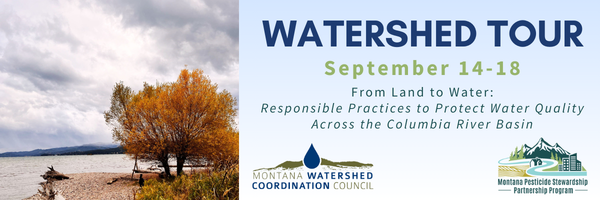
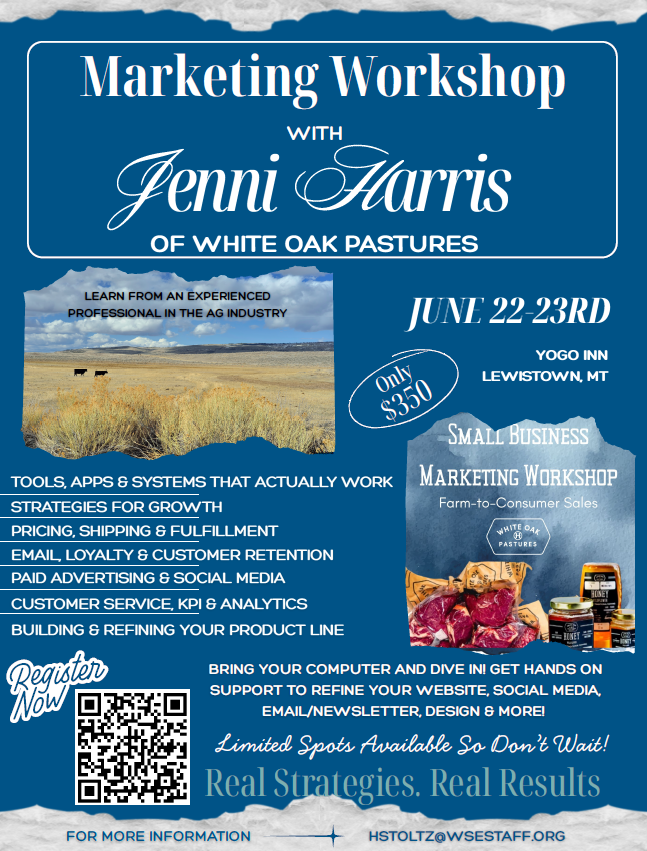

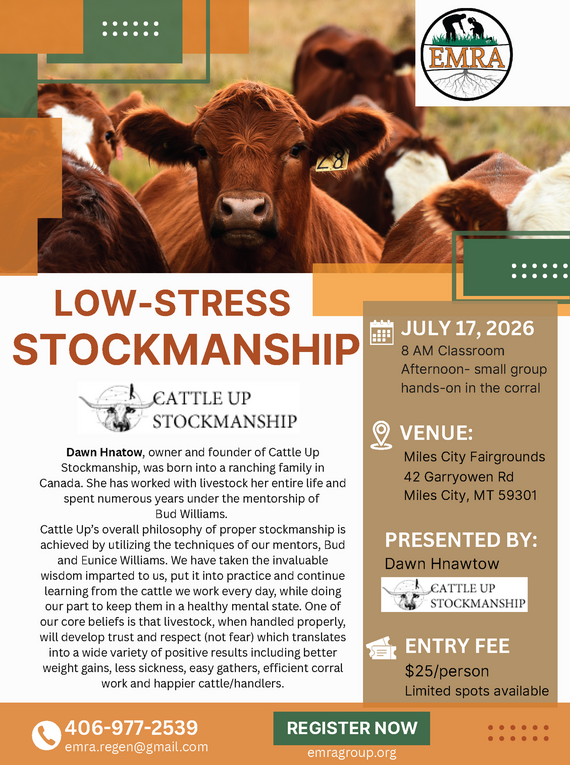
 Invasion Severity Index
Supporting Invasive Annual Grass Management Across the Sagebrush Biome
Invasive annual grasses (IAG) pose one of the most significant and rapidly expanding threats to rangeland health across the western United States. These exotic grasses include cheatgrass, medusahead, and ventenata, and when they overtake rangelands, they alter fire regimes, reduce habitat quality, and diminish long-term productivity.
Developing effective management strategies and treatment prescriptions requires an understanding of the degree of invasion in an ecological context, including site potential, competitive balance with perennial grasses and forbs, and overall productivity.
Education on Rancher-Selected Topics Now Available Online
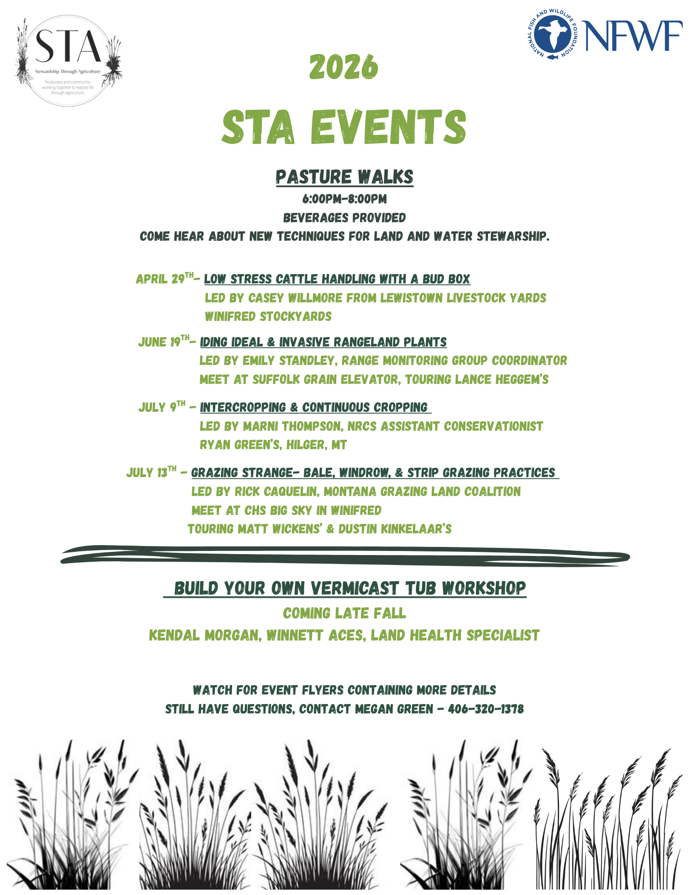
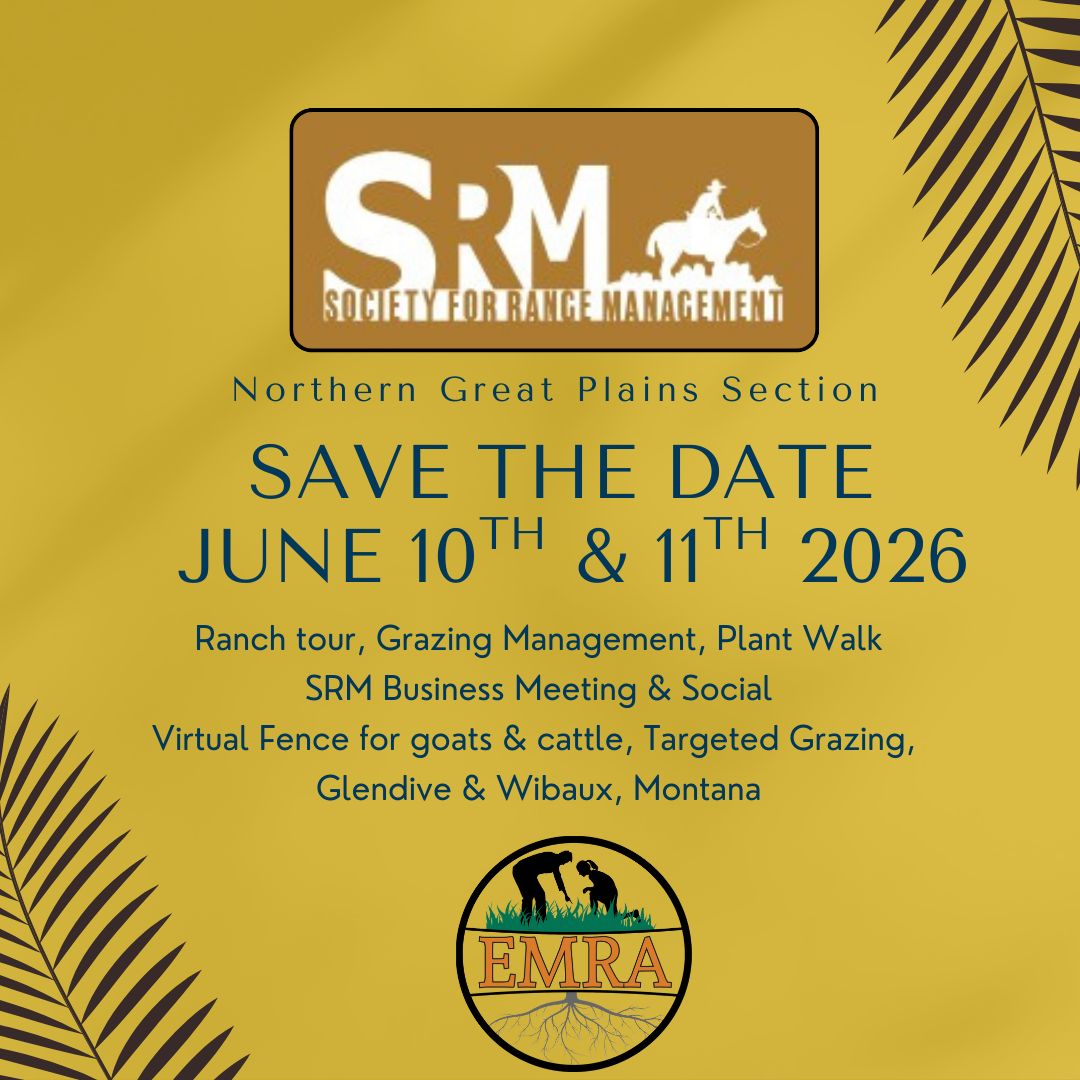
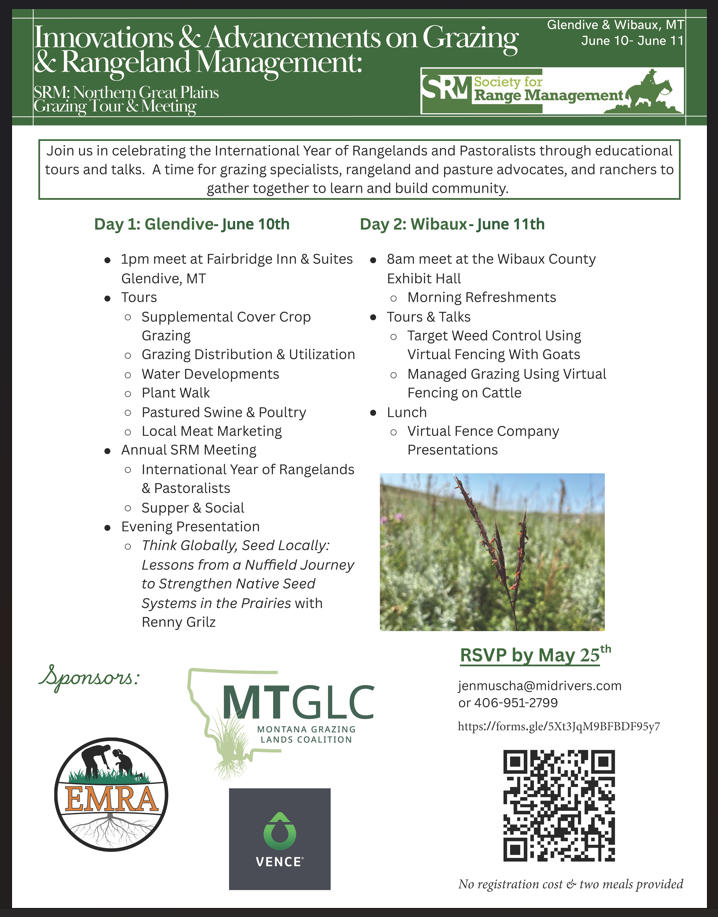
Ranchers Stewardship Alliance (RSA), a rancher-founded nonprofit serving the region for more than 20 years, has wrapped up its 2026 Rural Resilience webinar series, bringing together producers and partners for four evenings of practical, producer-driven learning. The series reflects RSA’s ongoing work to equip ranchers with the tools they need to make informed decisions for their operations, land, and livestock.
 Looking to buy or sell hay or straw? Need to lease pasture or have some available? Mountain West Grazing is here to help! With the launch of the grazing connection, you can easily post listings FOR FREE to connect with others in the ag community - this is your go-to resource.
Agency Updates
Funding Available Now!
Multiple Grant Opportunities
DNRC administers a wide range of grants and loans for Montana, assisting cities and towns, conservation districts, private landowners, and other groups in managing natural resource issues at the local level.
The Ranchland Stewardship Program (RSP) aims to expand and increase the use of technology to improve grazing management planning and adaptive strategies that enhance soil health. The RSP plans to use data-driven adaptive management decision-making tools to increase carbon storage in the soil, thereby increasing soil carbon sequestration on Montana’s expansive and diverse rangelands.

BLM, Forever Branded to host Wild Horse and Burro adoption events in Hamilton
The Bureau of Land Management and Forever Branded are scheduled to host the last in a 2026 series of Wild Horse and Burro adoption events at the Matt Bischof Training Facility, May 23, 9 a.m.- 4 p.m., at 736 Alvista Loop in Hamilton, Montana.
This event will provide the public an opportunity to adopt about 70 available wild horses and burros. Bids start at just $125.
 Growth Through Agriculture Business Acceleration and Marketing Grant
Next Application Deadline: June 30, 2026
The Montana Department of Agriculture has opened the GTA Business Acceleration and Marketing Program (BAM), to support businesses entering expansionary phases of growth and to aid in the access, development, and expansion of new markets. Funds are available now and are awarded on a quarterly basis, in the order the application is received, until funds are expended.
 USDA Announces $52 Million to Boost Public Access to Private Lands for Hunting and Fishing
USDA is announcing $52 million to help state and tribal governments encourage private landowners to allow public access to their land for hunting, fishing and other wildlife-dependent recreation through the Voluntary Public Access and Habitat Incentive Program (VPA-HIP).
 Forest Service announces $248 Million in Secure Rural Schools payments to support counties, schools, and wildfire preparedness
he U.S. Forest Service today announced it will be issuing $248 million in Secure Rural Schools payments for 2025, delivering critical funding to eligible states and counties with National Forest System lands. These payments help sustain public schools, maintain local roads, strengthen wildfire preparedness, and support other essential services in rural communities.
“Secure Rural Schools payments reflect our strong partnership with the counties and communities that surround national forests,” said Forest Service Chief Tom Schultz. “These funds support critical infrastructure, while advancing active forest management and restoration that keep forests resilient and communities safer. We remain committed to deliver this support directly to rural communities that depend on these resources.”
 MSU Seeks Input on Strategic Plan
MSU has launched the process of developing a new strategic plan that will guide the University for years to come.
Questions we are looking to answer:
- What can MSU do better?
- How can MSU more firmly root itself and serve Montana?
- What is your one big idea (and/or small idea) for MSU's future? This could be a project, program, or any other new initiative.
- What is your most brilliant Bobcat moment or impression?
- Is there anything else that you would like to share to be considered in the development of MSU's next Strategic Plan?
Learn more about the Strategic Planning Process here: https://www.montana.edu/strategicplan/ [montana.edu]
Questions can be directed to Laura Wilson, Assistant to VP, Dean & Director at laura.wilson5@montana.edu.
 FWP Public Notices & Opportunity for Comment
Podcast Corner

IYRP March: Maryam Niamir-Fuller on Economic Services of Global Rangelands
Maryam Niamir-Fuller’s career spans decades of work with pastoralist communities from all over the world. She is a special advisor to the Secretariat of the International Year of Rangelands and Pastoralists Global Alliance. Maryam shares how her journey began among the Dinka people of Southern Sudan and grew into a lifelong commitment to elevating the voices and improving the livelihoods of pastoral communities worldwide. From the economics of livestock as living wealth, to the global conversation around meat, land conversion, and unbalanced subsidies, this episode provides a good overview on the social and economic services provided by rangelands and people of rangelands.
|
Ep 251: Keeping Ranchers on the Land: The Mission of the Noble Research Institute w/ Steven Rhines
This episode takes a close look at the mission behind the Noble Research Institute and what it means for the future of ranching in the United States. Steven Rhines, CEO and President of the Noble Research Institute, joins us to share the history of the organization, the vision that shaped it in the 1940s, and how that work continues today through a focus on soil health, grazing management, and keeping ranchers on the land. We discuss the challenges facing U.S. grazing lands, the loss of producers, and why the conversation has shifted from growth to preservation.
|
Research Center
To make the 406 Rangelands newsletter more reader friendly, the "Research Center" section has been permanently moved to the Rangeland Resources Program website. You can access it here.
May
June
-
-
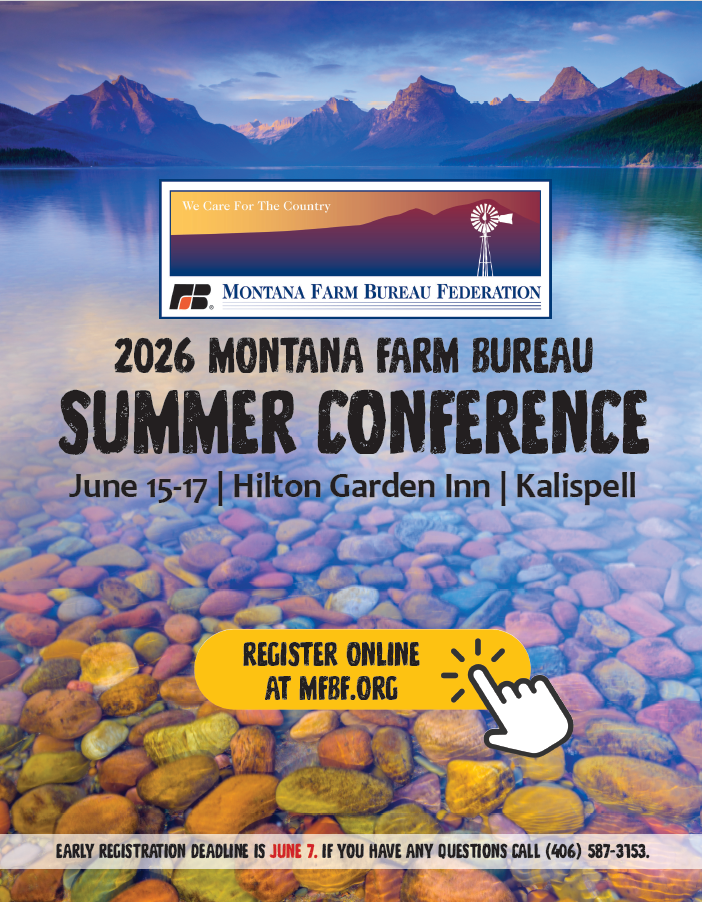
15-17 - Farm Bureau Conference (Kalispell, MT)
-
-
-
July
August
September
-
13-15 WSE Expanding Markets Conference (Columbus, MT)
November
-
6 - SMR IMS Fall Meeting (Vermillion, Alberta)
-
16-18 - StrongHER Together Conference (Fort Benton, MT)
December
-
-
23 - Governor's Summit on Local Food & Ag (Helena, MT)
Contacts
Stacey Barta, State Coordinator for Rangelands
(406) 594-8481
SBarta@mt.gov
Rangeland Resources Committee:
Diane Ahlgren, Chair
Perri Jacobs, Vice Chair
Steve Carey
Sigurd Jensen
Jim Anderson
Ryan Green
|
|
|
|
|