|
Celebrate National Invasive Species Awareness Week February 23-27, 2026 |
|
|
Join the Montana Invasive Species Council in celebrating National Invasive Species Awareness Week on February 23-27, 2026. Visit https://naisma.org/programs/nisaw/
The Montana Invasive Species Council (MISC) is a statewide partnership working to protect Montana’s economy, natural resources, and public health through a coordinated approach to combat invasive species.
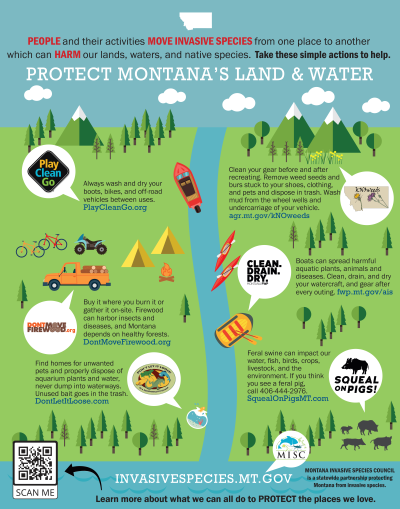
MISC and our partners urge all Montanans to share this information widely and take these simple measures to be informed, attentive, and accountable for preventing the spread of terrestrial and aquatic invasive species.
Defending our Health by Stopping the Spread

The term "invasive" is used for non-native species that spread and reproduce rapidly, displace native species, and cause major disturbance to the areas in which they are present. Invasive species can cause irreversible harm to the environment and the economy, and often pose a threat to plants, animals, and human health. The good news is that solutions to this problem start at home.
By taking some basic care, you can greatly reduce the risk of spreading invasive species to the places that you love. Here’s how:
- Clean, drain, and dry all watercraft, trailers, and equipment when boating or fishing.
- Comply with watercraft inspection and decontamination requirements.
- Clean hiking boots, waders, boats and trailers, off-road vehicles, and other gear in between outings.
- Never dump aquariums or live bait into waterways
- Buy firewood near where you’ll burn it or gather on site when permitted.
- Buy forage, hay, gravel, and mulch that are certified as “weed-free.”
Report invasive species or anything out of the ordinary using an app like iNaturalist.org or by contacting your local weed district, extension office, or agency personnel.
|
|
|
|
Learn about prevention campaigns at https://invasivespecies.mt.gov/montana-invasive-species/prevention-campaigns
|
|
USGS Invasive Species Science: Innovation for a Healthy Nation
February 23 @ 12:00 pm MST
This webinar highlights how U.S. Geological Survey scientists are advancing innovative, science based approaches to prevent, detect, and manage invasive species across diverse ecosystems. Speakers examine applied research on contaminants and health effects in aquatic systems, strategies to reduce wildfire risk from invasive vegetation in Hawaii, and the development of acoustic deterrents to control invasive carp. Together, these talks demonstrate how USGS research supports ecosystem resilience, public health, and natural resource management nationwide.
February 24 @ 12:00 pm MST
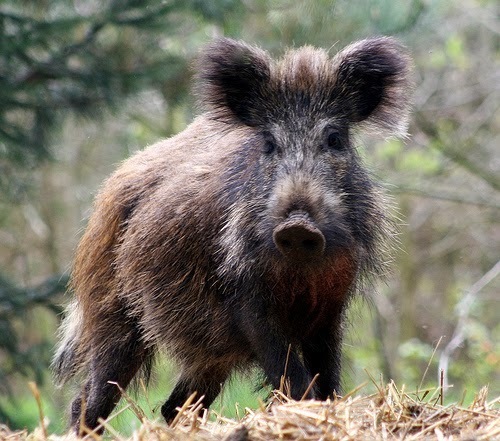
The presentation will provide an overview of recent regulatory changes, field operations, and cross jurisdictional collaborations that support Alberta’s approach to wild boar control. Importantly, this session will connect wild boar management to broader public health protection. Wild boar can carry and spread diseases such as African swine fever, brucellosis, and other zoonotic pathogens that threaten livestock, food systems, and human health.
 |
Current Situation of the New World Screwworm in Mexico
February 25 @ 12:00 pm MST
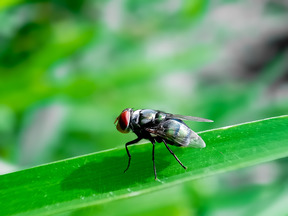
The New World screwworm remains one of the most serious transboundary threats to animal health, livelihoods, and public health in the Americas. New World screwworm infestations pose direct risks to animal welfare and human health. The larvae can infest wounds in livestock, wildlife, pets, and humans, causing severe tissue damage and, in untreated cases, life threatening complications. In this webinar, participants will learn about the current situation of the New World screwworm in Mexico and the actions being carried out to prevent its spread and protect both livestock and people
|

February 26 @ 12:00 pm MST
From the introduction of deadly microbes into seafood to the clogging of cooling systems of a nuclear power plant, marine invasive species are more than just costly pests that harm food webs. This talk will explore some of the surprising ways that marine invasive species impact our health, and summarize a new white paper from the Invasive Species Advisory Committee, advising federal agencies on “Opportunities to Improve Marine Biosecurity“. See the white paper at https://www.doi.gov/media/document/isac-marine-biosecurity-white-paper-2
February 27, 2026 @ 12:00 pm MST
Invasive species pose a growing and often underrecognized threat to American food security, public health, and economic stability. This webinar will present key findings from a white paper developed by the Invasive Species Advisory Committee (ISAC), which outlines how invasive animals, plants, and pathogens directly threaten the food security, prosperity, health, and safety of the American people.
 |
|
Invasive species experts joined Voices of Montana host Tom Schultz to talk about NISAW, invasive species, and what the public can do to protect Montana's lands and waters. The Voices of Montana podcast can be accessed at https://voicesofmontana.com/podcasts. Stay tuned to the Northern Agriculture Network at https://www.northernag.net/ the week of NISAW for more great content. |
|
|
|
|
|