National Invasive Species Awareness Week
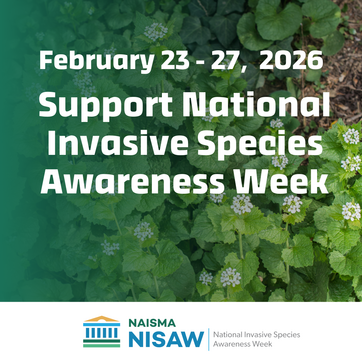
Defending Our Health by Stopping the Spread -February 23–27, 2026
The North American Invasive Species Management Association (NAISMA) announces the return of National Invasive Species Awareness Week (NISAW) from February 23–27, 2026, bringing together leaders from government agencies, Tribal nations, nonprofit organizations, academic institutions, and community groups for the nation’s largest cross-sector effort to prevent and manage invasive species.
With this year’s theme, “Defending Our Health by Stopping the Spread,” NISAW 2026 highlights the undeniable link between invasive species and human well-being. Invasive plants, animals, insects, and pathogens increasingly threaten public health, food security, recreation, infrastructure, and ecosystem stability across North America. This year’s events emphasize coordinated action and practical prevention strategies that every individual, organization, and policymaker can take.
A Critical Moment for Invasive Species Awareness
“Invasive species impact every community. Whether through wildfire risk, agriculture losses, water shortages, vector-borne diseases, or damage to critical infrastructure,” said Christie Trifone-Millhouse, Executive Director of NAISMA. “This year’s theme underscores a powerful truth: Protecting our environment is directly tied to protecting our health. NISAW 2026 is a rallying point for collaboration and solutions.”
NISAW 2026 will spotlight key issues such as:
- Public health impacts of invasives, including allergens, toxins, and disease vectors
- Aquatic invasive species threatening drinking water systems and fisheries
- Forest pests and pathogens are increasing wildfire risk and reducing carbon storage
- Agricultural and economic damages affecting food systems and rural communities
- Best practices for prevention, including recreation-based spread prevention, clean equipment protocols, and biosecurity principles
Visit the website: https://naisma.org/programs/nisaw/
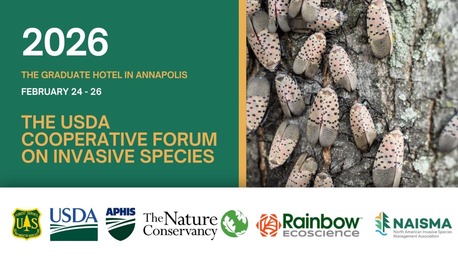
Emerald Ash Borer - photo Bugwood
Were you too busy to watch?
If you missed attending these online events, take some time to watch these recording before field season starts.
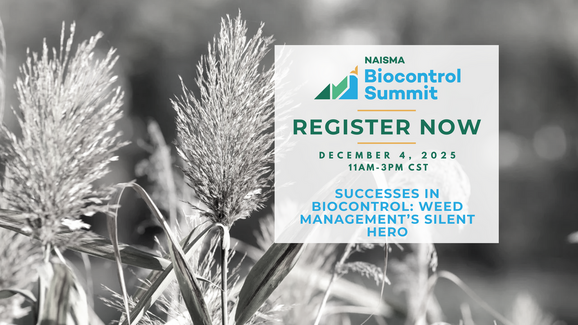
2025 Annual Biocontrol Summit: Successes in Biocontrol – Weed Management’s Silent Hero, held on December 4, 2025.
This year’s summit highlighted the often-overlooked successes of classical biological control through presentations from broad-scope land managers and leading biocontrol experts. Speakers shared firsthand experiences from established programs demonstrating measurable reductions in target weed populations, strengthened community engagement, and the importance of documenting these outcomes at a time when funding, institutional support, and federal biocontrol capacity in the United States are declining.
Several Montanans were presenters at the Biocontrol Summit:
- Dr. Jeff Littlefield - Montana State University
- Melissa Griffiths - Madison Valley Ranchlands Group - Weed Committee
- Todd Breitenfeldt - Jefferson County Weed District & Whitehall Biocontrol Project
- Melissa Maggio - Montana Biocontrol Project

2nd International Invasive Species and Climate Change Conference (IISCCC)
Organized by the Regional Invasive Species and Climate Change (RISCC) Management Network and hosted by NAISMA, IISCCC 2025 brought together researchers, practitioners, and partners from across regions and disciplines to explore the complex and evolving intersections of invasive species management and climate change. The presentations, discussions, and shared perspectives made this conference both inspiring and impactful.
If you were unable to attend all sessions or would like to revisit the content, recordings from both days are now available:
Additional presentation materials, resources, and conference information can be found on the IISCCC 2025 webpage: https://www.risccnetwork.org/iisccc-2025 [api.neonemails.com]
|