| |
Montana Highground Newsletter
December 2025
|
|
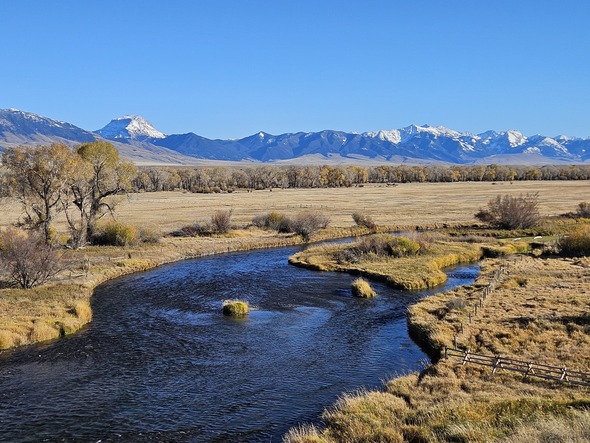
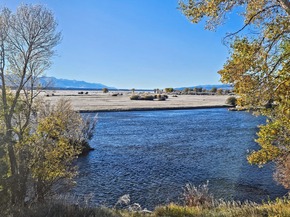
A trout stream turns dark blue when highlighted by the golden river valley. Snow looming on the mountain peaks signifies fall will soon be over and winter is on its way. (Photo: Madison Valley, Montana. By: Shylea Wingard)
|
|
|
Welcome to the December edition of the "Montana Highground" floodplain newsletter, a quarterly publication by The Montana Department of Natural Resources and Conservation (DNRC). This edition highlights upcoming educational events and floodplain resources that you can use when managing growth and development in your local floodplains.
As we transition into 2026, the only constant seems to be change. Historic flash floods and shifts in federal policies and programs during 2025 demonstrated the essential role floodplain managers play in limiting flood losses in our communities. The DNRC Floodplain team thanks you for your work to educate, inform, and reduce flood risk. Happy Holidays!
|
|
Montana Floodplain Resource Seminar 2025 Summary
|
|
|
In November, the The Montana Department of Natural Resources and Conservation (DNRC) floodplain community assistance program (CAP) hosted the annual Floodplain Resource Seminar. This training opportunity provided three days of online floodplain learning to 108 participants in a seminar titled "Floodplain Management in a Changing World." Thirty-two percent of attendees were Certified Floodplain Managers (CFMs) who earned up to 12 continuing education credits with the Association of State Floodplain Managers (ASFPM). We want to thank the presenters who shared their time and expertise with attendees.
A brief survey was sent to participants after the event to help guide, improve, and plan next year’s event. The survey indicated attendees favored the 3-day/4-hour per day, virtual format so at this time there are no plans to change the format. We invite you to attend next year and welcome your comments, ideas, or suggestions. Please email: .
|
|
The NFIP Extension: What does it mean for flood insurance policy holders?
On November 12, the House of Representatives passed a continuing resolution to fund most of the federal government, including the National Flood Insurance Program (NFIP), until January 30, 2026. The reauthorization is retroactive so any flood insurance applications or premiums held since October 1st, during the federal government shutdown, can now be processed.
|
|
|
Permitting Tip: Special Projects in Floodplains
|
|
|
|
Beavers can help build healthier and more resilient floodplains. Some landowners and watershed groups are using beaver mimicking tools to enhance stream restoration projects. Often these projects require applicants to work closely with local floodplain administrators on permitting. Pre-project planning meetings are recommended not only in the project stage, but also in the grant application process.
Click here for a list of local floodplain administrators. The directory is updated monthly with new contact information.
|
|
|
|
|
|
FLOOD INSURANCE TIP
The Benefits of NFIP Participation
The Benefits of NFIP Participation
Flood insurance is required for all buildings in a mapped high risk flood zone if they are financed by federally backed loans or mortgages, including Veteran and rural development programs.
Federal flood insurance is available to all homeowners, business owners and renters if the community participates in the National Flood Insurance Program (NFIP). Given most homeowners’ insurance policies do not cover flood damage, flood insurance is a viable risk protection tool.
If a community decides to withdraw from the NFIP, they are immediately sanctioned and may experience the following impacts:
- Residents may be prevented from purchasing or renewing NFIP flood insurance. Flood insurance purchased from private firms may be limited or more expensive. In some cases, insurance may not be purchased on structures private firms deem to have high flood risk.
- Federally backed loans, mortgages, or finance programs may be impacted, recalled, or not offered. Federal grants for development or home improvement may not be available.
- Federal officers and agencies are prohibited from approving any financial assistance for acquisition or construction purposes in the SFHA.
- If a disaster occurs, federal disaster assistance, loans or subsidies would be limited or unavailable.
It can be extremely difficult for a sanctioned community to get back in the NFIP program. It has taken some Montana communities over 10 years to rejoin. Communities are required to submit an application to FEMA to join the NFIP and to bring all non-conforming development within the FEMA mapped floodplain into compliance. For more information, see the FEMA Fact Sheet “Disaster Assistance When a Community is Not Participating in the National Flood Insurance Program” (October 2024).
|
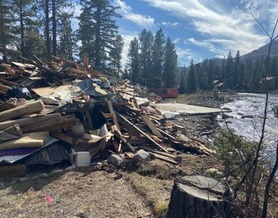
Photo: Flood debris. By: Doug Mahan, Colorado NFIP State Coordinator
|
|
Floodplain Resource Tools
|
|
 |
|
Local Floodplain Management Programs: A New Report Highlights Local Challenges
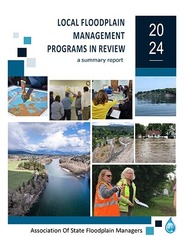
The Association of State Floodplain Managers (ASFPM) released the Local Floodplain Management Programs in Review 2024, a comprehensive look at the challenges faced by local floodplain programs.
|
The report is based on a spring 2024 questionnaire that drew responses from 448 NFIP participating communities in 47 states and the District of Columbia.
The report confirms what many local officials already know: flooding is a persistent and growing threat for communities of all sizes across the United States, underscoring the need for strong local floodplain management programs to reduce risk and protect lives and property.
Nearly 70% of respondents reported at least one flood event in the past six years, and more than 75% said their communities had flooded within the last decade. The report includes a number of demographics related to job title, experience, education, certifications, and salary. Download the full report.
|
|
Video: How to Issue a Floodplain Development Permit
 |
|
Kansas Department of Agriculture Division of Water Resources packed a thorough overview of floodplain administration and permitting into a one-hour online training session.
To enhance your skills - check out their YouTube video at: How to Issue a Floodplain Development Permit. Please remember that Montana has higher floodplain standards than Kansas.
|
|
|
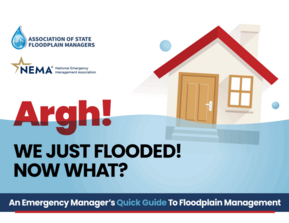
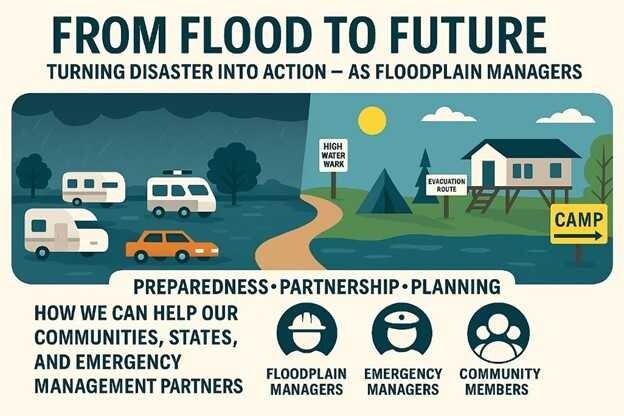
An Emergency Manager's Quick Guide to Floodplain Management
Emergency managers play a key role before, during, and after a flood to ensure community safety and resilience. This Quick Guide was developed to help emergency managers understand and implement floodplain management practices that will not only aid in immediate disaster recovery but also mitigate future risks.
|
|
ASFPM Post-Disaster Recovery Committee
To better address post-disaster recovery assistance, the Association of State Floodplain Managers (ASFPM) created the Post-Disaster Recovery Committee.
|
|
 |
|
|
 |
|
Education, Training and Events
|
January 9, 2026, 9:00 a.m.: Floodplain Bootcamp Training Series - a 1-hour online training offered every Friday. Contact shylea.wingard@mt.gov
February 3, 2026, 10:00 a.m. - 12:00 p.m.: CFM Exam Study Webinar: A Guide to Becoming a CFM. Sponsored by ASFPM. Link to register: https://floods-org.zoom.us/webinar/register/WN_E3u8C1GtQwKB0AvQ2lVDsQ#/registration
February 24, 2026: Pre-AMFM Conference In-Person Training | FEMA Elevation Certificates (Great Falls, MT). More information to come. Contact shylea.wingard@mt.gov.
February 25-27, 2026: AMFM Conference (Great Falls, MT) | Register to attend at mtfloods.org or Association of Floodplain Managers
|
|
 |
|
Association of Montana Floodplain Managers 2026 Conference
|
The Association of Montana Floodplain Managers (AMFM) will host the 26th annual Conference in Great Falls February 24-27, 2026.
The conference offers floodplain management resources to improve education about regulations, best practices, and assist with flood risk, safety, and mitigation. This annual conference brings floodplain professionals from all areas together to promote common sense floodplain development for Montana. For more information, to register, or to become an AMFM member visit mtfloods.org.
|
|
|
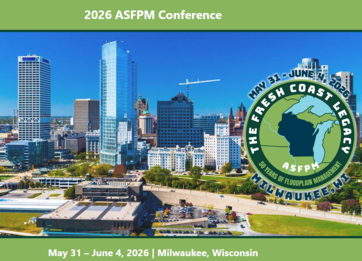
The Association of State Floodplain Managers (ASFPM) will host the 50th Annual National Conference on the shores of Lake Michigan on May 31 – June 4, 2026.
“The Fresh Coast Legacy: 50 Years of Floodplain Management” will celebrate five decades of flood risk reduction and community resilience and feature virtual and in-person opportunities. Registration opens in February 2026.
|
|
DNRC Grant Opportunities
DNRC administers a wide range of grants and loans for Montana, assisting cities and towns, conservation districts, private landowners, and other groups in managing natural resource and floodplain issues at the local level. Visit the Montana DNRC Grants Submission Manager to learn more.
|
|
Montana Resiliency Fund Direct Project Funding Opportunity
|
|
|
Montana Disaster and Emergency Services (MT DES) is pleased to announce the release of the Montana Resiliency Fund – Direct Project Funding Opportunity.
This funding opportunity is designed to support hazard mitigation projects that reduce long-term risk to people and property from natural hazards. Eligible applicants include state agencies, federally recognized Tribal organizations, and local governments (cities, towns, counties, and special districts).
See DES Mitigation website at: des.mt.gov/Mitigation/Mitigation-Program
|
|
Key Dates:
-
Notice of Interest (NOI) Deadline: Wednesday, January 7, 2026, by 5:00 p.m. (required to be eligible to apply)
-
Application Submission Deadline: Friday, March 6, 2026, by 5:00 p.m.
-
Project Selection Notification: Friday, April 10, 2026
-
NOFO Briefings: Tuesday, December 16, 2025, and Thursday, December 18, 2025, at 2:00 p.m.
|
|
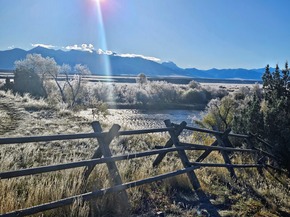
A frosty fall morning (Photo: Shylea Wingard)
|
|
Click to contact your state and local floodplain managers
|
|
DNRC Floodplain Community Assistance Program
Traci Sears, DNRC Floodplain State Coordinator -National Flood Insurance Program
Ph. (406) 444-6654 | tsears@mt.gov
Shylea Wingard, DNRC Floodplain CAP Assistant/ Floodplain Planner
Ph. (406) 581-5254 | shylea.wingard@mt.gov
|
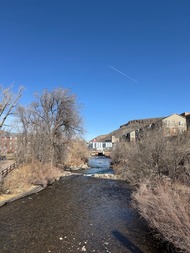
Photo: Community development along waterway. By: Traci Sears
|
|
|
|
|