|
 The Montana Department of Natural Resources and Conservation’s Rangeland Resources Program (RRP) promotes and advocates for healthy, sustainable rangelands that supports people, wildlife, recreation, clean water, and the natural scenic beauty of Montana. The Rangeland Resources Committee provides guidance to the Rangeland Resources Program and is administratively attached to DNRC.
News
Buy or develop? Weighing the true cost of replacement heifers
Kenny Burdine, University of Kentucky
As we roll through fall, spring-born calves will be weaned and many of those heifer calves will be held for replacement purposes. At the same time, a large number of bred heifers will hit the market and be available for the same purpose. It is not uncommon for someone to comment on how expensive bred heifers are and assume that they can develop their own heifers for much less. While this is true in some cases, I also think it is easy to underestimate some of those costs. The purpose of this article is to briefly highlight three things that are crucial to consider when a cow-calf operator tries to make this comparison. And I would argue these are even more significant given the strength of the current cattle market.
|
Monitoring on U.S. Pasture and Rangelands: Highlighting the Value of Informal Approaches for Practical Use
Rangeland Ecology & Management, Nov. 2025
Formal monitoring is widely promoted by scientists, range professionals, Extension services, and conservation organizations in the U.S. as a tool for ranchers to develop knowledge about the condition of pasture and rangelands and to improve management decisions. Despite extensive scientific literature on formal monitoring, informal monitoring—such as visual assessments, systematic observations, and photography—has received limited attention. Through qualitative interviews with ranchers (n = 63) across three U.S. ecoregions (MI, OK/TX, WY/CO), this study explores how ranchers define and utilize both formal and informal monitoring methods. We found that formal, “scientific,” monitoring methods are often underutilized due to time constraints, labor demands, perceived irrelevance, and the inadequacy of data to capture localized variability that ranchers observe and manage.
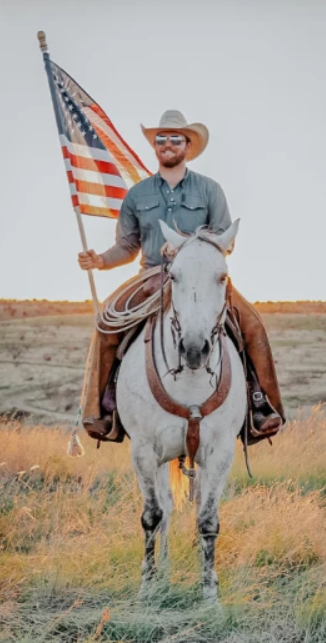
Alternative Ranch Revenue: Does Influencing Pay Off?
Shaye Koester-Wanner - Coming back to the ranch doesn’t come without a price. More often than not it may require adding a new enterprise to pay for an additional salary, or holding down a job in town to make up the difference.
However, the rising generation of ranchers has become more creative with ways to create this alternative revenue and still ranch through the use of online platforms and social media.
Tucker Brown is one example of how social media influencing has created a positive impact on the ranch and his family.
|
Supporting dryland restoration success with applied ecological forecasting of seeding outcomes – Restoration Ecology
Ecological restoration is increasingly used to sustain biodiversity and ecosystem services. In drylands of the western United States (US), post-disturbance restoration often involves seeding treatments to promote the recovery of native plant communities. Spatial and temporal variability in environmental conditions influences plant establishment and contributes to low restoration success in certain locations and years.
|
|
Conservation & Partnerships
 What If We Tried It This Way?
Few industries carry tradition as strongly as agriculture. Generations of ranchers have built knowledge through firsthand experience, passing down practices shaped by the challenges of their time. That inheritance deserves respect. Yet every generation must also face its own realities, asking hard questions about whether the methods of the past still serve the needs of today.
From Ashes to Innovation: How Virtual Fence is Changing Post-fire Ranching
The 2022 Moose Fire in Idaho burned thousands of acres of the Smith family’s federal grazing allotment to ash. But thanks to an experiment with virtual fencing, they were able to graze the unburned portions the following year.

|
|
|
Monthly Fun Soil Fact:
💧You Can Smell Rain for a Reason💧
That earthy smell you love to sniff after a cool rain? That's actually geosmin, a compound released by soil bacteria called Streptomyces. The human nose evolved to detect geosmin at concentrations as low as 5 parts per trillion (ng/L) helping us locate water
|
|
|
|
 Looking to buy or sell hay or straw? Need to lease pasture or have some available? Mountain West Grazing is here to help! With the launch of the grazing connection, you can easily post listings FOR FREE to connect with others in the ag community - this is your go-to resource.
Agency Updates
Funding Available Now!
Multiple Grant Opportunities
DNRC administers a wide range of grants and loans for Montana, assisting cities and towns, conservation districts, private landowners, and other groups in managing natural resource issues at the local level.
Irrigation and Development Grants
The Department of Natural Resources and Conservation (DNRC) irrigation Development Grant (IDG). Program supports irrigation projects that increase or sustain irrigated agriculture in Montana. Projects must address a need that will result in a benefit to irrigated agriculture.
 Early Detection, Rapid Response Program: Overview of the 2025 Field Season
After prevention, early detection and rapid response (EDRR) is the most time and cost-effective way to manage invasive plants. Montana Department of Agriculture’s (MDA) EDRR Program works with partners across Montana to prevent widespread infestations of new threats, protecting agriculture, natural resources, and native ecosystems. Summer 2025 saw both encouraging and concerning developments in these efforts. This post highlights a few EDRR endeavors, helping to raise awareness and hopefully contributing to continued or greater success in 2026.

BLM delivers on administration priorities
Under President Trump’s second term, the Bureau of Land Management is making major strides in putting America’s public lands to work for the American people. From boosting domestic energy production to cutting red tape and expanding access to natural resources, the BLM is ensuring that public lands support jobs, economic growth, and American Energy Dominance. Here’s a look at what the BLM accomplished in just the first nine months.
 USDA Announces Opening of Sterile Fly Dispersal Facility in Tampico, Mexico
Today, the U.S. Department of Agriculture (USDA) announced the next milestone in the fight against New World screwworm (NWS) – the opening of a sterile fly dispersal facility in Tampico, Mexico. The Tampico facility will allow USDA to disperse sterile flies aerially across northeastern Mexico, including in Nuevo Leon.

 FWP Public Notices & Opportunity for Comment
Podcast Corner

AoR 170: Dr. Jim Sprinkle on The Perfect Range Cow
Cattle growth goals and livestock use of large, topographically challenging landscapes have been at odds for some decades. Weaning weights went up, cow weights went up, and herd distribution on rangelands went down. Dr. Jim Sprinkle, an Extension beef specialist at the University of Idaho, has been doing research that is providing guidance on developing cows that do both, leading to herds that are more efficient on feed and graze hillsides -- the Perfect Range Cow.
|

In this episode, Haylie Shipp sits down with eco-nutritionist Sara Keough and rancher Craig French to explore the surprising ways soil health and human health are connected. S
|
Aging farmer demographics, rising land values and farm stress are creating a challenging environment for the successful transfer of farms and ranches to the next generation. Behind the legal, financial and familial considerations of farm and ranch transition, lay a wellspring of stories that do not often surface in conventional planning discussions. In Season Four, Reframing Rural will unearth the stories laying beneath the logistics, stories from families navigating complex social and environmental factors as they work to preserve their agricultural way of life.
|
Research Center
To make the 406 Rangelands newsletter more reader friendly, the "Research Center" section has been permanently moved to the Rangeland Resources Program website. You can access it here.
|
|
December
-
-
6 - Far Out & Waiting Training (Belgrade, MT)
Registration required. Questions to Samantha Ferrat via email or 406-949-0869
-
-
11 - Ladies Who Ag (Belgrade, MT)
Registration required by Dec. 8. Questions to Samantha Ferrat by email or at 406-949-0869
-
12 - Know Your Co-Op (Plains, MT)
RSVPs appreciated to Carissa McNamara via email or at 406-333-1886
-
13 - Know Your Cuts 101 & 102 (Ronan, MT)
RSVP here. Questions to Carissa McNamara via email or at 406-333-1886
-
17 - Ladies Who Ag (Townsend, MT) Registration req by Dec. 15
Questions to Samantha Ferrat by email or at 406-949-0869.
-
19 - Ag Producer & Ag Community Training (Billings, MT)
For more information, email: gusty@northernplains.org
-
January
February
March
-
11 - Invasive Annual Grasses Wkshp (Winnett, MT) Details TBD
April
-
10-12 - Red Ants Pants: Women in Ag Communities
Scholarships are available! Learn more and register HERE
Contacts
Stacey Barta, State Coordinator for Rangelands
(406) 594-8481
SBarta@mt.gov
Rangeland Resources Committee:
Diane Ahlgren, Chair
Steve Carey
Sigurd Jensen
Jim Anderson
Perri Jacobs
Ryan Green
|
|
|
|
|