|
 The Montana Department of Natural Resources and Conservation’s Rangeland Resources Program (RRP) promotes and advocates for healthy, sustainable rangelands that supports people, wildlife, recreation, clean water, and the natural scenic beauty of Montana. The Rangeland Resources Committee provides guidance to the Rangeland Resources Program and is administratively attached to DNRC.
News
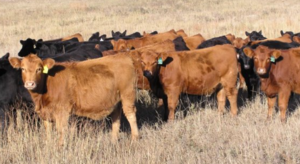
The Economics of Heifers: Keeping Replacements vs. Buying Bred Heifers
There is evidence of an increase in heifer retention with improved drought conditions across much of the Central and Northern Plains and summer video auctions reporting a smaller percentage of heifer calves. Retention does not appear to be aggressive. With the calf market on pace for another year of record prices providing incentive, herd rebuilding remains sluggish compared to past cycles.
|
Mastering the “Paddock Between Your Ears”
During a livestreamed, virtual discussion organized and hosted by Good Grazing Makes Cent$, ranchers from California, Montana, and Texas shared their expertise and outlook on “Solving the Number One Hindrance to Intensive Grazing.”
“The overall tendency of people to not want to change, I’ve heard of it described as the biggest challenge is the paddock between your ears,” Roger Indreland, owner and operator of Indreland Angus near Big Timber, Montana, said.
|
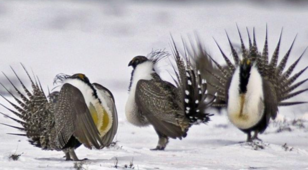
BLM seeks public comment on sage-grouse plan amendments
The Bureau of Land Management is seeking public comment on changes to its proposal on how to manage Greater Sage-grouse habitat across eight Western states and is inviting the public to weigh in. The amendments would affect BLM-managed public lands in California, Idaho, Montana, Nevada, North Dakota, South Dakota, Utah, and Wyoming.
Proposed amendments to the resource management plans would continue to ensure responsible habitat stewardship while making more public land available for energy development and mining to support President Donald J. Trump’s Executive Order, “Unleashing American Energy.” Proposed changes incorporate key research published since original plans were approved in 2015, including new information about how sage-grouse respond to drought and disturbance.
|
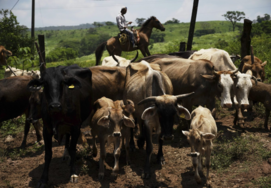
New World screwworm reemerges, but U.S. livestock remains safe
Despite the eradication of Cochliomyia hominivorax, or the New World screwworm, in the U.S. in the 1960s, infections are appearing in South American livestock, and a case of human infection has been confirmed in the United States.
However, Dr. Christine Navarre, the extension veterinarian for the LSU AgCenter, stresses that there is no cause for concern regarding livestock.
“It is not currently in the U.S., that needs to be made very clear. But we do need people to watch out for it, because if we do see it, we want to catch it as quickly as possible,” she explains.
|
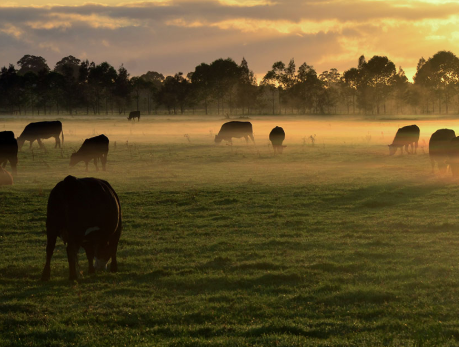
Montana Confirms 14th Brucellosis Case in Beaverhead County Bull
The Montana Department of Livestock confirmed Friday that a bull from a Beaverhead County ranch tested positive for brucellosis, marking the 14th case of the reproductive disease detected in the state since 2010.
The infected animal was identified during required testing at a livestock market in late July and was subsequently euthanized. Tissue samples sent to the USDA’s National Veterinary Services Laboratory in Iowa confirmed the presence of Brucella abortus, the bacteria that causes the disease.
The affected herd has been placed under quarantine while the Department of Livestock conducts an epidemiological investigation to trace animal contacts and movements.
“While detections of brucellosis are a hardship on operations, this detection is still a reflection of the success of our state brucellosis program,” said Dr. Brenee Peterson, a Department of Livestock veterinarian. “Through the work of DSA producers and local veterinarians, we continue to detect the disease early and prevent the export of a brucellosis infected animal to one of our trading partners.”
|
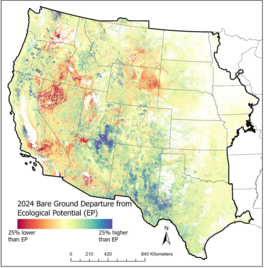
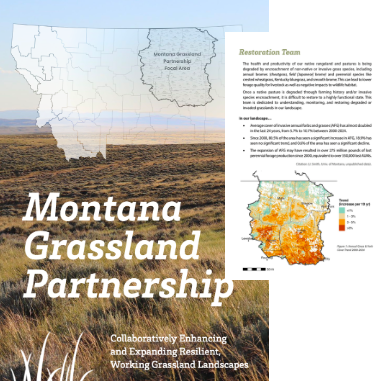
New generation of Ecological Potential (EP) fractional component cover predictions
The USGS RCMAP (Rangeland Condition, Monitoring, Assessment, and Projection) project has released a new generation of Ecological Potential (EP) fractional component cover predictions (bare ground, herbaceous, litter, shrub, sagebrush, and tree) and 2024 departures from EP. The data are available for download at MRLC [mrlc.gov] and in the MRLC Rangeland Viewer [mrlc.gov].
Understanding of the potential vegetation conditions of a site in an undisturbed state is invaluable for interpreting trends, disturbance impact, and guiding restoration targets. We model EP vegetation conditions to address this need. EP fractional cover data products represent the potential cover given the most productive, least disturbed, portion of the 1985-2024 Landsat archive. Models used to predict EP cover were trained on ecologically intact sites through time where annual herbaceous cover is low, no known disturbance or land treatment has occurred over the study period, and bare ground cover is relatively low.
In addition to EP cover layers, we calculate the departures of contemporary (2024) RCMAP time-series cover from EP. These departure maps are useful in highlighting locations that may have shifted from potential due to fire, annual grass invasion, drought, etc., and those vulnerable to future transition. Finally, we derived 11 vegetation states (sparsely vegetated, annual grassland, natural perennial grassland, irrigated perennial grassland, native sagebrush steppe, invaded sagebrush steppe, sagebrush shrubland, non-sagebrush shrubland, chaparral, savannah, and forest) in the EP layers and in the 1985 and 2024 RCMAP time-series data. Comparison among the three dates (EP, 1985, and 2024) of vegetation states can yield insights into potential shifts in plant communities.
|
Mastering the “Paddock Between Your Ears”
During a livestreamed, virtual discussion organized and hosted by Good Grazing Makes Cent$, ranchers from California, Montana, and Texas shared their expertise and outlook on “Solving the Number One Hindrance to Intensive Grazing.”
“The overall tendency of people to not want to change, I’ve heard of it described as the biggest challenge is the paddock between your ears,” Roger Indreland, owner and operator of Indreland Angus near Big Timber, Montana, said.
|
|
Conservation & Partnerships

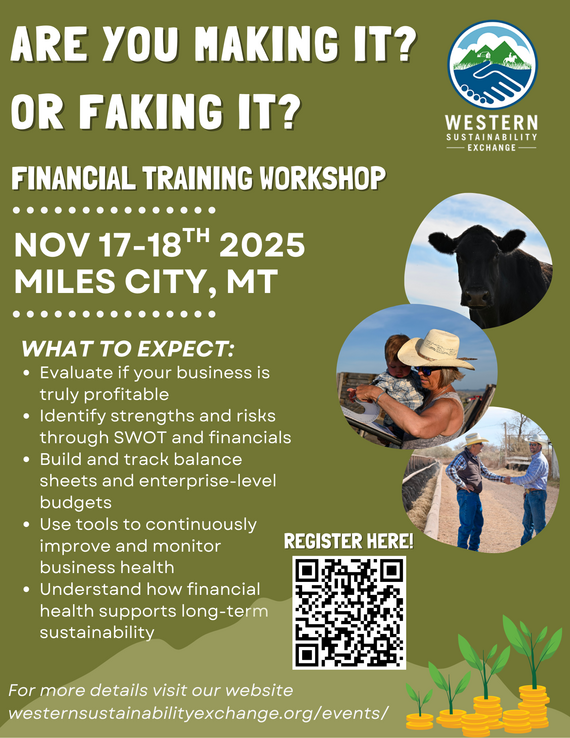
Manage the business as well as you manage the land
 Ranching for Rivers Funds Available!
If you are planning a project for Fall 2025, applications must be submitted by August 12th to be considered during the August 20th Application Review Committee Meeting. Funded projects must be completed by December 31, 2025.

Along with WSE, EMRA is proud to have launched the Rancher 2 Rancher Mentorship program (R2R). Applications are coming in! Let us help match you to a fellow rancher who could mentor you along your regenerative journey.
As a mentee, you get to learn from peers who have experience that can save you time and money. This program can take the frustration and risk out of transitioning to regenerative grazing. Technical assistance can include the development of grazing management plans, infrastructure development and much more. If this sounds interesting to you, reach out Sue, Sarafina or a board member. Ready to start now? Apply for a mentor HERE. [emragroup.us1.list-manage.com]
WE NEED YOUR HELP!!
WSE is developing a Financial Analysis System to help farmers and ranchers assess the viability of their current operations and explore opportunities for diversification.
To ensure this tool is as useful and relevant as possible, we’re gathering input directly from producers and that’s where you come in.
Please help us spread the word by sharing this short survey with farmers and ranchers in your network: Survey link: [forms.gle]https://forms.gle/jkAuEWrRsmPyY7Sd6 [forms.gle]
 Looking to buy or sell hay or straw? Need to lease pasture or have some available? Mountain West Grazing is here to help! With the launch of the grazing connection, you can easily post listings FOR FREE to connect with others in the ag community - this is your go-to resource.
Agency Updates
Funding Available Now!
Multiple Grant Opportunities
DNRC administers a wide range of grants and loans for Montana, assisting cities and towns, conservation districts, private landowners, and other groups in managing natural resource issues at the local level.
 2025 Waste Disposal Events
September 23- Plentywood
September 24 - Glasgow
September 25 - Glendive
September 26 – Hardin
Pre-registration Deadline Sept. 16, 2025

Interior Department advances coal lease sales in Alabama, Utah and Montana
The Department of the Interior is moving forward with three competitive coal lease sales in Alabama, Montana and Utah this fall. These sales reflect the Trump administration’s commitment to strengthening American Energy Dominance, supporting local economies and securing a stable supply of critical resources for the nation’s economy.
“Coal has long been the backbone of America’s energy and industrial strength,” said Interior Secretary Doug Burgum. “By moving forward with these lease sales, we are creating good-paying jobs, supporting local communities, and securing the resources that keep America strong. President Trump’s leadership is putting American workers first and ensuring our nation’s energy future is built on reliable, homegrown resources.”
 USDA Announces Forest Health Resilience Projects to Improve Timber Production
The U.S. Department of Agriculture (USDA) is investing more than $8 million for five new projects to reduce wildfire risk, protect water quality, and improve forest health across the nation. This expands President Trump’s mission to improve the lives of American families, support rural communities, and expand domestic timber production.
Today’s announcement builds on Secretary of Agriculture Brooke L. Rollins’ commitment to wildfire preparedness and President Donald J. Trump’s vision to safeguard American families. USDA and its agencies are working together to take action to protect people, communities, and the natural resources on which this country depends.

 FWP Public Notices & Opportunity for Comment
Commission approves future fisheries projects
The Fish and Wildlife Commission recently approved nearly $680,000 in funding for projects through the Future Fisheries Improvement Program (FFIP). In total, 17 projects will receive funding through FFIP.
Among these projects is a rock ramp that will replace an irrigation diversion on the Clark Fork River to allow fish passage to the river. The ramp, along with a fish screen and plume, will keep fish out of the irrigation ditch while still delivering the water right. Another project will replace an overflow pipe at North Polly Reservoir that will increase the capacity of the reservoir and improve black crappie habitat.
Other fisheries improvement projects include restoration of streams to a natural condition, installing riparian fencing and stockwater, restoring streambanks and riparian areas, reconnecting a cold water tributary and protecting fish with a barrier. Projects will help both native and non-native fish, including Arctic grayling, bull trout, westslope cutthroat trout, pallid sturgeon, mountain whitefish, brook trout, brown trout, rainbow trout and black crappie.
 Century-Old Ranch Protected Forever
Robert (Bob) and Valerie Anderson have conserved their 884-acre historic family ranch located southwest of Livingston, Montana, in the Trail Creek area with a conservation easement.
Through a voluntary land protection agreement, or conservation easement, the century-old ranch will remain intact and available for agriculture for generations to come.
Family Ranch in Paradise Valley’s Mill Creek Drainage Conserved
The Warfield Ranch, purchased in 1947 by Laurie and Sarah’s parents, James and Margery Warfield, supports a cow-calf operation, productive hay ground, and timberland that is a “Certified Family Forest” by the American Tree Farm System. Bounded by Mill Creek to the northeast and national forest to the south, the property provides critical wildlife habitat for a variety of species in the Greater Yellowstone Ecosystem.
Laurie and her sister, Sarah, were raised on the ranch. Deeply connected to the land, community, and rural lifestyle, Laurie and her husband, Alan Redfield, a fourth-generation Montanan, raised their twin daughters, Katie and Jodi, there as well. The family continues to manage the ranch, along with Sarah. Now grown, Katie and Jodi come to the ranch frequently to help their parents as the third generation to steward the land.
Podcast Corner

AoR 165: Virtual Fence Benefits Wildlife - Jay Kehne, Conservation Northwest
How many miles of barbed wire are stretched across the rangelands of the world? How does this 'hard' fence influence wildlife populations? Is there a better way to manage livestock location that effectively manages grazing effects and cares for the other animals occupying these landscapes? Maybe this is not a new idea? Jay Kehne with Conservation Northwest believes virtual fence may be one of the answers.
|
Research Center
To make the 406 Rangelands newsletter more reader friendly, the "Research Center" section has been permanently moved to the Rangeland Resources Program website. You can access it here.
|
|
September
-
-
16 - Free Screening of Common Ground (Dillon, MT)
For more information, click here
October
November
December
Contacts
Stacey Barta, State Coordinator for Rangelands
(406) 594-8481
SBarta@mt.gov
Rangeland Resources Committee:
Diane Ahlgren, Chair
John Hollenback, Vice Chair
Sigurd Jensen
Jim Anderson
Leah Lewis
Ron Devlin
|
|
|
|
|