|
 Don’t Let it Loose: Aquatic Pet Rehoming Event at University of Montana
Encouraging responsible pet ownership through aquatic pet rehoming Tuesday, April 29, 2025.
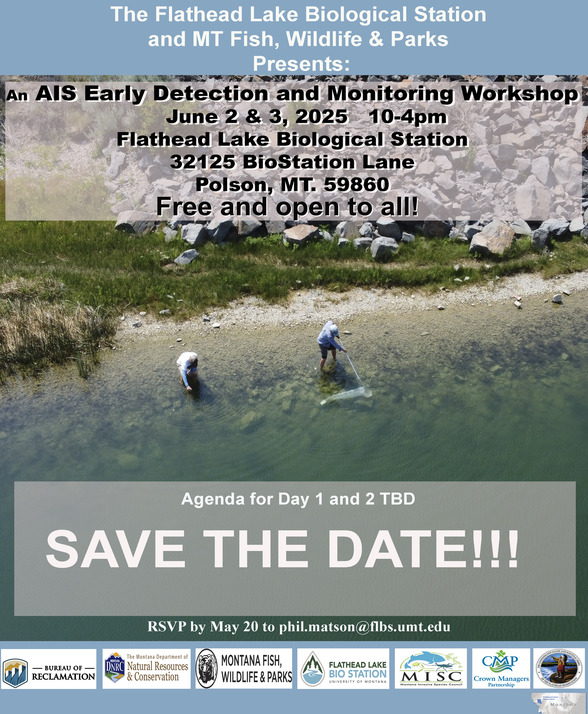
Missoula, Montana – Do you have a pet that you are no longer able to care for? Are you a recent or soon-to-be college graduate with a pet that can’t move with you? Don't Let It Loose into the wild! Instead, you can surrender your pet at the upcoming Aquatic Pet Rehoming Event hosted at University of Montana on Tuesday, April 29, 2025, from 10:00am – 3:00pm. This event is hosted by Invasive Species Action Network (ISAN) and will take place at the West Atrium inside the University Center building. At this event, local pet stores and animal rescues will be accepting fish, turtles, frogs, aquatic plants, and other aquatic pets for rehoming. Non-aquatic species, venomous animals, waterfowl, or domestic pets, such as dogs, cats, rabbits, pigs, birds, and chickens will not be accepted. There will also be knowledgeable volunteers able to discuss prohibited species, other pet rehoming options, and the impacts of invasive species on Montana’s waters.


|
|
 Long-term Response of Ventenata and Other Vegetation to Herbicide Applications
The invasive annual grass ventenata (Ventenata dubia) was first documented in North America in the 1950s. In the last 10 to 15 years, ventenata has rapidly spread across the inland Pacific Northwest, including portions of Montana and Wyoming. As a new invader relative to other annual grasses like cheatgrass (Bromus tectorum) and Japanese brome (B. japonicus), we were interested in how ventenata would respond to herbicides commonly used to control annual grasses. We were especially interested in indaziflam (Rejuvra®) as it was an emerging active ingredient for annual grass control.
Methods
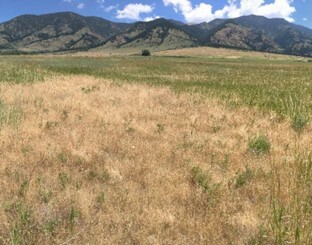
In the fall of 2016 we applied 10 different herbicide treatments to a pasture infested with ventenata near Bozeman, MT. Aside from ventenata, the most common species in the pasture included smooth brome (B. inermis), mountain brome (B. marginatus), western wheatgrass (Pascopyrum smithii), and red sorrel (Rumex acetosella).
Read more. . .
Ventenata-invaded pasture. Photo: Jane Mangold, MSU.
|
|
|
|