Conservation & Partnerships
 |
MSGOT to Meet December 11, 2023
|
|
|
|
The Montana Sage Grouse Oversight Team (MSGOT) will meet on Monday, December 11, 2023, from 10:00 a.m. to 11:00 a.m. The meeting will take place at the Helena DNRC Headquarters, Montana Meeting Room (1st floor conference room). The meeting will be streamed over Zoom and recorded.
This will be an informational meeting, no executive action will occur. MSGOT members with hear an informational presentation from the Program on the project submission and review process. All past and present meeting materials are posted on the MSGOT’s meeting web page.
Members of the public are invited to participate in person or virtually via Zoom.
Registration is also available by contacting Emily Moran at emoran@mt.gov. Requests should be received by 5:00 p.m. on Friday, December 8, 2023. Requests received after that time will be accommodated to the best of our ability.
The MSGOT oversees implementation of Montana's Sage Grouse Conservation Strategy by the Sage Grouse Habitat Conservation Program.
RSA, MT NRCS Unveil Major Partnership
Nonprofit Receives $875,000 Award, Adds Staff Position for Geospatial Coordinator
Ranchers Stewardship Alliance (RSA) is proud to announce a significant partnership with the Natural Resources Conservation Service (NRCS) of Montana, a momentous step forward in private lands conservation and prioritized ranch resiliency efforts. This partnership, solidified by an $875,000 award, will enable RSA to collaborate with NRCS and relevant partners in accelerating conservation delivery across RSA’s geography.
Ranch Stewards Book Club
Each year we try to pick out a book that’ll add value while fostering a hearty discussion during our online book club sessions. This year’s selection, Rancher, Farmer, Fisherman, achieves both of those goals.
Unfolding as a journey down the Mississippi River, Rancher, Farmer, Fisherman tells the stories of five representatives of this stewardship movement: a Montana rancher, a Kansas farmer, a Mississippi riverman, a Louisiana shrimper and a Gulf fisherman. In exploring their work, family histories and the essential geographies they protect, Rancher, Farmer, Fisherman challenges pervasive and powerful myths about American and environmental values.
Over the course of the Ranch Stewards Book Club, we’ll discuss the book in five sessions:
Monday, January 8 – Chapter 1, Rancher
Monday, January 22 – Chapter 2, Farmer
Monday, February 5 – Chapter 3, Riverman
Monday, February 19 – Chapter 4, Shrimper
Monday, March 4 – Chapter 5, Fisherman
These discussions will take place on Zoom from 7-8:30 MST and a direct link will be sent in your registration confirmation email. We’ll also send you reminders as each Book Club date approaches.
If you are one of the first 20 registrants, you can receive a complimentary copy of the book.
Landscape Explorer:
A Powerful Conservation Tool
Have you ever heard of shifting baseline syndrome? This concept—that humans tend to gradually shift the way they perceive what is “normal” for the environment around them—is important to keep in mind in landscape conservation across the Intermountain West. Looking to the past is one good way land managers can plan for future desired conditions.
A new tool from Working Lands for Wildlife can help them do just that. The Landscape Explorer Interactive Map Application takes historical imagery from the mid-twentieth century and juxtaposes it next to satellite imagery of current landscape conditions. It’s easy to use—just position the map on the area you’re working in and see how it’s changed over the last several decades by moving the slider.
|
Agency Updates
 |
The MT Invasive Species Council is now accepting applications for 2024 Aquatic Invasive Species (AIS) Grants.
Application period is from October 30 to January 7.
AIS grants are intended to increase local capacity and involvement to address AIS issues. Projects that focused on these AIS management components are eligible: prevention, early detection, education and outreach, research, and treatment.
This state funded program awards approximately $250,000 each year. Applicants may request up to $50,000 per project. Grant applicants can be local, state, tribal, or other government entities within the state; and Montana-based non-governmental entities.
Applications are due Sunday, January 7, 2024, before midnight.
AIS Grant Program Guidelines are here: Aquatic Invasive Species Grant Program | Montana Invasive Species (mt.gov)
The grant application form is here: grants.dnrc.mt.gov. Scroll down to AIS 2024 Grant Application.
Contact Liz Lodman at 406-444-0547 with any questions on the grant and application process. Questions can be emailed to dnraisgrants@mt.gov
|
 Montana Projects Receive $42 Million as Part of Unprecedented $1 Billion Investment in USDA Regional Conservation Partnership Program
The U.S. Department of Agriculture announced an unprecedented $1 billion investment in the Regional Conservation Partnership Program (RCPP) to advance partner-driven solutions to conservation on agricultural land through 81 projects. Three Montana projects will receive more than $42.3 million in funding. RCPP leverages a voluntary approach to conservation that expands the reach of conservation efforts and climate-smart agriculture through public-private partnerships. Historic funding is made possible by both the Inflation Reduction Act and the Farm Bill.
“The unprecedented demand for the Regional Conservation Partnership Program, shows how much interest there is from producers and partners for voluntary conservation on the ground,” said Tom Watson, State Conservationist in Montana for USDA’s Natural Resources Conservation Service (NRCS). “USDA is making historic investments and streamlining the program to make it work better for producers and partners. These factors in combination with the amazing partners that have brought their creativity and resources to the selected projects help deliver conservation to farmers, ranchers, and forestland owners at a larger scale than ever before.”
FACT SHEET: USDA Streamlines Regional Conservation Partnership Program, Invests Unprecedented $1 Billion in 81 Conservation Projects
The U.S. Department of Agriculture (USDA) is making historic investments to the Regional Conservation Partnership Program (RCPP) and streamlining the program to make it work better for producers and partners. This combination will deliver conservation at a scale never before achieved through RCPP. This year, more than $1 billion is being invested to advance partner-driven solutions to conservation on agricultural land through 81 projects.
RCPP leverages a voluntary approach to conservation that expands the reach of conservation efforts and climate-smart agriculture through public-private partnerships. Historic funding is made possible by both the Inflation Reduction Act, part of President Biden’s Investing in America agenda, and the Farm Bill.
 Montana landowner group supports overturning Wyoming judge's corner crossing ruling
Billings Gazette, November 29, 2023, Brett French
A Montana landowner group has filed a brief asking the U.S. Court of Appeals for the 10th Circuit to reverse a Wyoming district court judge’s 2023 ruling in favor of four hunters who corner crossed, according to reporting by WyoFile.

December Weed Post
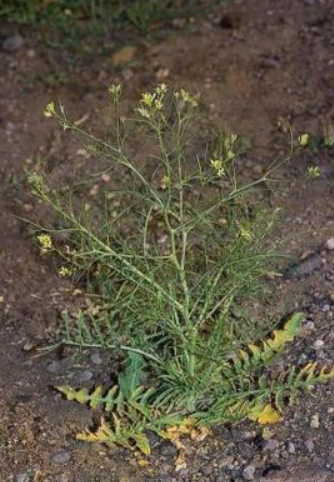
Tall tumblemustard (Sisymbrium altissimum)
Tall tumblemustard is an exotic species in the mustard family. This species grows throughout Montana, inhabiting disturbed soil of grasslands, agricultural fields, streambanks, and roadsides from low to mid elevations. Tall tumblemustard has been introduced widely in North America and is thought to have originated in Eurasia.
|

FWP to hold additional regional meetings to discuss 2023 Montana Gray Wolf Conservation and Management Plan
Montana Fish, Wildlife & Parks recently release a draft plan and environmental impact statement to guide the long-term management and conservation of wolves across the state.
In December, FWP staff will hold virtual and in person public meeting to answer questions about the plan and EIS. The draft 2023 Montana Gray Wolf Conservation and Management Plan incorporates updates in wolf-related research, more than 20 years of management experience, evolution in conflict management, new laws, social perspectives and public input. For more information about the draft 2023 Wolf Plan and draft EIS, please go online here.
The December meeting schedule is as follows:
- Region 1 – Kalispell, Dec. 7, 6-8 p.m., FWP Office, 490 N Meridian Road
- Region 2 – Missoula, Dec. 13, 6-8 p.m., FWP Office, 3201 Spurgin Road
- Region 3 – Bozeman, Dec. 5, 6-8 p.m., FWP Office, 1400 S 19th Avenue
- Regions 4 and 6 – Great Falls, Dec. 4, 6-8 p.m., FWP Office, 4600 Giant Springs Road
- Regions 5 and 7 – Billings, Dec. 6, 6-8 p.m., FWP Office, 2300 Lake Elmo Drive
- Virtual Meeting – Dec. 12 (visit fwp.mt.gov/aboutfwp/public-comment-opportunities/draft-wolf-mgmt-plan for login information.)
To view and submit comments on the draft plan and EIS, click here. Comment deadline in Dec. 19 at 5 p.m.
|
|
|
|
FWP seeking public comment on several items
Montana Fish, Wildlife & Parks is seeking public comment on several environmental assessments (EAs) and changes to Administrative Rules of Montana.

Noxious Weed Trust Fund Grant Applications Now Available
The Montana Department of Agriculture (MDA) is now accepting applications for the 2024 Noxious Trust Fund (NWTF) Grant Program.
Established by the 1985 Montana Legislature, the Noxious Weed Trust Fund provides funding for noxious weed research projects, development projects, state and community education, and on-the-ground management through a landowner cost share.
Applicants may apply for funding up to $75,000 per project. Applications are due Saturday, January 6, 2024.
To learn more about NWTF opportunities, please visit the Noxious Weed Trust Fund website at http://agr.mt.gov/NoxiousWeedTrustFund or contact Greta Dige, NWTF Program Coordinator, at 444-7882 or greta.dige@mt.gov.
To apply, please visit: http://funding.mt.gov/.
The Montana Department of Agriculture is serving Montana Agriculture and growing prosperity under the Big Sky. For more information on department programs and services, visit http://agr.mt.gov.
|
|
|
Montana Agricultural Business Association Foundation Announces Second
Annual Montana Ag Technology Innovation & Investment Summit
In coordination with the Montana Department of Agriculture and Montana State University, the Montana Agricultural Business Association Foundation is proud to announce the second annual Montana Ag Technology Innovation & Investment Summit set for January 23rd, 2024, in Great Falls, MT.
The Montana Ag Technology Innovation & Investment Summit is a strategic opportunity to bring cutting-edge agriculture technology and innovation to the forefront of North America’s agriculture economy. Building on last year’s inaugural event, the 2024 summit explores the nexus between research, innovation, and investment opportunities through a compelling sector that has the power to alter the course of the global food and agriculture system.
 USDA Designates Two Montana Counties as Primary Natural Disaster Areas Nine Contiguous Counties in Montana Also Eligible for Assistance
This Secretarial natural disaster designation allows the United States Department of Agriculture (USDA) Farm Service Agency (FSA) to extend much-needed emergency credit to producers recovering from natural disasters through emergency loans. Emergency loans can be used to meet various recovery needs including the replacement of essential items such as equipment or livestock, reorganization of a farming operation, or to refinance certain debts. FSA will review the loans based on the extent of losses, security available, and repayment ability.
According to the U.S. Drought Monitor, these counties suffered from a drought intensity value during the growing season of 1) D2 Drought-Severe for 8 or more consecutive weeks or 2) D3 Drought-Extreme or D4 Drought-Exceptional.
SBA Economic Injury Disaster Loans Available to Montana Small Businesses
Small nonfarm businesses in 15 Montana counties and neighboring counties in North Dakota are now eligible to apply for low‑interest federal disaster loans from the U.S. Small Business Administration, announced Director Jeffrey Lusk of SBA’s Disaster Field Operations Center‑West. These loans offset economic losses because of reduced revenues caused by drought in the following primary counties that began Aug. 22.
Primary Montana counties: Garfield, McCone, Phillips, Roosevelt and Valley;
Neighboring Montana counties: Blaine, Custer, Daniels, Dawson, Fergus, Petroleum, Prairie, Richland, Rosebud and Sheridan;
Neighboring North Dakota counties: McKenzie and Williams.
“SBA eligibility covers both the economic impacts on businesses dependent on farmers and ranchers that have suffered agricultural production losses caused by the disaster and businesses directly impacted by the disaster,” Lusk said.
 Biden-Harris Administration Partners with Ag Producers to Strengthen Agricultural Supply Chains and Lower Food Costs
As part of the inaugural meeting of the White House Council on Supply Chain Resilience, President Biden and U.S. Department of Agriculture (USDA) Secretary Tom Vilsack announced today that USDA is making investments that will strengthen American food and agriculture supply chains, expand markets for agricultural producers, and lower food costs.
 Disaster Assistance for 2023 Livestock Forage Losses in 14 Montana counties
14 MT Counties Triggered; U.S. Drought Monitor Updated Weekly Livestock producers in 14 Montana counties are eligible to apply for 2023 Livestock Forage Disaster Program (LFP) benefits on small grain, native pasture, improved pasture, annual ryegrass, and forage sorghum. LFP provides compensation if you suffer grazing losses for covered livestock due to drought on privately owned or leased land, or fire on federally managed land.
County committees can only accept LFP applications after notification is received by the National Office of qualifying drought, or if a federal agency prohibits producers from grazing normal permitted livestock on federally managed lands due to qualifying fire. The following 14 Montana counties have triggered the 2023 LFP drought criteria: Blaine, Chouteau, Flathead, Glacier, Hill, Lake, Liberty, Lincoln, Mineral, Missoula, Pondera, Sanders, Teton, and Toole. Producers must complete a CCC-853 and provide required supporting documentation no later than January 30, 2024, for 2023 losses. Producers in these counties are also eligible to apply for benefits under the 2023 Emergency Assistance for Livestock, Honeybees, and Farm-Raised Fish Program (ELAP) for losses relating to feed transportation, livestock transportation and water transportation costs. The deadline to file a Notice of Loss for livestock losses under ELAP is 30 days after the date that the loss is apparent.
Applications for payment must be completed no later than January 30, 2024, for 2023 losses. For additional information about LFP, including eligible livestock and fire criteria, contact the local USDA Service Center and/or visit www.farmers.gov and/or fsa.usda.gov/mt.
Podcast Corner
It’s important that we stay in touch with the activities and decisions being made in Washington DC that effects our industry… such as the latest announcement on fresh beef imports from Paraguay. Lia Biondo and Jess Peterson with the US Cattlemen’s Association join us to provide insight on several topics like the new House Speaker Johnson. How will he be for the cattle industry as well as the ability to collaborate within both his party and the House as a whole? And, what’s the future of the next farm bill with so much going on next year? There’s a lot to talk about!
AoR 118: Safe-to-Fail Experimentation & Regenerative Grazing with Graeme Hand & Kevin Muno
Can grazing be used to help ecosystem function or is 'do no harm' the best we can do? What is meant by the new buzzword "regenerative"? Graeme Hand has been teaching and practicing grazing decision-making for a long time and has championed the idea of experimentation at spatial scales at which failing is not fatal to the environment or a livelihood. Kevin Muno is a rancher in southern California trying these ideas out at the ranch scale. We discuss measuring success using Landscape Function Analysis, a system developed in Australia by CSIRO and similar to the NRCS rangeland health matrix.
|

Impact of effective probiotics on gut-brain-microbiome axis
Discover the groundbreaking science behind the gut-brain-microbiome axis and its pivotal role in animal health and well-being.
|

Safeguarding Grasslands & Cattle Industry Orange Flags
Join Haylie Shipp as Ranchers Stewardship Alliance board member Rick Caquelin and North Dakota rancher Jerry Doan start a conversation about conserving intact grassland and end up in a discussion of the big picture of the U.S. cattle industry.
|
Plant of the Month
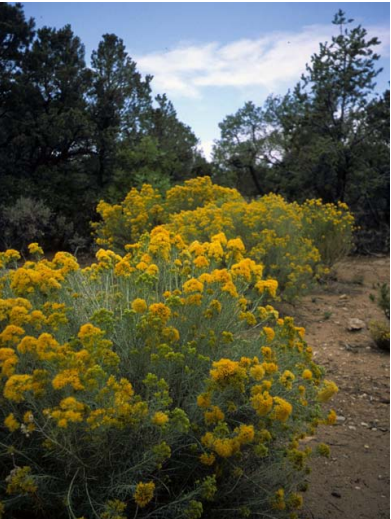
Rubber Rabbitbrush
Scientfic Name: Ericameria nauseosa (Pall.ex Pursh) G.L. Nesom & Baird)
Lifecycle: Native Perennial
Leaves: Whitish-green flexible stems, felt-like matted hairs, and narrow, thread-like grayish-green alternate leaves.
Flower: Made up of 5 small, yellow, tubular flowers, and are arranged in dense, rounded or flat-topped clusters at the ends of branches. Bloom August-October and provide a pollen source for insects late in the summer.
Stems: 2 to 5 feet tall but can grow to 7 feet.
Distribution: Northern Great Plains, Northern Rocky Mountains and Intermountain regions of the western United States.
Uses Grazing/rangeland/wildlife: Growing points of this grass are low and near the grounds surface, thus close grazing by livestock can be allowed. To obtain the best forage yields, grazing should be deferred once every two to three years. Blue grama cures well on the stem making it a good grass for deferred grazing during its dormant period.
Photo: Sally and Andy Wasowski, Lady Bird Johnson Wildflower Center, www.wildflower.org
|
Research Center
Montana State University:
Animal & Range Science
MSU Extension:
Updated MontGuides
University of Montana:
Rangeland Analysis Platform
Reversing Tree Encroachment Increases Usable Space for Sage-Grouse during the Breeding Season
USDA-Agricultural Research Service
Scientific Discoveries 2022
Rangeland Resources & Systems Research, Fort Collins, CO:
Livestock and Range Research Laboratory, Miles City, MT:
Pest Management Research, Sidney, MT:
USDA- Wildlife Services:
US Forest Service Research & Development:
Research topic: Fire
Research topic: Water, Air, & Soil
|