Conservation & Partnerships
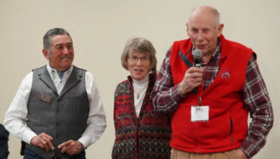
Society for Range Management to Recognize Ranchers for Stewardship Efforts
Award Established by Generous Montana Rancher Chuck Jarecki
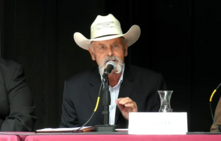
The Society for Range Management (SRM) recently established the Chuck Jarecki Rancher Land Stewardship Award thanks to a generous donation by its namesake, Montana rancher Chuck Jarecki. The award was created to recognize ranch operators who demonstrate outstanding rangeland stewardship and contribute to the ranching profession through local, state, and national service. Since SRM’s formation in 1948, ranchers have played a critical role in the organization and those who exemplify the founding principles of SRM will now have the opportunity to be recognized for their dedication to the land.
|
Private Lands Partners Day 2023
Private Lands Partners Day returns to its original location in celebration of the 15th anniversary of the original meeting in 2008. The 1.5 million-acre Blackfoot watershed forms the southern end of the Crown of the Continent, one of the most ecologically intact ecosystems left on earth. Every species that was present when Meriwether Lewis made his return trip east along the Blackfoot River in 1806 still resides here today. Beginning at the Continental Divide east of Lincoln, the Blackfoot River runs 132 miles west to its confluence with the Clark Fork River just east of Missoula.
|
VALUABLE VALIDATION: Rangeland Analysis Platform Offers Ranchers Decision Support
Ranchers who carefully monitor and manage the range can often describe the changes they have seen over the course of several years. However, on a day-to-day basis, major changes to the landscape can be difficult to recognize and nearly impossible to quantify as some occur slowly and tend to go unobserved when viewing the range each day.
In the case of conifer encroachment on Kevin Koss’ ranch south of Malta, Montana, for many years it was largely unnoticed. But after what Koss called over a decade of “above average precipitation at different times of the year, but good years in all,” he “suddenly” observed “thousands of small trees from six inches tall to several feet high.”
 Hoofin' It for Hunger Registration is Open
Hoofin' it for Hunger is coming back to Dillon! We had a successful event in 2022 and we are hoping to make our race even better this year...all for a great cause! This year's race will take place at Depot Park on Saturday, September 9th. There will be 5k, 10k, and virtual runner races offered.
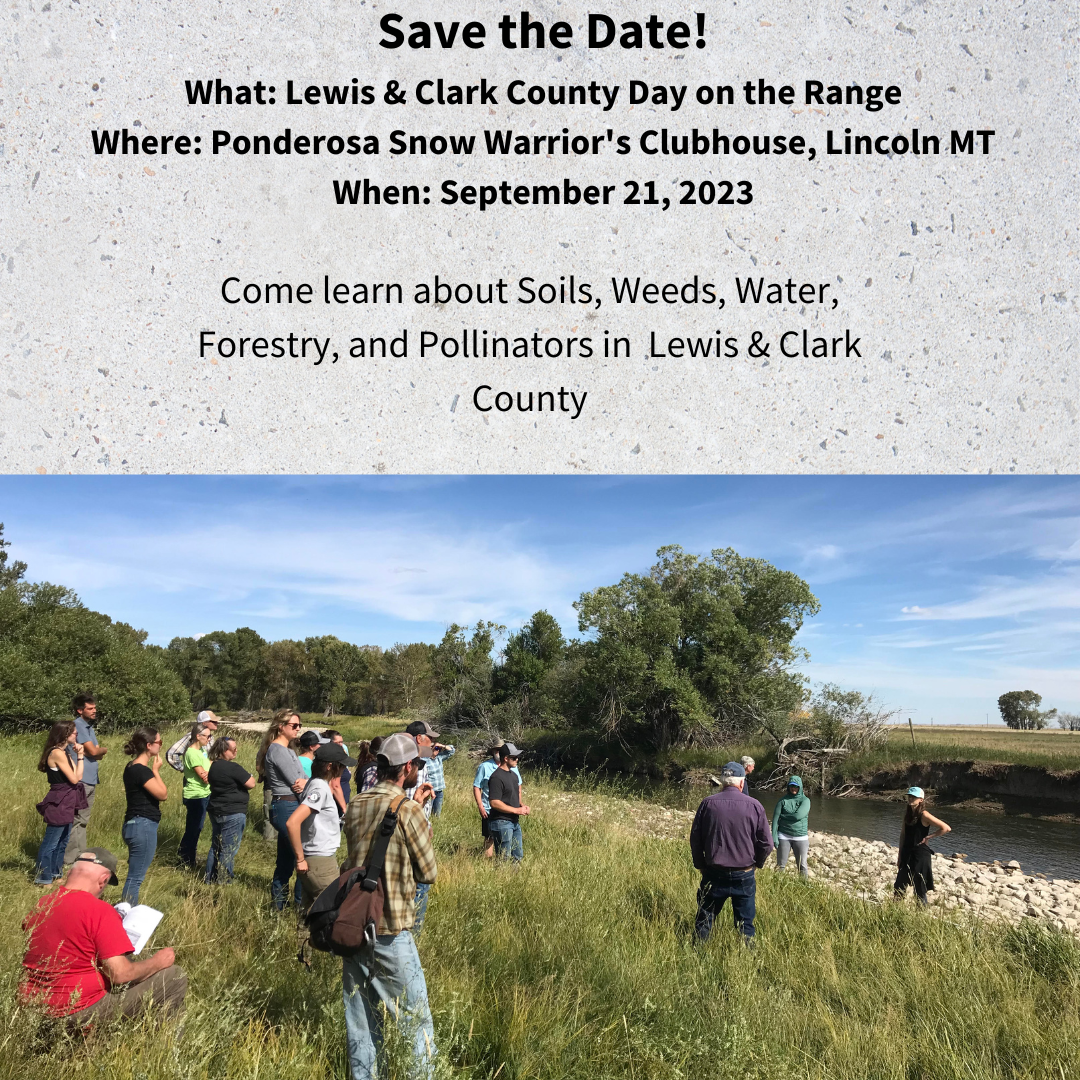
Emergency Response Fundraiser for Hawai'i's Agriculture Community
Fueled by hurricane winds and drought conditions, catastrophic wildfires began on multiple islands in Hawaiʻi on August 8, 2023. The fires rapidly gained intensity leaving communities devastated throughout the state. Maui Island endured multiple uncontrolled fires leaving many homes, communities, businesses, and land devastated. Ranches and farms have also been burned. A few structures and piles of ash are what remains of historic Lāhainā town, and search and rescue efforts continue to find survivors.
National Park Service releases a draft Environmental Impact Statement for Bison Management at Yellowstone National Park
The National Park Service (NPS) released today a draft Environmental Impact Statement (EIS) for a Bison Management Plan at Yellowstone National Park. The Draft EIS introduces a broad range of actions for managing bison inside the park. This plan allows the NPS to evaluate bison management based on new scientific information and changed circumstances, explore ways to reduce bison being sent to slaughter, and to continue working closely with Tribal Nations and agency partners in management.
 Expanding Markets Conference
The agenda is finalized, and planning is underway for the 2nd Annual Expanding Markets Conference at the Bighorn Resort in Billings, Montana, November 7th and 8th! You won't want to miss this one-of-a-kind event focusing on current and emerging market opportunities in the regenerative space. Listen to influential people in the regenerative marketplace, connect with potential buyers and shop industry vendor booths. Registration opens August 1st with limited ticket sales.
Agency Updates
 NRCS Sets Conservation Program Funding Application Date for October 27, 2023
The USDA Natural Resources Conservation Service (NRCS) in Montana is accepting applications for the Environmental Quality Incentives Program (EQIP), Conservation Stewardship Program (CSP), Regional Conservation Partnership Program (RCPP), and Wetlands Reserve Easements (WRE). To be considered for funding in the current cycle, producers and landowners should apply by October 27, 2023.
“NRCS provides funding and technical assistance to help farmers, ranchers, and forestland owners implement conservation practices that improve their environmental and economic sustainability,” said Tom Watson, NRCS State Conservationist for Montana. “Conservation work focused on local outcomes with the support of local partners and land managers achieves meaningful conservation across a landscape. These opportunities are open to ag operations of any scale.”
 Montana Sage Grouse Habitat Conservation Program to Host a Stakeholder Workshop on September 8, 2023
The Sage Grouse Habitat Conservation Program (Program) will host a workshop meeting for interested stakeholders on September 8, 2023, from 10:00 a.m. to 3:00 p.m. The meeting will take place at the Helena DNRC Headquarters, Montana Room (1st floor conference room). The meeting will be streamed over Zoom and recorded.
The stakeholder workshop will give interested parties an opportunity to provide input as the Program reviews the application of the Net Present Value concept, specifically the 3% discount method, to the current pricing structure for credits and debits.

 GRIZZLY BEAR EUTHANIZED DUE TO CATTLE DEPREDATION IN SOUTHERN PARK COUNTY
A grizzly bear was euthanized Friday after a cattle depredation on private land in the Tom Miner Basin.
Following the depredation, Wildlife Services with the U.S. Department of Agriculture captured the bear on Aug. 10. The bear—a 20-year-old male—was identified as having been captured and relocated previously due to cattle depredations. It also had significant tooth decay. Bears in this condition will sometimes prey on cattle as an obtainable food source, especially if they have a history of conflicts with livestock.
Considering these factors, and in consultation with the U.S. Fish & Wildlife Service, Montana Fish, Wildlife & Parks euthanized the bear on Aug. 11.
MT FWP Restrictions & Closures Due to Drought and Wildfire Risk
To protect the resources of Montana and to mitigate the potential start of wildfires, Montana Fish, Wildlife and Parks has enacted closures of state parks, limited fishing hours and closed fishing access sites. To learn more about closures, click the link below.
ANTELOPE QUOTA RANGES ALLOW FOR BIOLOGISTS TO TAILOR LICENSE NUMBERS TO HERD HEALTH
Two weeks ago, Montana Fish, Wildlife & Parks’ biologists were busy flying over Montana’s prairies counting pronghorn, or antelope. This week antelope licenses were drawn for the upcoming hunting season. These two circumstances are directly related and demonstrate how work on the ground directly affects hunters and the opportunities they have each fall.
First, it’s important to set the stage.
Every two years, the Montana Fish and Wildlife Commission establishes a quota range for most species of game animals, including antelope. This range is based on recommendations from FWP biologists. For example, biologists can recommend a quota of 150 antelope and a range of 100 to 200. This allows FWP to adjust quotas within the range quickly based on herd populations and health.
FWP COMPLETES ELK AND DEER HUNTER OPINION SURVEYS
Montana Fish, Wildlife & Parks recently completed extensive public opinion surveys of elk and deer hunters in Montana to gauge their satisfaction with hunting and harvest opportunities. The surveys were each sent to 5,000 randomly selected resident hunters.
The elk survey allowed FWP to take the first comprehensive look at elk hunter opinions. Overall, 73 percent of the respondents from this survey are satisfied with elk management in Montana. Generally, hunters surveyed were also satisfied with current elk hunting regulations and support the timing of the current general elk hunting season.
FWP seeking public comment on several environmental assessments
Montana Fish, Wildlife & Parks is seeking public comment on several environmental assessments (EAs). For more information, including how to submit comments, click on the link provided or visit fwp.mt.gov/public-notices.
 USDA Partners with Community College Alliance for Agriculture Advancement to Strengthen America’s Rural Workforce
U.S. Department of Agriculture (USDA) Acting Rural Development Under Secretary Roger Glendenning today announced that USDA is partnering with the Community College Alliance for Agriculture Advancement to strengthen the nation’s rural workforce.
Through this partnership, USDA and the Alliance will provide community college students in the Midwest with resources and skill sets that will help them advance in careers in agriculture and rural economic development. The partnership will also help to ensure rural communities across the country have the leaders and workforce they need to thrive.
 Biden-Harris Administration Announces New Round of Investments in Wildfire Protection through Community Wildfire Defense Grants
Agriculture Secretary Tom Vilsack today announced the Department of Agriculture’s Forest Service is again accepting applications for the Community Wildfire Defense Grant program. Now in its second year, this competitive program funded by President Biden’s historic Bipartisan Infrastructure Law is designed to assist at-risk communities, including Tribal communities, non-profit organizations, state forestry agencies and Alaska Native Corporations with planning for and mitigating wildfire risks. Applications will be accepted for 90 days.
 Montana Hay Hotline
The Montana Department of Agriculture’s Hay Hotline is an online portal where producers can donate, buy, or sell hay. Individuals needing donated hay or producers wanting to donate hay can go to the portal using the button " Go to the Hay Hotline Application Now" and create a listing by selecting “Create an Account”. Once created you will have access to "My Hay listings." Individuals can also search existing listings to see what is currently available.
 USDA To Provide Additional Financial Assistance to Qualifying Guaranteed Farm Loan Borrowers Facing Financial Risk
The U.S. Department of Agriculture (USDA) today announced it will begin providing additional, automatic financial assistance for qualifying guaranteed Farm Loan Programs (FLP) borrowers who are facing financial risk. The announcement is part of the $3.1 billion to help certain distressed farm loan borrowers that was provided through Section 22006 of the Inflation Reduction Act.
USDA Announces August 2023 Lending Rates for Agricultural Producers
The U.S. Department of Agriculture (USDA) announced loan interest rates for August 2023, which are effective Aug. 1, 2023. USDA’s Farm Service Agency (FSA) loans provide important access to capital to help agricultural producers start or expand their farming operation, purchase equipment and storage structures or meet cash flow needs.
COCO will be releasing the Fall 2023 request for concept papers on Friday, September 29. The AIM program accelerates fire adaptation concepts and reduces the risk from wildfire by funding nonprofit, capacity-building programs across the U.S. The AIM team will be hosting an informational webinar on Thursday, October 5, 2023, 10:00 AM - 11:00 AM MT.

Bipartisan Infrastructure Law Funding Help Map Critical Mineral Resources in Montana
The U.S. Geological Survey will invest more than $1.9 million to map critical mineral resources in Montana in partnership with the Montana Bureau of Mines and Geology.
The funding comes largely from an investment from the President’s Bipartisan Infrastructure Law in the USGS Mineral Resources Program’s Earth Mapping Resources Initiative (Earth MRI), which provides $320 million over 5 years through the USGS to advance scientific innovation and map critical minerals vital to the Nation’s supply chains, economy and national defense. The work will modernize our understanding of the Nation’s fundamental geologic framework and improve knowledge of domestic critical mineral resources both still in the ground and in mine waste. The Earth MRI investment will enable both traditional geologic mapping and cutting edge airborne geophysical surveys focusing on the Boulder Batholith and surrounding areas of southwest Montana.
Podcast Corner
Ep 127: Did you know this… about Section 1031 (Property Exchange)?
Capital Gains Taxes… it’s a subject that is a part of the conversation in ranching families when there is a desire to divest of ranch land. And if the land is sold outright, it leaves the seller liable for Capital Gains Taxes. This is where Section 1031 of the Internal Revenue Code comes in. Dal Houston, attorney from Alva, OK is my as we go through the details of using a 1031… but even more than a way to defer capital gains, it can be an Investment Tool.
Plus, the history and the future of cattle identification with AllFlex’s Austin Woltemath.
AoR 109: Atmospheric Water Generation and Rangeland Grazing with David Stuckenberg
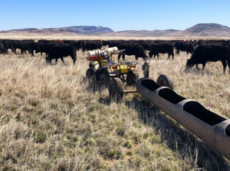
Livestock distribution is the key to good grazing, and water is the limiting factor to distribution. What if you could have water anywhere, produced from air? Genesis Systems, a company founded by Dave Stuckenberg, now offers atmospheric water generation devices that could revolutionize grazing management. This sounds like science fiction, but there's no fiction, only cool science.
|
Plant of the Month
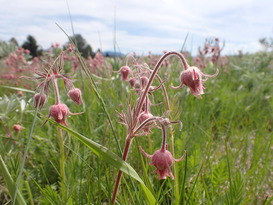
Prairie Smoke
Common Names: Prairie Smoke. Old Man's Whiskers, Torch Flower
Scientific Name: Geum triflorum
Lifecycle: Native Perennial
Leaves: basal clumps of up to 20 in. across, leaves are ferny, blue-green, and hairy. Leaves turn deep red in fall and are sometimes evergreen.
Flower: reddish-purple, bell-shaped flowers that hang in groups of three. Clumps of feathery, plumed, pink-gray fruits stay on the plant much of the summer. After fertilization, the bell-like flowers turn upward and plumes begin to grow from the pistils which have a plume of smoke appearance which indicates its name, "prairie smoke."
Stems: Up to 18 in. tall.
Distribution: Northern Great Plains, Northern Rocky Mountains and Intermountain regions of the western United States.
Fun facts: Native Americans valued Prairie Smoke for a variety of medicinal uses. The roots and foliage could be steeped in a tea for sore throats, stomach issues, and abdominal cramps.
Uses Grazing/rangeland/wildlife: Prairie smoke is one of the earliest blooming prairie plants and is an important food for bumble bees, which are the only pollinators strong enough to open the flower and reach the pollen.
Photo: Matt Lavin, Flickr
|
Research Center
Montana State University:
Animal & Range Science
MSU Extension:
Updated MontGuides
University of Montana:
Rangeland Analysis Platform
Reversing Tree Encroachment Increases Usable Space for Sage-Grouse during the Breeding Season
USDA-Agricultural Research Service
Scientific Discoveries 2022
Rangeland Resources & Systems Research, Fort Collins, CO:
Livestock and Range Research Laboratory, Miles City, MT:
Pest Management Research, Sidney, MT:
USDA- Wildlife Services:
US Forest Service Research & Development:
Research topic: Fire
Research topic: Water, Air, & Soil
|