|
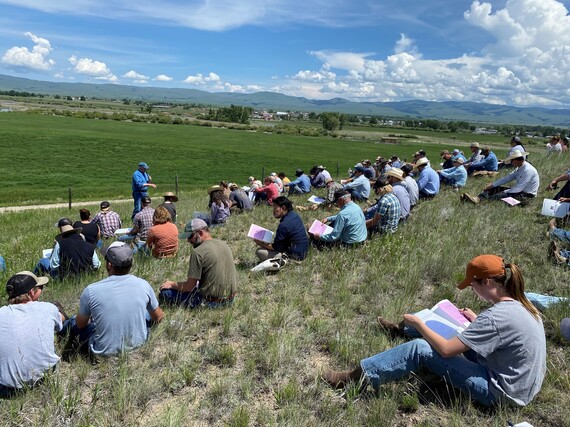 The Montana Department of Natural Resources and Conservation’s Rangeland Resources Program (RRP) promotes and advocates for healthy, sustainable rangelands that supports people, wildlife, recreation, clean water, and the natural scenic beauty of Montana.
News
BLM Public Lands Rule
Public comment period closes July 5, 2023
The proposed Public Lands Rule would establish a framework to ensure healthy landscapes, abundant wildlife habitat, clean water and balanced decision-making on our nation’s public lands. The proposal would uphold the Bureau of Land Management’s multiple use and sustained yield mission, ensuring the health, diversity, and productivity of public lands for the use and enjoyment of present and future generations. By putting conservation on an equal footing with other uses, the proposal would help guide responsible development while safeguarding important places for the millions of people who visit public lands every year to hike, hunt, camp, fish, and more. This proposal comes at a pivotal moment, as our public lands face new and growing challenges. Climate change is driving unprecedented drought and increasingly intense fires, a loss of wildlife, and an influx of invasive species. At the same time, public lands face growing pressure as recreation increases and development on private land disrupts habitat. This proposal would ensure the BLM is able to respond to these pressures, managing for healthy lands today so that it can deliver its multiple use mission now and in the future.
|
Governor Gianforte Blasts BLM’s Unlawful Federal Overreach With Conservation Rule
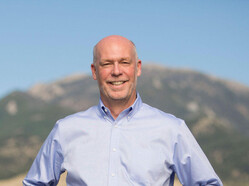
Governor Greg Gianforte today provided further opposition to a proposed rule by the Bureau of Land Management (BLM) which would alter the use of BLM lands to the detriment of recreation, livestock grazing, responsible resource development, and public access. The proposed rule seeks to define “conservation” as a use within the Federal Land Policy and Management Act (FLPMA), which requires BLM to manage its lands on the basis of multiple use and sustained yield. In a letter to Secretary of the Interior Deb Haaland and BLM Director Tracy Stone-Manning, the governor outlines eight reasons the BLM should withdraw its rule, including conflict with existing law and federal overreach. “The Rule’s creation of ‘conservation leases’ conflicts with the Taylor Grazing Act, Federal Land Policy and Management Act (FLPMA), and Public Rangelands Improvement Act,” Gov. Gianforte wrote. “This Rule is nothing more than a revival of the 1995 conservation use rule, already stricken by the courts as unlawful.” The governor continued, “Even if the Rule were founded in law, its terminology and criteria are so ill-defined and lacking in quantifiable metrics that agency overreach is inevitable. The ambiguity manifest in this rulemaking effort will lead to inconsistent, half-hearted implementation at best and controversial, divisive litigation between an over-reaching agency and stakeholders at worst.”
|
Draft Drought Management Plan
Read and Comment on the Plan through August 4, 2023
The Governor’s Drought and Water Supply Advisory Committee (Drought Committee), a multi-agency group coordinated by the Montana Department of Natural Resources and Conservation (DNRC), is seeking public comments on the draft Montana Drought Management Plan (Plan). Following the devastating drought in 2017 and the extreme weather events of recent years, the State recognized the need to review, expand, and improve its Drought Management Plan for drought monitoring, response, and adaptation. The Drought Committee spent two years understanding, refining, and documenting Montana’s drought assessment process and operational and administrative response framework. It also compiled and synthesized management recommendations that emerged from the ideas, concerns, and solutions brought forward by hundreds of Montanans and local, state, tribal, and federal partners. Engagement activities included:
- Eight meetings of the Drought Committee,
- Four regional stakeholder meetings with over 100 stakeholders representing Montana’s seven climate regions,
- An online survey about drought impacts, resources needed for community resilience, and adaptation strategies (~250 responses received),
- One-on-one interviews with 63 stakeholders representing agriculture, fish and wildlife, conservation, culture, energy, business, public health, tribal interests, community governance, municipal and public water supply, tourism, and recreation.
|
Learning How to Take a Different Perspective
Written by: Alex Rasmussen,
2023 Working Lands Intern
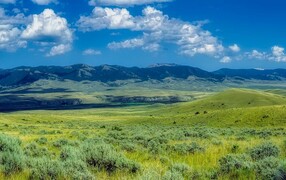
Learning how to let go of expectations can be a struggle. Everybody does things differently and everybody has a reason for how they operate, and that’s okay. The Working Lands Internship is a program that gives college students a chance to learn about agriculture with hands-on experience. It involves visiting 6 different ranches across the state of Montana for two weeks each. My experience with the program has been a whirlwind of different types of operations and operating philosophies. This summer has given me the opportunity to see conventional and regenerative agriculture and gain all sorts of different perspectives. While changing hosts every two weeks has been challenging, the nature of the internship has allowed me to see a variety of ranching methods. From some of the more conventional and traditional methods that I have seen to the innovative ideas that I saw being implemented at other operations, my biggest takeaway from the Working Lands Internship has been learning that there is not a single approach to any aspect of agriculture. Each situation is unique and depends on factors like who is running the ranch, the market, the location, the business model, and more. As I continue with the internship, I look forward to seeing more perspectives on how to ranch.
|
|
|
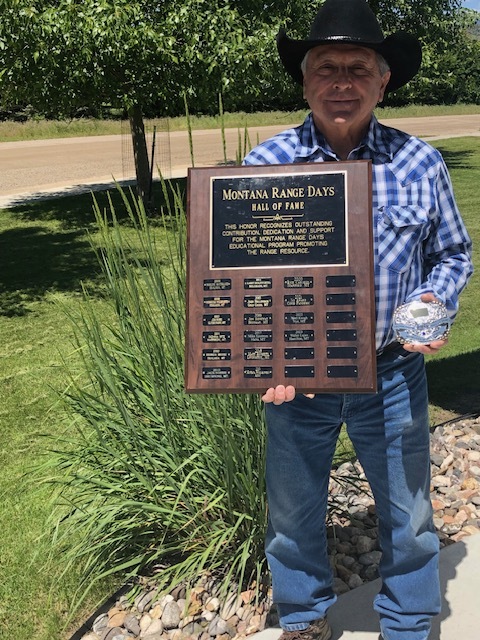
2023 Montana Range Days Hall of Fame Award Recipient
Walter Lujan from Stevensville, Montana was the recipient of the Montana Range Days Hall of Fame Award during the banquet on Tuesday night, June 20th in Shelby, Montana. Walter had been a range conservationist for the BLM and the NRCS for over 40 years. He had worked in Montana as the Missoula Area Rangeland Management Specialist from 2005 to 2017 before his retirement. Walter was actively involved with the Montana Youth Range Camp for several years and was an instructor at Montana Range Days for many years helping with the soils and ecological site station. He also taught a higher-level rangeland management course at the University of Montana for 9 consecutive years before and after his retirement. Walter also was involved in intensively managing cattle on his own acreage just outside of Stevensville for many years.
Walter is a humble, hard-working person with a great sense of humor who brings a positive attitude to his everyday activities. He is experienced and knowledgeable about all aspects of range management and the range resource. Walter communicates well with landowners and managers, and has been a valued mentor and friend to young and old alike and especially enjoys working with younger people. Walter is well respected by his peers in the range profession. The Montana Range Days Hall of Fame recognizes outstanding contribution, dedication and support for the Montana Range Days educational program promoting the range resource. The first recipient of this award was in 1984 and an award has been given each year since that time.
|
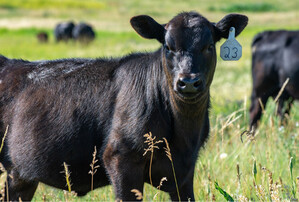
Are you ranching for practice or profit?
For many cow-calf producers, the thought of not raising cattle just seems foreign. As livestock producers, most of us have built a life around our cattle, not the cattle around our life. For better or worse, there seems to be an unexplained gravitational pull that will not let a rancher walk away from their cows. I started as a financial officer with Compeer Financial in 2018. Readers might recall that it was not a glamorous time to be in the cattle industry or raising row crops. Early on, I sat in on a discussion with a financial officer and credit team about how to help a financially-challenged client get his operation back on track. Someone suggested the option of selling the cows. His financial officer quickly shot down the idea, saying that the client might rather give up his wife than the cows. Of course, this was a joke, but I share it to illustrate that as cattlemen, we are drawn to this lifestyle. And if the cows aren’t going anywhere, we might as well do our best to make them a profitable part of our business.
|
Conservation & Partnerships
Nominate a Rancher You Know for the Montana Environmental Stewardship Award
Nominations due July 15, 2023
Each year, the Montana Stockgrowers Association (MSGA) honors a Montana ranch that exemplifies environmental stewardship and demonstrates a commitment toward improved sustainability within the beef industry.
State winners selected by the Montana Stockgrowers Association advance to the regional and national levels. Since the establishment of the program, Montana has won 15 regional awards and two national awards.
Help us continue this strong tradition by taking the time to apply for this prestigious award, or by nominating a producer in your area who has practiced environmentally sustainable practices or demonstrated conservation improvements on their land.
Who to Nominate
The next ESAP winner is any rancher you know who demonstrates a commitment toward improved sustainability within the beef industry.This could be your neighbor, family member, friend, someone in your community, it could even be YOU.
This award serves as an honor to those who are nominated, so give this compliment to someone you know who is improving resources and ranching for the future.
|
|
|
These Tricks Will Make Your Grazing Allotment More Efficient!
5 Tips for Incorporating Flexibility
Shared by a Past BLM Range Specialist
1. Utilize Animal Behavior
As noted in the video, when flexibilities are not available within your grazing allotment, animal grazing behavior can be a tool to utilize different areas of the range at different times. Turning out into a new gate, for example, means the forage in that area will likely be grazed first so entering at new point (if assessable) each year can slightly impact the season of use. Salt licks can have the same impact if moved to a new location. Not only does rotating the lick site give the previous site rest, but it can impact the flow pattern of stock from grazing to salt, to water, for example.
“Herding is a huge tool,” Adrienne Hoskins said. “It’s not always feasible for some operations, but for some it is, and it does wonders.”
 Cornell Films Highlight Grasslands
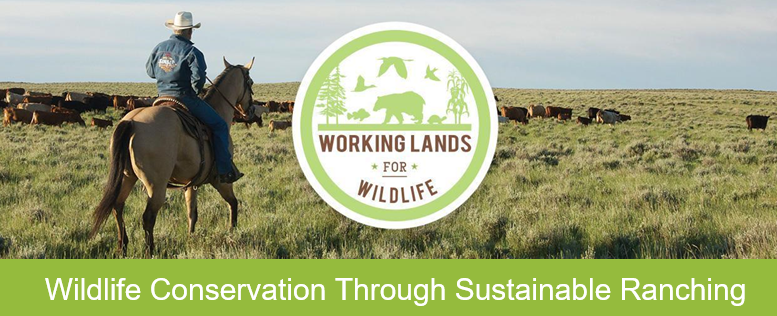
FOUR SHORT FILMS FEATURE PEOPLE ON THE FRONT LINES OF GRASSLAND CONSERVATION, INCLUDING WLFW SCIENCE ADVISOR DIRAC TWIDWELL
"Reconsidering Cedar" is one of the four films that highlights how partners are coming together to protect and restore North America's imperiled grasslands. Featuring Nebraska's Sandhills and Dirac Twidwell, WLFW science advisor and professor at the University of Nebraska-Lincoln, the film dives into the complicated relationship residents of the Great Plains have with eastern redcedar trees - one of the most significant threats facing the biome. The other ther three films also feature familiar themes and faces. Both "Mending Fences" and "Uncrossed Arms" highlight collaborative efforts in northeastern Montana where WLFW-partner Rancher Stewardship Alliance is working to build community and reduce fence impacts to wildlife. Martin Townsend, a former WLFW Strategic Watershed Action Team member and current RSA staffer, plays a prominent role in both of these efforts. The film, "Vital Signs" features longtime WLFW partner the Bird Conservancy of the Rockies and their efforts in South Dakota to monitor grassland songbird populations following improved grazing practices, a key component of WLFW's range-wide conservation efforts.

New Producer Grant
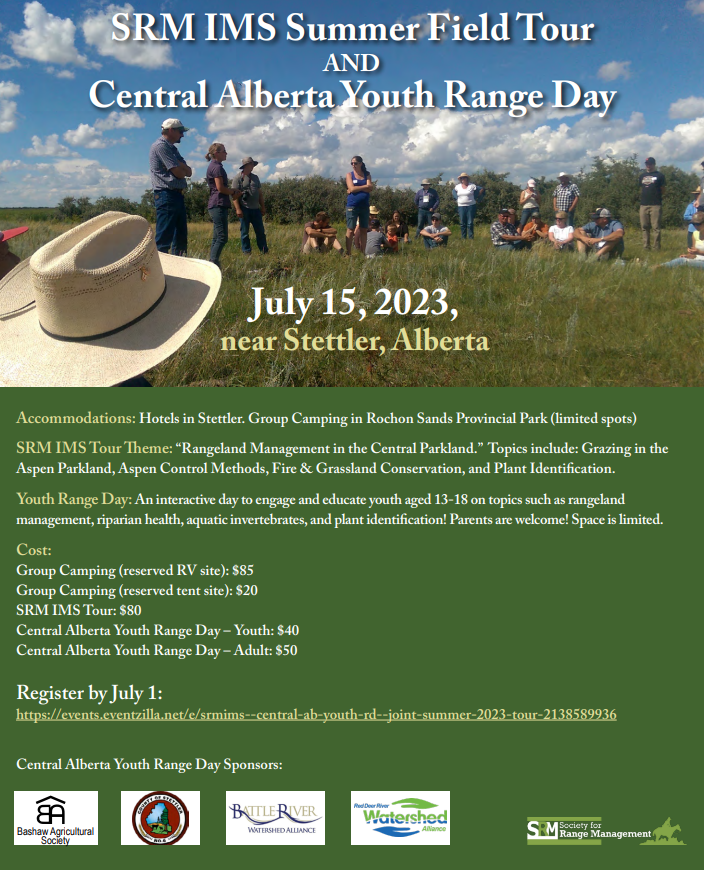
This grant opportunity celebrates the ingenuity and passion of new producers and helps their dreams come to fruition. This program was developed for those who have a vision for their operation but lack the funds to put their plans into action. Successful applicants will receive a one-time $15,000 grant to support their operation's growth. Deadline to apply is August 31. Recipients will be notified by September 29 and will be invited to an awards ceremony to celebrate their achievements in the late fall.
|
Agency Updates
 Early Estimates of Exotic Annual Grass (EAG) in the Sagebrush Biome, USA, 2023
These datasets provide early estimates of 2023 fractional cover for exotic annual grass (EAG) species and one native perennial grass species on a weekly basis from May to early July. The EAG estimates are developed typically within 7-13 days of the latest satellite observation used for that version. Each weekly release contains four fractional cover maps along with their corresponding confidence maps for: 1) a group of 16 species of EAGs, 2) cheatgrass (Bromus tectorum); 3) medusahead (Taeniatherum caput-medusae); and 4) Sandberg bluegrass (Poa secunda).
MSGA's Rancher Resources Webpage
|
|
MSGA has developed a one-stop-shop webpage for events, funding, comment opportunities, and more! Members can find
- Drought Info
- Event Calendar
- State/Federal Programs
- Comment Opportunities
- Scholarships
- Industry News
- Position Papers
You can find the Rancher Resource page at www.mtbeef.org/advocacy/resources
|
|
FWP seeking comment on proposals for August commission meeting
Fish and Wildlife Commission meeting August 17, comment deadline July 24
Montana Fish, Wildlife & Parks is seeking public comment on several proposals slated to go to the Fish and Wildlife Commission in August. Comment is open through July 24. After public comment, commissioners can offer amendments to the proposals as they see fit. The proposals and supporting documents, commissioner amendments and collected public comment are available on the commission webpage. The commission will make a final decision on these proposals at its meeting on Aug. 17.
|
|
|
|
FWP seeks public comment on draft language regarding grizzly bear management
Montana Fish, Wildlife & Parks is seeking public comment on amendments to Administrative Rules of Montana (ARM) addressing grizzly bears.
At its meeting on Aug. 17, the Montana Fish and Wildlife Commission will make a final decision on draft language proposed by FWP to for new rules and to amend current ARM rule 12.9.1401. The language was drafted after Senate Bill 295 passed during the 2023 Legislative Session and became law. The law clarifies how Montana will manage grizzly bears once they are delisted. The law focuses on human safety, conflict with livestock and genetic exchange. The law also requires the commission to adopt rules prior to delisting.
Wolves in Montana: numbers dip but remain strong, quota recommendations released, ARM rule language proposed
While the population remains strong, wolf numbers did again fall slightly in 2022, according to the 2022 Montana Fish, Wildlife & Parks Wolf Report.
“We're meeting the legal requirement to reduce wolf numbers and we're doing it at a measured pace we know will keep the population healthy, sustainable, and above recovery levels” said Montana Fish, Wildlife & Parks Director Dustin Temple.
The estimated wolf population for 2022 was 1,087 wolves. This is down 44 wolves from 1,143 in 2021. The number of wolf packs was 181, down 10 packs from 2021. Total wolf harvest for the spring and fall of calendar year 2022 was 248.
|
|
|
|
  SAVE THE DATE:
RCPP Easement Information Session
The Natural Resources Conservation Service (NRCS) invites potential partners to join an information session to hear about Regional Conservation Partnership Program (RCPP) easements. The session will focus on easement-related aspects of RCPP project proposal development, project planning and implementation.
Wednesday, July 12, 2023
2:00 pm ET
Join Meeting (Zoom)
Meeting ID: 160 940 1378
Passcode: 803806
Organizations, institutions, conservation districts, States, Indian Tribes, and other groups are invited to partner with us through RCPP. For more information about RCPP and how to apply, visit our website.
 Biden-Harris Administration Partners with Agricultural Producers to Strengthen Markets and Create Jobs for Producers in 19 States
U.S. Department of Agriculture (USDA) Secretary Tom Vilsack announced today that USDA is making investments that will create new and better markets for agricultural producers and food businesses in 19 states across rural America.
“The Biden-Harris Administration and USDA are standing up for America’s farmers and ranchers by expanding processing capacity, creating fairer markets, more revenue streams and market opportunities which help bring down food costs for families at the grocery store,” Secretary Vilsack said. “We are partnering with entrepreneurs in rural areas to build brighter futures, connect business owners to new markets and create good jobs for generations to come. These investments reflect the goals of President Biden’s Investing in America agenda to rebuild our economy from the bottom up and middle out and make our communities more resilient.”
 USDA Announces Historic Investment in Wildlife Conservation, Expands Partnership to Include Additional Programs
U.S. Department of Agriculture (USDA) is announcing that it will expand its work on wildlife conservation by investing at least $500 million over the next five years and by leveraging all available conservation programs, including the Conservation Reserve Program (CRP), through its Working Lands for Wildlife (WLFW) effort. These commitments, which align with President Biden’s Investing in America agenda, will ramp up the conservation assistance for farmers, ranchers, private forest owners and tribes with a focus on working lands in key geographies across the country as well as hiring for key conservation positions. The funding will help deliver a series of cohesive Frameworks for Conservation Action, which establish a common vision across the partnership of public and private interests and goals for delivering conservation resources in a given ecosystem, combining cutting-edge science with local knowledge.
Tracking Surface Water Tool
Intermountain West Joint Venture and partners have released a new tool powered by Google Earth Engine called Wetland Evaluation Tool (WET). The tool uses satellite data from the mid-1980s to the present- day to help users track changes in surface water over space and time. Combining this tool with the on-the-ground knowledge of land managers’, will help support conservation decision-making. The three modules, a full video tutorial, and “Science Behind WET” articles can be found on the IWJV website.
 Water Sequestration by Beavers
The water year so far has been extremely wet, so how do we work on keeping that water around to use later? Beavers and Beaver Dam Analogs.
Podcast Corner
BeefWatch Podcast
As a busy rancher, you have limited time to spend reading. You often have time available to listen while in the pickup or tractor cab. The BeefWatch Podcast brings you the information you need in a format you can use.
Research Center
Montana State University:
Animal & Range Science
MSU Extension:
Updated MontGuides
University of Montana:
Rangeland Analysis Platform
Reversing Tree Encroachment Increases Usable Space for Sage-Grouse during the Breeding Season
USDA-Agricultural Research Service
Scientific Discoveries 2022
Rangeland Resources & Systems Research, Fort Collins, CO:
Livestock and Range Research Laboratory, Miles City, MT:
Pest Management Research, Sidney, MT:
USDA- Wildlife Services:
US Forest Service Research & Development:
Research topic: Fire
Research topic: Water, Air, & Soil
|
|
July
-
6 - Montana Ag Experiment Station Field Day (Conrad, MT)
For more information, agenda, and to register click here.
-
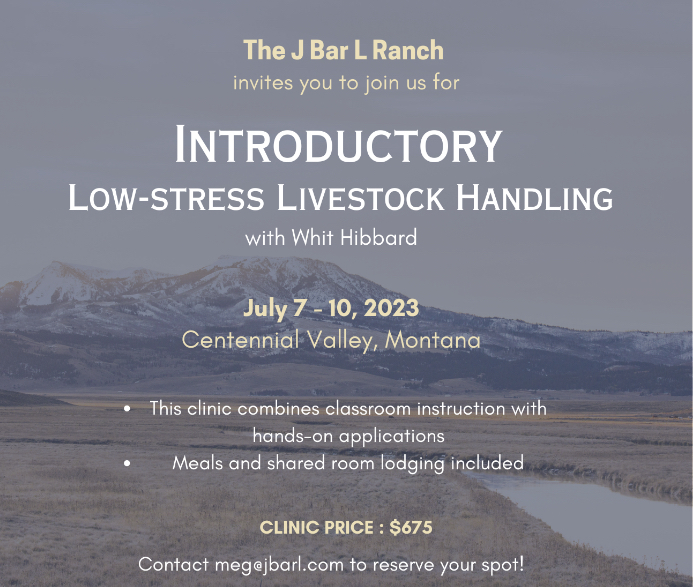
7-10 Beginner Livestock Handling (Centennial Valley, MT)
For more information and to register: meg@jbarl.com
-
11 - Montana Ag Experiment Station Field Day (Sidney, MT)
For more information, agenda, and to register click here.
-
13 - Montana Ag Experiment Station Field Day (Creston, MT)
For more information, agenda, and to register click here.
-
19 - Montana Ag Experiment Station Field Day (Bozeman, MT)
For more information, agenda, and to register click here.
-
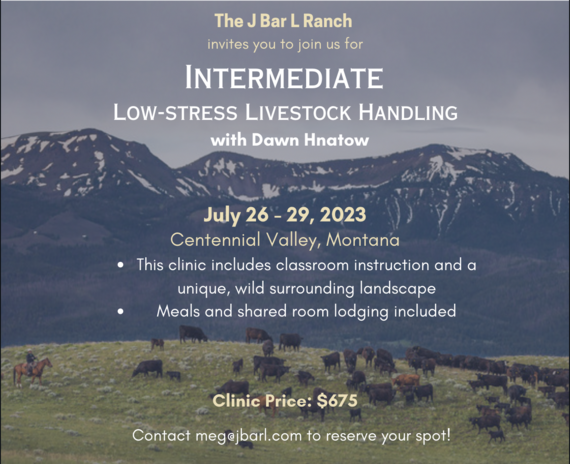
26-29 - Intermediate Livestock Handling (Centennial Valley, MT)
For more information and to register: meg@jbarl.com
-
27 - Montana Ag Experiment Station Field Day (Corvallis, MT)
For more information, agenda, and to register click here.
-
29 - Rancher Roundtable
For more information, and to register click here.
Contacts
Stacey Barta, State Coordinator for Rangelands
(406) 594-8481
SBarta@mt.gov
Rangeland Resources Committee:
Diane Ahlgren, Chair
John Hollenback, Vice Chair
Sigurd Jensen
Jim Anderson
Leah Lewis
Ron Devlin
|
|
|
|
|