Upper Clark Fork River Spring 2024 Fisheries Update
by Caleb Uerling, FWP Fisheries Biologist
 |
Trout fishery restoration is an objective for cleanup and restoration of the Upper Clark Fork River Basin (UCFRB). However, brown trout numbers have declined in the Upper Clark Fork River (CFR) upstream of Deer Lodge while remaining steady in sections downstream of Deer Lodge. The most upstream monitoring reach (Warm Springs) averaged 900 brown trout per mile from the 1990’s through 2014 but has declined to an average of less than 200 per mile, and most recently just 25 per mile in 2023. Sections downstream of Deer Lodge have remained stable or slightly increased over this same time period, averaging about 300 brown trout per mile. Low production and survival of small fish into the population, a process biologists call recruitment, is responsible for the decline. Higher flow years used to be associated with more recruitment prior to 2015, but no longer are. This suggests that different factors are driving the number of trout in the river. Fish Wildlife and Parks (FWP), the Natural Resource Damages Program (NRDP), DEQ and others are working together to learn more about the biology behind the decline and the environmental causes.
FWP, DEQ, NRDP along with our project partners are interested in further understanding water quality, habitat, geomorphology, sediment quality, and ground water interactions as part of our investigations into the trout population declines. We believe variable(s) associated with one or more of these themes might be responsible for trout declines. FWP, DEQ, NRDP, United States Geological Survey (USGS), and EPA are working together to complete additional monitoring associated with these themes. Additionally, FWP has been studying juvenile fish population dynamics on the CFR to better refine our understanding of what is happening to juvenile trout. We hope to combine further understanding of brown trout recruitment with more robust monitoring of other variables to ultimately restore the UCFR trout fishery.
Clark Fork Remediation Design Changes in 2024
by Jessica Banaszak, DEQ Environmental Project Officer
In response to community concerns over habitat simplification, lack of coir (coconut) materials needed for bank treatments, and input from stakeholders and the local fishing community, the State has incorporated the following design changes into future cleanups.
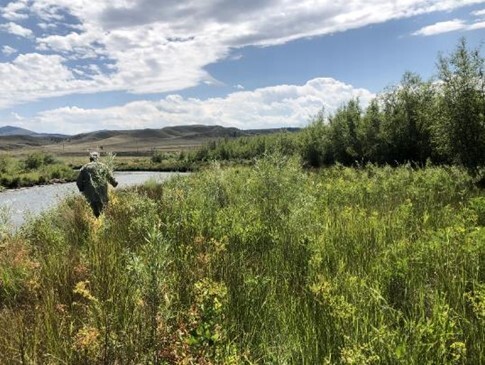
Vegetation Preservation: Areas within the 100-year channel migration zone with high cover of desirable riparian vegetation will be preserved. These areas are evaluated in relation to the final design elevation, must be within 1 foot (higher or lower) of the design elevation, and have a low risk of erosion. Below is an example of a vegetative area being preserved.
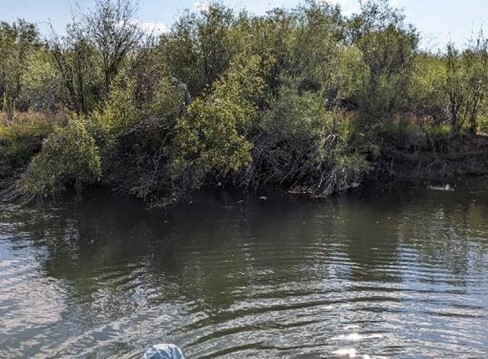
Vegetation along streambanks that provides high quality aquatic habitat will be preserved during streambank reconstruction. Below are examples of overhanging shrubs and woody debris that will be preserved during streambank reconstruction.
 |
Streambank Treatments: The State has started using two "new" types of streambank treatments in recent cleanups.
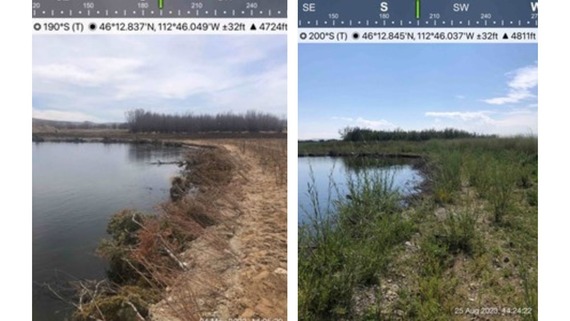
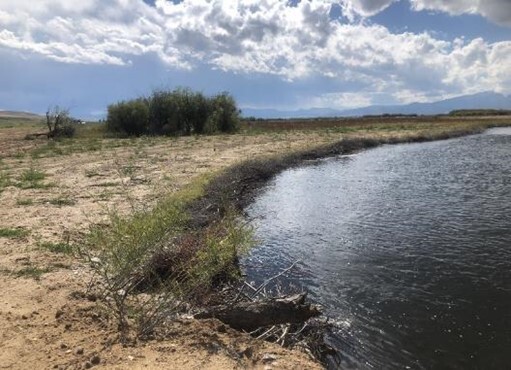
Brush Matrix Streambank Treatments: These streambank treatments consist of a mix of woody brush (conifers, junipers, and on-site salvaged woody materials) oriented in both the upstream and downstream direction to dissipate flow energy. These treatments resist erosion while mimicking aquatic habitat features such as over-hanging woody vegetation and undercut banks. Dormant willow cuttings and living willow clumps will be incorporated into these streambanks to provide long-term resistance to erosion. Below are examples of brush matrix streambank treatment. The photo on the left shows this treatment immediately after construction and the photo on the right shows the same streambanks after approximately two
 |
Additional Resource Benefits: In addition to the “new” streambank treatments that will be providing immediate aquatic and riparian resource benefits to the Clark Fork River. The Montana Natural Resource Damage Program is using terrestrial funds to remove conifers which are encroaching into grasslands and supply those materials (junipers and conifers) to the Clark Fork Cleanup. Land use and fire suppression have allowed conifers such as Rocky Mountain Juniper and Douglas Fir to expand their typical ranges into native grass and sagebrush ecosystems. Removing these tree species from these upland areas will enhance terrestrial habitat for wildlife, reduce water depletion, provide additional forage for grazers like elk, and increase the productivity and vitality of sage brush-grassland habitats.
Also, thanks to our project partners, we have been working with both Anaconda-Deer Lodge County and Powell County to salvage acceptable streambanks materials from the local landfills to be used in streambanks construction.
Phases 13 and 14 Design Update
By DEQ Staff
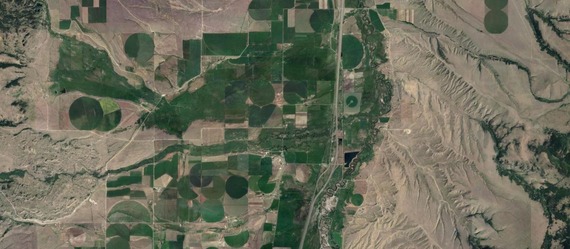 In response to the community concerns about public safety at Arrowstone Park, signs have been installed at park entrances advising park users on how to maximize their safety while recreating, and in December 2023, temporary soil caps were installed on bare spots in the park. These soil caps are temporary measures intended to minimize exposure risk in high-traffic locations until full remediation can commence.
The State has prioritized remediation for the Phases that encompass Arrowstone Park (Phases 13 and 14) and is currently working in collaboration with EPA, Powell County, and FWP on the preliminary design for the remediation of Phases 13/14, which include Arrowstone Park.
Support is being provided for future use planning for Arrowstone Park through a Superfund Redevelopment Program regional seed, which is additional funding for EPA site teams and communities to facilitate redevelopment, remove barriers to productive reuse, and ensure future use is well aligned with the cleanup process. This work will continue to identify resources and provide support to Powell County in the update of the Arrowstone Park master plan and subsequent implementation.
This collaboration is enabling the incorporation of the community’s vision for the park into remedial design. While settlement funds cannot be spent enhancing the park beyond performing remedy, any park infrastructure that is damaged or removed during construction will be restored. Additionally, by collaborating with the County, design elements such as haul roads and staging areas can be tailored to help support future park development.
The design team is also closely coordinating with both Montana DPHHS and EPA’s toxicologist to ensure that the remediated park will be safe for all to enjoy. Ensuring that remediation achieves a park that is safe for human use and the environment is a high priority for all agencies involved. The State is expecting to have a Preliminary Design Plan this summer.
|