|
ISSUE 3 | SEPTEMBER 2026 | VOLUME 19
- State Veterinarian Notes
- Montana Johne’s Control Program (MJCP) Updates
- RFID Tag Allocation Update
- Staff Corner: Dr. Hayley Masterson
- Therileriosis (Theileria)
- West Nile Virus (WNV) Updates
- Pigeon Fever Updates
- Brucellosis Fall Reminders
- Scrapie Updates
By Tahnee Szymanski, DVM
Fall is here and with it, an uptick in brucellosis testing and our first brucellosis suspect. The single female bovine from a Beaverhead County herd is low risk for being a true infection, and I fully expect that she will test negative in the next 30-45 days. The brucellosis article below provides an important reminder regarding Designated Surveillance Area (DSA) regulations and how management agreements can be used to ease the regulatory workload for producers.
While serologic suspects are often low risk for disease confirmation, we recognize that they are still substantially disruptive to cattle operations and come with a level of stress no matter how low the risk. The Department of Livestock (DOL) continues to advocate for brucellosis research that will allow us to continue to refine how we manage brucellosis serologic results and brucellosis detections. Because of some of this advocacy, United States Department of Agriculture Agricultural Research Service (USDA ARS) will be doing work to follow up on serologic reactors and other non-negative animals. Target animals will be purchased and transported to Iowa for housing in a high-containment facility and followed through their pregnancy. I don’t expect that the current Beaverhead County suspect will be considered for this research.
We are fortunate that brucellosis testing at the Montana Veterinary Diagnostic Laboratory (MVDL) in Bozeman was minimally impacted as the lab transitioned from Marsh Laboratories to the new State Combined Labs facility. The move is nearly complete and MVDL has now begun receiving sample submissions at the new diagnostic laboratory facility located at 1969 W Garfield St, Suite A, Bozeman, MT 59718. All sample submissions moving forward should be shipped to this address. In addition to the move, Dr. Hayley Masterson has officially joined DOL as our new veterinary microbiologist. Dr. Masterson helps round out our professional staff in Bozeman who are available for consultation with veterinarians. DOL continues to recruit for a second veterinary pathologist, and pending the outcome of the 2027 legislature, we hope to be able to hire two additional veterinary positions.
The Department has also received notice from NIFA that nominations for veterinary shortage areas are open for the FY2027 funding cycle. Montana had 6 shortage area designations for FY2026 and had successful recipients in 5 of our 6 shortage areas. This provides us an opportunity to look to new areas of the state or continue to focus in areas where a critical shortage exists. If you would like your area considered for inclusion in a shortage area, please contact Dr. Emily Kaleczyc at (406) 444-5214 or emily.kaleczyc@mt.gov.
With the move into cooler temperatures, the risk of many diseases is declining. Over the next several weeks, we expect to see a decrease in West Nile Virus (WNV), rabies, hemorrhagic disease, and tick activity. Additionally, the risk of a New World Screwworm (NWS) incursion also decreases. With cooler temperatures and the fall migration, however, comes an increase in the risk of avian influenza cases in domestic poultry. In addition to the detection in Ravalli County, Idaho, North Dakota and South Dakota have seen detections in the last 30 days, so we assume the current risk spans all of Montana. In response, DOL has reviewed our advisory that poultry should be housed indoors to the extent possible through the fall migration. Please continue to remain vigilant for highly contagious or high-consequence regulatory diseases such as Highly Pathogenic Avian Influenza (HPAI), help educate our livestock and poultry owners, and feel free to call our office with any questions or concerns you might have about what you are seeing on the local landscape.
Finally, I know that tags remain a substantial topic of concern and pinch point for veterinarians. I fully expect Montana’s tag allocation for Federal FY26, including tags shared by other states, to exceed 300,000 tags. This is an increase from last year’s allocation. This “win” is unfortunately negated by the delay in tag arrival. I suspect it will be December if not later before all 300,000 tags make their way to Montana. We will distribute all the tags that we receive, with allocations based upon 2025 tag usage. I remain cautiously optimistic that the timing of this year's tag allocations is a one-off, and we will see our NEXT round of tags for FY27 arrive in Montana earlier in the year. As always, we will work to ensure that you have up-to-date information so that you can make tag purchasing decisions promptly. To ensure that you are getting your full allocation of tags, please be sure to submit brucellosis vaccination certificates to our office in a timely manner. If you are interested in electronic reporting of vaccination data, please reach out.
By Kelsey Martin, DVM, MS
After extensive deliberation and feedback from veterinarians, producers, and state animal health officials, the Department of Livestock (DOL) has decided to retire the Montana Johne’s Control Program (MJCP) in its current form. If producers have an interest in a state-sponsored program that looks different, please provide any suggestions.
DOL wants to recognize and support the producers and veterinarians who have been working diligently to prevent and control Johne’s Disease but have been unable to qualify for the program due to its current written standards. Over the years, herd enrollment has continuously dropped due to challenges in meeting program requirements, and only a few herds currently remain enrolled. Factors cited for low participation include the cost of testing, requirements for whole-herd testing, and program fatigue from continued detections despite intensive management and testing efforts.
Johne’s management is complex, and DOL would like to offer programming or guidance that is more adaptable to an individual operation’s needs and circumstances. Over the coming months, as we continue to explore how to reconfigure the MJCP, prioritization will be placed on increased education and outreach to both livestock owners and veterinarians, how to better accommodate different types of livestock operations, allowance for more adaptive surveillance strategies, and potential methods for alleviating some of the financial burden of diagnostic testing.
DOL continues to welcome any feedback that veterinarians or livestock owners may have and are grateful to those who have already reached out to share their experience with the MJCP and ideas for improvement. Please contact Dr. Kelsey Martin at 406-475-2693 or kelsey.martin@mt.gov to provide feedback.
By Britta Sekora
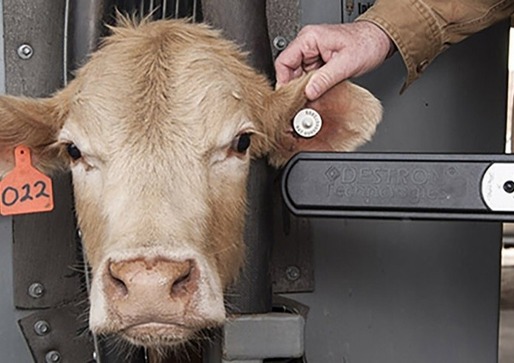
Figure 1. RFID Tag in Cattle. Source: USDA.
As communicated earlier this summer, the delivery of no-cost RFID tags to states from the United States Department of Agriculture (USDA) for Federal Fiscal Year 2026 continues to be delayed. Fortunately, USDA has additional funding available for tags, so while the timing of delivery has been challenging, Montana should see an increase in the total number of tags received. Additionally, the Department of Livestock (DOL) has received additional tag allocations from other states and from unclaimed pools of tags.
DOL began distributing available tags this summer rather than waiting for the entire Federal Program Year 2027 allotment to arrive. Vaccination tag allocations are based on the number of animals each veterinarian brucellosis vaccinated in 2025 and reported to MDOL by August 5, 2026. Because the number of no-cost tags available this year is limited, DOL planned allocations at approximately 50% of each veterinarian's reported 2025 vaccination use. DOL has distributed all the tags received to date, but delivery of Montana's remaining RFID tag order is pending. Unfortunately, this timing coincides with an important time of year for many veterinarians completing fall vaccination work. Once the remaining tags arrive at DOL, staff will work to receive, inventory, assign, and ship to veterinarians as quickly as possible. Veterinarians who have already submitted a request do not need to submit duplicate requests while waiting for their allocation. It is important, however, that veterinarians do not rely solely on USDA-provided no-cost tags to meet their practice's total RFID tag needs. The federal allocation is intended to supplement, not replace, the tags veterinarians may need to purchase for their normal business operations. Veterinarians should plan and purchase additional RFID tags directly from an approved manufacturer as necessary to ensure they have an adequate inventory on-hand.
To order RFID Tags Directly: USDA maintains the current list of approved Animal Identification Number (AIN) devices and manufacturers here, and veterinarians should ensure that tags purchased for official identification are approved for the intended species and use.
Questions regarding Montana's RFID tag allocation program may be directed to the Animal Health Bureau at (406) 444-2976 or livpermits@mt.gov.
By Hayley Masterson, DVM, PhD
Figure 2. Dr. Hayley Masterson. Source: DOL Staff.
Dr. Hayley Masterson was born and raised in Washington state and spent her summers visiting her grandparents’ ranch in Texas. Working with the cattle, goats, and chickens sparked her interest in veterinary medicine and infectious diseases of livestock. She completed her undergraduate education at Washington State University (WSU) in Microbiology with a minor in Spanish in 2018 and graduated from the WSU veterinary program in 2022. During that time, she worked within the United States Department of Agriculture Animal Disease Research Unit (USDA-ADRU) on bovine babesiosis, a tick-transmitted disease of cattle. Dr. Masterson then completed her PhD and veterinary clinical microbiology residency training in 2026. She is passionate about parasites, infectious diseases, and utilizing diagnostics to assist veterinarians, producers, and clients. Dr. Masterson is excited to have this opportunity to work closely with stakeholders to provide quality laboratory services and support the important work being done in the animal health and livestock industry of Montana.
In her free time, she enjoys playing soccer, biking (motor and pedal-based), painting, running, hunting, and hiking with her dog Tekoa to find cool rocks and bones. She sometimes dabbles in plant rearing, although currently she only has one live aloe plant and a dying bowl of succulents.
By Brenee Peterson, DVM
Theileriosis is an emerging, tick-borne disease that has been spreading across the United States since it was initially detected in Virginia in 2017. In May of 2026, reports of cases reached as far west as Nebraska, where it was detected in a group of feedlot cattle. The disease is caused by the protozoal organism Theileria orientalis, which is transmitted by the invasive Asian longhorned tick. Most cases of theileriosis are associated with exposure to the Asian longhorned tick. However, the Nebraska cases in May were determined to be due to movement of infected animals and iatrogenic transmission, rather than tick-borne transmission. Just like Theileria, the Asian longhorned tick has been creeping westward and setting up established populations since it was first detected in the United States in 2017 (Figure 3).
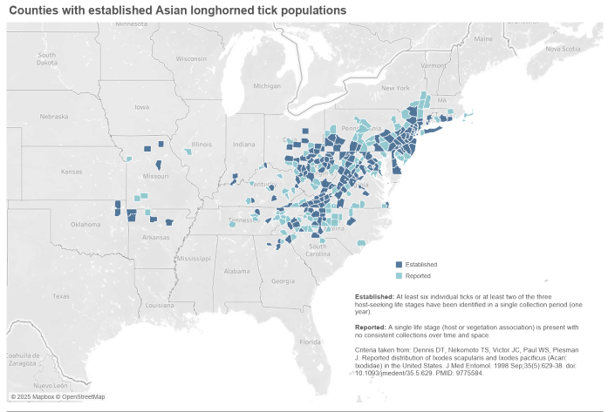 Figure 3. Distribution of Asian longhorned rick in the United States. Source: USDA.
T. orientalis poses a risk to the cattle industry as it can lead to significant production losses for producers. The Theileria organism primarily affects cattle, sheep, yaks, and water buffalo. Clinical signs seen with infected animals are attributed to the protozoa infecting red and white blood cells. Many cases of Theileria are confused with anaplasmosis, as clinical signs can be similar. Commonly, animals infected with Theileria will show signs of weakness, fever, reduced milk production, jaundice, and abortions. Mortality rates can range from 1-5%, with some populations reaching over 50%. Young calves and pregnant heifers tend to be more susceptible. Once an animal becomes infected, they will be a lifetime carrier of the disease. Diagnosis is typically confirmed by PCR on whole blood. Unfortunately, there are no approved treatments for theileriosis in the United States and often treatment is supportive care.
Prevention is a key aspect to controlling T. orientalis and includes reducing exposure to ticks, specifically the Asian longhorned tick, and reducing the likelihood of iatrogenic transmission. Controlling tick exposure can be achieved by modifying the habitat by keeping grass short, removing brush, and restricting animals from grazing in heavily tick-infested pastures. Some tools, such as an innovative vaccine platform for theileriosis, have shown promising results in areas severely impacted by the disease. The vaccine is intended to be used as a preventative step rather than as a treatment and is a part of a line of other novel biologics for tick prevention.
To date, Montana has no confirmed cases of theileriosis or identified any Asian longhorned ticks. If you observe a tick that does not appear to be “normal” in Montana, please contact Department of Livestock (DOL) at 406-444-2976 and tick identification can be performed.
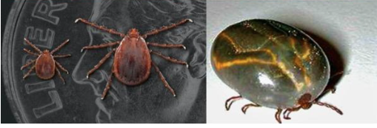
Figure 4. Asian longhorned tick. Source: USDA.
By Kelsey Martin, DVM, MS
So far this season, six cases of equine West Nile Virus (WNV) have been confirmed in horses in Montana and reported to the Department of Livestock (DOL). Cases have occurred in Beaverhead, Yellowstone, Hill, Cascade, Park, and Powder River Counties. Based on information from reports, all cases (except for the Beaverhead County horse who recently traveled out of state) are considered locally acquired infections. All affected horses had either never received a WNV vaccine in their lifetime or did not receive a vaccine this year.
As a reminder for veterinarians, September remains in the high-risk period for WNV. Since surveillance began this season, Department of Public Health and Human Services (DPPHS) has identified two WNV-positive mosquito pools, both in Roosevelt County, and a human case was recently confirmed in Cascade County. Timely reporting of WNV cases is important not only for safeguarding animal health but for developing a coordinated One Health response to help mitigate the disease in affected areas. Please help remind owners that for horses, WNV is preventable through vaccination and mosquito-control efforts.
By Kelsey Martin, DVM, MS
Based on reporting by veterinarians since late July, multiple horses spread across at least ten different premises have either been confirmed or suspected to be infected with Corynebacterium pseudotuberculosis, the causative agent of pigeon fever. Most cases have been concentrated in Gallatin County, but Missoula and Beaverhead Counties have also been affected. Cases of the disease are also being reported in nearby states, such as Wyoming and Oregon.
Reasons for the severity of the recent outbreak of pigeon fever in Gallatin County remain unclear. The epidemiology of pigeon fever is closely tied to environmental and vector conditions rather than direct horse-to-horse spread, though care should still be taken to isolate infected horses. For horse owners who are seeking more information about the risk to their animals, the following can be shared:
- Practice careful wound and skin care. Promptly clean and monitor any cuts, abrasions, or insect bites (e.g., ventral midline where fly dermatitis frequently occurs), as these are common entry points for infection.
- Closely monitor horses for swelling or abscesses, particularly along the ventral midline, chest, sheath/udder, or groin, as well as lameness or limb swelling, which may indicate the less common ulcerative lymphangitis form of disease.
- Fly control and prevention are key to reducing spread of the disease.
- Isolate horses with draining abscesses, and disinfect or avoid sharing tack, grooming and feeding equipment, and bedding between horses.
- Facilitating drainage of abscesses along with frequent flushing will lead to faster recovery and reduced risk of transmission. It is imperative that drained material and fluids during flushing of abscesses are captured and properly disposed of to reduce contamination in the environment and further spread of disease.
Additional information on the prevention of pigeon fever and nationwide status of cases can be found through resources at AAEP and the Equine Disease Communication Center.
By Brenee Peterson, DVM
Fall is a busy time of year for veterinarians and producers alike. At the Department of Livestock (DOL), we appreciate the hard work veterinarians do to partner with producers and manage brucellosis testing in the field. This is when we see an uptick in testing and identification, and we want to share a few reminders about Designated Surveillance Area (DSA) requirements. For easy reference, various brucellosis requirements are listed below. For the full list, please see our website at https://liv.mt.gov/Animal-Health/Reportable-Animal-Diseases/Brucellosis. Please continue to educate producers on the importance of the brucellosis program and testing requirements as you work with them in the field.
Scheduling can be hectic during this time of year, so please ensure that testing is conducted with enough time between bleeding and moving animals. The Montana Veterinary Diagnostic Laboratory (MVDL) is often quick with turnaround times, but there are instances where it can take an extra day or two to finalize test results. Additionally, please remind producers that a negative test is not guaranteed and that any non-negative results will require additional time for follow-up. Animals are not permitted to leave the DSA or the state on a pending brucellosis test.
Management agreements are voluntary agreements between producers and DOL, and they are available for producers who have regular management practices that might benefit from slight variances to DSA regulations. Examples of potential variances include timing or location of testing and identification, and testing and isolation of specific cohorts of animals. Please contact Dr. Brenee Peterson at brenee.peterson@mt.gov or call DOL at 406-444-2976 to discuss management agreements.
Testing Reminders:
- All sexually intact animals leaving the DSA must have a negative brucellosis test before leaving or changing ownership.
- This includes bulls in addition to females
- A test run after August 15 is acceptable for cattle movements UNTIL February 15 the following year. After February 15, a test within 30 days is required.
- Exceptions to testing include:
- Steers and spayed heifers
- Animals destined for exhibition or veterinary care within the DSA that will not be commingled with other livestock, will remain in confinement for the duration of the event or treatment, and will depart within ten days of arrival
- Animals that are moving to a market where they will be tested before sale
- Sexually intact animals that are less than 12 months of age entering a feeding-to-slaughter channel (these animals still require official identification).
- Animals that utilize the DSA only during the low-risk period (July 15 to January 15)
Official Identification Reminders:
- All sexually intact cattle and domestic bison, regardless of age, leaving the DSA must be officially identified with 840-series RFID tags.
By Emily Kaleczyc, DVM, MPH
At the end of July, the United States Department of Agriculture (USDA) announced the detection of classical scrapie in a sheep that was slaughtered in Oregon and tested as part of the national, routine slaughter surveillance program. The positive sheep was not showing any clinical signs at slaughter, but unfortunately, this case will reset the seven-year timeline for the United States to declare freedom from scrapie. The sheep did not have an official identification tag, but investigators are confident they have narrowed down the source of the animal to two potential flocks of origin, and additional testing is ongoing. The recent case should not have any impact on interstate movement requirements or international trade opportunities for Montana sheep.
This case is a good reminder of the importance of official identification for sheep and goats and of remaining vigilant for clinical signs of scrapie. The rules for small ruminants are stricter than for cattle, and most sheep and goats require official identification before they leave their birth premises. Sheep and goat producers, especially those with breeding animals, should ensure they have a scrapie flock identification number for ordering official tags. Owners can get a flock identification number by calling the USDA office at 406-437-9450 and leaving a voicemail with their request.
Samples from sheep with neurologic signs are the most valuable scrapie surveillance available. There is no cost for scrapie testing, although there is a fee for the rabies testing that is usually conducted prior to testing for scrapie. Please contact the Department of Livestock (DOL) anytime at 406-444-2976 for information and assistance with scrapie testing.
|