|
ISSUE 1 | MARCH 2026 | VOLUME 19
- State Veterinarian Notes
- Fair Outreach
- Equine Herpes Virus (EHV)
- Vesicular Stomatitis (VS) Outbreak
- Equine Disease Communication Center (EDCC) Reporting Option for Veterinarians
- Brucellosis Reminders and Elk Capture Results
- Scrapie Surveillance
- Disease Reporting - What You Need to Know
- One Health Vector Control Strategies
by Tahnee Szymanski, DVM
Three months into the new year and the newsletter is once again in a state of flux. My apologies for the ever-evolving format. The State of Montana is working to bring our website into Americans with Disabilities Act (ADA) Compliance following a new rule on accessibility published in April 2024. Over the next several months, content on our website: liv.mt.gov will also be updated to be consistent with ADA standards. I hope the new format proves easier for electronic navigation and consumption. This format allows more flexibility on the content that we provide and long-term will allow the newsletter index (liv.mt.gov/Animal-Health/Newsletters/index) to be more user-friendly, should you ever wish to revisit an article or find content on a specific topic. Full disclosure however, Department of Livestock is actively recruiting for a public information officer (PIO) and having this role filled may result in one additional format change as we try to unify DOL communication.
In addition to website changes, DOL's new diagnostic laboratory facility is projected to complete construction on May 26, 2026. Operations are expected to transition to the new facility shortly thereafter with plans for the exact timing of the transition currently in development. Upon finalizing the date of transition, we will send communication to the Montana Veterinary Diagnostic Laboratory's (MVDL) client list as well as our animal health distribution list with updates on the new physical address, contact information, and other updates as needed. While we are extremely excited about the move to a new facility, we are aware this transition may impact our routine testing services for a short period of time during the transition. We will do our best to mitigate any impacts on operations and ask for your support and patience during the transition period.
Looking forward, DOL has been working hard to advocate for Radio Frequency Identification (RFID) tags for Montana and for a meaningful path forward for brucellosis research and we are starting to see some payoff from our efforts.
- Through conversations with United States Department of Agriculture (USDA) regarding tag use in states with brucellosis programs, USDA has expressed a willingness to consider other models for tag distribution. Current tag allocations for states are based off of the cattle and calves inventory of each state. Several Western State animal health officials are working together on a proposal that we hope all states will accept for presentation to USDA. We believe the current model disproportionately directs tags towards states with large numbers of animals in feeding channels, a population that doesn't require official identification.
- Several concepts for brucellosis research have been approved by USDA Agricultural Research Service (ARS) including research that will allow ARS to purchase and follow brucellosis reactors through pregnancy to better understand the risk these animals pose to a population as we routinely find these animals still pregnant and often with healthy seronegative female calves from the previous year. ARS has also green-lighted work on evaluation of diagnostics in elk, with a focus on characterization of the culture status of elk and correlation to serology. In other words, how do we get more meaningful diagnostic information out of the elk with targeted tissue sampling.
While brucellosis holds a large amount of our bandwidth during any given season, the columns ahead provide meaningful information and guidance that reflect the full breadth of the work that we do, with hopefully something for all practice types. With VSV and New World Screwworm active to the south and another detection of Foot and Mouth Disease (FMD) in a European nation (https://greekreporter.com/2026/03/18/greece-first-foot-mouth-disease-lesvos/), we have ample reminders of the need for increased vigilance in evaluating animals for illness. Please do not hesitate to reach out if you have questions about something you are seeing in the field or if you are seeing an atypical presentation of disease.
by Brenee Peterson, DVM
Figure 1. Swine Show (Source: TX Pork)
The start of fair and rodeo season is around the corner along with large numbers of interstate animal movements. In the December StockQuotes newsletter (https://liv.mt.gov/_docs/Animal-Health/Newsletters/2025/2025-4th-Quarter-Newsletter-Vol-18_Issue4.pdf) Department of Livestock (DOL) shared information from other states regarding show animals traveling without correct documentation. Since then, we have heard several stories of animals, particularly swine, entering Montana for use as show or 4H projects and arriving without official identification (ID) or health certificates. We also see missing brand inspections and health certificates, outdated equine infectious anemia (EIA) tests, and a lack of official ID as common compliance deficiencies with exhibition animals.
While the veterinarian's role isn’t enforcement of movement requirements, we do rely on you to educate owners about the importance of protecting their animals with proper documentation, vaccinations, and strong biosecurity practices. Animals traveling to shows and fairs and then returning home pose an increased risk of disease transmission to resident herds. Veterinarians play a crucial role in helping owners set up isolation or quarantine facilities for returning animals and providing guidance on appropriate biosecurity both at events and for animals that come home.
To assist with education, DOL has resources available regarding biosecurity, animal disease traceability and other topics. We are also happy to attend events and to discuss best practices and animal movement requirements. If you are looking for resources, please contact the department at 406-444-2976. DOL also has a small allocation of Radio Frequency Identification (RFID) tags specifically for swine projects. These tags are intended for use in breeding swine, 4H swine, or Future Farmers of America (FFA) swine projects. If you are interested, please contact us at the number provided above.
Back to top of page.
by Kelsey Martin, DVM MS
In early February, the Department of Livestock (DOL) responded to a report of equine herpes myeloencephalopathy (EHM) in a 2-year-old Quarter Horse mare in Silver Bow County. The horse presented to a veterinary clinic on a Saturday and was afebrile with hind end weakness, rapidly progressing to dog-sitting, sternal recumbency, inability to rise, and difficulty urinating within a 24-hour period. The horse tested positive for EHV-4 on a nasal swab sample using an in-clinic, commercially manufactured Polymerase Chain Reaction (PCR) test. Based on the early diagnostic testing and signs consistent with EHM, quarantine measures were immediately put into place due to the large number of potentially exposed horses and multiple premises involved including some premises with high volumes of equine traffic.
Five days into quarantine, a second horse that had been stalled near the index case developed fever and nasal discharge. Initial testing (using in-house PCR) was negative for both EHV-1 and EHV-4. The horse was placed in isolation and remained negative on a re-test several days later.
Around this same time, results of confirmatory testing for the index EHM-suspect horse were received, revealing no detections for either EHV-1 or EHV-4 across all samples submitted (blood, nasal swab, and cerebrospinal fluid). Additionally, review by a veterinary expert and co-developer of the in-house PCR test determined that the initial EHV-4 positive result was likely a false positive. Without confirmation of EHV and following discussion with impacted barns, the quarantine for all premises and exposed horses was lifted.
The circumstances in this case highlight some useful reminders regarding the utility of in-house diagnostic tests, the importance of confirmatory testing, and early reporting for the management of highly infectious diseases. Access to rapid test results, especially in after-hours/emergency situations or in cases where a highly infectious disease is suspected, provides significant opportunity for early detection, treatment, and management of disease. However, in most cases involving in-house diagnostic tests, additional confirmatory testing at an accredited lab remains an imperative for both non-negative and, equally important, negative results where clinical suspicion is high. This step is particularly significant in incidents where many animals have potentially been exposed, the disease is highly communicable or impactful, or a major zoonoses is suspected.
Diagnosis of EHV can present challenges depending on the stage of disease and samples collected. Serologic testing in horses is of limited value due to the common practice of vaccination for EHV and its wide distribution in the equine population. Detection of the virus or its DNA is the preferred standard for diagnosing infection, with PCR being the method of choice due to its high sensitivity and specificity and rapid turnaround time. In cases where respiratory EHV or EHM is suspected, both a nasal or nasopharyngeal swab AND whole blood should be submitted. Furthermore, during an outbreak event where twice daily temperature monitoring is being performed, horses that become febrile may initially test negative for EHV because viral replication and shedding is still low and animals should be retested 48 to 72 hours later. While EHV-1 is overwhelmingly represented in EHM cases, EHV-4 can also lead to EHM and so both viruses should be tested for when samples are submitted.
EHV is a reportable disease in Montana, so please contact DOL with any questions or for support as needs arise in suspected or confirmed cases at 406-444-2976. Due to the highly infectious nature of equine herpesviruses and risk of the severe, often fatal neurologic form (EHM) developing, early detection, reporting, and strict biosecurity measures remain the mainstays of control for this disease when it occurs. Equine sporting events, travel, or any periods of stress are key risk factors for EHV outbreaks, as asymptomatic carrier animals can easily recrudesce and begin shedding the virus into the environment. Treatment options remain limited but new therapeutics or interventions may be emerging, and protocols for vaccination should be closely evaluated on a case-by-case basis, as timing of vaccination has been associated as a risk factor for EHM. We encourage veterinarians to pursue additional information in these areas and to reach out to DOL for any questions.
Back to top of page.
by Kelsey Martin, DVM MS
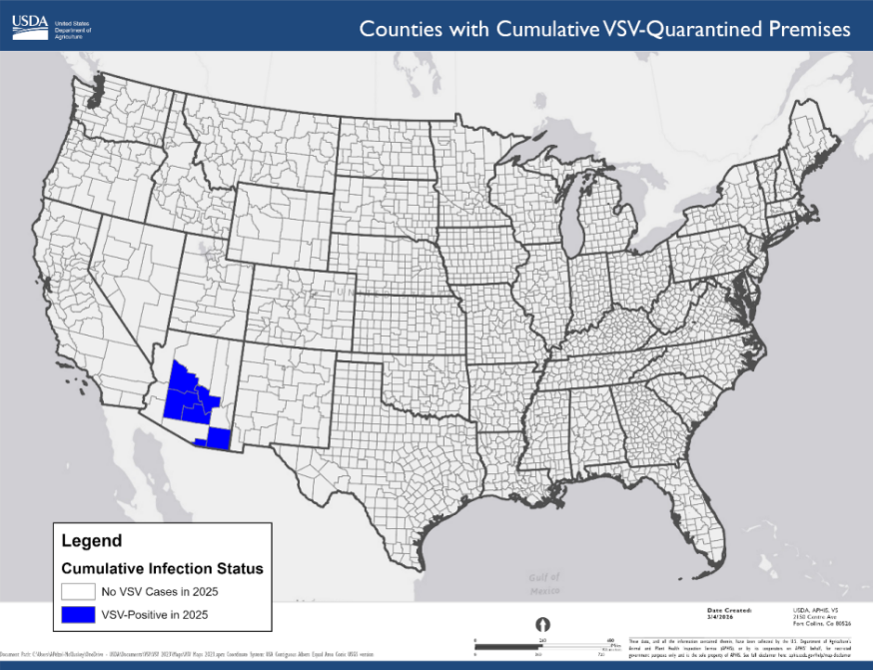
Figure 2. Counties with Cumulative VSV-Quarantined Premises (Source: USDA)
Detection of vesicular stomatitis (VS) cases continues in Arizona, with the most recent (Vesicular Stomatitis Virus) VSV-positive premises identified in Yavapai County on March 4, 2026. Since the start of the outbreak last October, a total of 13 premises have been quarantined across six counties, in addition to one case identified in a wild horse from the Salt River Wild Horse Management Group in the Tonto National Forest. All cases have occurred in equids only, and while infection has not yet been observed in other species, some quarantined premises contain other livestock species.
Climate and environmental factors are important for the spread of VSV and its insect vectors. Common vectors relevant to Montana include black flies, Culicoides biting midges, and Aedes mosquitoes. VS cases tend to occur in regions characterized by warmer than average temperatures, lower precipitation, and around habitat that supports vector abundance (e.g., riparian areas, irrigated fields, standing water, etc.). The mild conditions this winter into spring may facilitate the northward expansion of VSV, so a high degree of vigilance, especially for animals with a recent travel history, is warranted. Montana currently requires all equine import CVIs to state if the animal(s) have spent any time in Arizona in the previous 21 days, and for horses originating from VS-affected states (currently only Arizona), health certificates must be issued within 7 days of entry to Montana. Horses from states with VSV outbreaks are ineligible for direct export to Canada and must be outside of a VSV affected state for 21 days before they can be inspected for export to Canada. Other states are also likely to have changes to their animal import requirements due to VS, so it is important to review requirements prior to writing health certificates.
As a reminder, VS is a viral disease affecting horses, mules, donkeys, pigs, cattle, and New World camelids. Sheep and goats tend to be resistant to infection and rarely display clinical signs, in addition, cattle and horses under one year of age are seldom affected. Wildlife, such as white-tailed deer, may also be infected and play a limited role in disease spread. VS is clinically indistinguishable from other vesicular diseases in cattle and swine, such as foot and mouth disease, and is therefore reportable in all states. Insect vectors are the primary mode of transmission, but disease can also be spread via direct and indirect routes, such as contact with contaminated feed equipment or shared water sources. While mortality is rare in infected animals, morbidity rates are can reach up to 90% in affected herds. Generally, infected animals exhibit anorexia, lameness, hypersalivation (often the first sign noticed), fever, and a generalized loss in production. Lesions can occur on or around the lips, tongue, muzzle, ears, udder, prepuce, and coronary bands. Humans can also become infected with VSV and experience an influenza-like illness, so using personal protective equipment is strongly recommended when managing suspected cases.
If you suspect an animal is infected with VSV or has any vesicular-like lesions, please notify Department of Livestock (DOL) immediately. At a minimum, collecting serum and swabs of any lesions will be valuable for diagnosis, in addition to scabs, crusts, or vesicular fluid if available. Through coordination with our office, samples on suspected equine cases can be submitted directly to National Veterinary Services Laboratory (NVSL). A foreign animal disease investigation will be initiated for any cases involving livestock species. In the event that a case of VS is confirmed in Montana, a quarantine of the premises will be issued for a minimum of 14 days from the onset of lesions in the last affected animal on the premises. Preventative measures focused on vector control in the environment will be key in slowing the spread of this disease. The One Health Bulletin in this newsletter has additional information on vector control.
Back to top of page.
by Brenee Peterson, DVM
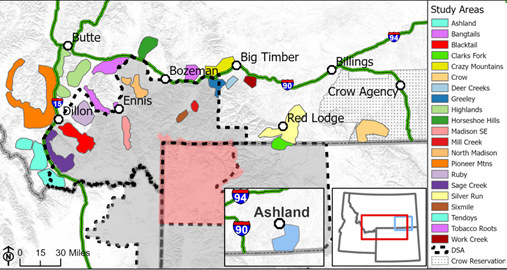
Elk Capture: In early February, Montana Fish Wildlife and Parks (FWP) coordinated with the Crow Tribe to capture 99 elk on the Crow Reservation. Live elk capture is part of the ongoing targeted elk brucellosis surveillance in support of Montana’s brucellosis program. This year all 99 elk tested negative for brucellosis. In addition to brucellosis testing, 30 elk were fitted with Global Positioning System (GPS) collars. The movement and location data from these collars will provide a better understanding of elk movement in the region.
The northern terminus of the Big Horn Mountains is on the Crow Reservation in Montana. Wyoming has found intermittent seropositive results from elk in the Big Horn Mountains in Wyoming. The successful capture of elk on the Crow Reservation and the negative results help provide confidence that we do not have an additional geographic area where wildlife are infected with brucellosis that may spill over to livestock. Additionally, the collar data that will be obtained from the 30 collared animals will help us understand how elk move between Montana and Wyoming.
Figure 3. Elk Capture Map (Source: FWP)
Program Reminders: Department of Livestock (DOL) would like to remind veterinarians and producers that it is the high-risk period (January 15-July 15) for brucellosis transmission from wildlife to livestock. During this time, a negative brucellosis test within 30 days is required before moving cattle. Voluntary herd testing conducted in the fall is no longer valid for movement or change of ownership. Additionally, bulls are still considered program animals, thus a negative test is also needed prior to a movement.
Recently, the department has received many calls regarding final test results and the lack of official identification listed. Please make sure your lab submission form for brucellosis includes the official identification for all animals tested. Electronic submissions are ideal as they help ensure that test data for animals is electronically available and searchable in case of a disease trace. Forms that are not sent in electronically can delay test results and lead to an incomplete final chart. If you would like assistance with brucellosis submissions to the veterinary diagnostic laboratory, please contact Montana Veterinary Diagnostic Laboratory (MVDL) at 406-994-4885.
Lastly, the department is having conversations with United States Department of Agriculture (USDA) regarding heifers less than 12 months going for feeding and their official identification. Currently, Montana allows heifer calves going for feeding that are destined for slaughter channels to use a metal National Uniform Eartagging System (NUES) tag as their form of identification. At this time, you may continue using metal NUES tags in this group of animals but please note that some states will not accept this form of identification for animals coming into their state.
Back to top of page.
by Kelsey Martin, DVM MS
Figure 4. EDCC Logo (Source: EDCC)
The Equine Disease Communication Center (EDCC) serves as an excellent resource for veterinarians and equine owners alike regarding equine disease alerts and information. Veterinarians and State Animal Health Officials can submit reports of equine infectious and vector-borne disease to EDCC, which serves as a nationwide disease monitoring system and one-of-a-kind tool for the equine health industry.
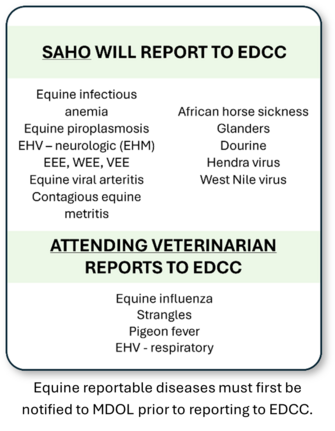
Veterinarians in Montana must notify Department of Livestock (DOL) for any cases involving a reportable disease, particularly those diseases that are also federally regulated and require immediate State actions (Figure 4). However, in cases involving equine diseases that do not require immediate State action, such as equine influenza, strangles, pigeon fever, practitioners are encouraged to self-report these cases to the EDCC. Reporting is fast, easy, and if done in a timely manner, it can help reduce the risk of additional spread in regions with disease incursion. Furthermore, reporting allows for improved monitoring of disease trends, prediction of future risks, and provides guidance for resource allocation. For more information on EDCC and how to report, visit www.equinediseasecc.org.
Figure 5. Equine Disease Reporting (Source: MDOL Staff)
Back to top of page.
by Emily Kaleczyc, VMD MPH
Scrapie, the prototypical and earliest identified prion disease, is a fatal, neurodegenerative disease of sheep and goats. The first case of scrapie was identified in the United States (US) in 1947, and since 1952 the United States Department of Agriculture (USDA) has been working to eradicate the disease from our domestic sheep and goat flock. The modern version of the eradication program began in 2001 and relies on a combination of the Scrapie Flock Certification Program, slaughter surveillance, and on-farm testing.
The US must maintain a high level of surveillance for seven years with no scrapie detections to meet the World Organization for Animal Health (WOAH) standards to declare disease freedom. The last detections in the US occurred in a goat in 2019 and a sheep in 2021. This timeline means the US is two years away from being considered scrapie free. Scrapie free status would open a lot of international markets and opportunities for the US sheep and goat industry.
There are challenges to maintaining a high level of surveillance. In Fiscal Year 2026 Montana needs 448 samples from sheep to meet our surveillance target. In the past most of our testing has been collected from mature sheep that are slaughtered out of state, but several large plants are no longer participating in the surveillance program. This fall off may require Montana to increase in-state testing.
Veterinarians can help with surveillance in several ways:
-
Submit samples from adult sheep for testing. Any animal over 18 months of age at the time of death is eligible for scrapie testing. The best animals to sample are those that die from unknown causes or have clinical signs consistent with scrapie, but sheep that die or are slaughtered for any reason can be submitted. There is no cost for the supplies, shipping, or testing, and you or your client can submit whole heads so that you don’t have to deal with removing brainstems or lymph nodes. Call our office (406-444-2976) or the USDA office in Montana (406-437-9450) if you want to have sampling supplies on hand or if you ever have an animal you would like to submit for testing.
-
Genotype testing for live animals. If you have clients that are interested in selecting scrapie resistant sheep for their flock, you can submit samples for official genotype testing through laboratories approved by USDA.
-
Assist clients who want to participate in the Scrapie-Free Flock Certification Program. This program is intensive and best suited to producers with valuable genetics in their flock and who are interested in being able to export live animals or germplasm.
Additional information on scrapie and the various surveillance mechanisms can be found at the USDA website https://www.aphis.usda.gov/livestock-poultry-disease/sheep-goat/scrapie. We want to help ensure the US has the required surveillance to declare disease freedom, and reaching those numbers will require the assistance of veterinarians and producers in Montana.
Back to top of page.
by Emily Kaleczyc, VMD MPH
Montana’s list of reportable diseases (https://liv.mt.gov/_docs/Animal-Health/diseases/reportable/Reportable-List_Nov-2024.pdf, https://rules.mt.gov/browse/collections/aec52c46-128e-4279-9068-8af5d5432d74/policies/9989bcca-6abb-48c7-be21-f4065f5520e5) is based on diseases which are reportable nationally, are important zoonoses, or may have significant impacts on the livestock industry in the state. Diseases are broken into those which require immediate notification and those which must be reported within 30 days of diagnosis.
Please make sure you are familiar with the reportable disease list as it contains many diseases you may not realize require reporting. For instance, we recently had an inquiry about equine influenza cases in the state. Our records include only a small number of cases reported over the last few years. Proper reporting of diseases that do not result in a regulatory action allows the Department to monitor disease trends and to provide accurate information for you and your clients to facilitate informed decisions for travel, vaccination, or other biosecurity practices. Other common reportable diseases include heartworm, strangles, bovine viral diarrhea, infectious bovine rhinotracheitis, and porcine coronaviruses including porcine epidemic diarrhea virus.
If you submit testing for any reportable disease through the Department’s Veterinary Diagnostic Lab (MVDL), your reporting duties are complete, as our office automatically receives those results. However, if you conduct testing in-house or use an outside lab, you are responsible for reporting all positive cases to our office. Most outside labs do not automatically report results to the state. You can report cases by calling 406-444-2976 or emailing copies of testing reports to livresults@mt.gov.
For most diseases, only positive results are reportable, however, you should be aware that ALL brucellosis and trichomoniasis results are reportable, INCLUDING negatives (https://rules.mt.gov/browse/collections/aec52c46-128e-4279-9068-8af5d5432d74/policies/bed62d1f-b5db-4954-b447-9993ca0aea76 and https://rules.mt.gov/browse/collections/aec52c46-128e-4279-9068-8af5d5432d74/policies/a1f19191-85f0-425a-a1a8-bfcb8ccda5a1). It is important to remain aware of reportable diseases and to be vigilant about reporting diseases to protect both human and animal health. Additionally, if you are seeing disease symptoms that you are unable to explain or diagnose, the Department is happy to receive those reports as well. Veterinarians remain the frontline of defense and your vigilance may help identify a newly emerging disease sooner than later. If you ever have a reporting question, please reach out to our office.
Back to top of page.
by Kelsey Martin, DVM MS
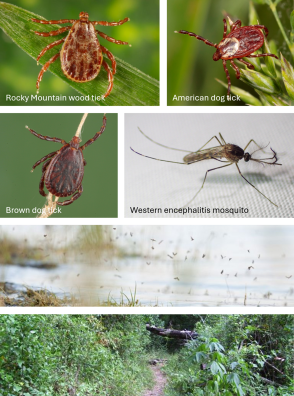
Figure 6. Primary Disease Vectors for Montana (Source: iNaturalist)
Montana’s 2025-2026 winter season has been declared as one of the warmest winters on record for most of the state. Unusually warm temperatures, coupled with reduced freezing events and a state-wide below average snowpack, predispose areas to adverse events such as drought, wildfire, flooding, and, even, heightened disease risk.
Mild winter conditions allow for increased overwinter survival of ticks, mosquitos, and other vectors, setting the stage for early emergence if warm temperatures persist. Abundance of vectors and the amplification of disease in the environment is driven by a variety of factors such as temperature, humidity, rainfall, host availability, land use, and human activity. The primary vectors of concern in Montana for both humans and animals alike include the Rocky Mountain wood tick (Dermacentor andersoni), American dog tick (Dermacentor variabilis), brown dog ticks (Rhipicephalus sanguineus), and Aedes and Culex mosquitoes, most notably the Western encephalitis mosquito (Culex tarsalis) for its role in transmitting West Nile virus and other flaviviruses. However, other insects including fleas and biting flies (e.g., Culicoides midges) are also important to keep in mind when considering strategies for limiting vector-borne disease this spring into summer.
While each species has its own habitat preference and conditions necessary for reproduction, ticks and insect vectors generally thrive in warm, humid environments and are limited when conditions become dry with extended periods of extreme heat or cold. However, suitable “microclimates” offer the opportunity for some vectors to persist much longer into the year then they would otherwise. Areas that trap heat (e.g., urban areas, parking lots), cool air (e.g., shaded areas, rich vegetation, wetlands), and standing water can all promote survivability of vectors.
Therefore, implementing a multimodal approach for vector control, that considers both vector ecology and host susceptibility, will be more effective (and economical) for preventing disease and safeguarding human and animal health long term. The use of insecticides or acaricides alone may be insufficient at controlling disease if pest pressure becomes too high, if it is not used in a timely or appropriate manner, or if vectors develop resistance. The following outlines general recommendations that can be considered by veterinarians, and communicated to clients, for reducing the risk of vector borne diseases in both humans and animals:
Environmental management
- Reduce overgrown vegetation, tall grass, leaf litter, brush, and debris from areas frequented by people and animals as these are areas likely to harbor ticks and other insects.
- Eliminate stagnant water sources (e.g., puddles, unused buckets, overflowing stock tanks, etc.) where it is feasible. Shallow areas along water bodies are ideal breeding grounds for many vectors, so performing landscaping/habitat alteration that reduces these zones is important.
- For livestock, consider pasture rotation and manure management strategies to reduce exposure to areas with high burden of vectors or vector attractants (e.g., standing water, manure).
- Consider environmental application of repellents or insecticides/acaricides for high-risk areas but be aware of potential impact on non-target species, any health hazards, product durability, weather conditions during application, and life cycle/ecology of vector targets to ensure safe and effective application.
- Set up insect traps or screens in areas frequented by people or animals.
Animal husbandry and protection
- Application of appropriate animal-use insecticidal and acaricidal products; products must be used according to label directions with considerations for time of year, life cycle of vectors, target species, and withdrawal periods in livestock.
- Some vectors, like certain species of mosquitoes, are better adapted to cold conditions so year-round use of certain preventives (e.g., heartworm prevention) is prudent.
- Animals can be housed during dawn and dusk to avoid periods of peak vector activity.
Biological control
- Use of biopesticides (e.g., fungi, bacteria) or release of natural predators or parasites of insect and arthropod vectors (e.g., parasitic wasps, Wolbachia ) can be considered.
Personal protection
- Wear clothes that are full coverage and apply insect repellent as needed throughout the day. Clothes can be cycled in the dryer for 10 minutes after being outdoors to kill ticks.
- Avoid prime habitat areas for vectors during dawn and dusk hours.
- Clothing and gear can be treated with 0.5% permethrin.
Monitoring
- Continuous, daily monitoring for signs of ticks and other pests on yourself, pets, and livestock.
- Submit ticks for identification by grabbing head as close to skin as possible and placing into container of rubbing alcohol or in a sealed bag/container. Ticks can be submitted to DPHHS or MVDL for identification. Tick encounters can also be recorded here https://form.jotform.com/243114113292141 as a part of Montana’s Department of Public Health and Human Services (DPHHS) tick surveillance.
These approaches are based around reducing vector sources and minimizing overall interactions with vector species. Region-specific measures may be required based on vector population size and disease prevalence. It is important to note that with changing climatic conditions and frequent travel across North America, geographic expansion of certain vectors not before seen in Montana is an increasing concern. In late 2023, a blacklegged tick (Ixodes scapularis, aka deer tick; a major vector for Lyme disease) was discovered in Dawson County, but an established population has not been confirmed. The recent incursion and spread of the exotic Asian longhorned tick (Haemaphysalis longicornis; major pest for livestock and vector for theileriosis and other diseases) to the United States also presents a significant threat to livestock health.
We encourage veterinarians to closely monitor for tick and insect vectors in the months ahead. The blacklegged (deer) tick, Asian longhorned tick, and cattle fever ticks (Rhipicephalus microplus, R. annulatus) are all reportable tick species in Montana, along with an extensive list of vector-borne diseases that can be reviewed on DOL's and DPHHS’s websites. Veterinarians are encouraged to submit ticks for identification to either MVDL or DPHHS.
Back to top of page.
|