What Do Inspectors Do?
 by Doug Determan and
Bill Smith
Minneapolis is in the midst of a historic building boom, and
as a result, Construction Code Services Inspectors are hopping. But not
everyone knows exactly what inspectors do. So here it is, in a nutshell. Once a
project has been approved and permits are issued, the inspection team visits
the site to ensure that safe and appropriate structures are being built;
inspecting the foundation and footings followed by framing, insulation,
plumbing and mechanical installation, roofing, to the final inspection and
completion of the project.
Every boom comes with challenges, however, and this
one is no exception. Complaints from
frustrated neighbors of construction sites surged regarding excavations without
proper shoring, debris on boulevards and adjacent properties, and contractors
working after hours. The Minneapolis
Residential Construction Management Agreement (CMA) was created to address and
minimize issues felt by neighbors. While
the focus of CCS is on the structure itself, two inspectors have been assigned to
help enforce the agreement and to ensure compliance with a goal of decreasing
complaints. We are happy to report, we are seeing success! (See related story below in "Trends.")
The (Construction Management Agreement) Enforcers
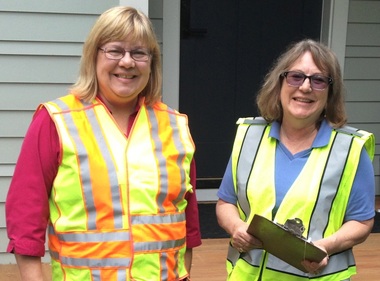 by Julie Biesemeier
Marlene Bach and Vicki Carey are the two inspectors mentioned in the article above resolving negative impact concerns
that are outlined in the new Residential Construction Management Agreement. With the goal of ensuring and maintaining a safe and
nuisance free job site, they focus on issues like shoring the ground around
foundations, foundation height, orderly job sites, use of sidewalks and
boulevards, overflowing dumpsters, and building to approved plans. Both are Minnesota Certified Building
Officials and ICC (International
Code Council) Certified Building Inspectors holding numerous other
certifications and qualifications. Vicki was one of the first in the City to
obtain LEED AP (Leadership
in Energy Efficient Design, Accredited Professional) qualification and is an IAPMO (International
Association of Plumbing and Mechanical Officials) Mechanical Inspector and
Minnesota Energy Auditor. Marlene has a
degree in Building Inspection Science, 10 years of experience designing plumbing
and heating systems and more than 4 years as Zoning Coordinator for the City of
Duluth. Together, they have over 20 years of experience with the City.
DC Group Invests $7 Million in North Mpls
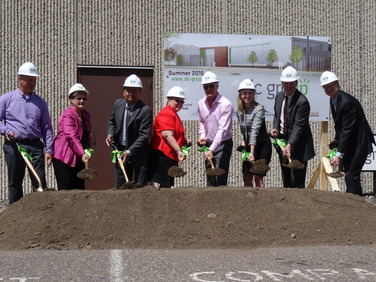 On May 29, the DC Group held a ceremonial
groundbreaking event on their nearly $7 million building expansion/renovation
project at 1977 West River Road in North Minneapolis. Founded in
Minneapolis in 1969, DC Group is one of the nation’s largest providers of
maintenance and repair service to users of uninterruptible power systems, such as
government, hospitals and critical data centers. The renovation will
include approximately 15,000 square feet of the existing facility and
construction of an additional 23,500 square feet of new space along
with an 86-stall parking structure.
Among other funding sources used to finance the project, DC Group became the first recipient of the City
of Minneapolis' Grow North funding through this project. Grow North focuses on connecting
North Minneapolis residents with jobs created by new and expanding North
Minneapolis companies, offering forgivable loans of up to $200,000 to
businesses locating or expanding in North Minneapolis which provide at least 15
jobs to local residents. To fulfill their loan requirement, DC Group is currently working with Marie Larson in Minneapolis Employment and Training to promote their job openings.
Broadway Flats Apartments Aims to Replace North Minneapolis Housing Lost to Tornado
 by Tiffany Glasper
Steve Minn of Lupe Development Partners and Dean Rose, owner
of Broadway Liquor Outlet, have joined forces to create Broadway Flats, LLP for the purposes of
redeveloping the northwest corner of the Penn-Broadway intersection. This
location was the epicenter of the May 2011 tornado that destroyed hundreds of
housing units and many businesses including Broadway Liquor Outlet.
The project site consists of nine individual parcels of
land, six owned by the City, two owned by the developer and one for which the
developer has a purchase agreement.
The development is proposed to include 103 affordable rental
units, 19,000 square feet of commercial space, underground parking, shared
surface parking and numerous pedestrian amenities.
Broadway Liquor Outlet will relocate to this new space and
become the anchor tenant. The Rose family’s willingness to invest beyond just
their own interests is a testament to their longtime dedication to the
community. This project has strong support from Council Member Blong Yang, West Broadway Business and Area Coalition, and Jordan Area Community Council.
The total project costs are currently estimated at just
under $24 million and we hope to break ground in the spring of 2015.
New Artwork Brings Neighborhoods Together
by Mary Altman
“In a sea of concrete [this design will]
bring life and light and color to the community and people who live there and
pass by every day.” - June Community Event Attendee
On June 19, the John Bigger’s Seed Project
partners and artists unveiled a design for a new gateway and artwork to be
located at the bridge along Olson Memorial Highway crossing Interstate 94. The
location, currently an industrial corridor unfriendly to pedestrians, is an
important connection between the Northside and Downtown. The design features a
shared gateway that brings neighborhoods together and celebrates the history
and community of Minneapolis’ Northside. The work will be created in porcelain
enamel, a medium selected for its creative potential and durability. The entire
process, including construction of a kiln for the project, is being coordinated
by the Chicago Avenue Fire Arts Center.
A major emphasis of this groundbreaking
project is to support the development of the next generation of African
American public artists. Thirteen emerging and mid-career artists are engaged
in the design and fabrication of this work of art as well as a two-year
professional development program to learn the skills needed to embark on successful
careers.
Learn more
Technology, Information & Innovation
Keeping the M Drive Clean is Smart and Simple
One of the challenges associated with cleaning our old files
is how to begin the daunting task of knowing where and how to look for old or
redundant files. Now, with the help of some basic queries, you can easily list
some of the larger files specific to your business lines, determine their value
and delete them if you choose. Below, you will find a list of links. Each link
will list all M: drive files larger than 5 Mb for that specific business
line. Simply click the link and wait for the list to generate.
To Recap:
- Click
the link associated with your general business line.
- Wait
for the file list to generate. Depending on the number of files, this may take
a few moments.
- Look
for those files that appear redundant or have the same file size.
- Delete
those files that are not needed or are redundant.
- You
will only be able to delete from folders in which you have authorized access.
CPED M: Drive Files Larger than 5 MB:
Please do your part to keep our files and server clean and
efficient.
If you have any questions, contact Ed Daley x5107.
ELMS is Driving Change and Improvements
by Connie Perila
The Enterprise Land
Management System (ELMS) is more than just a replacement of outdated business
applications. The ELMS project presents the City with a unique opportunity to
review how we do our work. We can analyze existing business processes,
streamline and enhance them before
they are configured into the new system.
This way they are configured the most efficient way possible.
So, now is the time
to review and develop new and enhanced workflows to ensure optimal
effectiveness of the ELMS system and our CPED and cross department
operations. If you have a suggestion on
a work process that ELMS will touch, speak to a project team member today.
Project Status Update
Scope 1 of the ELMS
project wrapped up earlier this month. The following application types
have been configured and tested by key business users in Health, CPED and PW:
After Hours, Soil Erosion, Street Use, Mechanical, Plumbing, Residential
Building, Site Alteration, Water Tap, Sewer Tap, and Sidewalk. Interfaces
to COMPASS, Master Addressing, and GIS were also developed in Scope 1.
Scope 2 plans will
start July 7. Plans include the design and configuration of 36 additional
application types, implementation of four product installations: Billing,
Electronic Plan Review, Mobile, and Portal interface to the public, additional
interfaces to HRIS employee index, Govern, and ECMS. Go live of scope 1
and 2 is planned for May 2015.
Scope 3 includes
additional application types and interfaces. It will conclude with the
entire system going live in early 2016.
See complete project Implementation Timeline on the ELMS
CityTalk website.
Ongoing Updates
The ELMS Website is updated every week. Visit it regularly for project
news.
|