|
Public safety leadership, stronger protections, and a responsibility to deliver
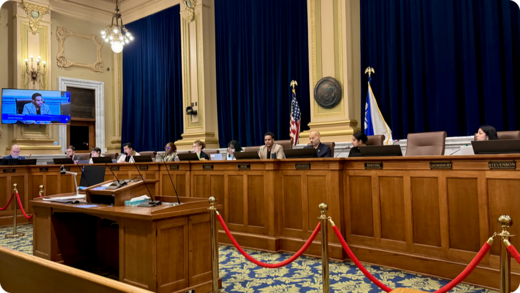 Minneapolis City Council chambers, where the Council considered the police chief nomination and data center regulations on November 20.
Neighbors -
Today, the City Council considered Mayor Frey’s vetoes on the police chief nomination and on data center regulations. Both vetoes were sustained.
I voted to sustain the Mayor’s veto of the Council’s rejection of Interim Chief Bill Peterson’s nomination. I voted to override the veto on data center regulations.
You deserve a clear explanation of both decisions and what comes next.
 Interim Police Chief Bill Peterson speaks alongside Mayor Jacob Frey following his nomination to serve as Minneapolis’ next police chief.
Before there was a nominee, my office brought neighbors together to hear what they wanted from Minneapolis’ next police chief.
We heard from people who wanted faster police response and more proactive policing. We heard calls for stronger accountability, reform, and greater use of specialized and community-based responses.
Native neighbors spoke about safety and exploitation along Franklin Avenue. Somali and immigrant neighbors spoke about trust. Transgender residents spoke about safety and fair treatment. Survivors and advocates spoke about domestic violence.
People did not all agree. They did not need to.
Our responsibility was to listen carefully and carry those voices with us when it was time to make a decision.
Those conversations helped shape the standard I laid out before the vote.
When people call for help, someone should come - and when someone comes, people should be treated fairly.
After listening to neighbors, meeting with Chief Peterson directly, and hearing him through the public process, I believed he could meet that standard.
I believed he understood the work ahead on reform and accountability, staffing, responsible management, domestic violence, and rebuilding community trust.
I voted to confirm him with those expectations. I will continue to judge his leadership by whether he delivers.
Today, I voted to sustain the Mayor’s veto of the Council’s rejection.
I then moved to refer the nomination to the City Clerk so the Council can revisit this critical public safety appointment. A majority of my colleagues supported that motion.
Chief Peterson continues to serve as interim chief, and his permanent appointment remains pending.
Council members can disagree strongly about the leadership our city needs. We still have a shared responsibility to ask serious questions, treat candidates fairly, and give this decision the care our neighbors deserve.
 Minneapolis’ proposed data center rules would limit the space devoted to servers and require operators to disclose how much water and electricity they expect to use.
I have been clear about my opposition to data centers. I have also been clear that Minneapolis needs strong, enforceable rules governing them.
For neighbors living near a proposed facility, the questions are practical. How much water and electricity will it use? How will noise be controlled? What standards must it meet? How will residents be heard?
City staff and Council staff spent roughly six months developing a regulatory framework. Through that work and subsequent amendments, we reached a compromise with limits on location and size, resource-use disclosures, renewable-energy purchasing requirements, and public review.
Council Member Rainville and I brought forward an amendment reducing the maximum computing area - known as white space - from 175,000 to 150,000 square feet.
I also supported Council Member Chowdhury’s renewable-energy purchasing requirement for facilities with more than 50,000 square feet of computing space.
Those were meaningful protections. They reflected the work of colleagues finding enough common ground to move forward.
A majority of the Council then added an overlay requirement that would require a separate Council rezoning decision for each proposed site.
The Mayor had made clear he would veto that approach. I warned that without the votes to override him, those additions could prevent the entire package from becoming law before the moratorium expired.
That is why I opposed the final version last week.
Today, I nevertheless voted to override the veto.
With the deadline upon us, I was willing to accept a provision I opposed to put the protections we had developed into law.
Compromise requires each of us to make that kind of judgment.
Seven of us voted to override. We needed nine.
The moratorium expires November 21. Data centers will be able to seek permits under the existing zoning framework, which allows them in 10 of the City’s 15 primary zoning districts.
The additional protections we spent these months developing will still be missing.
That is the outcome I warned about, and one I worked to prevent.
The Mayor is responsible for his decision to veto. My colleagues and I are responsible for our decisions and for finding a path forward.
This afternoon, the Council unanimously agreed to send the earlier compromise back to the Planning Commission.
A public hearing is planned for December 14, with Council action expected December 17.
I will continue working to put data center regulations into law.
Thank you to every neighbor who attended a listening session, testified, or wrote to our office. Your concerns deserve careful consideration, including when we reach different conclusions.
I owe you an honest explanation of my decisions. I owe you continued work. And I owe you accountability for what follows.
Jamal Osman
Council Vice President | Ward 6
Minneapolis City Council

Learn More
Review the City’s overview of the proposed data center regulations, research, public process, and supporting materials.
Learn more about data center regulations →
Visit the Websites for our amazing neighborhood organizations to keep up with hyperlocal news and information about upcoming events:
|