 Credit: Scott Rodgerson
The hard work of city staff and the efforts of my office and co-authors to craft data center regulations for the future started coming front and center this week.
Last Friday marked the beginning of a 60-day public comment period on the proposed plan, kicked off by the launch of the website outlining Community Planning & Economic Development's (CPED) proposed ordinance changes. On Monday, CPED posted a video premiere starring Jason Wittenberg, City Planning Manager, explaining the thinking behind the proposed ordinance changes.
Finally, we had a presentation at the Business, Housing, and Zoning Committee (BHZ) from our Legislative Research & Oversight (LRO) department, which issued a report on the potential impacts of data centers and an analysis of regulations in peer cities within this rapidly emerging sector. Please take the time to enter your thoughts into the public comment portal.
I commend all these resources to you. They are highly informative and do a great job of taking an issue that is generating a great deal of concern at the moment—some of which is legitimate—and dealing with the facts on the ground here in Minneapolis. When it comes to data centers, local conditions and local context matter. That was one of the key takeaways in the LRO report.
The bottom line is this: Minneapolis' proposed regulations would place us on the more restrictive side of the spectrum nationally. You won’t be able to build a single-use, new data center here in Minneapolis of any size. Hyperscale data centers are not in the mix. We aren’t going to surrender the skyways to Skynet. In fact, you probably won’t even notice they're here, like the ones that have been here for decades.
CPED thoughtfully incorporated the feedback we gave them in crafting their proposed ordinances:
- Data centers will only be allowed in existing buildings.
- They won't be allowed on the first or second floors, so they won't impact street activation.
- White space (where the actual processing takes place) will be restricted to 175,000 square feet and must be located at least 20 feet from an exterior wall, and 100 feet from the exterior wall of a residential dwelling unit.
- Applicants will be asked to disclose expected water and electricity use, backup generator plans, and a sound attenuation plan.
- The city will never enter into a non-disclosure agreement with the developer of a data center.
 At this point, I do sense some agreement on council around a few things. First, downtown is the best place to allow data centers in our city. If we're going to have more of them, this is primarily where they belong. Second, there is no desire for, nor is there market demand for, hyperscale data center development in Minneapolis. There just isn't any room for them here.
By contrast, there isn't consensus on whether we should allow for the possibility of data centers in industrial or commercial districts outside of downtown. The council will continue to discuss these topics (and all the proposed regulations above!) with CPED staff next week in our legislative lab focused on data centers.
A case in point is the 25-acre former Wells Fargo/Honeywell campus just off 35W in the Phillips neighborhood. This site previously hosted a data center, and the new owner has expressed a desire to renovate this space in his multi-use development plan, which includes a technology hub, housing, retail, and healthcare. The question is whether allowing a small data center in locations like this would help make larger redevelopment projects financially viable. If so, in this case, it would bring a large, vacant complex back to life for a community and prevent it from becoming a deteriorating eyesore that sits vacant for decades.
I'm personally agnostic on whether a data center makes sense as part of this project, but it’s an example of why the council may want to maintain optionality for specific use cases outside of downtown.
To this end, CPED is exploring the use of overlay districts for data centers —a mechanism which would allow property owners in commercial districts outside of downtown to apply for a data center overlay on a case-by-case basis. Any building seeking this distinction would have to first go before the Planning Commission and then gain final approval from the City Council, giving the council complete discretion over whether to approve any given project. The overlays could have additional restrictions put on them as well. I am curious to learn more about this idea as it could provide us with flexibility for investment where it makes sense (i.e., not residential), while at the same time giving the public a chance to weigh in on specific projects through their council members.
We’re not talking about the Wild West here, but the Mild Midwest, where we do thoughtful, smart policymaking and don’t get caught up in the hyperbole.
I urge the public, with myself included, to beware of fearmongering, which derails and sabotages collaborative discussion. I understand that the broad fears around AI are real, even though it is something we all use every day and probably wouldn’t want to give up. What the council is trying to do now is set regulations that prevent a free-for-all approach in Minneapolis like we currently have under the “communications exchanges” ordinance. So, when you hear someone fueling fears over facts, call it out, redirecting the dialog to a productive, collaborative space. Don't believe the hype about hyperscalers coming here. AI data centers in Minneapolis aren't a cure-all, and no one is claiming that they are. Nor does considering overlay districts mean that anyone wants a data center on every corner.
The truth is much more boring—as it usually is. A few more will be built downtown and maybe a couple more across the city where it makes sense for the market. Remember, local conditions and context drive whether an idea makes sense, not a national narrative.
Lastly, data centers are just one factor—albeit a potentially significant one—in stabilizing the value of commercial real estate in our downtown core. This would be no small accomplishment, given that the MSP region just claimed the top spot for the most distressed commercial real estate market in the country.
So in the race to the bottom, congratulations – we are already here! Now can we please try something different?

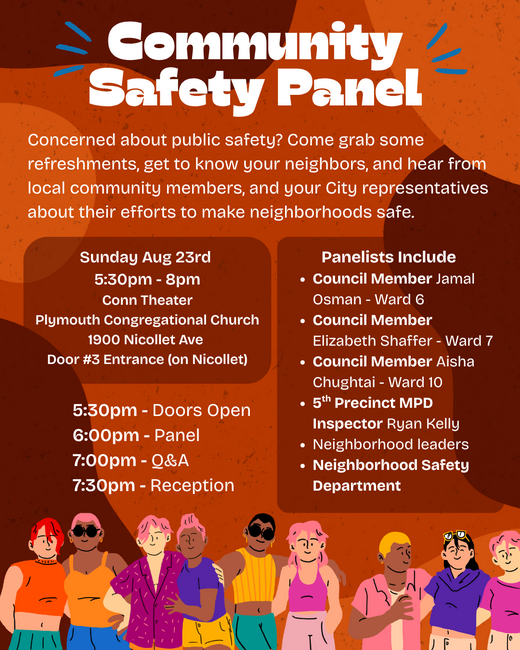 As flagged in last week’s newsletter, I’m co-hosting a community meeting at Plymouth Congregational Church, 1900 Nicollet Ave., on Sunday, August 23rd, 5:30-7:30, regarding public safety in the 19th and Nicollet corridor. I’ll be joined by fellow councilmembers Aisha Chughtai and Jamal Osman, along with MPD Fifth Precinct Inspector Ryan Kelly, other city staff, and local community leaders. You can expect substantive updates on the current situation and plans for the future, and you should absolutely bring your questions. Hope to see you then!
 We have not one but two community meetings coming up next week regarding selection of the next police chief, with a third to follow in September. On Tuesday, August 25, Ward 3 councilmember Michael Rainville and I will be hosting a meeting from 6:30 – 8:00 p.m., at the Renaissance Depot Hotel, 225 Third Ave. S. While I expect much of the discussion will focus on issues related to the First Precinct, which covers the downtown area, anyone interested is welcome to attend.
The very next day, Wednesday, August 26, I’ll be joining Ward 5 councilmember Pearll Warren and Ward 4 councilmember LaTrisha Vetaw for a similar session, 5:30 p.m. – 8:00 p.m., at the Farview Recreation Center, 621 N. 29th Ave. Again, I expect this meeting will focus on matters of interest related to the MPD Fourth Precinct, which includes north Bryn Mawr (Ward 7), Near North (Ward 5) and North Minneapolis (Ward 4), but anyone is welcome to attend.
We’ll be joined by representatives from the mayor’s office and MPD for both events, and if you want to add your voice to the selection process for the new chief, this is a prime opportunity.
Lastly, if those dates don’t work for you, there will be a third meeting that I’m co-hosting with councilmembers Palmisano, Whiting and Chughtai on Monday, September 14, 6:00 – 8:00 p.m., at Washburn High School, 201 W. 49th St. As with the earlier two meetings, all are welcome to attend, but it will focus largely on issues related to the Fifth Precinct (southwest Minneapolis).
 As you might imagine, we’ve been receiving much constituent feedback regarding the mayor’s proposed 11.3% property tax levy hike. As discussed in last week’s newsletter, this is too high and we need to find ways to bring it down to a more manageable level. I’ll be keeping you regularly posted on budget-related developments all the way through December, but there’s an important way you can be involved right now.
On Wednesday, September 9, starting at 5:05 p.m., the Board of Estimate and Taxation (BET) will hold a public hearing at the Public Service Center, 250 S. 4th St., regarding maximum property tax levies payable in 2027. While the city council and park board can both propose their own levy, the BET is the group that holds the power to set a binding cap for everyone. The BET representation includes the mayor, President of the City Council, Chair of the Budget Committee, President of the Park Board and two elected citizen members.
The BET needs to hear your voice, stories and perspective on the direction of our property tax rates. This is an important issue and an opportunity to add your voice to the discussion. After hearing from the public on September 9, the BET members will reconvene on Wednesday, September 23, to finalize the maximum levy for 2027. Any further mayoral or council deliberation around the budget will need to stay at or under that set levy number.
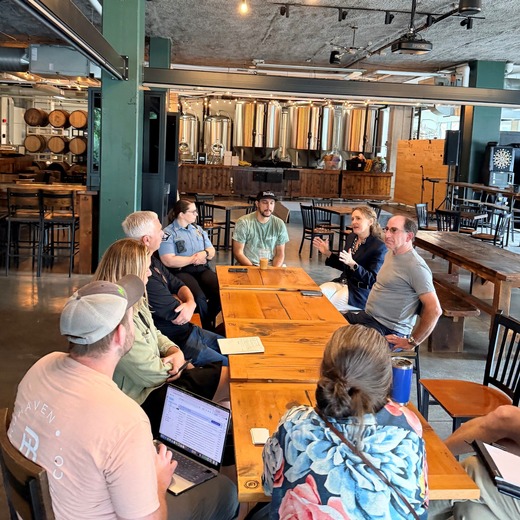 I think one of the most important things a leader can do is get the right people around the table to tackle a problem, because none of us working alone has all the answers.
This morning, I got a group together at Brühaven on 14th and LaSalle to discuss some of the issues in the neighborhood that have negatively impacted their business and the surrounding community. We had Alex and Glenn, the business owners; Inspector Mota from the First Precinct; Abby Poeske from Meet Minneapolis; Shane Zahn, the Safety Director from the Downtown Improvement District; Jana Metge, the Director of Citizens for a Loring Park Community; Jim Rubin and Mike Finkelstein from 19th & Nic; and my team, to listen, learn, and start to make a plan.
The challenges Brühaven has faced are numerous: first there was Operation Metro Surge, which tanked business; on top of that, they've had windows smashed, multiple break-in attempts, and a robbery in which more than $10,000 of D&D gear was stolen -- gear tied to a monthly Dungeons & Dragons event that's become a real community fixture at the brewery. This, along with the gambling and open drug use happening outside the smoke shop at the mini-mall on 13th and LaSalle, deters residents and visitors from the Convention Center and downtown more broadly.
This is a microcosm of what commercial corridors across the city are facing. We have too many vacancies and too many public safety issues concentrated in certain pockets. It's time to take an all-hands-on-deck approach. Each of these areas needs a regular coalition of stakeholders meeting to come up with solutions that address the safety and economic needs at the same time. When we attack the problem from both angles, we're going to drive away the bad actors and welcome in the neighbors who want to support their local businesses and enjoy their neighborhood.
We have so many great community leaders, and I am committed to doing what I can to get the city to do its job so everyone else can do theirs.
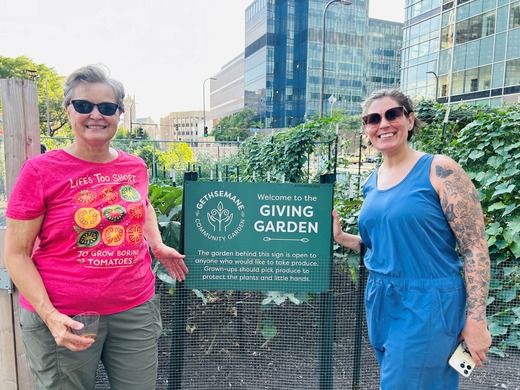 Vegetable gardens in the heart of downtown are always worth a visit, and this week I stopped by the Gethsemane Community Garden on the corner of 10th Street South and 4th Avenue. Tuesday evening was their annual open house, and the garden was in full glory with blooming okra, melons hanging from trellises, and zinnias here and there making everything look cheery. The gardens here are a mix of private plots and a large pick-it-yourself area for the surrounding neighborhood, completely supported by volunteers. As I was collecting a few cucumbers and tomatoes on my way out, I learned that even in gardens downtown, the rabbits are prolific, to the point that some Ward 7 rabbits find themselves becoming Ward 3 rabbits through friendly relocation. To those of you who have the opportunity (and desire!) to garden, enjoy these waning days of summer.
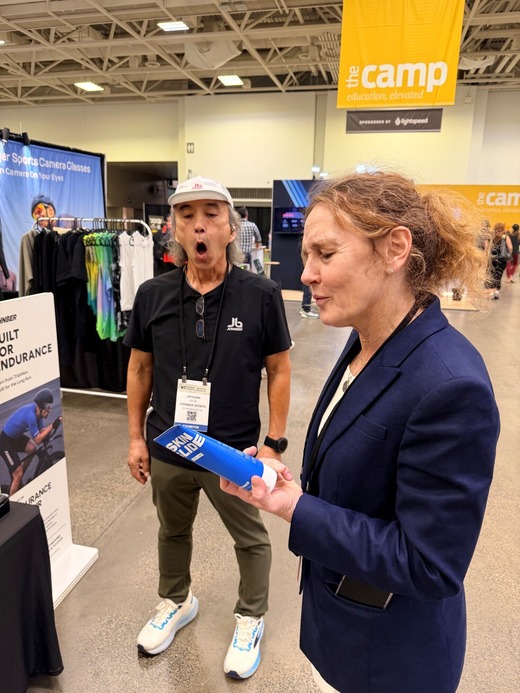 It’s been a big week for Minneapolis and the outdoors! Yesterday I was pleased to attend the first day of exhibitions at the Outdoor Retailer (OR) trade show at the Minneapolis Convention Center, which started on Wednesday and wraps up today. For those not in the know, Outdoor Retailer is the leading outdoor sports business event in North America, with hundreds of exhibitors and retail buyers in attendance. OR recently decided to shift to Minneapolis from Salt Lake City, its longtime venue, attracted in part by its central location and large number of trails and other outdoor amenities. It’s expected to remain in Minneapolis going forward, and I expect there will be a fruitful collaboration between event organizers and the city going forward.
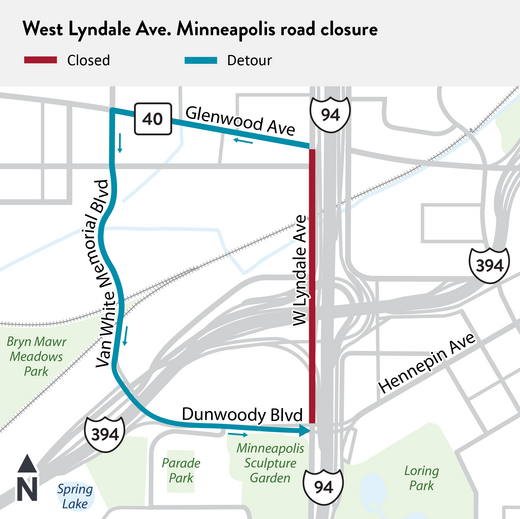 Yet another note for construction-weary residents (Bryn Mawr in particular): The signs saying Lyndale will be closed starting Friday between Glenwood and Dunwoody are real. The good news? It’s just for the weekend (Fri. 10:00 p.m. – Mon. 5:00 a.m.), and there’s a viable detour to Hennepin/I-94 and other destinations via Van White Memorial Blvd, per the map above. This is a MNDOT closure related to the I-394 work, and will be followed by a one-night closure of Van White beneath the 394 bridge (Mon. 10:00 p.m. – Tues. 5:00 a.m.). Thank you once again for your patience with this very lengthy and disruptive construction project. The project will wrap up in November.
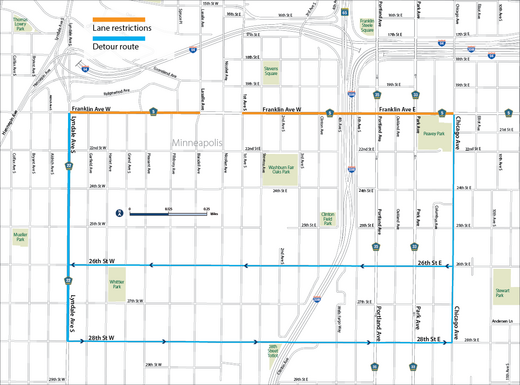 Also, in construction news not related to Bryn Mawr, there are some substantive updates to this summer’s construction work along Franklin Avenue. From yesterday through approximately September 2, Stevens Avenue will be closed to through traffic between 22nd and Franklin while the city works to replace a watermain near the intersection of Franklin and Stevens. Also, starting today, Hennepin County crews will shift work from north side of Franklin Avenue to the south side between Lyndale and Grand avenues. As with the first stage of the work, there are local access options, but check the project webpage for full details, as they are many and varied. This too shall pass, but not today…
Saturday, August 22: Stevens Square Community Organization Annual Meeting, 1:00 – 3:00 p.m., Stevens Square Park, 1801 Stevens Avenue.
Tuesday, September 1: Lowry Hill Neighborhood Association monthly board meeting, 6:30 – 8:00 p.m., at the Kenwood Rec Center. Click here for more information.
Tuesday, September 8: West Maka Ska Neighborhood Council monthly meeting, 6 – 8 p.m., Bakken Museum Great Hall, 3527 Zenith Ave. S.
Tuesday, September 8: East Isles Neighborhood Association monthly meeting, 7:00 – 9:00 p.m., at Grace Trinity Church, 1430 W. 28th Street. Click here for more information.
Wednesday, September 9: Bryn Mawr Neighborhood Association monthly meeting, 6:30-7:30pm at Bryn Mawr Presbyterian Church, 420 Cedar Lake Road. Click here for more details.
Wednesday, September 9: Cedar-Isles-Dean Neighborhood Asoociation monthly meeting, 6:00 – 7:30 p.m., Jones Harrison Senior Living, 3700 Cedar Lake Avenue. Click here for full details.
Monday, September 14: Kenwood Neighborhood Organization monthly meeting, 6:30 – 8:00 p.m., at the Kenwood Rec Center, 2101 W. Franklin Ave.
Monday, September 14: Citizens for a Loring Park Community board of directors meeting, 6:30 – 8:00 p.m., via Zoom. Click here for directions.
 This section is intended to flag issues coming up in the next council cycle (and beyond) which we believe might be of interest to Ward 7 constituents. Items that made it onto our radar this week include:
Budget Committee: Monday’s meeting of the budget committee is expected to include two items of interest to budget wonks. First is a presentation from the Capital Long-Range Improvement Committee, or CLIC. For the uninitiated, CLIC is a citizen-led committee with representation from all thirteen wards that sets long-range plans and priorities for city capital improvement projects and budget requests. This is brick-and-mortar stuff that you can actually see, and an endorsement by CLIC typically goes a long way towards shepherding these projects into reality. If this is of interest, you can also review the 2026 CLIC report here.
Second is a presentation from Legislative Research and Oversight on budget process in relation to various comparator cities. This report was generated in response to a legislative directive I co-authored with Budget Committee Chair Aisha Chughtai and should be helpful in benchmarking where we sit with our process in relation to peer communities. It may give us ideas for process improvement so our budgeting is maximally transparent and done in a timely, predictable manner. I’m looking forward to hearing the presentation.
Annunciation Remembrance Day: On a quite somber note, Tuesday’s meeting of the Committee of the Whole will begin with a resolution recognizing August 27 as Annunciation Remembrance Day. As we approach the one-year anniversary of this tragedy, it’s important that we remember and honor what was lost, and that we redouble our efforts to ensure that this never happens again. The entire Annunciation community has been a beacon of healing and hope for the Twin Cities and across the United States.
Non-disclosure agreements: One of the more troublesome aspects of some data center projects in Minnesota has been the secrecy that results when some local governments have entered into non-disclosure agreements (NDA’s) with developers. Minneapolis doesn’t do that and never has. Data centers already require a conditional use permit, and that process occurs in the sunlight, just like any other permit application. That being said, we recently discovered that nearly twenty years ago, the council did delegate some authority to its Community Planning and Economic Development department (CPED) to enter into NDA’s for limited purposes. Given the mistrust around such agreements, I don’t believe that having this potential is good for any of us in the current environment, so I’m co-sponsoring a resolution rescinding that existing limited authority. While I have no information that this authority has ever been used by the city in a harmful way, this resolution enables us to answer the question “does the city ever enter into NDA’s” with a clear and decisive answer: No.
 What should Minneapolis look like in the future? The City is working on its next comprehensive plan, Minneapolis 2050. Your input can help shape the plan’s goals and vision.
Take the Minneapolis 2050 survey by Sept. 30 to share your ideas about the future of Minneapolis. It should take you less than five minutes to complete. You can take the survey in:
Once the new plan goes into effect in 2030, it will influence many things that impact our daily lives, including:
- Where homes, businesses and parks may be located
- Where and how streets will be improved
- How we will work to reduce our climate impact
Over the next couple of years, there will be more opportunities to learn more about Minneapolis 2050 and share your ideas and feedback.
To stay informed, sign up for Minneapolis 2050 text or email updates.
 Applications are closing soon. Apply through the end of the month to serve on a City board or commission. Serving on a board or commission is your chance to directly shape policies that affect daily life. Your voice brings fresh perspective and drives transparency in City decisions. Whether you’re interested in civil rights and ethics, public housing and property values, historic preservation, or zoning, we encourage you to consider an open position.
Most boards meet monthly, and it’s a great way to gain valuable skills, build relationships with community leaders and grow your understanding of local government.
Right now, Minneapolis is accepting applications for several boards.
Ready to get involved? Explore current openings, and apply Aug. 1-31.
 Minneapolis Animal Care & Control (MACC) is now able to process adoptions seven days a week thanks to a new event with Petsmart.
Meet (and adopt) available animals every Sunday from 11 a.m.-2 p.m. at the Petsmart at the Quarry, located at 1640 New Brighton Blvd. Every other day of the week, you can stop by MACC at 212 17th Ave. N. to view adoptable animals.
Adoption fees are always free for residents.
View adoptable animals, see adoption hours and learn more on the City website.
Scammers may pretend to be City employees to trick people into paying fake bills or sharing personal information.
Watch for warning signs. Be cautious if a request includes:
- A sense of urgency or threatening language. The City will not disconnect services without official notice.
- Requests for unusual payment methods such as cryptocurrency, gift cards or money transfers
- Invoices off the usual schedule or that you didn’t expect
- Spelling mistakes, unusual formatting or suspicious links
If something feels suspicious, call 311 before making a payment or sharing personal information.
Why these scams can look real
Some City information is public. Scammers may use real property addresses, permit applications or other details to make messages appear legitimate.
What to do
- Pause. Take a moment before clicking links or sending payment.
- Call 311. Find out if the request is from the City.
- Check requests using official City channels.
Learn more on the City website. |