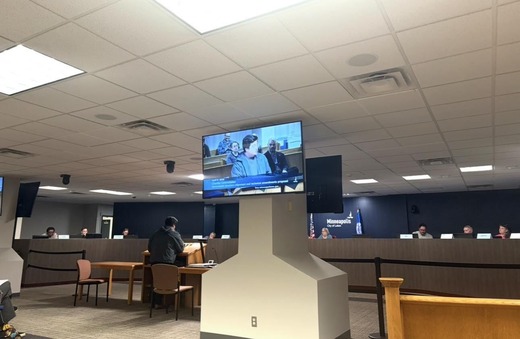
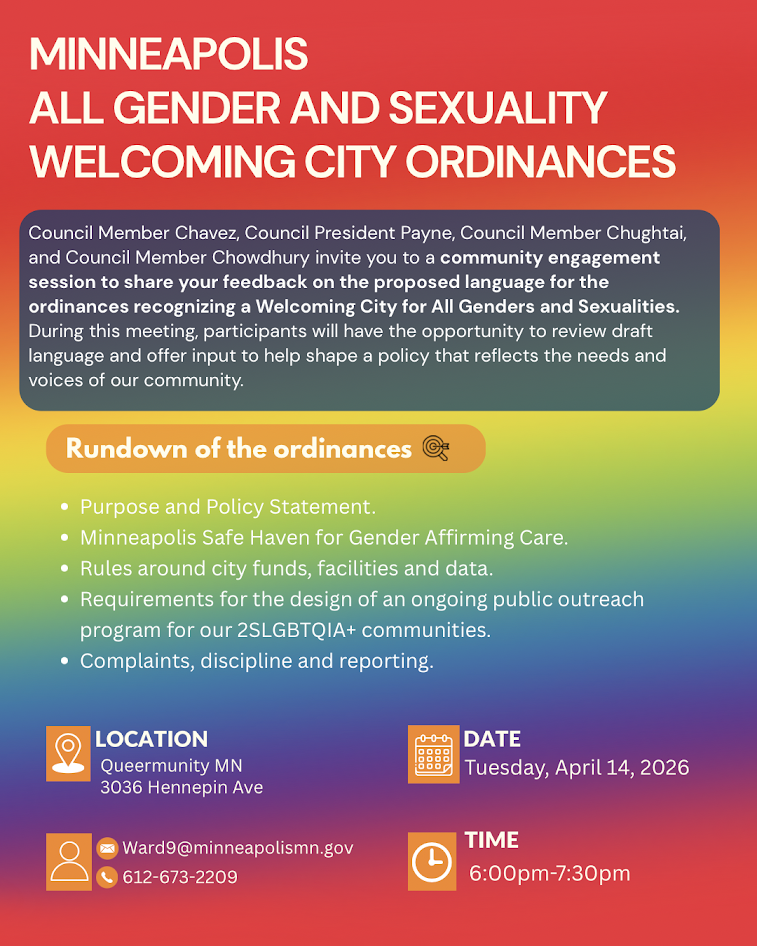
 I am excited to share that our City Council is working on the All Genders and Sexuality Welcome City Ordinances.
As we work to develop policies that are inclusive and supportive of our 2SLGBTQIA+ community, especially at a time when federal actions are impacting our neighbors, your voice and participation matters.
Please join us for a conversation on Tuesday, April 14th at Queermunity (3036 Hennepin Ave) from 6:00pm-7:30pm.
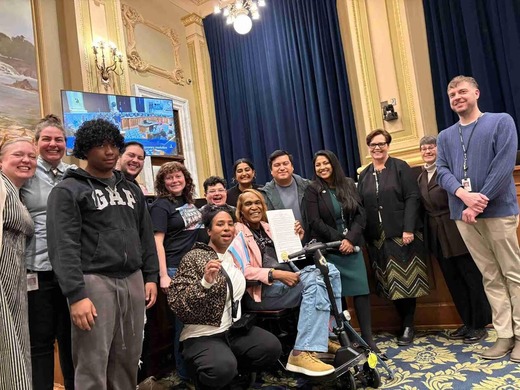 At yesterday’s council meeting, we honored and recognized March 31, 2026, as a day dedicated to celebrating the accomplishments and victories of transgender, non-binary, gender expansive, and gender non-confirming communities while raising awareness of the work that is still needed to save Trans lives.
The International Transgender Day of Visibility holiday was founded in 2009 as a reaction to the lack of LGBTQIA+ holidays that celebrate the successes and accomplishments of transgender, non-binary, gender expansive, and gender nonconforming people.
The International Transgender Day of Visibility is an annual holiday celebrated around the world that promotes the importance of recognizing and supporting the resilience and strength of our transgender, nonbinary, gender expansive, and gender non-confirming community members on this day and every day.
 In the interest of public safety, the Minnesota legislature repealed in 2023 the statute that criminalized the possession of drug paraphernalia. This was signed by Governor Tim Walz.
The Care Over Criminalization Ordinance would align the municipal code with state law and repeal conflicting language. This ordinance brings the Minneapolis Code of Ordinances into alignment with that legislative action. In addition to decriminalizing the possession of drug paraphernalia, the Care Over Criminalization ordinance will also clarify that it is unlawful for any person 18 years of age or older to deliver drug paraphernalia to a minor who is at least three years younger.
While this ordinance had enough support to pass at yesterday's council meeting, several council colleagues made a request to me for more time. I made a motion to delay this ordinance until the April 21 Committee of the Whole meeting. That also means we will consider additional amendments to further align with state law.
I hope to use this time to better educate the public on the difference between drug possession and paraphernalia possession, which are two separate issues. This ordinance is simply about paraphernalia.
Lastly, I am glad that members of the state legislature are asking the council to support the ordinance and asking Mayor Frey to sign it.
There has been a lot of misinformation out there regarding what this ordinance will—and won’t—do, so my office put together an FAQ and shared it in the legislative file. It is also included here:
Does this ordinance legalize the use of drugs?
No, the Care Over Criminalization ordinance does not legalize drug use.
Does this ordinance legalize the possession of drugs?
No, the Care Over Criminalization ordinance does not legalize drug possession. In fact, under this ordinance if a person has any amount, even a residual amount, of drugs in paraphernalia in their possession, it remains a criminal offense under the Minneapolis Code of Ordinances.
What is harm reduction?
According to the American Addiction Centers, harm reduction is an umbrella of policies, programs, and practices intended to reduce the negative impacts on drug and alcohol abuse. The purpose of harm reduction methods is not to eliminate the use of drugs or alcohol; rather, it is to mitigate the damage done by these substances.
Why is this ordinance necessary?
Decriminalizing paraphernalia is an approach to harm reduction focused on helping to minimize the health, social, and economic impacts of drug use. The stigma-free aim of harm reduction approaches towards people who use drugs places an emphasis on humility and compassion. Under the current Minneapolis ordinance, whereby the possession of drug paraphernalia is a criminal offense, the approach towards people who use drugs is one of criminalization and punishment. The Care Over Criminalization ordinance would follow the former approach, focusing on humility and compassion.
Care Over Criminalization, in addition to aligning with state law, aligns with Minneapolis’s values of equity, justice, and healthy communities. Passage of this ordinance is a step toward treating drug use as a health issue, not a criminal one. Keeping a charge like possession of paraphernalia off of one’s record can keep people in their jobs, homes, and in school, and it can help prevent families from being separated, among many other collateral consequences.
Both data and anecdata show that the fear of paraphernalia possession has been shown to increase sharing or reusing needles, which increases the risk of infection. The fear of paraphernalia possession has also been shown to increase the possibility that needles are not disposed of properly.
Don’t we need to criminalize drug paraphernalia to keep people safe and healthy?
According to the Minnesota Medical Association, there is medical and public health consensus showing that criminalizing addiction leads to negative outcomes for patients. Punitive measures have long been unsuccessful in deterring drug use, while the overdose rate has increased and criminal penalties have created barriers to job access, public benefits, and a place to live.
A National Institutes of Health study concludes that “full and immediate repeal” of paraphernalia laws at the state and local levels “is both warranted and needed to reduce opioid overdose death and related harms.” The study continues that repeal of paraphernalia laws “would improve the health of people who inject drugs and those with whom they interact, reducing the spread of blood-borne disease and fatal overdose associated with infiltration of illicitly manufactured fentanyl into the illicit drug supply. It would also free up scarce public resources that could be redirected toward evidence-based approaches to reducing drug-related harm.
Together with Council Members Chughtai and Chowdhury, I have been working over recent years on a number of policies that address unsheltered homelessness and its many impacts. One of the policies is safe parking, which is modeled after programs in Duluth and Denver and is intended to provide a legal, regulated option for people to shelter in their personal passenger vehicles overnight in designated, managed parking lots.
Within this policy, we will need to pass four separate ordinances, due to the broad scope of the policy. The first step in this process was to get approval from the planning commission to amend the zoning code. At their meeting on Monday, the Planning Commission unanimously approved the amendment. The ordinance has now been referred back to staff, where it will remain until the other three ordinances are ready to move forward.
You can learn more about the Safe Parking policy here.
 Minneapolis strives to be a welcoming City for all. More than half of the residents of the city live in rental housing, and all residents deserve to feel safe in their homes and have access to safe housing. Because of that, I find it necessary to adopt protections to ensure residents are not prevented from obtaining rental housing, or made to feel unsafe in their rental housing, due to immigration status.
At Tuesday’s Committee of the Whole meeting, we set a public hearing for an ordinance I authored that would establish protections for tenants and applicants in rental dwellings based on immigration and citizenship status.
Next Wednesday, April 15, the Public Health, Safety, and Equity Committee will take place at 1:30PM. There, we will have a public hearing for this ordinance. If you are able and interested in coming to City Hall to testify regarding this ordinance, please just show up or feel free to reach out to my office and ask any questions you may have about the process.
The ordinance contains four main components:
-
Prohibitions: An owner, operator, landlord, or their agent may not ask about, require disclosure of, or share information about any tenant’s, prospective tenants, occupants, or prospective occupant’s immigration or citizenship status. Landlords are also prohibited from denying a rental application solely because the applicant provides an Individual Taxpayer Identification Number (ITIN) in lieu of a Social Security number which is a critical protection for mixed-status households and immigrants who use ITINs as their primary financial documentation.
-
Exceptions: These prohibitions do not apply when a landlord is legally obligated to determine immigration status under state or federal law. An owner, operator, landlord or their agent may also request documentation necessary to verify the financial qualifications or identity of a prospective tenant or occupant, if the process is not used as a pretext to determine immigration status.
-
Anti-Retaliation: An owner, operator, landlord or their agent may not increase rent, decrease services, alter an existing rental agreement, file a legal action, contact federal or state law enforcement regarding a tenant’s immigration status, or seek to recover possession. They may not threaten any such action in retaliation against a tenant or applicant who reports a code violation, seeks assistance from a community organization or the media, requests repairs, joins a tenant association, or exercises any other right or remedy provided by law.
-
Enforcement: Violations may result in administrative fines, adverse rental license action, and criminal prosecution. Any tenant aggrieved by a landlord’s noncompliance may also seek redress directly in court. The city is not required to issue prior notice of violation before pursuing enforcement action under this section.
LGBTQIA+ gathering spaces, including bathhouses, have long been targeted by criminalization and policing, and our communities have paid a devastating price for that. At a time when the federal government is actively stripping away LGBTQIA+ rights, it’s more important than ever that cities like Minneapolis step up to protect and invest in our communities.
I’m excited to partner with Council President Elliott Payne, Council Member Soren Stevenson, and groups like the Aliveness Project, OutFront MN, and other community stakeholders to allow for the development of these spaces in a public health-focused, culturally competent, and safe manner for everyone.
For too long, the 1988 ban has driven sex-related gatherings underground and away from a public health approach. We can do better.
This item was referred to staff which is a standard legislative process. I am hearing from my colleagues who are concerned about priorities or why this is an issue. The deeper question is: whose priorities count? When we say this isn’t a priority, we are telling LGBTQIA+ Minneapolis residents that their safety, their health, and their community spaces are not a priority.
On the City Council, I have been working on a variety of issues. Including public safety, gun violence prevention, criminal justice reform, rental assistance, approving basic city services and more. We can protect our LGBTQIA+ community and more.
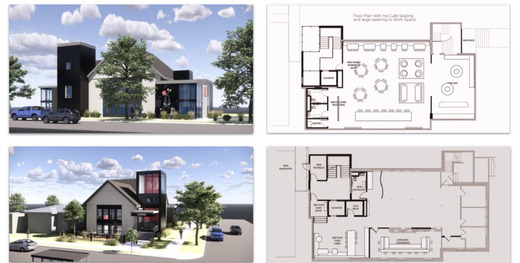 Mni Sota Fund is a 501(c)(3) nonprofit organization and an Urban Native Community Development Financial Institution. The organization serves Minnesota’s urban Native American community and focuses on advancing Indigenous economic sovereignty through culturally responsive financial services, including homeownership education, mortgage lending, and small business financing although services will be available to all.
At yesterday’s full council meeting, we approved a $250,000 Great Streets loan to Mni Sota Fund to support construction costs for the Indigenous Wealth Building Center project located at 1530 E Franklin Ave. This is the result of a 2025 budget amendment authored by Council Vice President Osman. I was a co-author on the amendment along with Council President Payne.
In November 2025, Mni Sota Fund closed on its acquisition of the property, securing site control. Since that time, the organization has continued to refine the project scope and advance design and pre-development activities for the project. I’m proud of our work to get $250,000 in funding to Mni Sota.
At yesterday’s council meeting, we gave notice that we would introduce at the next council meeting an ordinance to place a one-year moratorium on data centers in Minneapolis. There is plenty of information out there regarding the harms that come from data centers, so I gladly joined lead author, Council Member Aurin Chowdhury, as a co-author on this important policy.
This is the first step in the legislative process, so I will keep you updated over the coming months as we make progress.
At yesterday’s council meeting, we approved a contract with the Minneapolis Public Housing Authority (MPHA), providing authority for them to undertake program operations and management of the Emergency Housing Voucher (EHV) program.
During the 2025 budget process, we created the EHV program based on a COVID-era federal program that partnered housing authorities with local continuum of care programs to provide rent support and supportive services to households experiencing homelessness. During the 2026 budget process, we appropriated $1.7 million to support the EHV program this year, in addition to a rollover of $400,000 appropriated from the previous year, which totals roughly $2 million.
Program Overview: The City of Minneapolis will provide up to 36 months of rental assistance for up to 100 households (approximately 50 individuals and 50 families) referred to the Program from Hennepin County’s Coordinated Entry System Priority List. Participant households will have access to supportive services, housing coordination services, and housing stabilization assistance provided through existing Hennepin County programming and/or MPHA.
Eligible Households: To be eligible for the Minneapolis EHV Program, households must be:
- Assessed and referred through Hennepin County’s Coordinated Entry System.
- Planning to reside within the City of Minneapolis.
Voucher Terms: The following are the terms of the Program’s rental vouchers:
- Provide up to 36 months (subject to future budget allocations) of rental assistance, provided in amounts consistent with federal housing choice voucher payment standards.
- Must be placed at rental units within the City of Minneapolis.
- Allowed to be re-placed at a new unit within the City of Minneapolis should the voucher holder move (e.g. the voucher is not invalidated if the household moves within the City of Minneapolis)
Referrals: MPHA will coordinate referrals with Hennepin County’s Coordinated Entry System. Through the referral acceptance process, MPHA will work toward the goal of placing 100 households, including approximately 50 individuals and 50 families.
Supportive Services: Hennepin County has offered to coordinate access to supportive services within their existing programs for Minneapolis EHV participants, both enrolled and placed households. Program participants will be encouraged to use these services, but participation is not a requirement of the program.
While 30-day pre-eviction notice requirements remain the same, the City has expanded rental assistance to help residents stay in their homes, thanks to actions taken by the Council. Renters and property owners can find information about the 30-day pre-eviction notice and resources for renters on the City website.
Help for residents who are behind on rent
There are funds available for renters to access. With $2 million in City funding, alongside a $1 million private funding donation from the Wilson Foundation, this emergency rental assistance will be distributed through existing systems to deliver the aid quickly.
Through the City’s partnership with Hennepin County, the relief will reach renters faster and make it easier for residents to access help when they need it most. These funds will not require an eviction filing for residents to seek access. This assistance is designed to:
- Help renters experiencing sudden financial hardship
- Prevent evictions before they happen
- Get support to residents quickly through trusted partners
To access emergency rental assistance, complete an application on the Hennepin County website.
With spring comes the likelihood of severe weather, including tornadoes, hail, destructive winds and flooding. Knowing what to do and making a few simple preparations can help protect you and your family when severe weather strikes.
Severe Weather Awareness Week is a great opportunity to refresh your knowledge about seasonal hazards from severe weather. Throughout the week, each day has a focus theme.
- Monday, April 13: Alerts and warnings
- Tuesday, April 14: Severe weather, lightning and hail
- Wednesday, April 15: Floods
- Thursday, April 16: Tornadoes
- Friday, April 17: Extreme heat
Learn more about Severe Weather Awareness Week.
State-wide tornado drills
Outdoor warning sirens will sound on Thursday, April 16 in two simulated tornado warnings. The first drill is intended for institutions and businesses. The evening drill is intended for second shift workers and families.
State-wide tornado drillsThursday, April 161:45 and 6:45 p.m.
Outdoor sirens
Did you know that these sirens are not just for tornadoes? Hennepin County uses outdoor warning sirens to alert people outdoors about dangerous weather. Sirens are meant to be heard by those outdoors, so it’s important to have other ways to get severe weather information. The sirens are activated in several instances:
- A tornado warning has been issued, meaning a tornado has been sighted or indicated by radar and there is an imminent danger to life and property
- Credible reports of sustained winds of more than 70 mph
- Damaging, dangerous hail or other life-threatening weather hazard
When you hear sirens, seek shelter and information:
- Seek shelter in a building away from windows or lie in a low area away from cars. Cover your head with your arms. Don't go under an overpass.
- Listen to local weather information on the radio, television or online.
- Continue to shelter until the threat has passed.
Hennepin County does not use the outdoor warning sirens to give an “all-clear” or notify people that the danger has passed. Learn more about outdoor sirens.
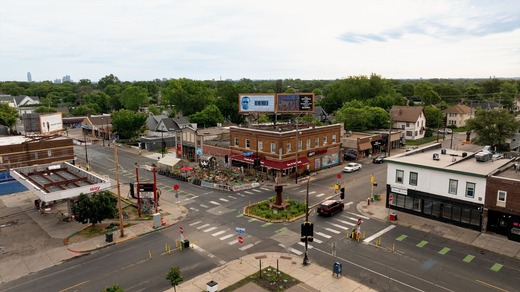 The City is preparing to begin the next phase of work around George Floyd Square.
Construction timeline
Work is expected to begin in June 2026, with substantial completion in 2027. Get detailed information about the construction timeline on the 38th & Chicago Re-envisioned project page.
Learn more about construction at an upcoming open house
Stay informed
Community, art and memorials
Staff said that community gathering spaces will remain available during construction, though locations may shift.
Staff said the project team is working with artists and community members to preserve, document and reinstall memorials and artworks.
Peoples’ Way
The City is continuing its review of the Peoples’ Way development applications, considering experience, financial qualifications, stewardship plans and community feedback. The Mayor and City Council will make the final decision on the developer and future owner. Learn more about the City's efforts at George Floyd Square. I continue to share my frustrations with the delays on the decision by Mayor Frey's Administration. The decision was supposed to be made nearly a year ago.
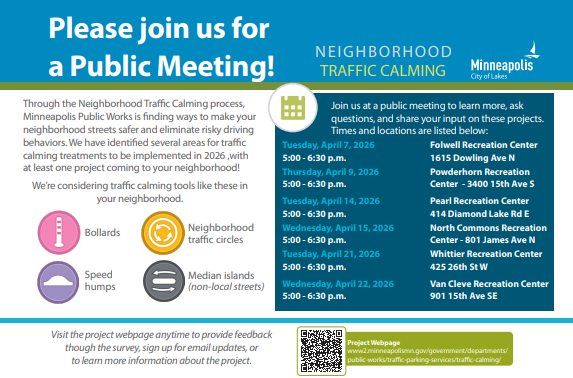 Through the Neighborhood Traffic Calming program, Minneapolis Public Works is finding ways to make your neighborhood streets safer and reduce risky driving. We have identified several areas for traffic calming projects in 2026. Staff want to hear your concerns about traffic safety near the projects. You can provide feedback in several ways.
Use the project feedback map to tell staff about safety concerns you experience near the projects.
Complete a short survey by May 1 to share more of your thoughts.
Attend a neighborhood open house
Attend an open house to learn about specific projects in your neighborhood and provide feedback to staff.
-
South open house April 14 from 5-6:30 p.m. Pearl Recreation Center, 414 E. Diamond Lake Rd
-
North open house #2 April 15 from 5-6:30 p.m. North Commons Recreation Center, 1801 N. James Ave.
-
South/Uptown open house April 21 from 5-6:30 p.m. Whittier Recreation Center, 425 W. 26th St.
-
Northeast open house April 22 from 5-6:30 p.m. Van Cleve Recreation Center, 901 15th Ave. SE
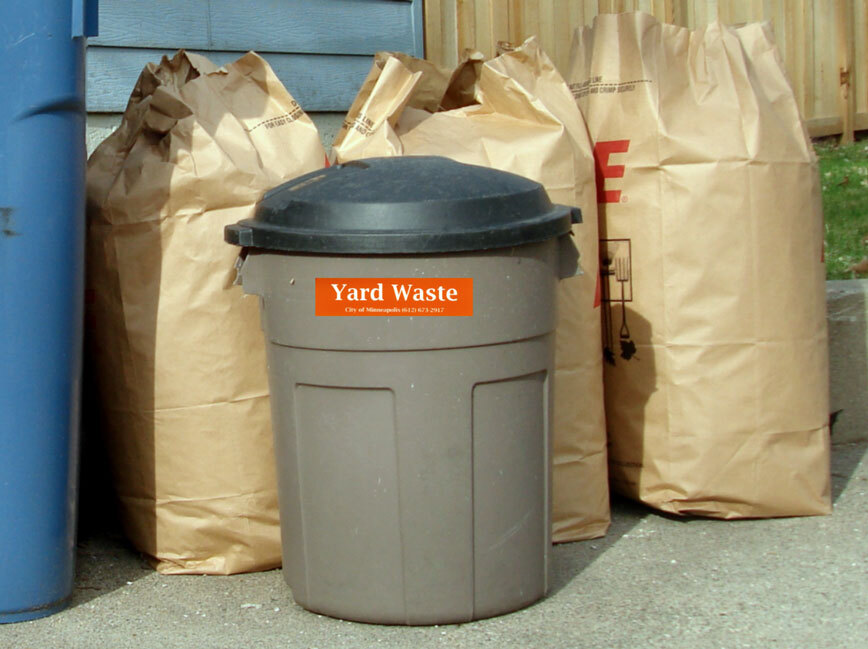 Yard waste season began the week of April 6. During yard waste season, we pick up yard waste every week on your garbage pickup day. There is no extra charge for us to collect properly prepared yard waste.
We accept leaves, brush and other yard trimmings. You should prepare yard waste and set it at your alley or curb next to your garbage cart by 6 a.m. on your garbage pickup day.
You can set yard waste out in reusable containers, compostable bags (paper or BPI certified compostable plastic) or bundles secured with string or twine. Learn how to prepare your yard waste for pickup.
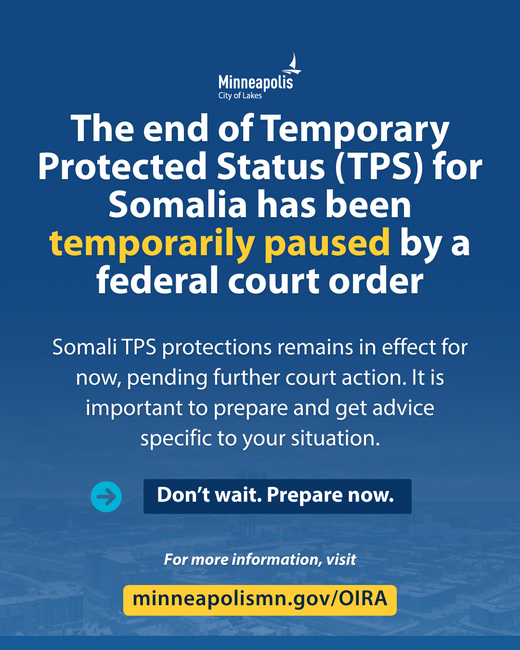 The Somali Temporary Protected Status (TPS), set to end on March 17, has been temporarily paused by a federal court order. The end of TPS could have resulted in the loss of immigration status, work authorization, and deportation. According to the court order, people with TPS or pending TPS applications keep all their rights and protections during the pause. Somali TPS remains in effect, pending further court action.
Be prepared
It’s important to prepare and get advice specific to your situation. You can connect with an immigration lawyer to:
- Get advice on your personal case
- Stay updated about laws and active litigation
- Explore other legal options, like asylum
Find links to free legal help on the Know Your Rights and Resources page on the City website.
Contact the Ward 9 Office
Email: jason.chavez@minneapolismn.gov
Phone: 612-673-2209
City Hall
350 S. Fifth St., Room 370
Minneapolis, MN 55415
For reasonable accommodations or alternative format please contact 311. People who are deaf or hard of hearing can use a relay service to call 311 at 612-673-3000. Para ayuda, llame al 311. Rau kev pab, hu 311. Hadii aad caawimaad u baahantahay, wac 311. |