|
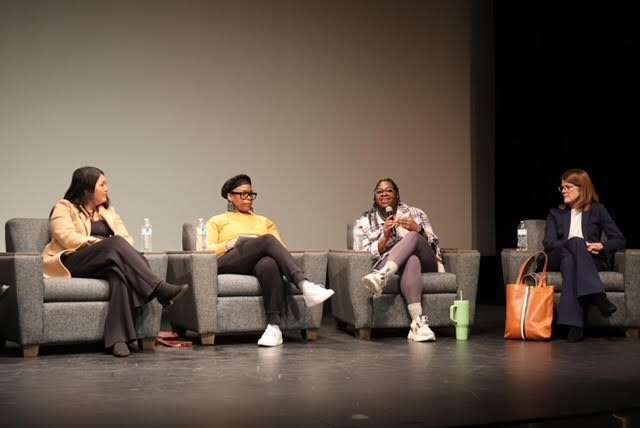
I spoke at the annual Women in Politics Panel hosted by the University of Minnesota Undergraduate Student Government. It’s always a wonderful event to uplift the leadership of women in politics and support the next generations of women political leaders.
Council Member Wonsley at the Women in Politics Panel.
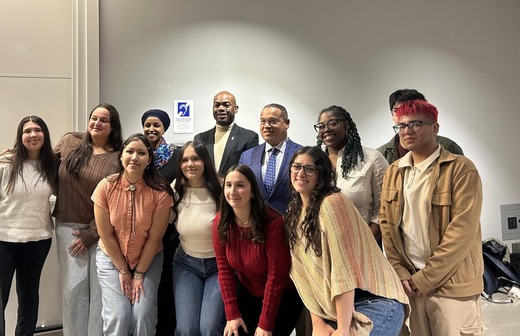
I spoke on a panel alongside Representative Ilhan Omar, Representative Cedrick Frazier, and Attorney General Keith Ellison about Operation Metro Surge through a legislative lens. The panel was organized by University of Minnesota’s Mujeres Activas en Letras y Cambio Social (MALCS). Thank you MALCS organizers for this powerful opportunity to bring together legislators from all levels of government to reflect on the challenges of the last few months and what’s to come.
Council Member Wonsley with speakers and organizers of the Operation Metro Surge Through a Legislative Lens Panel.
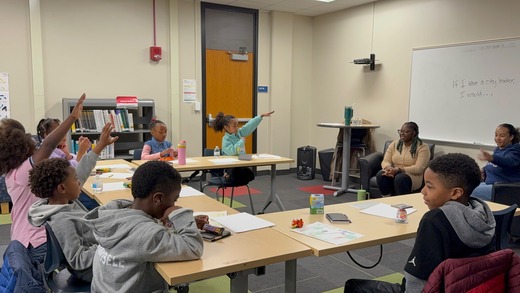
I was honored to join the Minneapolis–St. Paul Chapter of Jack and Jill of America for a city politics for children event. I treasured the opportunity to share my experiences, answer questions, and connect with both children and their parents. Thank you to our local Jack and Jill chapter for all your leadership!
Council Member Wonsley with children at the Jack and Jill City Politics event.
National Night Out (NNO) registration is officially open, and we encourage residents to sign up early. Throughout the summer, our team will host National Night Out Pop-Ups across the city to distribute flyer hard copies, caution tape, informational materials, and fun freebies to registered hosts. Supplies are limited, so early registration is the best way to ensure you receive everything you need.
Registration closes five business days before the event (Tuesday, July 28).
If you register now, you’ll receive a confirmation email on Monday, June 1, which will include the Pop-Up schedule and digital flyers.
🔗 https://www.minneapolismn.gov/nno
💬 Questions? Contact Crime Prevention Specialist, Kali Pliego, kali.pliego@minneapolismn.gov
Are you passionate about making Seward a place where everyone feels they belong? The Seward Neighborhood Group (SNG) is looking for community-minded individuals to join our Board of Directors. We welcome neighbors from all backgrounds who want to help us build a stronger community where every person is treated with dignity and every voice is truly heard. Whether you care about standing up for your neighbors’ rights, creating a space where everyone can participate, or simply helping us grow closer as a community, your perspective is vital to our mission.
While we invite all interested neighbors to apply, we have an immediate and specific need for a Treasurer to join our leadership team in the coming months. You don’t need to be a professional accountant to excel; we are simply looking for someone organized and committed to helping us steward our resources transparently and effectively. If you’re ready to play a vital role in our neighborhood’s future, please reach out to admin@sng.org to learn more or apply today!
Como neighbors along with the Como Community Center (CCC) team are celebrating this month, with our Minneapolis Preservation Award in the “Grassroots Advocacy and Education” category. This MPA award recognition to Como comes jointly from the Minneapolis chapter of the American Institute of Architects, Preserve Minneapolis, and the City of Minneapolis Heritage Preservation Commission.
The award recognizes the sustained dedication and effort by Como neighbors, and their notable progress in recent years, in remaking this historic Como landmark building into a revitalized community center hosting cultural and arts events, public meetings, youth programming, enrichment courses, and other community-building activities.
The Como story: In the youthful, diverse SE Minneapolis Como neighborhood, neighbors are active and moving ahead on a major community project. They’ve blocked demolition, and obtained community nonprofit ownership of the former Como Congregational building – a Como landmark and social hub since 1886. The CCC restoration of this building not only has notable historical significance, this auditorium – with outstanding acoustics and sightlines – will be a vibrant community asset as it serves as a Como community center. The Como Community Center vision is to provide the diverse and growing Como neighborhood and district with a lively program of social gatherings, music and art events, and cultural celebrations. Bringing neighbors together in this shared community space is the vision for Como.
Summary: Council received a report on ways to increase municipal revenue without raising property taxes. I requested this report to explore realistic ways for Minneapolis to tax the rich or implement other progressive revenue streams.
Background: One of my top priorities is helping Minneapolis bring in more revenue without raising property taxes. Property taxes have become increasingly burdensome to working class homeowners and renters as a result of the rich not paying their fair share. I’m excited to lead the Council to diversify our revenue to build a more equitable and sustainable City budget in the long term.
At the end of 2024, I authored a directive that Council approved to research alternative revenue sources. I worked with President Payne in 2025 to refine the research in conjunction with the Board of Estimates and Taxation (BET).
This week, Council and the BET held a joint meeting to receive a report on alternative revenue options for Minneapolis. The report affirms what working class residents already know: the City budget is overly dependent on property taxes, yet we’re still struggling to bring in enough revenue to maintain basic services that residents rely on.
We need to tax the rich- and we have tools to do so. The report outlines five potential strategies: Real Estate Transfer Tax, Individual Income Tax, Payment in Lieu of Taxes (PILOT), Empty Homes Tax, and Asset Monetization.
Each strategy has pros and cons, and some require changes at the state legislative level and/or a vote by Minneapolis residents. I look forward to working with my colleagues on the Council, BET, and the community to identify the next steps to tax the rich.
Key votes: No votes taken.
Summary: The City is implementing the Non-fatal Shooting Task Force, a proven tool to reduce gun violence, that I led Council to fund last year.
Background: Last year, my office worked in collaboration with local and national experts on a proposal for Minneapolis to implement a data-backed method to reduce gun violence, a non-fatal shooting task force.
Saint Paul implemented a non-fatal shooting task force in early 2024, and the results have been impressive. When police investigate non-fatal shootings with the same level of seriousness as homicides, gun violence citywide is reduced. I believe Minneapolis residents deserve the same level of public safety services as our neighbors in Saint Paul, so I led Council to allocate $1,700,000 within MPD for a non-fatal shooting task force.
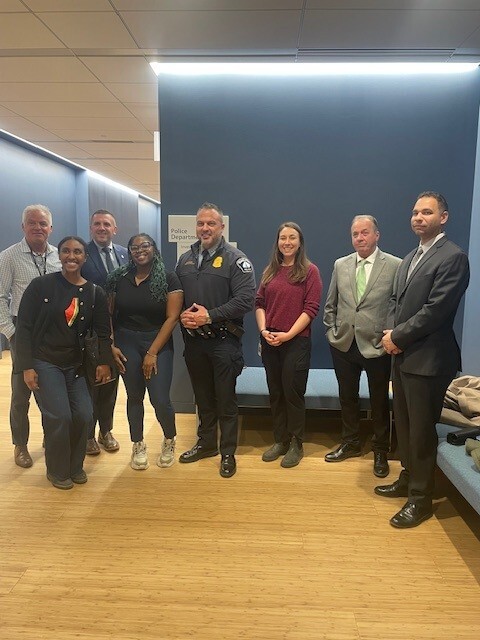
This week, I met with the task force, which is called the Firearm Assault Shooting Team (FAST). FAST massively improves on MPD’s previous response to shootings in a few ways. One way is that the added capacity of FAST allows law enforcement to respond and investigate every non-fatal shooting. Previously, this only applied to homicides. The other major change is that FAST responds immediately with a team of law enforcement and investigators, instead of waiting until business hours to begin processing the case. For example,Prior to FAST, a shooting could occur on a Friday or Saturday and not even arrive on investigators’ desks until Monday morning, by which point the scene was cleared, the victims had dispersed, and the suspects were far away. By responding immediately, FAST is able to make more meaningful contact with victims and witnesses, collect more physical and video evidence, and get clearer leads on suspects.
After only three weeks, FAST has already had significant impacts on case closure rates for both homicides and non-fatal shootings. The FAST team has a goal of a clearance rate over 70%, which would be a double-digit improvement for both homicide and non-fatal shootings.
There is also a bill in the state legislature to support nonfatal shooting teams that had a hearing in the House Public Safety Committee this week. I’m excited to keep working with local and state partners to advance these proven strategies to reduce gun violence and keep all our communities safe. MPD will be providing for their first update on this program in the upcoming weeks. Last year, I led the council to pass a legislative directive requesting quarterly updates regarding the non-fatal taskforce. This will ensure Council and residents stay informed on this important issue.
Key votes: No votes taken.
Council Member Wonsley with members of MPD leadership and the Felony Assault Shooting Team.
Summary: Council adopted an agreement with the Minneapolis Public Housing Authority to implement Emergency Housing Vouchers for 50 families and 50 individuals experiencing unsheltered homelessness. This is an exciting step forward in Housing First work I’ve been leading the Council in for over two years.
Background: One of my top priorities for the last few years has been Housing First, a data-backed strategy to reduce unsheltered homelessness by providing permanent housing and social services to people who are unhoused.
In 2024, I worked with City staff, Hennepin County, and the Minneapolis Public Housing Authority on a proposal to collaborate on vouchers for 50 unsheltered families and 50 unsheltered individuals to receive housing and wraparound social services. These vouchers have been documented to be one of the most effective and cost-efficient tools to help residents achieve permanent housing stability. Council approved the funding for these vouchers to be implemented in 2025.
The Frey administration refused to implement these vouchers for the entire year of 2025. The city could have had over 150 people off the streets and into housing last year, but the Mayor’s administration chose not to. During the 2026 budget-mark up sessions, I led Council to reinstate the funding. The Frey administration repeatedly proposed cutting these vouchers during budget negotiations. The insistence by Mayor Frey on cutting the funding for housing vouchers occurred again a couple of months ago when I and several Council Members were looking for funding sources for rental assistance. The Frey administration is fully aware that the unhoused situation in Minneapolis is expected to grow exponentially this year as a result of Operation Metro Surge. It is incredibly concerning to me that city leaders are willing to pit vulnerable communities against each other rather than taking a critical look at bloated budgets and shift funds that have provided no measurable public benefit to data-backed initiatives. And while we should celebrate the approval of this agreement, residents have a right to be frustrated that the Frey administration delayed and allowed at least 150 unsheltered residents to be out in the streets unnecessarily for over a year.
This program was always intended to receive ongoing funding so that residents would receive permanent housing. Both times I authored the amendment it included ongoing funding, and Council approved that both times. Permanent housing is the best practice to support people in transitioning from unsheltered homelessness to stable housing. It can take some time for a family or individual to make the transition and putting a time limit on their housing reduces the chance that they’ll successfully be off the street in the long term. However, at the end of last year the mayor negotiated a deal with council that reduced the funding from permanent to one-time, with a pinky promise for two additional years. This was reflected in the proposal that came before Council this week. which includes one-time funding and a statement that we should anticipate funding for 2027 and 2028. I am looking forward to seeing this funding commitment realized in the Mayor’s proposed budget for 2027, which comes out in August.
Key votes: Council unanimously adopts the agreement with Minneapolis Public Housing Authority for emergency housing vouchers.
Summary: The Mayor nominated the re-appointment of three City leaders: City Attorney Krystin Anderson, Commissioner of Community Safety Toddrick Barnette, and City Operations Officer Margaret Anderson Kelliher. The City Council approved the nominations of Attorney Anderson and COO Anderson Kelliher, but did not approve the appointment of Commissioner Barnette.
Background: At the start of each term, the Mayor nominates City leaders and the City Council votes to approve or reject those appointments. Mayor Frey nominated the re-appointment of three City leaders: City Attorney Krystin Anderson, Commissioner of Community Safety Toddrick Barnette, and City Operations Officer Margaret Anderson Kelliher.
I voted against City Operations Officer Margaret Anderson Kelliher due to her long history of undermining, opposing, and slow-walking resident priorities, including the East Phillips Urban Farm, humane and effective responses to homelessness, and expanded public transit infrastructure. Employees under COO Anderson Kelliher who are represented by AFSCME Council 9 strongly opposed the re-appointment citing “patronizing or hostile” communications and failure to provide “overarching structure to enterprise operations.” COO Anderson Kelliher has also failed to oversee a functional Budget Office, during the public hearing council learned that despite having the Chief Financial Officer reporting to her directly, she was unaware that MPD would go nearly $20 million over budget, draining the City’s cash reserves, which jeopardizes our credit bond rating. These failures move our city backwards on equity and are directly responsible for increased property taxes. The City Council took a narrow vote to confirm the re-appointment of COO Anderson Kelliher.
After much deliberation, I voted yes on the reappointment of Attorney Anderson. I commend Attorney Anderson for developing a strong roster of service-driven attorneys. Employees of the City Attorney’s Office represented by AFSCME Local 9 expressed strong support for Attorney Anderson and near universal approval of her as a manager and leader. Attorney Anderson has also done a phenomenal job at legally challenging the reckless and dangerous measures being enacted under the Trump administration.
On the other hand, Attorney Anderson has a major deficit that was discussed at her confirmation hearing. There have been several instances where Attorney Anderson was unable or unwilling to support Council priorities when they contradicted the mayor’s priorities. This inhibited my office’s work to advance resident priorities like carbon fees, regulating MPD off-duty, and implementing the federal consent decree. In all these situations, I attempted to work with Attorney Anderson and ask her to fulfill the mandate to serve Council even when it contradicted the Mayor’s preferences, but she doubled down and ultimately we had to have public conversations about the CAO’s inability to serve both the legislative and executive branches. It even led Council to adopt a directive exploring independent legal counsel for the legislative branch.
I was hoping that on Tuesday, Attorney Anderson would be able to share how she specifically planned to adjust department operations to address these concerns. I was disappointed that rather than using this feedback to shape a better approach, she responded with defensiveness and deflection. I have seen Attorney Anderson take feedback and improve her leadership in other areas and was hopeful that there would be growth here as well, I did not see that reflected in her responses during her nomination hearing. I hope this continues to be a growth area for Attorney Anderson in the coming years and am grateful that her office is filled with many attorneys who have demonstrated success and willingness to work with the council in delivering for our communities.
I voted against the re-appointment of Commissioner Barnette because he has not fulfilled the responsibilities of the position. A huge part of my time on Council has been trying to prevent the Office of Community Safety (OCS) from neglecting or sabotaging key pieces of comprehensive public safety work. Council had to intervene to rescue the Behavioral Crisis Response (BCR) team, a highly successful mental health response program that the Office of Community Safety put in jeopardy through contract mismanagement. After continued inaction on implementing the Safe and Thriving Communities Plan, an incredibly detailed ten year action plan to build a comprehensive public safety system ecosystem, the council formalized a work group filled with experts to help us hold the administration accountable. Council had to do extensive oversight of contracting and procurement processes after he and his leadership permitted prior staff to issue contracts with clear conflicts of interest. Council members like myself have spent countless hours triaging calls and emails from violence prevention contractors, community leaders, and other government partners who were hitting operational and logistical dead ends in all attempts to productively engage with the Office of Community Safety.
Year after year, the Office of Community Safety has failed to do anything to meaningfully advance public safety beyond policing. Commissioner Barnette’s leadership is certainly part of that problem, but at this point I believe it’s inherent to the entire idea of an office of community safety. The Office of Community Safety was supposed to be a trial, and the outcome is that the trial failed. At least under this current mayoral administration, it has not been a worthwhile investment that has improved life for residents in any meaningful way.
Council authorized spending millions of dollars for a step-by-step plan on how to build a comprehensive public safety system and professional consultants to support implementing that plan. Yet even with all these resources, the highest paid leader in the city, and a team of staff, the Office of Community Safety is not making significant progress. MPD is failing critical components of the settlement agreement. OCS leadership are regularly failing to comply with legislative directives to share basic information with Council and the public in a timely manner. Whether they’re unable or unwilling, at this point it’s clear that this office is a failure and the resources would be better spent investing directly in programs and services that prevent violence in our communities. The Commissioner of Community Safety is a no-value added position that has become a bureaucratic barrier towards advancing safety initiatives, while costing the public nearly 2 million dollars per year. In addition to voting against the re-appointment of Commissioner Barnette, I also look forward to working with my colleagues and the community on more significant reforms to our government structure that can use resources more efficiently to improve public safety.
Key votes: City Attorney Anderson was re-appointed in a 10-3 vote, with Council Member Chavez, Chughtai, and myself voting in opposition. Chief Operations Officer Anderson Kelliher was re-appointed in a 7-6 vote, with Council Members Stevenson, Chavez, Chughtai, Chowdhury, Council President Payne, and myself voting in opposition. Commissioner Barnette was not re-appointed in a 6-7 vote, with Council Council Members Osman, Stevenson, Chavez, Chughtai, Chowdhury, Council President Payne, and myself voting in opposition.
Summary: Council Members and LGBTQIA+ community leaders are working to develop a policy to legalize and regulate adult bathhouses. Some Council Members attempted to prevent this policy from even being explored, but strong advocacy from Council led to a unanimous vote to continue policy development.
Background: In response to requests from LGBTQIA+ community organizations dedicated to public health, Council Member Chavez, Stevenson and President Payne are working on a policy to legalize and regulate adult bathhouses and sex venues. This has been a Council priority for several years, and was previously led by Council Member Jenkins.
Several Council Members expressed opposition to the idea of even exploring a policy related to adult bathhouses. There were comments made calling it a waste of time, not reflective of city priorities, and something that would reflect negatively on our city in the national eye. Multiple Council Members pushed back on these characterizations. Council Members reasserted that this is aligned with public health best practices and data from other cities and that it is an important way to resist the criminalization of LGBTQIA+ communities. Council Members were also reminded that the vote to refer the policy to staff simply authorizes further research and policy development, and does not commit the city to any specific policy.
These arguments were evidently persuasive, because Council Members who had spoken strongly against the item ultimately voted in support of it. During the discussion I and Council Member Chughtai added ourselves as co-authors. I look forward to supporting this work going forward.
Key votes: Council voted 12-0-1 to refer the items to staff to continue researching. Council Member Warren abstained.
Summary: Council is considering an ordinance that would decriminalize the possession of drug paraphernalia, which aligns with best practices for public health and criminal justice equity.
Background: Council Members Chavez, Chowdhury, Stevenson, President Payne, and I authored an ordinance that would decriminalize the possession of drug paraphernalia. Currently, it is a misdemeanor to have a syringe, pipe, or other items related to drug use. This policy harms criminal justice efforts by creating a pretext for additional criminalization of people suffering from substance use disorder. It also significantly inhibits public health practices like harm reduction.
There was some confusion and misinformation about this ordinance. The authors presented clear information and an FAQ sheet to address some of these concerns. Most importantly, this ordinance does not decriminalize drug use. I was very pleased to see that there was unanimous support for this change from every public health professional who testified at the public hearing or sent council comments. The City of Minneapolis should be aligned to best practices around all issues, but especially evidence based strategies that involve public health.
There was productive conversation about the ordinance, but Council Members expressed a desire to continue to learn about the topic, meet with subject matter experts, and consult with people who are directly impacted. In light of this, Council voted to hold the ordinance over for a cycle and will consider it at a future meeting.
Key votes: Council voted to hold the ordinance over for one cycle. It will return to the Council for consideration as soon as April 23rd.
Contact Ward 2
Visit: minneapolismn.gov/ward2
Email: robin.wonsley@minneapolismn.gov
Phone: 612-673-2202
City Hall
350 S. Fifth St., Room 370
Minneapolis, MN 55415
For reasonable accommodations or alternative format please contact 311. People who are deaf or hard of hearing can use a relay service to call 311 at 612-673-3000. Para ayuda, llame al 311. Rau kev pab, hu 311. Hadii aad caawimaad u baahantahay, wac 311. |