|
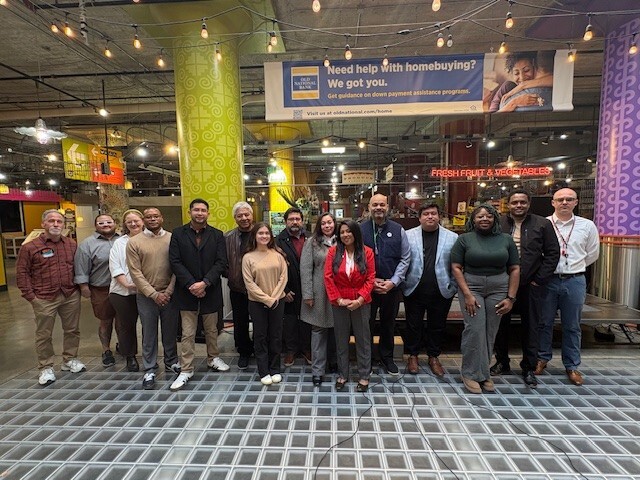
I was honored to attend Representative Ilhan Omar’s annual Black Leaders Happy Hour. It’s so powerful to connect with Black leaders from across the district in fellowship and solidarity.
Council Member Robin Wonsley at the Ilhan Omar Black Leaders Happy Hour.
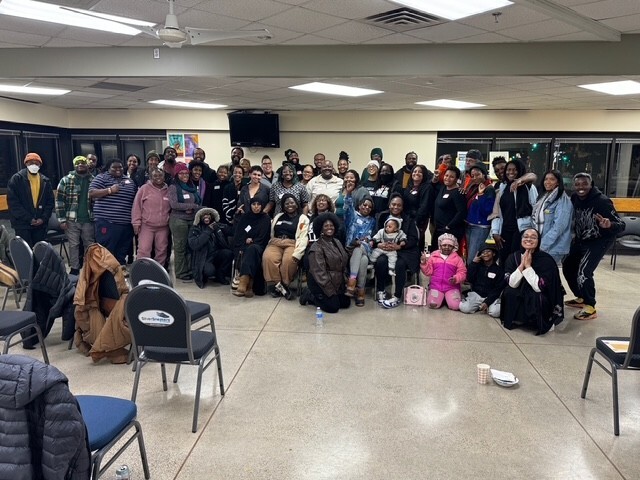
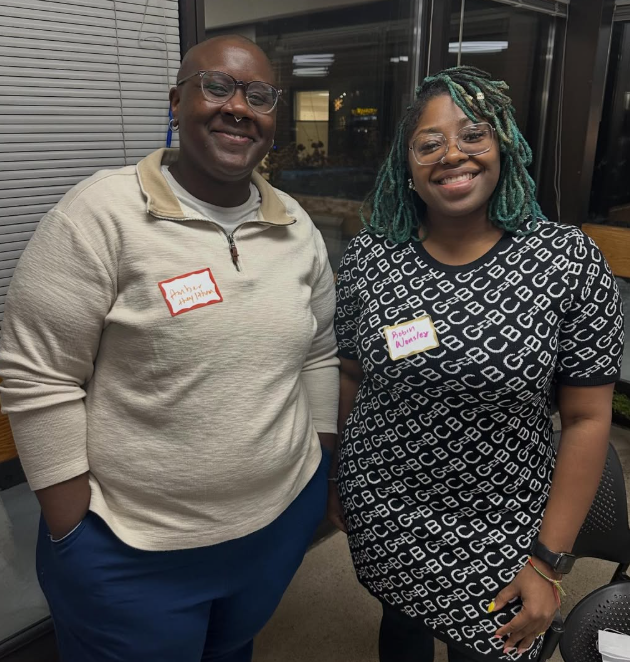
I attended a powerful meeting of Black leaders hosted by the New Justice Project. It was inspiring to connect with so many diverse leaders and community organizers with a shared focus on Black liberation and collective liberation. I also got to meet my favorite local social media celebrity, Dr. Amber. Look out for a collab video soon!
Council Member Wonsley at New Justice Project’s Black Mass
Council Member Wonsley with Dr. Amber
In partnership with Energy CENTS Coalition, the Citizens Utility Board (CUB) has launched the Lights On, Homes Warm utility bill fund to support neighbors impacted by federal operations with their utility bills. The goals of this fund are:
- Provide direct support to households behind on their electric or natural gas bill, prioritizing those with large balances and/or those who many not qualify for Energy Assistance
- Relieve the burden on other mutual aid funds so they can prioritize things like rent and groceries
- Educate consumers about their rights and responsibilities. There are many protections that make it possible to catch up with past due balances (at least compared to things like rent) but people need to know about them and seek to access them.
You can learn more about the intake process here. Applicants should call CUB directly and we will fill out the application over the phone. We have interpretation services available. Money is sent directly to the utilities.
To apply for support, contact CUB at 651-300-4701, and press 9 to reach our Outreach Team.
Flyer for Lights On, Homes Warm program.
Neighbors in Northeast and Southeast have organized a Keep Us Housed Bar Crawl! This fun event will raise mutual aid to pay rent for people impacted by the federal occupation.
- Saturday, February 28: 1-6pm
- 5+ bars participating
- Suggested $30 donation to the below mutual aid funds. Bars are also contributing via drink sales and/or flat donations.
Keep Us Housed Bar Crawl for Mutual Aid Flyer
Summary: Council Member Chavez led the City Council to allocate $7 million to support small business resilience and recovery from the impacts of Operation Metro Surge.
Background: Small businesses in Minneapolis have been catastrophically impacted by Operation Metro Surge. Many businesses have shut their doors temporarily and face permanent closure. According to the City’s Preliminary Impact Assessment & Relief Needs Overview, we have seen:
-
$47 million in lost wages for people afraid to leave home and go to work.
-
$81 million in restaurant and small business revenue losses.
-
$4.7 million in revenue lost from hotel cancellations extending through summer.
Small businesses are the heart and soul of many of our commercial corridors, hold important cultural and community significance, and are a massive part of our local economy. Small businesses are also a significant part of the city’s tax base, meaning that if hundreds of small businesses close we will see massive increases in property taxes for working class people citywide.
In response to the urgent need for small business stabilization and support, Council Member Chavez authored a proposal to invest $5 million into a Small Business Resiliency Fund (SBRF). I was proud to co-author this policy along with Council Members Chowdhury, Chughtai, Stevenson, Vice President Osman and President Payne.
During the discussion at Committee of the Whole, the Council voted to approve Council Member Chowdhury’s amendment to increase the SBRF to $7 million. This increase was in response to feedback from small business owners citywide, who have stressed the need for more resources. The SBRF will provide financial assistance to small businesses in Minneapolis that have experienced economic loss due to Operation Metro Surge. The City Council voted 11-2 to send forward the $7 million SBRF to the full Council for a final vote. The full Council then voted 13-0 to approve the SBRF funding.
The reality is that we cannot balance the budget on the backs of working-class residents who already bore the brunt of this occupation. We must choose an equitable recovery, which means investing in the most harmed communities through programs like the SBRF. Elected leaders must step up and provide resources needed to help our small businesses both navigate and survive the impacts of the federal occupation. Governor Walz announced that he is allocating a mere $10 million for small business recovery for the entire state. It is unclear what actions Senator Klobuchar and Senator Smith are proposing at the federal level to support recovery efforts. I am incredibly proud of the City Council for taking the initiative on this proactive investment to support small businesses. Thank you to Council Member Chavez and all the small business owners and community members who advocated for the SBRF investment.
In addition to moving the SBRF forward, Council also approved a resolution calling on Hennepin County, the State of Minnesota, and the federal government to provide funding to support small businesses in Minneapolis negatively impacted by Operation Metro Surge.
Key votes: The Committee of the Whole voted 11-2 to recommend the Council allocate $7 million for a Small Business Recovery Fund. Council Members Rainville and Shaffer voted against it. The full Council then voted unanimously to approve the allocation.
Council Member Wonsley with Council Members co-authoring the Small Business Resiliency Fund and small business owners at Mercado Central.
Summary: Council passed a resolution urging Governor Walz to pass a moratorium on utility shutoffs to protect families impacted by Operation Metro Surge.
Background: In response to the Covid-19 pandemic, Governor Walz issued Executive Order 20-01, and as a result the Department of Commerce and the Public Utilities Commission requested that regulated utilities voluntarily extend the cold weather rule and take certain other actions during an unprecedented national crisis. The regulated utilities voluntarily took these steps and in May 2020 the Public Utilities Commission issued an order requiring regulated utilities to suspend residential disconnections, suspend negative reporting and waive certain fees and penalties for the duration of the application of Executive Order 20-01.
Unfortunately, Minneapolis residents are once again experiencing unprecedented danger and are vulnerable to losing their electricity and gas without government intervention, increasing their vulnerability to violence and abduction by the Trump administration. Our neighbors deserve to feel safe and comfortable without fear of displacement or dangerous temperatures.
Council Member Chavez authored a resolution that I co-authored along with Council Member Chowdhury that makes a request to Governor Walz to take steps that would allow the Public Utilities Commission to put in place utility shutoff protections and calls on the Public Utilities Commission to put in place the protections that were in place during the Covid-19 pandemic for residential utility customers, including:
- Suspension of disconnections.
- Suspension of negative reporting to credit agencies.
- Waiver of reconnection, service deposits, late fees, interests, and penalties.
Further, the resolution calls on Xcel Energy to expand language service in bill payment assistance and arrear forgiveness to the languages spoken in our communities, including Hmong, Karen, and Somali, "subject to applicable laws and regulations."
Key votes: Council voted unanimously for a resolution urging Governor Walz to pass a gas and electric shutoff moratorium.
Summary: Council approved liquor licenses for two hotels that allegedly housed ICE agents.
Background: Every bar and restaurant in the city of Minneapolis has a liquor license that must be renewed annually by the City Council. The license renewal process is an opportunity for the City to address any concerns with the business, such as if a licensee is not complying with laws and regulations, creating safety or nuisance issues, or not paying license fees.
The City Council was asked to approve liquor license renewals for several hotels that are alleged to have been housing federal agents participating in Operation Metro Surge. Council Members received thousands of emails from constituents outlining the public safety concerns that have arisen from ICE allegedly staying at these hotels. Council held a public hearing, at which workers and community members testified about the fear they experienced because of ICE staying in their workplaces and communities.
Having a liquor license is not a right– it is a privilege granted to businesses who show they are able to comply with regulations and public safety standards, which is why they must be renewed annually. I believe that it’s completely understandable for residents and workers to be alarmed about ICE staying in local hotels and to ask city officials to do something about the significant safety risks. I voted against renewing the licenses, but the majority of my colleagues voted to renew the licenses. I am continuing to work with my colleagues, workers and the community to explore legislative action related to hotels in response to the concerns I have heard from my own constituents as well as residents citywide.
Key votes: Council voted to renew the liquor licenses for the Canopy by Hilton and Depot Hotels, which were alleged to have housed ICE agents. I voted against the renewal along with Council Members Chavez, Chughtai, Chowdhury, and President Payne.
Summary: I led Council to prevent the appointment of the General Manager of the Graduate Hotel to a Stadium Village Advisory Board due to concerns about the Graduate’s response to nonviolent protests against ICE.
Background: The city has areas called Special Service Districts (SSD) in commercial corridors. Businesses in an SSD pay a small tax into a fund which they can use for services that support the commercial area, such as snow plowing, extra signage, lighting, advertising, etc. Each SSD’s funds are managed by a SSD Advisory Board, which is composed of business owners who vote on which services they will spend the SSD’s money on.
This week, Council approved appointments for several SSD Advisory Boards across the city. One of the proposed appointments to the Stadium Village SSD Advisory Board was the General Manager of the Graduate Hotel.
I was incredibly concerned at the way the Graduate Hotel conducted itself in relation to the community concerns about them allegedly housing ICE agents. These concerns come from workers at the hotels, alumni who often stay there when they are in town, and students who live in the area who feel unsafe knowing that federal agents who have no regard for the law or life could be living in their community. The Graduate had the opportunity to be responsive to these community concerns. Instead, they responded by criminalizing protestors, leading to dozens of avoidable arrests, including many undergraduate students who were nonviolently protesting. The Graduate has failed to be responsive to community concerns and failed to use de-escalation and restorative justice to respond to criticism and concern from neighbors. They are not the right organization to have any role on an advisory body for the City. I shared these perspectives with my colleagues at the Committee of the Whole, leading the Committee to vote to recommend the Council deny the appointment.
Before the Council had the opportunity to vote to formally deny the appointment, the applicant withdrew their application. I am pleased that Council refused to rubber stamp the appointment of a representative from a problematic business to a leadership role.
Key votes: Committee of the Whole voted 8-4-1 to deny the appointment of the General Manager of the Graduate Hotel to the Stadium Village SSD Advisory Board. Council Members Rainville, Vetaw, Warren and Palmisano voted against the denial and Council Member Whiting abstained.
Summary: Council will hold a public hearing on March 3rd for Pause Eviction, Save Lives, an ordinance I’m authoring to slow down the timeline for a renter to be evicted.
Background: The occupation of Minneapolis by federal agents has caused many families across the city to lose income and fall behind on rent. This is creating a looming eviction crisis that will have catastrophic impacts on families, neighborhoods, and our city if local leaders do not take action. In light of this, I worked with my colleagues to create an ordinance called Pause Evictions, Save Lives, which is a temporary policy change that would extend the timeline for evictions to protect renters from the impacts of the ICE occupation.
Currently, if a landlord plans to file an eviction due to missed rent, they must give the renter 30-days notice prior to filing the eviction. Pause Evictions, Save Lives would temporarily increase the required notice from 30 days to 60 days. This gives families an extra month to acquire the funds needed to cover any missed rent and avoid the eviction being filed. The 60-day requirement would be in effect until July 31, unless Council takes action to extend it or end it earlier.
Rental assistance funding takes time to get to the renters who need it. Pause Evictions, Save Lives gives families more time to apply for and receive rental assistance funding, preventing evictions and protecting families.
Council will hold a public hearing on Pause Evictions, Save Lives on March 3rd at 9:30am. I encourage everyone to testify in person or submit comments in writing!
Pause Evictions, Save Lives – Share your support!
Testify in Person
- City Council Meeting
- March 3rd at 9:30am
- Minneapolis City Hall – 350 South 5th Street, Third Floor
- All residents have 2 minutes to speak on the record
Testify in Writing
- Comments are accepted until March 3rd at 9:30am
- Comments can be emailed to CouncilComment@Minneapolismn.gov
- Individuals and organizations can submit comments to the public record.
Key votes: Council voted unanimously to set a public hearing on Pause Evictions, Save Lives for March 3rd at 9:30am. If approved, the ordinance could pass as soon as March 5th.
Summary: Council voted down a request by the Frey administration to temporarily suspend normal procurement requirements.
Background: The Frey administration asked Council to temporarily suspend the City’s normal procurement requirements. Procurement requirements are the policies and procedures that ensure that the City purchases goods and services in ways that are fair, equitable, and transparent.
Council Members had many questions about this request that the Frey administration was unable to answer. The administration claimed this was needed in order to respond to the impacts of Operation Metro Surge in a nimble and efficient way without delays, but could not offer clarity on which departments were struggling to complete purchases, what limitations or challenges existed due to current procurement policies, and what goods and services are they struggling to procure.
It was also not clear why this proposal was being brought forward when Mayor Frey hasn’t declared a state of emergency for the City, which would typically create more flexibility for procurement.
The City has been documented to fail to adhere to procurement processes, which has been identified both through internal City audits and lawsuits. Given this context and the lack of clarity from the Frey administration on the purpose of this suspension, the Council voted down the proposal because it is an unnecessary waiver of oversight.
Key votes: Council voted 7-6 against the Frey administration’s proposal to suspend procurement requirements. I voted against the proposal along with Council Members Stevenson, Chavez, Chughtai, Chowdhury, Palmisano, and President Payne.
Summary: Council approved a legislative directive I authored to learn more about the Frey administration’s approach to retaining potential evidence of illegal actions by federal agents.
Background: The City has hundreds of cameras, but only retains the footage from these cameras for a limited time, some for only 14 days. This timeline allows the City to access the footage if needed related to public safety or traffic safety matters, but also ensures the City is deleting footage that isn’t needed to limit concerns about surveillance as well as to conserve video storage space.
Last month, my office was contacted by lawyers in the community inquiring about how the City was retaining evidence of potential illegal actions by federal agents during Operation Metro Surge. They shared that the caseload they were experiencing was so large, they were concerned the current 14-day timeline would mean that the City would inadvertently destroy evidence that could support potential future litigation against federal agents who violated laws, or support their clients detained by ICE during Operation Metro Surge. The City has huge amounts of footage that could be crucial to being able to prosecute potential crimes, but it will be lost unless the Frey administration takes action to preserve it.
In light of this, I reached out to the Frey administration to learn if and how they were making adjustments to data retention policy to preserve evidence of unlawful federal actions. No one was able to offer meaningful information or assurance of any strategies around data retention as it relates to evidence of incidents that include federal agents acting unlawfully. After being unable to receive this clarity, I authored a legislative directive requesting a formal update from the Frey administration by March 24th.
I hope that the City is not simply relying on ordinary citizens to document potential crimes or civil violations by ICE and federal agents, but is actually contributing to and maintaining our own evidence too. We all need to do our part to make sure federal agents are held accountable.
Key votes: Council voted unanimously to approve my legislative directive about the Frey administration’s data retention strategy for potential evidence of crimes by federal agents. The Frey administration will present a response in March.
Contact Ward 2
Visit: minneapolismn.gov/ward2
Email: robin.wonsley@minneapolismn.gov
Phone: 612-673-2202
City Hall
350 S. Fifth St., Room 370
Minneapolis, MN 55415
For reasonable accommodations or alternative format please contact 311. People who are deaf or hard of hearing can use a relay service to call 311 at 612-673-3000. Para ayuda, llame al 311. Rau kev pab, hu 311. Hadii aad caawimaad u baahantahay, wac 311. |