|
As we move through February, our city continues to experience an extraordinary moment that demands care, clarity, and collective action. The past several weeks have brought uncertainty and real hardship for many of our neighbors, from families worried about safety and stability, to small businesses struggling to keep their doors open, to communities carrying grief while still showing up for one another.
I want to share how the City of Minneapolis and community partners are responding and how we are working every day to keep people fed, powered, housed, informed, and safe. You’ll find updates on the City’s response to recent federal immigration enforcement activity, steps being taken to protect utilities and housing stability, efforts to keep streets accessible for emergency response, and resources available to support mental health, crisis response, and community well-being.
This newsletter also highlights moments of reflection and resilience, including how Minneapolis is honoring Black History Month by celebrating Black leadership, culture, and legacy, as well as opportunities for neighborhood groups and artists to activate public spaces and strengthen community connection as we look toward warmer months.
Even in difficult times, Minneapolis shows up, through partnership, compassion, and a deep commitment to one another. As your Councilmember, I remain focused on listening, advocating, and working alongside residents to ensure our city responds with dignity, transparency, and care.
Thank you for staying engaged, supporting your neighbors, and being part of what makes Minneapolis strong.
Council Member LaTrisha Vetaw

The Trump administration announced Wednesday that it would immediately reduce the number of federal immigration law enforcement officers in Minnesota. Despite this reduction, Minneapolis Mayor Jacob Frey and Community Safety Commissioner Todd Barnette remain concerned about the thousands of U.S. Immigration and Customs Enforcement and Border Patrol agents still in Minneapolis, the Twin Cities area and statewide.
The announcement from U.S. Border Czar Tom Homan came days after U.S. Homeland Security Secretary Kristi Noem said ICE agents will also start wearing cameras as part of their enforcement actions.
Effects of Operation Metro Surge
There have been significant impacts on the city since Operation Metro Surge began in December. The community lost Renee Good and Alex Pretti, and the entire city continues to feel the negative impacts of the ongoing presence of federal agents. Every day, City officials hear about residents who are afraid to go to work and school, and business owners who have closed their doors or are unable to pay their employees.
New resource: donations list
If you’re looking for a way to make a donation to support the community, you can now find links to local organizations on the City website.
Donating to a local foundation
Monetary donations can assist local organizations that provide:
- Food
- Rental assistance
- Mutual aid
- Other resources
- Submit incidents around federal actions to the state attorney general
- Submit reports of potential unlawful conduct by federal agents
- Find a vehicle abandoned due to ICE detention
This is a non-exhaustive list of local foundations. Information and links to local foundations are provided solely for the convenience of the public and are not an endorsement, approval, or recommendation of that organization or service. The City of Minneapolis assumes no responsibility for the content or operation of other websites.
CLCIK HERE FOR LINKS
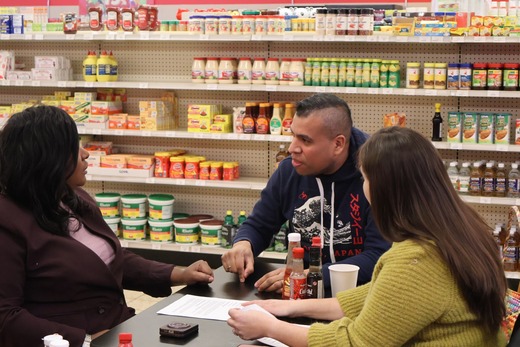 This week, Councilmember Vetaw met with Daniel from Colonial Market and Viviana from Nueva Lucha to talk through what our neighbors affected by operation Metro Surge are facing right now and, more importantly, how we can respond together.
Colonial Market and Nueva Lucha are on the front lines every day, hearing directly from families who are struggling to keep the lights on, put food on the table, and maintain their livelihoods during an incredibly challenging moment. These conversations weren’t theoretical they were rooted in real stories, real needs, and real urgency.
Together, they are working to connect residents with direct assistance to help keep utilities on, access food, and stabilize household finances. Just as critical, they’re identifying ways to move support quickly and flexibly, making sure help gets to the people who need it most, without unnecessary barriers or delays.
This partnership reflects a shared commitment: meeting people where they are, supporting small businesses that anchor our neighborhoods, and building pathways to stability that protect dignity. By strengthening coordination between trusted community organizations, local businesses, and City leadership, we can better protect our neighbors and keep our community strong.
Councilmember Vetaw remains committed to lifting up these partnerships and continuing to advocate for solutions that keep families housed, fed, powered, and supported today and for the long term.
Keeping streets clear is a critical part of the City’s responsibility to protect lives, property and neighborhoods. Blocked streets and makeshift checkpoints are serious concerns for police, fire and emergency medical responders because it can delay response times and restrict access for their vehicles. Neighbors have echoed the City’s public safety concerns about restricted street access.
Thank you, Minneapolis, for using your collective voice during this time. Let’s keep our streets open at the same time.
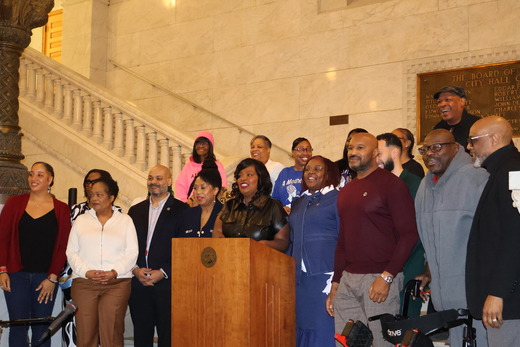
Minneapolis kicked off Black History Month with an honorary resolution and a community breakfast held in the City Hall Rotunda on the morning of February 5.
The gathering brought together residents, community leaders, and City officials to celebrate Black history, culture, and the lasting contributions of Black leaders who have shaped Minneapolis. During the program, the City formally honored influential individuals whose leadership, service, and advocacy continue to strengthen neighborhoods, uplift families, and create pathways for future generations.
Council members reflected on the legacy of Black excellence in Minneapolis from grassroots organizers and faith leaders to educators, artists, entrepreneurs, and public servants. Recognizing both historic trailblazer's and those doing vital work today. The resolution served not only as a recognition of achievement, but as a reminder of the responsibility to continue investing in equity, opportunity, and community care.
The breakfast offered a space for connection and reflection, grounding the start of Black History Month in gratitude, pride, and collective purpose. As Minneapolis observes Black History Month, the City recommits to honoring Black leadership year-round and continuing the work toward a more just and inclusive future for all.
 The City is hosting several events throughout Black History Month this February to honor, celebrate and reflect. The 2026 theme is A Century of Black History Commemorations: Honoring Our History, Uplifting Our Legacy, Continuing the Celebration. All City of Minneapolis residents are welcome.
Moments That Matter: Celebrating Local Black Artists
The City of Minneapolis will celebrate 100 years of Black history through music and movement. Join us as Minnesota activist and saxophonist Jerome Treadwell will perform, blending jazz, history and community voice.
Student dancers from the Dominion Dance Company, led by founder and chief director Kenyelle Taylor, will demonstrate how access to the arts builds confidence, excellence and opportunity for the next generation.
11:30 a.m.-1 p.m. Tuesday, Feb. 10 Public Service Building, Room 100AB
A Touch of Soul
A Touch of Soul is a lively celebration featuring spoken word artists, dancers and an opportunity to support Black-owned businesses through tabling and product sales.
Noon-1:30 p.m. Tuesday, Feb. 24 Public Service Building, Room 100AB
35W Bridge lighting
The 35W Bridge will shine in Black History Month colors Friday, Feb. 27.
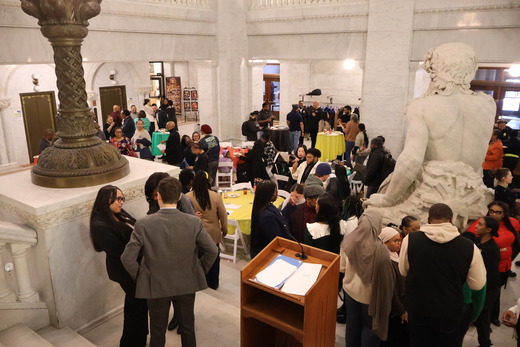
As the City of Minneapolis looks forward to warmer days filled will community fun, we’re excited to announce several funding opportunities to help bring some of that fun to life. The City is excited to issue a request for proposals (RFP) for this summer's Open Streets Minneapolis events. In addition, two Cultural Districts Art Fund programs are now accepting applications for creative, community activations from June 2026 through May 2027.
Open Streets Minneapolis
Open Streets Minneapolis transforms major City streets into car-free places to grow community connections, stir interest in local business and inspire healthy living by encouraging people to move around.
The City is soliciting proposals from community event organizers to coordinate and implement up to two Open Streets events each. In addition to in-kind services, the City will also provide up to $40,000 for expenses for each event. Proposals are due Feb. 23 at 12 p.m. CST.
New for the 2026 season, the City is expanding the proposal process to allow organizers to select from several event dates and routes around the City. Eligible routes include:
- Lowry Avenue (between Penn Avenue & Lyndale Avenue)
- West Broadway (between Penn Avenue & Lyndale Avenue)
- Central Avenue (between 26th Avenue & Broadway)
- Hennepin Avenue and 1st Avenue NE (between Main Street & 5th Street), with 2nd Street, 4th Street, and 5th Street (between Hennepin Avenue & 1st Avenue).
- Glenwood Avenue (between Vincent Avenue & Royalston Avenue)
- Franklin Avenue E (between Chicago Avenue & 26th Avenue)
- Lake Street E (between 1st Ave & West River Parkway)
- Lyndale Avenue (between Franklin & 42nd Street)
- Nicollet Avenue (between Lake Street & 46th Street)
- Cedar Avenue (between 15th Avenue & 6th Street) with Riverside Avenue (between Cedar Avenue & 19th Avenue)
- Hennepin Avenue (between W Franklin Avenue & W 36th Street)
Since the City launched Open Streets in 2011, more than 60 events have brought more than 750,000 people to different areas of town to enjoy all that the City of Minneapolis has to offer. In 2025, the City co-hosted three successful Open Streets events, partnering with the Audubon Neighborhood Association on Central Ave., the West Bank Business Association on Cedar and Riverside Aves., and the West Broadway Business Coalition on W. Broadway.
Prospective organizers with questions can contact: OpenStreets@minneapolismn.gov Cultural Districts Arts Fund
Two programs with the Cultural District Arts Fund (CDAF) are now accepting applications. The Festivals & Cultural Spaces Activation Program which grants three or more awards per cultural district, each worth up to $16,700 for a 12-month term. The Pop-Up Art & Culture Activations Program offers up to five awards per district, each amounting to $5,000 for a 12-month term.
Both programs are encouraging proposals that respond to immediate community needs in 2026. Funding prioritizes community-driven, publicly accessible engaging arts projects that provide uplifting support, foster creative place-making, and strengthen safety, connection, and resilience within the city’s seven cultural districts.
Last year, the City of Minneapolis provided approximately $700,000 for 65 awards through the CDAF. More information on the Cultural District Arts Fund can be found on the program’s website. Interested applicants may also RSVP for a virtual information session which will be February 9,at 2:00 PM. Interested participants may RSVP online. Applications are due February 27, by 4:30pm CST.
Prospective applicants with questions can contact: mplsaca@minneapolismn.gov
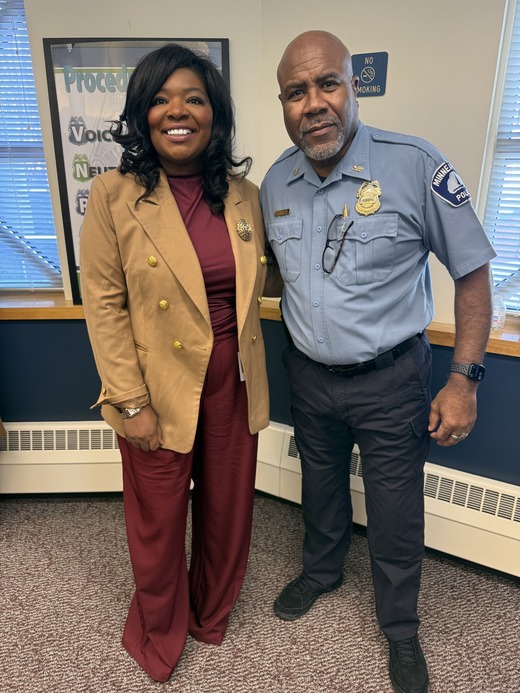
In honor of Black History Month, the City of Minneapolis is recognizing the remarkable legacy of Inspector Charlie Adams, who currently leads the Fourth Precinct and serves the Northside, including Ward 4.
Inspector Adams is a 40-year veteran of the Minneapolis Police Department and a deeply respected leader not only within MPD, but across the communities he has served for decades. Since joining the department in 1986, Inspector Adams has built a career defined by professionalism, credibility, and commitment to service.
Over the course of his career, Inspector Adams has served in four of MPD’s five precincts and held key roles in Internal Affairs, the Homicide Unit, and the Juvenile Unit. His work across these areas reflects both the breadth of his experience and his dedication to accountability, safety, and mentorship.
Inspector Adams holds a Bachelor of Science degree from Metropolitan State University and a Master of Arts degree from Concordia University. Public service also runs deep in his family his brother, son, and daughter have all served with MPD, underscoring a multigenerational commitment to public safety and community service.
Beyond his professional accomplishments, Inspector Adams continues to invest in learning, reflection, and leadership. In recent years, he has traveled annually to Alabama as part of the Police and Black Men Project, visiting museums and historic sites tied to Black history and the civil rights movement. These trips reflect a commitment to understanding history, honoring legacy, and bringing those lessons back into leadership and service today.
Inspector Adams’ career represents the kind of steady, experienced leadership that matters especially during times of challenge. Ward 4 is grateful for his decades of service, his dedication to community, and his continued leadership on the Northside.
A story highlighting Inspector Adams’ participation in the Police and Black Men Project was produced by MPR News and can be found online.
Rental properties must have heating systems that work properly and safely. They must be able to keep the indoor temperature at:
- 65 degrees F from Sept. 15-30
- 68 degrees F from Oct. 1-April 30
- 65 degrees F from May 1-15
What to do when the heat isn’t working
- If your heat isn’t working, tell the property owner or manager right away.
- If they don’t take steps to fix it immediately, call 311 or 612-673-3000 to report it. 311 is open 7 a.m. to 7 p.m. on weekdays.
- Outside of 311 hours, call 911 to report low heat or no heat.
The 311 agent or 911 dispatcher will take your contact information, and an inspector will contact you to visit your rental unit as soon as possible. From Sept. 15 to May 15, there is always an inspector on call to help renters with no or low heat.
Safety and resources
If a housing inspector, fire inspector or other City employee comes to your home, they will introduce themselves and tell you why they’re there. You can always:
- Ask a City employee to identify themselves and show you their badge.
- Request a translator.
- Call 311 to verify the employee's identity and reason for being at your address.
Nobody in a City uniform will ever ask for your immigration status or participate with any federal immigration enforcement activity. Our officers do not wear masks to hide their identity.
If you need emergency shelter, contact Hennepin County at 612-596-1900 or visit its website.
If you need a warm space to be during the day, Hennepin County and its partners offer warming spaces. Call 612-204-8200 for overnight options. If you’re in physical danger of freezing, call 911.
If you have questions about your renter rights, call HOME Line at 612-728-5767 or Legal Aid at 612-334-5970.
In response to the ongoing hardships facing residents and businesses across the Twin Cities, Xcel Energy has announced a series of immediate customer protections and support measures for Minneapolis and St. Paul.
Recognizing the financial strain many households and small businesses are under right now, Xcel Energy will suspend all residential and commercial utility disconnections in Minneapolis and St. Paul through the end of February. This temporary pause is intended to ensure families and businesses can remain safely connected to heat and electricity during a critical winter period.
In addition, Xcel Energy is taking steps to better support customers who reach out for help, including:
-
Training call-center agents to offer the most flexible payment arrangements available to customers experiencing hardship
-
Expanding access to digital tools that allow customers to track energy usage, manage payments, receive reminders about disconnection protections, and learn about available energy-assistance resources
Ongoing Protections Under Minnesota Law
Beyond these immediate measures, customers are reminded that Minnesota’s Cold Weather Rule provides strong seasonal protections. The rule is in effect every year from October 1 through April 30, preventing disconnection of heat-providing utility service for income-eligible households during the heating season.
Customers who contact Xcel Energy to enroll in Cold Weather Rule protections can:
-
Set up flexible monthly payment plans
-
Learn whether they qualify for energy efficiency and conservation programs
-
Receive referrals to local community energy-assistance organizations
Residents and business owners who are struggling to keep up with utility bills are encouraged to reach out directly to Xcel Energy as soon as possible to explore these options and protections.
The City will retire its dedicated TTY number, as the technology has become largely obsolete and is no longer the primary way Deaf/deaf or hard-of-hearing people communicate by phone. “TTY” refers to teletypewriter, and the City had a dedicated number that people could call using a TTY device. The user would type their side of the conversation on their TTY device, and a third-party relay operator would say what was typed to 311 operators. The relay operator would then type back to the caller what the 311 operator said.
TTY was a critical form of communication with agencies that were required to offer effective communication services under the Americans with Disabilities Act (ADA). Now, most people who need it use a video relay service that involves video and video interpreters for real-time ASL-interpreted conversations. The ASL interpreter interprets what is being signed by the caller and voices that to the 311 operator, who does not need to see them on video, and then signs back to the caller what the 311 interpreter says.
Going forward people can use their relay service to call 612-673-3000.
Residents and community members can report suspicious vehicles on city streets. If you see an unmarked vehicle without front and rear license plates, you can report it to 311.
Contrary to federal rhetoric, Mayor Frey and other City leaders have consistently called for peace and calm as our community confronts the incursion of federal agents sowing chaos in our streets.
The federal government is looking for any opportunity to further escalate the crisis we’re facing right now, and the City continues to urge protesters and observers to respond by showing the world the welcoming, unified, and loving values that define Minneapolis.
Amid ICE’s divisive presence in our neighborhoods, we’ve heard reports of threats of violence against schools and community organizations. Call 911 immediately if you hear about or receive a threat involving schools, students, or community groups. Reporting threats right away helps keep everyone safe. If you have questions about your child’s school safety plan, contact your school’s administration.
Call 911 immediately if you:
- Receive a threat about violence directed toward a school or a student, or a threat on school grounds.
- See a threat on social media directed at a school.
- Receive threatening calls or emails sent to a nonprofit or community organization.
The City Council changed its meeting schedule in response to ongoing community needs resulting from the presence of federal agents in the city. Council members are prioritizing their constituents and the community, and they recognize the demand this ongoing situation has placed on the City’s administration and staff.
Regular committee meetings are cancelled. Items normally referred to standing committees will be referred to the Committee of the Whole. The change in the council’s regular cycle affects meetings through Feb. 19.
This is a difficult time for everyone in our city. If you're in crisis or know someone who is, the Cope mobile crisis team can help 24/7. Cope responds to anyone in Hennepin County who needs an urgent response — whether one person, families or communities.
Cope has bilingual and bicultural staff available for face-to-face, phone, and video visits. It uses interpreters when needed.
Call 612-596-1223 or visit Hennepin County’s website. If the situation is life-threatening or you need immediate response, call 911. |