|
Summary: Council will vote on historic designation for Glendale Townhomes on June 5th. Prior to that vote, Glendale residents, community supporters, and my office are working to correct misinformation and misconceptions about historic designation that have circulated. Historic preservation does not necessarily prevent or guarantee any type of redevelopment does or does not occur.
Background: At the request of residents, I nominated the Glendale Townhomes for historic designation last year. In the last several weeks, it’s become clear that there is significant misinformation and misunderstanding about what historic designation does and does not do. Council voted to postpone the vote on designation until June 5th to ensure that everyone has access to accurate information prior to voting. My office published an FAQ sheet about historic designation of Glendale that I recommend everyone read.
This weekend, Glendale residents collaborated with community members and historic preservation scholars to host an educational event at Glendale Townhomes. It was a great opportunity to learn about what historic designation means to residents and hear about how historic preservation of Glendale fits into the larger context of uplifting Black, immigrant, and working-class history.
Key votes: Council will vote on historic preservation of Glendale at the Council meeting on June 5th.
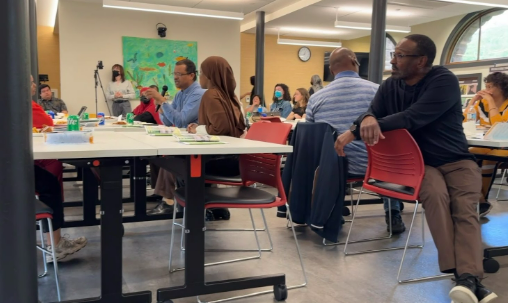
Glendale residents and members of the public ask questions about the historic designation process.
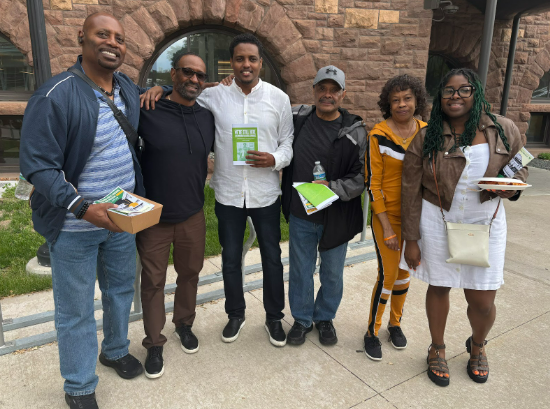
Council Member Wonsley stands with current and former Glendale residents and Council Member Jamal Osman.
I attended the Rise and Remember events at 38th and Chicago. It was a powerful gathering to honor the memory of George Floyd, uplift the stories and memories of all victims of police brutality, and remember Minneapolis’ role as the epicenter of the mass movement against racist policing. I sincerely appreciate the opportunity to be with community members at this potent anniversary.
My office hosted a neighborhood community meeting for the East Bank neighborhoods including Como, Dinkytown, Marcy Holmes, and the University area. I presented alongside 2nd Precinct Inspector Torborg and Crime Prevention Specialist Teila Zoller, District 4 County Commissioner Angela Conley, and East Bank Neighborhood Partnership Executive Director Chris Lautenschlager.
After updates and presentations from the panelists, residents asked great questions about the pathway to close the Hennepin Energy Recovery Center, humane and effective solutions to homelessness, and a variety of infrastructure projects. You can read the notes here. Thank you to everyone who attended and engaged in this fruitful conversation.
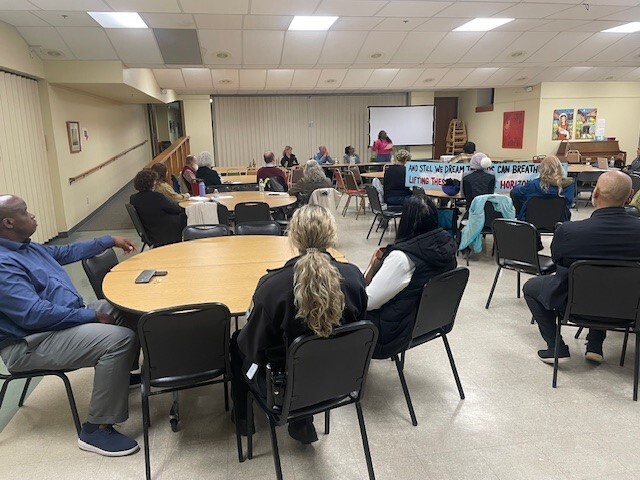
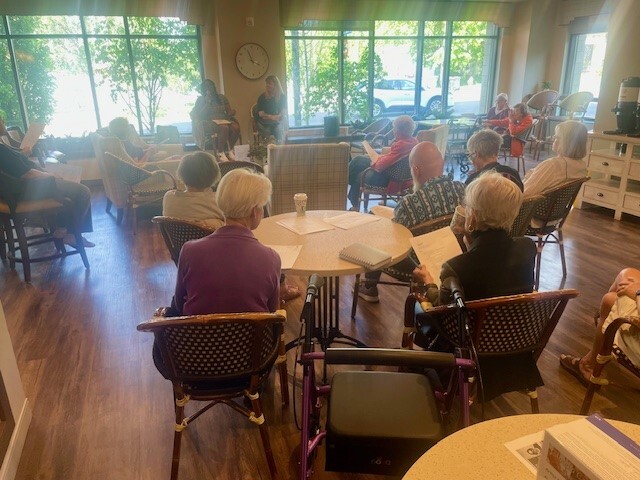
Residents attending the East Bank Community Meeting.
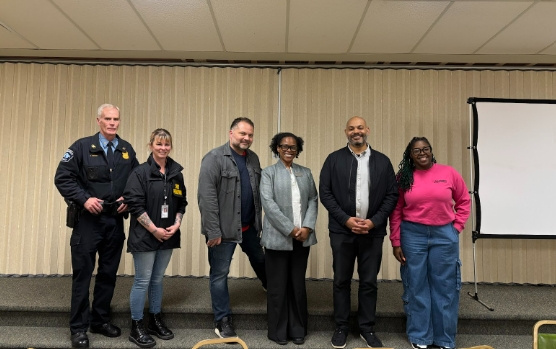
From right to left: Council Member Robin Wonsley, Council President Elliott Payne, County Commissioner Angela Conley, East Bank Neighborhood Director Chris Lautenschlager, 2nd Precinct Crime Prevention Specialist Teila Zoller, and Inspector Nick Torborg.
This week I hosted regular quarterly office hours at the Pillars of Prospect Park. We were joined by 2nd Precinct Crime Prevention Specialist Teila Zoller, who shared updates on local crime trends, safety strategies for multi-unit buildings, and the best ways to report different types of safety concerns.
We also discussed local and citywide updates. You can read the notes here. Thank you to the Pillars for wonderful community conversation.
Council Member Wonsley and 2nd Precinct Crime Prevention Specialist presenting to residents at the Pillars of Prospect Park.
Summary: In response to my legislative directive, MPD conducted a fee study and determined the appropriate hourly rates that will recoup about $1.4 million that taxpayers are currently subsidizing for MPD officers’ personal side gigs.
Background: Minneapolis Police officers are able to work “off-duty,” meaning that they use City cars, weapons and uniforms while working unregulated private security jobs for personal gain. This system has been identified as extremely problematic and detrimental to citywide safety and equity. While many Council Members and the Mayor have talked about their concerns with off-duty over the years, there has been a lack of political will to actually implement any regulations.
Regulating off-duty has been a priority for me, and I have taken numerous legislative actions over several years to advance off-duty fees. Under State statute, the City is allowed to charge fees to recoup the costs associated with programs and services. Currently, MPD officers do about 86,000 hours of off-duty work per year, but there are not fees associated with this service. This means taxpayers are essentially subsidizing MPD officers’ side gigs.
Earlier this year, I led Council to pass an ordinance allowing the City to put fees on off-duty. Then, I authored a legislative directive asking the Mayor’s administration to calculate fee rates that align with State statute and municipal financial policies.
The fee study found that fees of $6.99/hour without a squad car and $27.58/hour with a squad car would recoup the administrative and resource costs associated with MPD’s off-duty work. This is expected to recoup about $1.4 million in existing costs that are currently being subsidized by taxpayers, as well as about $300,000 in new revenue that is needed to improve tracking and administration.
As we go into the budget season, it's incredibly important that the city is ensuring we are being prudent in how resources are being distributed. It's also just as important we are recouping all costs that we can relate to services. When these fees are implemented, the City’s current $1.4 million off-duty program will now be covered by those who are contracting these services directly instead of being subsidized by taxpayers.
The secondary impact of this new fee will also be increased transparency and accountability to the off-duty system. Early in my time on Council, residents reached out frustrated and confused to see the amount of officers parked on Lake Street working off-duty for construction companies, while simultaneously hearing City leaders talk about their extreme staffing shortage of police. I am hopeful that these fees will lead to more transparency about how off-duty fits into the larger picture of staffing.
This fee does not address all the concerns that are continuously raised about our off-duty system, such as the fact that officers can charge small business owners any rate without reason. That said, it's a step in the right direction and would be the largest step the City has taken to regulate off-duty in decades. I am committed to using all tools available to continue reforming the off-duty system and I look forward to further conversations on this issue.
I also want to note that during the process around this fee study, I learned that members of MPD leadership were not aware that the City does not cover liability for actions committed by an MPD officer that occur while the officer is working off-duty for personal gain. The fact that MPD leadership did not know this makes me incredibly concerned that this misinformation could be widely held by officers who engage on off-duty. While I continue to lead Council on regulatory oversight of off-duty, I hope this can also be an opportunity for the Mayor’s administration to ensure that MPD is correctly educating officers on this basic information.
Key votes: No votes taken. When the Council sets the 2026 fee schedule, I will work with staff to include these new off-duty fees.
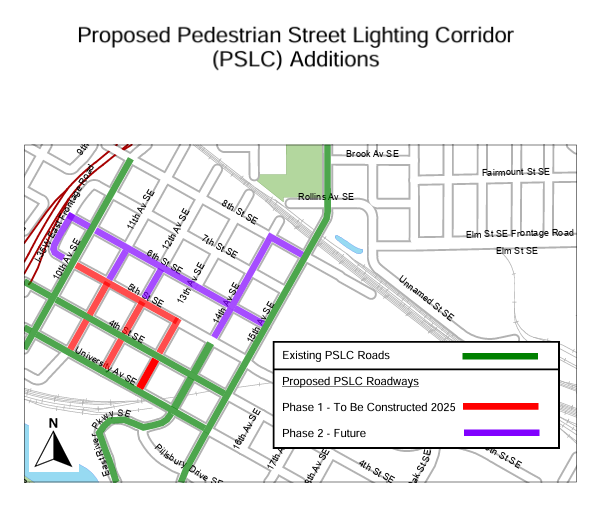
Summary: The Climate and Infrastructure voted to add Dinkytown Marcy Holmes to the Pedestrian Street Lighting Corridor map, making it eligible for improved pedestrian level lighting.
Background: The Dinkytown Marcy Holmes area has extremely high pedestrian and bike use, and substandard pedestrian lighting has been consistently identified as a barrier to public safety, economic and social vibrancy, and decreased car use. Improving pedestrian level lighting in this area is a top priority for residents and my office.
Council voted to approve the “Dinky After Dark” amendment to the 2025 budget, which allocated $500,000 for pedestrian level lighting in the area for streets on the Pedestrian Street Lighting Corridor (PSLC). PSLCs are eligible for brighter and denser pedestrian-level lighting than is typically used in residential areas.
Earlier this year, the East Bank Neighborhoods Partnership initiated the formal request for reclassification with support from my office. Public Works determined that the area is eligible, and this week the Climate and Infrastructure Committee voted to approve the map amendment. If approved by Council, construction of new pedestrian lights in Dinkytown Marcy Holmes could begin as soon as this year. This would be a significant safety enhancement for the University community.
Key votes: The Climate and Infrastructure Committee voted 5-0-1 in support of amending the Pedestrian Street Lighting Corridor Map to include Dinkytown Marcy Holmes. Council Member Vetaw voted to abstain. Council will vote to approve the map on June 5th.
Map of proposed additions to the Pedestrian Street Lighting Corridor.
From CenterPoint Energy: We are committed to keeping our customers informed about important updates we are making to our infrastructure – designed to enhance safety, improve reliability, and continue to provide you with the energy you need for the natural gas infrastructure in Prospect Park.
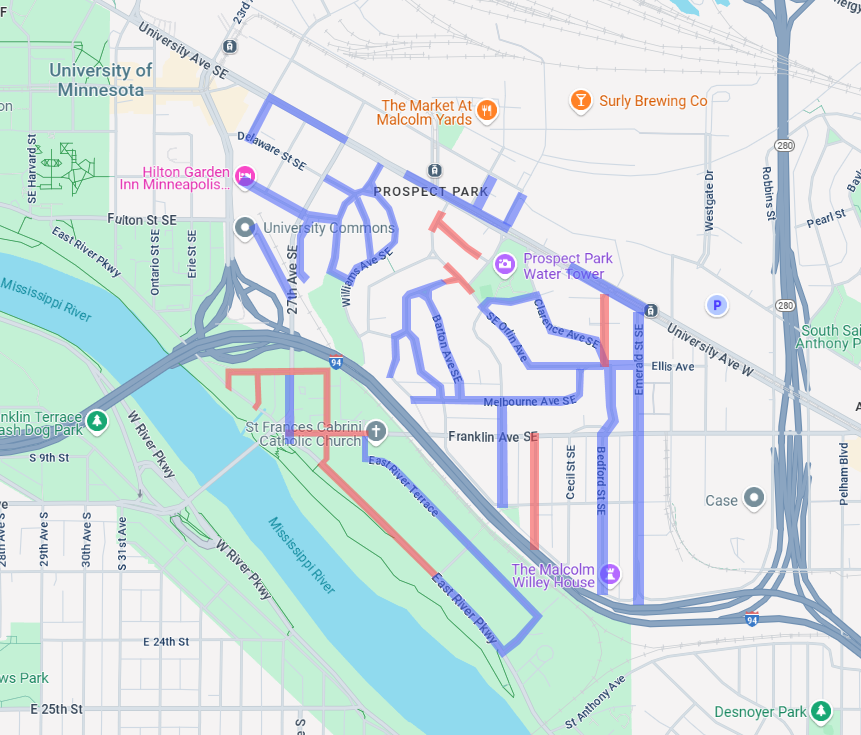
This project involves some natural gas main replacements but is largely focused on meter moves and service line upgrades. The work zone is illustrated on the following map.
Contractor summary
CenterPoint works with multiple contractors to complete construction projects in a safe and timely manner. You will see these contractors working in your area and may be contacted by them at various stages in the construction process.
The following outlines upcoming work in the Prospect Park Neighborhood of Minneapolis.
Overview
For several months, beginning as early as June 5, 2025, CenterPoint Energy authorized contractors will have CenterPoint Energy identification cards. You are encouraged to ask to see that identification.
The first contractor that will be seen in the area will be locating sewer laterals that extend from properties to the sewer line in the street. This is an important safety measure that CenterPoint Energy is required to execute before beginning construction. For more information about the importance of locating sewer laterals visit CallBeforeYouClear.com.
Marking utilities
CenterPoint Energy will locate public underground utilities. This is an important safety preparation, done before construction begins. The utilities will be marked with spray paint and flags. If you have installed any private lines such as sprinklers or dog fences, we ask that you mark them with a material that is convenient for you. Examples include spray paint, flags, and wooden sticks used to stir paint. Marking sprinkler heads is sufficient. If any utility flags are left in residents' yards after restoration is complete, they may be removed and thrown away.
Natural gas main work
Plastic mains reaching the end of their useful life are replaced with modern plastic piping that increases the safety and reliability of CenterPoint's gas distribution.
Plastic main is replaced by boring underneath one side of the road. Please keep in mind that some intersections may not be permanently restored until after the service work is complete. Until then, customers may see temporary backfill such as dirt or gravel.
Service line and meter work
CenterPoint Energy will send a postcard in the mail before the service crew comes on site. A technician will schedule appointments for relighting gas service to each property.
One natural gas crew typically completes one block per week. For most properties, the crews remove at least one sidewalk panel in front of the house, excavate a hole by the outside meter, and bore the service line from the sidewalk to the house.
The crew will make appointments with residents to move inside meters outside. Customers with outside meters will be notified prior to the replacement or connection of their service lines to the new main.
Visit the Construction Definitions page for more information.
Restoration
The final step in an infrastructure project is to restore the roads, sidewalks, boulevards, and lawns that were impacted by construction. Restoration is typically on site a few weeks after the completion of all other construction. Until then, temporary restoration is done by the utility crews to maintain an area's livability.
For more details visit the Restoration Practices page.
Traffic impacts
Most traffic impacts will be restrictions on street parking, closure of one sidewalk at a time, and lane shifts. Specific traffic impacts will be communicated as they are determined. The utility crews will work with residents to maintain access to their homes.
Thank you for your patience and understanding as we replace our infrastructure! We value the privilege of having you as a customer.
Questions?
Head to our website for more information about the construction process and impacts on the area. For additional questions, contact our Communication Specialist at una.omeara@centerpointenergy.com or 612-542-6198.
The webpage for this work can be found here: Minneapolis - Prospect Park Neighborhood
Map of the Natural Gas Improvement Project in Prospect Park.
What changes are planned in my community?
The work plan adds new bus shelters, replaces aged shelters, adds shelter lighting, and adds shelter heaters. It includes removal of bus shelters where there are very few riders. A list of bus shelter improvements planned for this year is available online.
With approximately 9,000 bus stops in the transit system, Metro Transit uses bus stop improvement guidelines to plan for bus shelters across the transit system. These guidelines were recently updated and are posted online.
- A bus stop must have consistently 20 or more average daily passenger boardings to consider adding a shelter.
- Bus shelters with ridership lower than 10 daily passenger boardings may be removed to redirect maintenance resources.
What construction activity can the community expect?
Depending on the specific needs of each bus stop, the improvements may involve pouring a concrete pad, installing a shelter, or completing underground electrical work to the shelter. The general construction season is through November.
Plans may change depending on the final design and the construction schedule. Improvements are made in coordination and partnership with cities, counties and MnDOT.
Stops on the 2
- Riverside Ave & 24th / 25th Ave S
- E River Pkwy & Appleby Hall
- 15th Ave SE & 7th St SE
- 15th Ave SE & 7th St SE
- 15th Ave SE & 4th St SE
Contact Ward 2
Visit: minneapolismn.gov/ward2
Email: ward2@minneapolismn.gov
Phone: 612-673-2202
We've moved while work is being done in City Hall. Our office is in:
Room 100, Public Service Center
250 South 4th St.
Get directions
For reasonable accommodations or alternative format please contact 311. People who are deaf or hard of hearing can use a relay service to call 311 at 612-673-3000. TTY users call 612-263-6850. Para ayuda, llame al 311. Rau kev pab, hu 311. Hadii aad caawimaad u baahantahay, wac 311. |