  Preserving our affordable housing stock is important to addressing unsheltered homelessness. The Minneapolis City Council allocated $1 million in the 2025 adopted City Budget to go toward the Minneapolis Affordable Rental Stabilization (MARS) which is a one-time program established to assist nonprofit affordable housing owners in stabilizing existing properties.
These grant awards will help prevent the loss of existing affordable housing units, protect the City’s investments in the affordable rental projects, and increase developer capacity to pursue projects that produce new affordable housing units.
The recommended awards total $976,757, which will help preserve 203 affordable units, including 115 units affordable to households at or below 30% AMI and 86 units dedicated to households exiting homelessness.
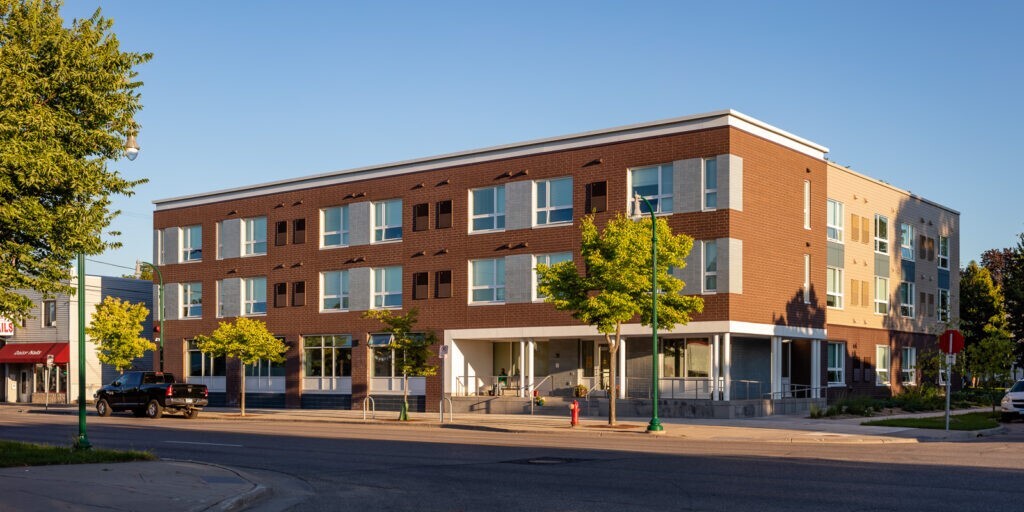
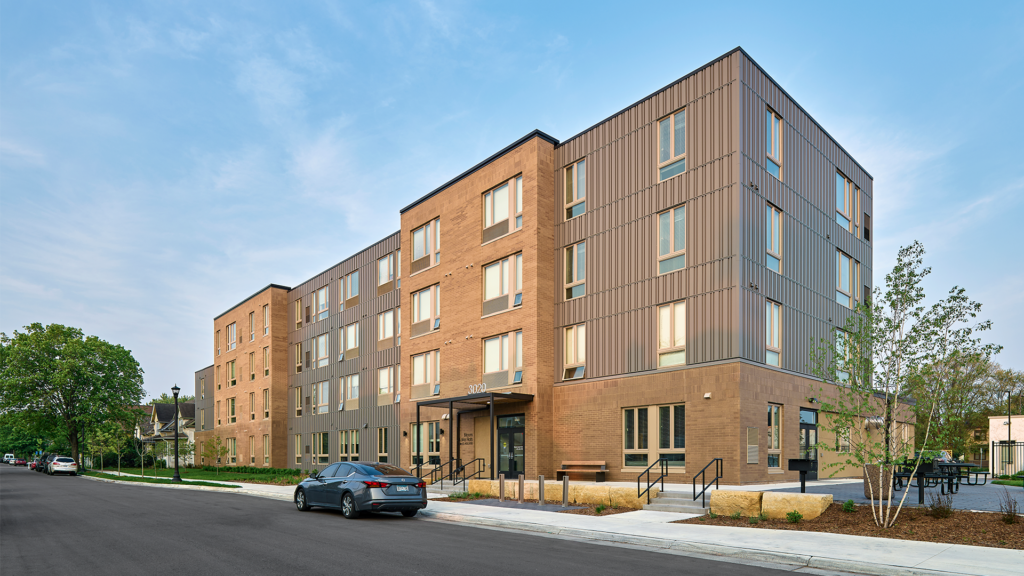
Below is a summary of two projects located within Ward 9 that will receive funding.
Bloom Lake Flats (Powderhorn Park)
- Parent organization: Project for Pride in Living
- 42 units (24 @ 30% AMI and 18 @ 50% AMI)
- 42 units dedicated to households exiting homelessness including 4 HOPWA units dedicated to people living with HIV/AIDS
- 42 units with Housing Support
- Supportive services provided by Affinity Residential Care LLC
- Award amount: $231,210
Minnehaha Commons (Longfellow)
- Parent organization: Alliance Housing
- 44 units (22 @ 30% AMI and 22 @ 50% AMI)
- 14 units dedicated to households exiting homelessness
- 15 units with Housing Support and 44 units with rental assistance
- Supportive services provided by Touchstone Mental Health
- Specialized populations served: seniors with a history of homelessness
- Award amount: $175,159
 Mayor Frey, who has sole authority over encampments in the City, has a history of antipathy towards transparency and accountability in terms of his administration’s actions and spending around encampments. That’s why Council Member Chowdhury, Council Vice-President Chughtai, and I authored an ordinance establishing a comprehensive reporting framework for all removals of encampments within the city. Not only does this ordinance respond to ongoing concerns regarding the transparency and accountability of encampment removals, but also seeks to have a beneficial impact on individuals experiencing homelessness. Key provisions of the ordinance include:
- Detailed reporting requirements for each removal event, including the involvement of city departments, non-government entities, and service providers.
- Data on the number of affected individuals, offers of housing and services, and outcomes related to each removal.
- A focus on ensuring data privacy and compliance with relevant laws.
Last week at the Business, Housing, and Zoning Committee, the mayor’s administration presented their first report since the ordinance was enacted. The clear message that came out of that presentation was: The mayor’s approach to addressing homelessness is not working.
The topline data that stuck out to me: between July and December 2024, the City spent $330,000 to clear 17 encampments, which evicted 227 unhoused residents. Of those 227 people, only nine of them were moved into shelters. In other words, four percent of people the City evicted were moved into shelters. Perhaps part of the reason that so few of the residents were moved into housing is because only 169 of the 227 evicted individuals, or 74 percent, were offered housing after the encampments were evicted. I find it objectionable that the City would evict these folks and not offer to move more than 25 percent of them into shelters.
 In my previous newsletter I communicated with all of you that I was saddened to see that the Mayor and his Administration were asking the Minneapolis City Council to approve a $643,632 contract with a non-profit run by the same person who lobbed homophobic remarks towards me and threatened my colleagues and I. Since then, the Mayor’s Administration asked the City Council to withdraw the contract.
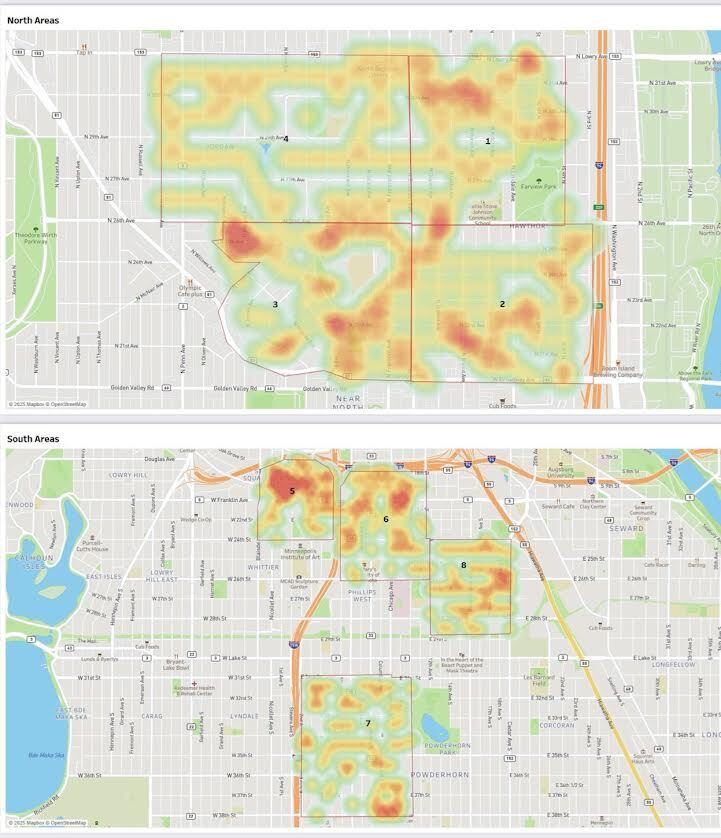
At today’s City Council meeting, we approved a variety of contracts for MinneapolUS Services. These services are a unique, interdisciplinary, public health approach to violence prevention and an adaptation of the Cure Violence Model (CVM).
Coverage for the program will include a team of seven people deployed per shift, each shift lasting up to 8 hours, with approximately 5 shifts per week. Teams will also work to change behavioral norms that support violence through public education and active community engagement. Continual data collection efforts will be implemented to assess program effectiveness and inform strategies.
Geography:
- A Mother’s love was assigned to Area 1.
- No coverage has been assigned to Area 2 but the City Council passed a resolution supporting consideration to re-solicit this request.
- No coverage has been assigned to Area 3 but the City Attorney said there are options for coverage. I am interested in working with colleagues to find a solution to this.
- Restoration Inc. was assigned to Area 4.
- Mad Dads was assigned to area 5.
- No coverage has been assigned to Area 6 but the City Attorney said there are options for coverage. I am interested in working with colleagues to find a solution to this.
- Sabathani Community Center was assigned to Area 7.
- TOUCH outreach was assigned to Area 8.
I am excited to see that our violence interrupter services going deeper into our neighborhoods. I am committed to working with staff to address the areas that do not have coverage yet.
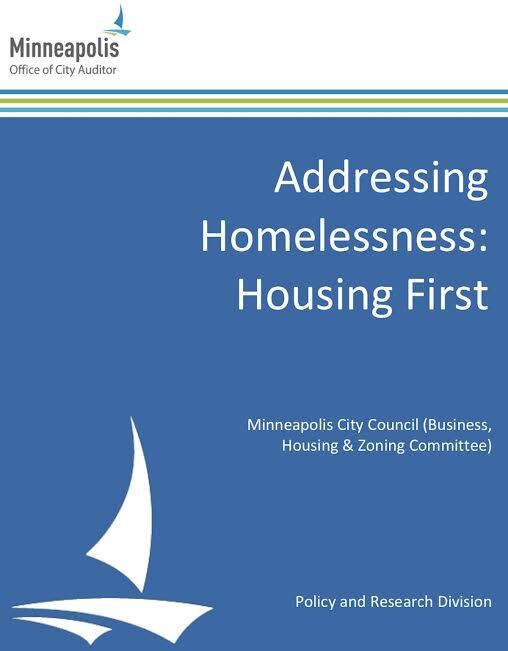 Last summer I authored a staff direction for City staff to produce a national landscape analysis of other localities’ policies, programs, and strategies to reduce homelessness using a housing first model. The purpose of the research is to increase the City Council’s understanding of policies and programs designed to prevent and reduce homelessness and enable the City Council to compare local strategies in terms of efficacy and costs. The report was shared with the Business, Housing, and Zoning Committee last week with a presentation to follow. The full report can be found here.
Housing-first approaches help ensure that people experiencing homelessness are connected to permanent housing swiftly with as few obstacles as possible. This approach requires eliminating or reducing the use of treatment preconditions, behavioral contingencies, and other barriers or requirements prior to housing or as a condition for continued tenancy in housing.
Housing-first is not housing only. Rather, these approaches are based on a substantial body of evidence illustrating that people experiencing homelessness can achieve stability in permanent housing when they are provided the appropriate level of tailored services and support. These approaches are both cost effective and create stronger outcomes.
Housing choice is also an important aspect, as evidence demonstrates that when communities offer a range of housing options that have varying levels of tolerance for substance use, this provides a safer environment for people experiencing homelessness who are often marginalized, stigmatized, and vulnerable because of poverty and behavioral health disorders.
In addition to offering permanent supportive and independent housing, Housing First program models offer rapid-rehousing (temporary support) and safe, flexible, interim housing options for vulnerable people who need a place to stay because of delays in finding permanent housing, or during gaps in housing when they relocate.
It can be more challenging to implement a housing-first approach in cities where tighter housing markets drive up costs and limit the availability of rental housing. Apart from veterans, advocates point out that Congress has not funded it to scale and that most housing-first programs are not well supported, politically or financially. According to some accounts, only about 15 percent of people who experience homelessness get into a housing-first program in a given year.
 Last November, I authored a legislative directive related to the Affordable Housing Trust Fund (AHTF), requesting a comprehensive update, potential changes, and policy recommendations to increase the number of 30% Area Median Income (AMI) units and housing for the homeless, as well as the preservation, rehabilitation, and stabilization of existing units. It is widely accepted that “deeply affordable housing” is defined as households making 30% AMI. In 2024, the AMI for a family of four was $124,200. In other words, a family making $37,260 is classified as 30% AMI.
The primary purpose of the AHTF program is to assist in financing the production, preservation, and stabilization of affordable and mixed-income rental housing projects in Minneapolis. Program funds are available on a competitive basis to projects that need gap financing to cover the difference between total development costs and the amount that can be secured from other sources. The funding sources for the program are primarily federal Community Development Block Grant funds, federal HOME Investment Partnership funds, and local funds.
As the city begins to deal with fiscal cliffs and budget deficits, it is important to prioritize our programs to meet the needs in our community.
I recently received an update from staff on the questions posed in the legislative directive that I authored. While there is still progress that needs to be made on how AHTF dollars are spent, the City appears to be making progress on getting more people into truly affordable housing. The City changed in 2023 the way they score applications for AHTF dollars, which led to a demonstrable increase in the number of 30% AMI units last year. In total, last year, 341 30% AMI units were awarded AHTF dollars; in 2023, that number was 298.
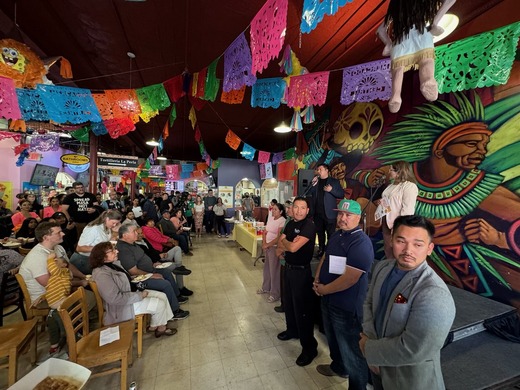 In 2019, the City of Minneapolis established Black Business Week, celebrated at the end of July. Since that time, the City has hosted an annual series of events to support and uplift Black business owners and entrepreneurs. In 2023, I authored a budget amendment to establish Latino Business Week which was successful. I authored this once again in 2024 because the Mayor left it out of his budget proposal.
Between 2019 and 2024, the activities and events hosted for these weeks have been planned and managed by staff across multiple departments. Over time, community groups have expressed an interest in designing their own events as part of the cultural business weeks. Council took action to an open solicitation process to fund community proposals in support of Cultural Business Week celebrations. This week, I authored a resolution to help establish new program guidelines that will set the parameters for soliciting and awarding funds to community proposals.
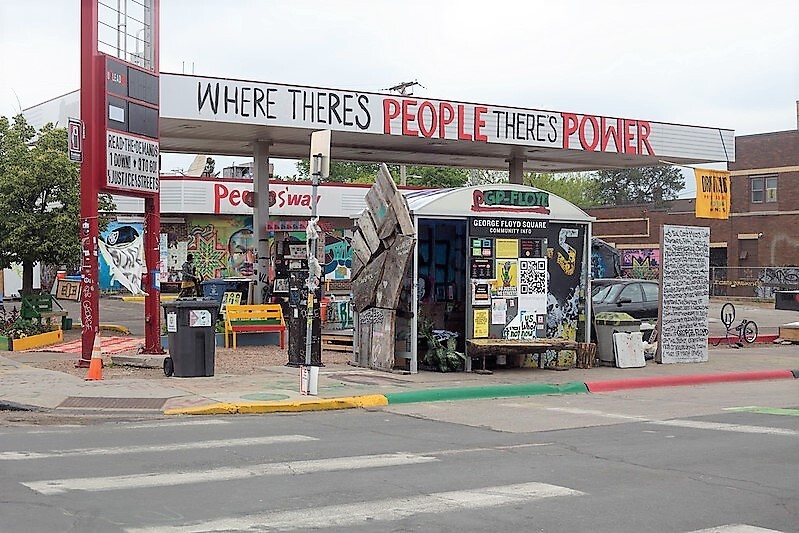 The City is looking for community input before advancing a development group for Peoples’ Way to the mayor and City Council for approval. Please take a survey by March 28 to share your feedback.
Redeveloping the Peoples’ Way site for community use is a part of the City’s effort to work with the community on a new vision for George Floyd Square. Years of feedback from community members has informed a shared vision for the area.
Read more about Peoples’ Way on the City website and take the survey by March 28. You can also see presentation materials and video recordings from a Feb. 26 event with four applicants to redevelop the site.
Recruiting members for eight boards and commissions is open through the end of March. The deadline for the Community Commission on Police Oversight was extended.
We’re looking for applicants with a diversity of backgrounds and experiences representing the demographics of Minneapolis to strengthen the work of the City. Translation and interpreting are available so all residents can participate.
Serving on City boards and commissions offers a direct way for residents to advise City leadership about topics important to them. This is a way to help make changes and improvements that affect your community.
Apply by March 31.
Serving on City boards and commissions offers a direct way for residents to advise City leadership about topics important to them. This is a way to help make changes and improvements that affect your community. Applications will be taken throughout March for these boards and commissions:
- Advisory Committee on Aging
- Advisory Committee on Disabilities
- Advisory Committee on Housing
- Bicycle Advisory Committee
- Community Commission on Police Oversight (applications open until March 16)
- Homegrown Food Council
- Pedestrian Advisory Committee
- Public Health Advisory Committee
Apply by March 31, and stay up to date on vacancies, position descriptions and timelines by visiting the City website.
We took action on an ordinance to amend the enclosed building requirements for outdoor food lockers. The intent of the amendment is to implement policy guidance in Minneapolis 2040 related to food access by allowing for outdoor food lockers associated with community provisions facilities. Increased food access serves several key public purposes that contribute to the well-being of individuals and communities, including increasing access to healthy foods, reducing financial stress for low-income individuals and families, promoting social equity by reducing barriers to food access, and connecting marginalized and vulnerable individuals and groups to local resources.
Outdoor refrigerated food locker systems can supplement the operations of existing food shelves. The locker system would allow users to pick up pre-selected foods twenty-four hours a day, seven days a week, providing access to those unable to visit the food shelf during operating hours. Food and supplies offered through the food lockers would mirror what is offered at the food shelf, and would include canned goods, pantry items, fresh produce, fruit, meat, eggs, and milk, as well as various other items such as hygiene products including diapers, toothbrushes, toilet paper, and shampoo, if requested by the client.
 The 2025 City of Minneapolis Trans Equity Summit has been scheduled for Monday, Aug. 11, at the McNamara Alumni Center. The theme for this year’s event is “Trans Equity and Intergenerational Power: Strengthening the Future by Honoring Our Past.”
The City of Minneapolis and partners are planning the all-day, free event that provides space to connect on social, legal and health issues important to the transgender community.
The summit will include breakout sessions, a job and resource fair and healing justice offerings. Space will be protected for community care and collective witnessing for trans and gender non-conforming neighbors.
Bookmark this webpage and check back for updates.
The Department of Public Works has three overlapping projects along 24th St. E. scheduled for construction in 2025. To minimize disruption to the community, they are constructing all three around the same time, and for the community, this could look like one single project. I wanted to make sure that you understood the differences ahead of construction.
24th St. E. ADA pedestrian ramps and resurfacing project
These upgrades are part of the Phillips traffic safety project to reduce speeding and improve traffic safety in the neighborhood. These upgrades will make the streets safer for everyone. The City will be upgrading pedestrian ramps to current Americans with Disabilities Act standards. Further, the street will be resurfaced to replace the top layer of asphalt pavement to extend the life of the street. The new pavement is anticipated to last at least ten years.
Council approved special assessments to the land area of benefited parcels located within the street influence zone along the improved streets. These assessments are not calculated based on project cost alone. The city uses a formula that combines influence area with an annually established rate. This formula is carefully considered and applied by City staff, and it is intended to account for and reflect each project’s value to benefitted properties. The 2025 resurfacing rates are:
- $0.75/ sq. ft. - Non-residential
- $0.25/ sq. ft. - Residential
The proposed total assessment amount for the 24th St. E. Resurfacing Project is $245,069.07. Individual assessments over $150 would begin collection on 2026 real estate tax statements with interest charged at 4.10%, and assessments of $150 or less would be collected in their entirety on the 2026 real estate tax statements with interest charged at 3.90%. Information has been provided in the notices as to how persons may prepay the special assessments in full without interest if they so choose. City Council has passed resolutions whereby a deferment of special assessments may be obtained by showing hardship for any homestead property owned by a person 65 years of age or older, active military service, or retired by virtue of a permanent and total disability.
Public Works will also include improvements along 24th St. E. that will be implemented in conjunction with the resurfacing work to improve safety for all users, with a focus on pedestrian safety. Over the past few years Public Works has led an extensive community engagement effort with multiple rounds of outreach to residents, businesses, and other major stakeholders. This effort was structured to collect input, evaluate design treatments, and recommend safety improvements that align with City policy and are representative of community input. The inclusion of the safety improvements does not influence the special assessments calculated for the project.
24th St. E. Bikeway Improvements and Federal Pedestrian Safety Improvements
These two projects include a bikeway project along 24th St. E. between Portland and Cedar that will upgrade the existing painted bike lanes to a two-way protected bikeway; as well as a federally funded pedestrian improvement project that will build large new bump outs along 24th Street at the intersections of Elliot and 10th streets adjacent to the Village Market Mall. This latter project will also construct additional bump outs to improve safety at the intersections of Chicago 25th St. E.; Chicago and 28th St. E., and; 28th St. E. and 10th Ave. S.
This project intends to improve safety and comfort along High Injury Streets in the Phillips community. These improvements will improve mobility, accessibility, comfort, and safety by reducing crossing distances at intersections, improving visibility, and better protecting people using the bikeway. The proposed safety improvements are also located next to some of the largest trip generators in the community, including the Village Market Mall and Abbott Northwestern Hospital, improving comfort and safety where people most frequently need to go.
Minneapolis was awarded $1,000,000 in federal funds for the Phillips Safety project in the 2020 Metropolitan Council Regional Solicitation, as well as a $500,000 Safe Routes to School Grant from the Minnesota Department of Transportation.
The federal government has pulled back all of its COVID-19 funds. This means that City of Minneapolis work around vaccination clinics and immunization education is stopped. The impact on the community is substantial as we’re canceling the five free clinics in April and do not know the future of our vaccination services right now.
Impact
Decisions at the federal level are impacting lives in our community and hurting employees dedicated to making Minneapolis a healthy place to live.
In 2024, the Minneapolis Health Department partnered with community organizations to hold 87 vaccine clinics in underserved communities. The clinics provided more than 800 COVID-19 shots, more than 700 flu shots and more than 500 mpox shots.
The decision also impacts the immunization work of three Health Department employees. The City is evaluating all options. In the meantime, the three employees will remain on staff and be funded by other sources.
Read more on the City website.
If you’re a City Solid Waste & Recycling customer, watch your mailbox in the coming weeks for your annual service guide. Your guide will include a collection schedule for the year; ways you can create less trash and reuse what you already have; and a catalog of what belongs in the black garbage cart, blue recycling cart and green organics cart. The guide also has instructions for setting out large items and for managing household hazardous waste.
Find more resources for recycling and organics on the City website.
Contact the Ward 9 Office
Email: jason.chavez@minneapolismn.gov
Phone: 612-673-2209
We've moved while work is being done in City Hall. Our office is in:
Room 100, Public Service Center
450 South 4th St.
Get directions
For reasonable accommodations or alternative format please contact 311. People who are deaf or hard of hearing can use a relay service to call 311 at 612-673-3000. TTY users call 612-263-6850. Para ayuda, llame al 311. Rau kev pab, hu 311. Hadii aad caawimaad u baahantahay, wac 311. |