|
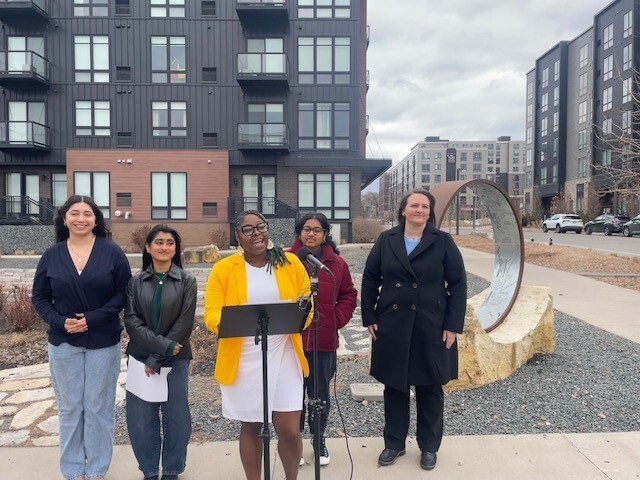
Summary: The Minneapolis City Council voted 9 to 4 to move forward with a pedestrian plan for George Floyd Square.
Background: A supermajority of the Minneapolis City Council overrode Mayor Jacob Frey’s veto of a legislative directive that allows the City to have a clear vision of a pedestrian mall at 38th St and Chicago Ave. The Council’s move is supported by community members who, for nearly five years, have been cultivating and re-imagining the space in a way that centers ongoing calls for justice. This veto override means the City is moving forward with a concept that guarantees pedestrianization. In addition to cultivating and protecting the existing memorial from non-delivery, maintenance, and emergency vehicles, the pedestrian mall concept would also provide new boulevard spaces that will allow for plantings, trees, and stormwater treatment areas and prioritize traffic calming, safety, and accessibility improvements.
The directive is in line with community members’ demand for a pedestrian model that does not erase the history of police brutality in Minneapolis, and for which Public Works provided a supporting memo that lays out the work needed to develop a pedestrian mall concept layout.
George Floyd Square is not like any other street in the City. It is the epicenter of a global uprising against racism and police brutality. Attempts to reduce the future of George Floyd Square to a conversation about street infrastructure are attempts to erase Black history.
Nationwide, cities such as Birmingham, Cincinnati, Memphis, and Detroit have continued to reckon with racial violence through design by creating Civil Rights memorials and established sites meant for visitors to learn, understand, and respect history.
Council is ready to act for the community to see real investments and progress that does not allow Mayor Frey to erase what happened to Mr. Floyd, the trauma residents of Minneapolis experienced in 2020, or ongoing calls for justice for victims of police violence. There can be robust economic investments in the George Floyd Square corridor without erasing the area’s history, and it is troubling to hear the Mayor’s administration claim that residents must accept a certain type of street design in order to receive basic economic investment.
Council’s action respects the time it takes for neighborhoods to endure significant reconstruction after traumatic events and preserves a space of historical, artistic, and political significance in the City of Minneapolis.
Key votes: Council voted 9-4 to override Mayor Frey’s veto of the community-led pedestrian plaza for George Floyd Square. Council Members Rainville, Vetaw, Jenkins and Palmisano voted in opposition.
Summary: After community pressure, the Frey administration backed away from a deal to partner with an infamous organization that claims to do anti-trafficking work, but is currently under federal investigation for trafficking. Council approved actions to investigate how the Frey administration entered into this partnership.
Background: Many residents reached out to my office after learning in the media that the Frey administration was trying to bring an infamous and problematic organization that is under federal investigation into the new South Minneapolis Community Safety Center. After intense pushback by residents, the media, and Council, top leaders in the Frey administration walked back this decision and decided to re-solicit the contract for this program. I want to thank all the members of the media, the public, and local credible anti-trafficking organizations, in particular The Link, for raising the alarm about this situation.
This week, Council Member Koski authored a request for a full investigation by the City Auditor and a legislative directive asking the Frey administration for context on how this partnership came about.
There are numerous credible, trusted location organizations that do anti-trafficking work, and it’s incredibly disturbing that instead of partnering with any of these groups, the Mayor’s administration proposed working with an organization with a deeply troubled past that involves alleged practices ranging from completely ineffective at preventing trafficking to actually committing sexual assault and trafficking themselves. This was information that was readily available by a simple Google search that was somehow seemingly overlooked by our professional staff in the Office of Community Safety.
Council Offices have been asked how an organization like Our Rescue was seriously considered for any form of partnership with the City, especially in a space that has been promised to the community as a space that will not repeat the trauma the 3rd Precinct inflicted on residents for decades. The South Minneapolis Community Safety Center was a promise to do better, and the Frey administration's actions here rightfully question whether the community should trust that promise.
I want to be clear that predatory groups like Our Rescue, also formerly known as Operation Underground Railroad, are not welcome here, and no amount of rebranding will change that.
I also want to note that I am extremely disappointed by the lack of communication and critical information from the administration after the public became aware of who was awarded the request for proposals. My office fielded significant constituent correspondence when the media shared the administration's vendor selection, and when I reached out to Commissioner Barnette, who leads the Office of Community Safety, to receive more information, I heard nothing back. After reaching out to Council Member Chavez to understand if he knew anything as the Chair of the Public Health and Safety Committee, I was surprised to hear that Council Member Chavez had also emailed Commissioner Barnette, who responded that Council Member Chavez could reach out to Council Member Palmisano for more information relating to the RFP and organization in question. This comment was extremely troubling to me for a variety of reasons.
There should never be a scenario where an individual Council Member has non-public information on vendor selection, or more information than administrative staff. I was not the only Council Member who was troubled by this and I am hopeful that the audit and legislative directive will provide more information. The Our Rescue ordeal was easily avoidable and once again demonstrates the need for Council’s continued scrutiny into the Office of Community Safety’s programmatic operations and management practices.
I want to assure residents that I will continue to hold a high standard for building a comprehensive community safety system that includes reputable, and trusted community partnerships. I look forward to the results of this audit so Council can take the corrective actions so situations like this do not occur again.
Key votes: Council voted 12-0-1 to approve a legislative directive and request an independent audit of the Frey administration’s vendor selection process for the South Minneapolis Community Safety Center. Council Member Palmisano was absent. Both reports will be presented to Council by June 30th, or within 30 days of a new unsolicited contract being executed.
Summary: Council approved contracts from the Neighborhood Safety Department with community organizations to administer Group Violence Intervention and Youth Group Violence Intervention services. Council Members expressed clearly that there are still many outstanding concerns about the department’s ability to support these contractors in keeping residents safe.
Background: The Frey administration asked Council to approve contracts from the Neighborhood Safety Department (NSD) with community organizations to administer Group Violence Intervention and Youth Group Violence Intervention (GVI/YGVI) services. GVI/YGVI is an extremely specialized type of violence prevention that involves intensive case management and intervention with the 0.5% of the population involved in 50% or more of the violent incidents.
Due to persistent concerns about NSD’s overall functionality, earlier this month I proposed moving the city’s GVI/YGVI to Hennepin County for 2025. The Frey administration deflected these concerns with a variety of false statements, and continued to have no answers to why the department has not produced any data on their outcomes for over two years and has a 50% staff vacancy. Ultimately the Frey administration’s false allegations inflamed community members to the point where Council Members received death threats. I withdrew the proposal to refocus the conversation on the issue at hand: the Mayor’s persistent mismanagement of public safety programs that has resulted in a less safe Minneapolis.
This week, NSD brought forward their proposed GVI and YGVI contracts. They also presented on how they have improved their contract procurement process after a lawsuit for procurement mismanagement.
While I was encouraged to see that there may be positive developments in NSD’s procurement practices, selecting a vendor is just one step of the process. The NSD still has not demonstrated significant improvement in their ability to manage these programs on an ongoing basis. The department has 50% staff vacancies, many of the leading staff are very new, and most crucially, there is nobody in the role of program manager who will actually implement and manage the GVI/YGVI programs. With these crucial infrastructure and programmatic pieces still missing, we are not creating a strong foundation for our new YGVI & GVI contractors and thus, I am concerned that we are setting them up to fail.
While there continue to be large holes in the basic operational capacity of NSD, there are also new concerns that continue to be added. Just last week, the Star Tribune reported that a former boyfriend of the former director of NSD received a contract for implementing a program or service that, according to national experts, does not exist. They were compensated over $800/hour. Only contracts above the threshold of $175,000 require Council approval, which is why this contract never was brought forward publicly. This has been a concerning pattern from the department. Earlier this year, NSD staff brought forward a contract for nearly $1 million that did not appear to comply with best practices and raised many questions and concerns. Since this contract was above the threshold for Council approval, the body was able to block it from proceeding forward. These examples demonstrate that when there is a lack of expertise within the department and they refuse to use national best standards, the results are poor outcomes and wasteful spending.
All of this to say, I do not have confidence in any element of NSD at the current time and I do not feel comfortable approving contracts under these conditions. My concerns are not about the vendors. I abstained on these contracts as a vote of no confidence in the Frey’s administration management of Neighborhood Safety. I will continue to abstain on contracts from this department until there is evidence and data affirming that the department is mitigating risk, operating in line with best and evidenced-based practices, and has more full and established staffing.
I have always been and continue to be a champion of violence prevention. I will continue to utilize all of Council’s tools to ensure that all public safety efforts are aligned with national standards, are administered by experienced professional staff, and deliver effective and measurable outcomes.
Key votes: Council votes to approve the contracts in a 10-1-2 vote. Council President Payne voted in opposition and Council Member Osman and I voted to abstain.
Summary: Council voted 9-4 to create a community advisory Work Group to support the city’s work building a comprehensive community safety system that goes beyond policing.
Background: I authored a resolution establishing a Safe and Thriving Communities Work Group, a community advisory body to support the Mayor and Council in the creation of a comprehensive public safety system that goes beyond policing and includes preventative, responsive, and restorative services.
The Safe and Thriving Communities Report and Plan is a detailed document outlining a vision and 10-year guide for developing a public safety system that goes beyond policing. The Safe and Thriving Communities Report and Plan states that within the first 12 months, the city should establish a community advisory body.
This was also something that my constituents suggested at a Ward 2 Community Safety meeting that I hosted at Matthews Park in the summer of 2024. Residents in Seward, who will be neighbors of the new 3rd Precinct/South Minneapolis Community Safety Center, expressed that they want a venue for community oversight of the city’s new public safety buildings and programs. Persistent community engagement and oversight has held the Frey administration accountable to making good on their commitments around an equitable and comprehensive public safety system, and residents know that this oversight and accountability needs to be an ongoing presence to ensure that the administration doesn’t revert back to implementing the status quo of policing.
Creating a community advisory body will ensure that there is a diverse and dedicated group of appointed residents who can help hold the administration accountable on matters related to comprehensive public safety beyond policing, including advising against harmful actions and recommending strategies and best practices for our new Safe and Thriving Communities model. My office with the support of Council allocated $4 million to support new safety pilots at the South Minneapolis Community Safety Center, and one of the Work Group’s roles can be helping shape what those pilots look like.
In addition to the 3rd Precinct/Safety Center, this group will also have a role in the development of the 4th Precinct/North Side Community Safety Center, which will be coming up in the next few years.
You can read more about the makeup of the new proposed Work Group in the resolution approved by Council this week. Each Council Member and the Mayor nominate applicants, and the Office of Community Safety nominates several applicants with lived experience or expertise in particular subject matter areas. All nominations are subject to approval by Council and the Mayor. The Work Group will sunset when the implementation of the Safe and Thriving Communities Report and Plan is complete, which is estimated to take approximately 10 years.
Key votes: Council voted 9-4 in support of my proposal to create a Safe and Thriving Communities Work Group. Council Members Rainville, Vetaw, Jenkins and Palmisano voted in opposition.
Summary: Council approved a legislative directive requesting information on contracts that the Frey administration has signed without approval by Council.
Background: According to the city’s current policies, the Mayor’s administration must receive Council approval on any contracts over $175,000, but may enter into contracts below that threshold without a Council vote. After a number of situations in which Council and the public learned about concerning contracting choices by the Frey administration, Council Member Koski authored a legislative directive requesting the administration disclose all contracts that have been entered into without Council approval.
I voted in support of this legislative directive and appreciate Council Member Koski bringing it forward. In my role as Chair of the Administration and Enterprise Oversight Committee, I have been part of many conversations related to procurement and contracts this term. I have been interested in reopening the procurement ordinance that Council passed in 2022 along with the government restructure. The goal of that ordinance was to increase efficiency, which I was supportive of, but since its passing it's clear that there is a need for increased transparency. In addition to recent revelations about the administration's poor contract management, it is just good governance for this information to be public.
I am looking forward to the presentation on this legislative directive, and to taking additional legislative action to address the serious gaps in transparency within our procurement process.
Key votes: Council unanimously approves Council Member Koski’s legislative directive on transparency in contracting. Staff will present a response by June 20th, 2025.
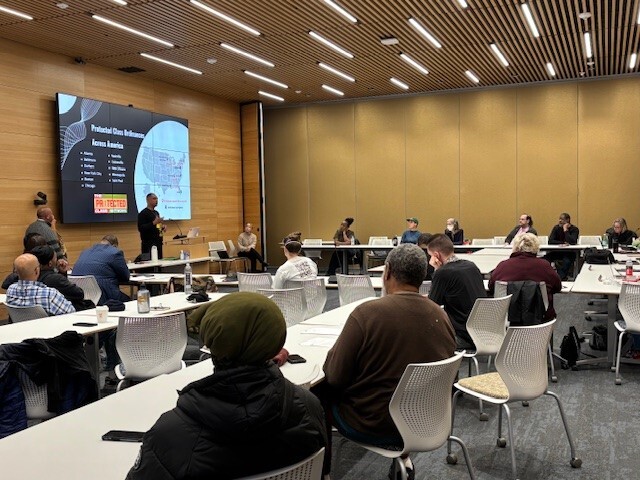
I attended a Civil Rights Commission meeting with Council Member Jason Chavez and members of the Justice Equity Coalition. Council Member Chavez and I are authoring an ordinance to update the city’s Civil Rights Ordinances to include new protected classes. We’ve been working with the Justice Equity Coalition on creating a new protected class for justice-impacted individuals (residents with histories in the criminal justice system or criminal records). We appreciated the opportunity to dialogue with the Civil Rights Commission on new protected classes and look forward to advancing this ordinance in partnership.
Members of the Justice Equity Coalition presenting at the Civil Rights Commission with Council Members Wonsley and Chavez.
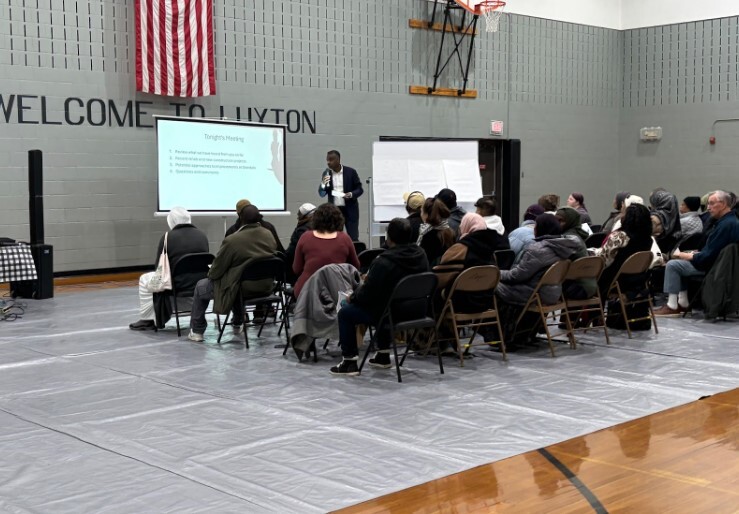
I attended the Minneapolis Public Housing Authority community meeting at Glendale Townhomes. Glendale residents reached out to my office requesting we attend this meeting to listen to MPHA’s presentation and hear the conversation and questions that residents raise. I appreciated this opportunity and look forward to many more conversations about the future of Glendale and centering the needs of Glendale residents.
MPHA Director Abdi Warsame presenting to Glendale Townhomes residents.
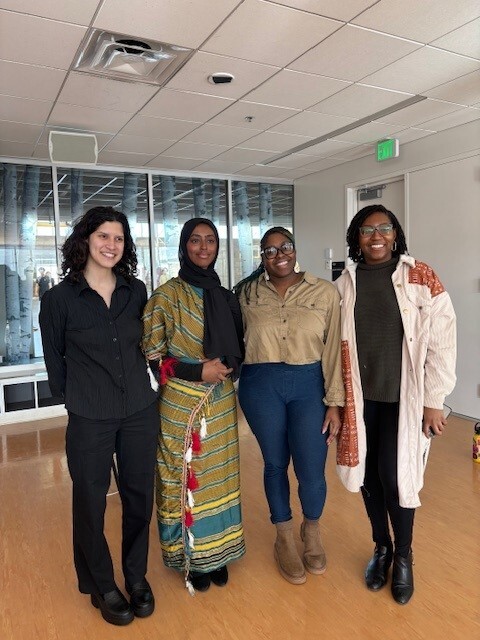
I attended the University of Minnesota Black Artists Showcase. It was a fantastic event uplifting a huge variety of talented Black student artists. Thank you to all the performers, organizers and community members who helped contribute to this powerful event.
Council Member Wonsley at the University of Minnesota Black Artists Showcase with student organizers and Memorialize the Movement, a local art preservation organization dedicated to preserving the art that was created across the city following George Floyd’s murder.
The City of Minneapolis has unveiled a draft Development Framework for the highly anticipated New Nicollet Redevelopment project, guided by input from thousands of community members. Through 14 in-person and virtual events, 2,245 survey responses, and 520 in-person interactions, the community’s voice is represented and shaping every aspect of this project.
The New Nicollet Redevelopment site spans 10 acres of land between the Midtown Greenway trail, Lake Street, First Avenue and Blaisdell Avenue. The City's plan includes the reconnection of Nicollet Avenue and creates more opportunity for:
-
Housing options for individuals and families of all income levels
-
A new park and green spaces for community gathering areas
-
Local businesses to meet daily needs of residents
-
Incorporate sustainable design opportunities
The project team will seek approval of the Development Framework from City Council and the mayor this spring. Construction on Nicollet Avenue is expected to begin later this year.
View the draft Framework and sign up for future email updates on the New Nicollet webpage.
Come to a public meeting March 12. You’ll get updates about the City of Minneapolis and Minneapolis Police Department’s path to meet the requirements of the Minnesota Department of Human Rights settlement agreement. Effective Law Enforcement For All (ELEFA), the independent evaluator of the settlement agreement, will present the updates.
ELEFA will present an overview of its role in the settlement agreement, describe its requirements and how it checks compliance, and provide implementation updates from the first semi-annual evaluation report.
5:30-8 p.m. Wednesday, March 125:30-6 p.m. Food and refreshments6-8 p.m. Event presentationUkrainian American Community Center, 301 Main St. NE
If you have questions or require accommodation to attend, please contact ELEFA.
Learn more about the March 12 information sessions on this flyer (PDF).
You can also learn more about the evaluator and its work on its website.
The City of Minneapolis has appointed Robert Timmerman the new city auditor, effective immediately.
The Office of the City Auditor office provides independent, objective review and consulting services to add value and improve City operations. Services also include auditing, continuous monitoring and investigations. The city auditor reports to the audit committee, which is made up of two City Council members, a Park Board commissioner and four community members.
Timmerman comes to the City of Minneapolis with strong state experience. Most recently, he served with the Minnesota Department of Transportation as acting director of the Office of Audit and an internal audit and investigations supervisor. Timmerman also served as a senior auditor for the Minnesota Office of the Legislator Auditor and a tax supervisor for the Minnesota Department of Revenue.
Timmerman holds a business administration degree in economics from the University of Wisconsin-Eau Claire and a certificate in law enforcement from Metropolitan State University. He has performed government audits and led professional level government auditors for most of his 18 years in public service.
Read more about the city auditor appointment on the City website.
With the early warming up in our weather, some people may want to tidy and rake up their yards. But pollinators nest in the broken stems of plants and overwinter in leaf piles. To protect them, please do not rake any leaves or clean up your yard until temperatures are consistently above 50 degrees.
Yard waste collection will begin the week of April 7.
Contact Ward 2
Visit: minneapolismn.gov/ward2
Email: ward2@minneapolismn.gov
Phone: 612-673-2202
We've moved while work is being done in City Hall. Our office is in:
Room 100, Public Service Center
250 South 4th St.
Get directions
For reasonable accommodations or alternative format please contact 311. People who are deaf or hard of hearing can use a relay service to call 311 at 612-673-3000. TTY users call 612-263-6850. Para ayuda, llame al 311. Rau kev pab, hu 311. Hadii aad caawimaad u baahantahay, wac 311. |