|
Summary: Council voted 9-4 in support of my amendment to implement fees on the largest emitters of carbon dioxide and greenhouse gasses. This is estimated to help reduce emissions 6% from the city’s largest polluters in 2025 at no cost to taxpayers.
In 2022, thousands of residents organized around the People’s Climate and Equity Plan, a comprehensive policy package about how to build a just and sustainable city. One of the recommendations of the People’s Climate and Equity Plan was to implement Pollution Control Annual Registration (PCAR) fees for carbon dioxide. Additionally, PCAR expansion work also builds upon the inspirational organizing efforts that Northside and Southside Green Zones residents have been leading to both close and hold industrial polluters accountable. Their fierce advocacy has led to the closure of Smith Foundry and the pending closure of the HERC incinerator.
I have been working for over a year to get carbon dioxide added to the city’s PCAR list and the fee schedule that corresponds to it. In February, I authored a legislative motion that resulted in a joint report that was presented in June laying out the pathway to creating a PCAR program for carbon dioxide (CO2) and equivalent greenhouse gasses, which are referred to as CO2e.
The new program would charge large facilities $452/ton of CO2e. At each of these sites, city staff would conduct site visits to complete technical analyses of projects to reduce emissions and refer facilities to a contracted partner to apply for a Green Cost Share program. The implementation of this fee is estimated to cover the city’s cost of reducing emissions 6% at each of the large facilities in 2025, a total reduction of 605.81 tons of CO2e.
The fee would cover the cost of the staffing and administrative time needed to implement the program. It would be essentially self-sustaining, and would mean that polluters themselves would be covering the cost of helping meet the city’s emissions reductions goals. As we all know, property taxes are a challenge and this is a great opportunity to expand our sustainability programming without adding to that tax burden. Staff from Sustainability projected that this project will reduce emissions 6% at the 36 largest greenhouse gas emitters in the city in 2025, at no cost to taxpayers.
At the Council meeting, there was an extensive conversation initiated by Council Member Palmisano about the administration’s implementation of the ordinance. The Council cannot force the administration to implement this carbon reduction program if they are unwilling to do so for whatever reason. But Council can make sure they have all the budgetary and legislative tools needed to take bold action on carbon reduction, and to do so in a way that makes polluters pay for needed mitigation measures, and not working class residents.
With this fee amendment plus my forthcoming budget amendment, the administration will have all the tools that they need to begin this program and reduce emissions by 6% from the 36 largest producers of greenhouse gas in the city. The climate crisis is an urgent matter and when we have programs like this that are ready to roll out and can concretely help reduce emissions next year, we have a responsibility to move them forward.
Key votes: Council votes 9-4 to implement carbon emissions fees. Council Members Palmisano, Rainville, Vetaw and Jenkins vote in opposition.
Summary: Council approved reducing the licensing fee for rideshare companies from $36,000 to $12,500.
Background: I have spent a large part of the last two years working with Council Members Chavez and Osman to support rideshare drivers who were organizing to demand minimum wage protections and standard workers’ rights that had been denied to them under the multi-billion dollar rideshare companies Uber and Lyft. Our efforts and workers’ tireless organizing succeeded in overcoming two vetoes by Mayor Frey and a veto by Governor Walz to win a statewide policy for some of the highest wages and strongest protections for rideshare drivers in the whole country.
During this process, there were conversations about what the city could do to diversify the rideshare industry and support more local small rideshare businesses. We identified that the license fee for rideshare companies was about $36,000 with a $10,000 additional fee for companies that did not have wheelchair accessible vehicles. This fee had not been updated since it was calculated a decade ago when TNCs first came to Minneapolis.
Earlier this year, I authored a legislative directive requesting an updated fee study for the cost of TNC licensure. This week, city staff presented the results. When the fee was first calculated, the process of setting licenses was brand new and required much more staff time, and was therefore much more expensive. Now, the city’s Business Licensing team is able to administer licenses much more efficiently and therefore the cost of the process is much lower.
The city can only charge fees that reflect the average cost of staff time and resources needed to complete the licensing process. The current fee rates are outdated and no longer reflect the current cost to the city for issuing a TNC license.
I, along with Council Members Chavez and Osman, brought this amended rate to the 2025 Fee Schedule. This would reduce the cost of a TNC license from about $36,000 to about $12,500. It holds the Wheelchair Surcharge flat to continue to incentivize TNCs to have wheelchair accessible vehicles, without overstepping the appropriate margin for a licensing fee.
Key votes: Council votes 9-4 to approve reducing the licensing fee for rideshare companies to align with current costs. Council Members Palmisano, Rainville, Vetaw and Jenkins vote in opposition.
Summary: Council had a discussion about the role of charter schools and the city’s relationship to charter school bonds, and voted 7-6 in favor of granting a charter school bond.
Background: Council was asked to support up to $50 million in bonds for a charter school. Charter schools can receive bonds from any public entity, such as a city or county government, including from a jurisdiction outside where the charter school is located. The local government entity does not contribute any funds to the charter school nor is it in any way liable for the charter school’s financial outcomes.
I believe it is of the utmost importance that the City of Minneapolis invest in our public schools and acknowledge how charter schools contribute to public school enrollment decline. I have always been and will continue to be a strong advocate for Minneapolis Public Schools, which means curbing charter school expansion. For this reason, I voted against the bond.
I want to note that my vote is in no way a reflection of the individual charter school that requested the bond, rather it reflects my position on charter schools in general. I also want to note that if the City Council were to ever vote down a bond, a charter school could apply for and likely receive bonds from another local government entity. Denying charter school bonds would therefore not have a catastrophic impact for the school, but it would get the City of Minneapolis out of the business of financially enabling them.
Key votes: Council voted 7-6 to approve $50 million in bonding to a charter school. I voted in opposition along with Council Members Cashman, Chavez, Chowdhury, Vice President Chughtai, and President Payne.
Summary: Council approved a legislative directive authored by Council Member Chavez, Chowdhury, Vice President Chughtai and myself to explore creating a Navigation Center for Unsheltered Homelessness on publicly-owned property, a possible additional tool for addressing unsheltered homelessness.
Background: One of the City Council’s top priorities is humane and effective solutions to unsheltered homelessness. We have taken bold action in the last week to allocate funding to a transitional shelter to preserve over 100 beds, approved an ordinance requiring the executive branch report data on the costs and outcomes of encampment closure, and more than doubled the minimum required pre-eviction notice period to help prevent homelessness and housing instability. This week, we approved a legislative directive to explore a possible tool that could be part of our toolbox.
The legislative directive asks the executive branch to provide data on the Navigation Center that the city operated from December 2018 to June 2019 and which had promising results. The legislative directive will help provide the City Council with a list of city-owned possible locations to establish a new Navigation Center, as well as assess what other resources would be required for successful operation.
In addition to identifying publicly-owned land that could become a Navigation Center, this will also help the Council identify land owned by the City of Minneapolis that could be used as housing, shelters, or housing solutions.
The Legislative Directive passed on a 10-3 vote. We look forward to receiving a report back on this in January 2025 and the subsequent actions we take following that report to address unsheltered homelessness.
Key votes: Council votes 10-3 in support of a legislative directive exploring creating a Navigation Center. Council Members Palmisano, Rainville, and Vetaw voted in opposition.
The Minneapolis City Council has approved municipal consent for the Blue Line Light Rail Extension. The City’s consent involves the station locations and alignment of the project. The proposed route starts at the Target Field station and extends through north Minneapolis up to Brooklyn Park. The council resolution highlights economic and transit benefits. It also advocates for anti-displacement work supporting residents and businesses.
The Metropolitan Council and Hennepin County lead the project. Municipal consent means that all cities along the proposed route must approve certain physical components. The project will go ahead with final design and an environmental work plan.
Read more about the Blue Line extension resolution on the City website.
The City of Minneapolis has selected the awardees for the 2024 Minneapolis Cultural Districts Fund. In its first year, the fund will grant 65 awards totaling $690,000 across the city’s seven cultural districts. This fund supports:
- An arts ambassador for each cultural district.
- Festivals, cultural venues and cultural spaces.
- Pop-up projects and creative activations.
The projects and arts ambassadors will showcase a vibrant tapestry of community engagement, artistic expression, and cultural celebration across the seven Minneapolis cultural districts. The districts are: Lowry Avenue North, 38th Street, Cedar Avenue South, Central Avenue, East Lake Street, Franklin Avenue East and West Broadway.
Highlights of the funded projects include:
- Transforming train cars into mural canvases.
- Engaging community elders, stakeholders and youths to document and exhibit Native stories.
- Art workshops to empower youths through self-expression.
- Events featuring Día de los Muertos, art demos, and workshops connecting diverse residents.
- A monthly photo exhibition, iron pour, and a celebration of Native artists.
- Northside Art Crawl revitalizing the local art economy.
- Showcasing local fashion designers and artists.
This initiative provides critical financial support to empower local artists, creative entrepreneurs, community place makers and cultural organizations. Read more about the projects, recipients and districts on the City website.
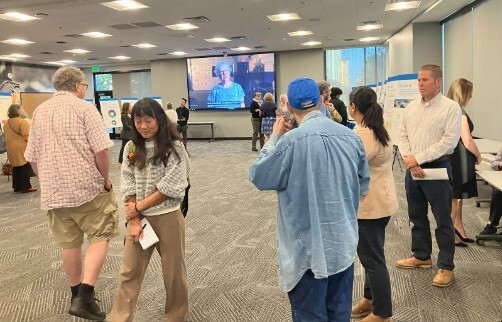
I attended the open house for residents to learn about the Frey administration’s proposal to put a voting center and ballot warehouse at 3000 Minnehaha, the site of the former 3rd Precinct. I continue to hear residents express extreme frustration that the Frey administration has failed to conduct meaningful community engagement on the future of the site, and the lack of a proposal that centers racial healing.
Former 3rd Precinct/3000 Minnehaha Open House
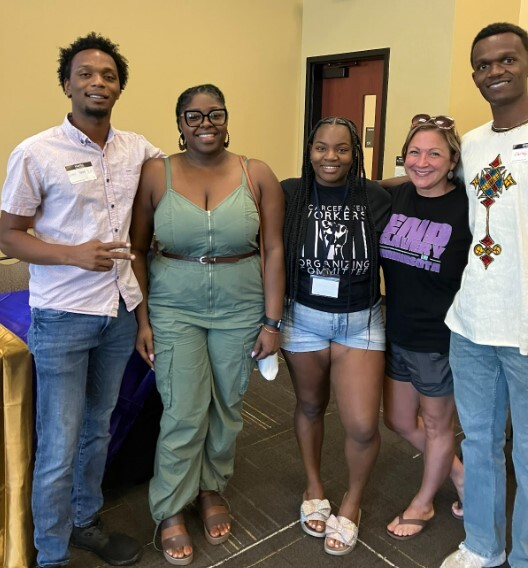
Residents across Minnesota are organizing around a statewide policy change that would make forced unpaid labor in state prisons illegal. This would be a constitutional amendment that voters would approve on the ballot to “End forced labor in correctional institutions by reclassifying prisoners as workers with the right to employment.” The bill is being introduced by Senator Clare Oumou Verbeten and Representative Cedrick Frazier. I was honored to attend the kickoff of this campaign last weekend and look forward to supporting these efforts going forward. Learn more about the campaign here.
CM Wonsley at the campaign launch for the End Slavery Constitutional Amendment
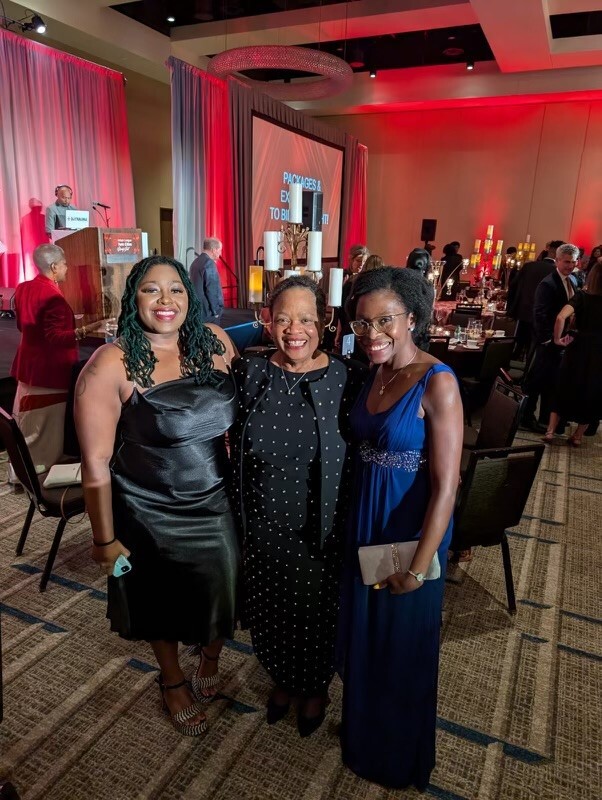
I attended the Urban League Unity Ball. The Urban League has a long history of leading programs in workforce development, asset and wealth accumulation, health and wellness, education, civic engagement, family stability and advocacy. It was an inspiring and festive evening to be in community and celebrate what we have accomplished together and to hear our vision for the future.
CM Wonsley with Urban League Director Marquita Stephens and Representatie Esther Agbaje at theUnity Ball
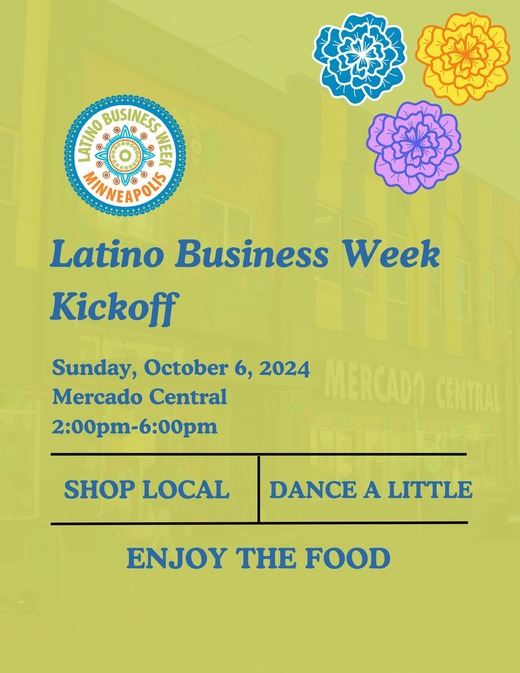
It is with great excitement that we share the commencement of Latino Business Week, organized by the City of Minneapolis.
Date: Sunday, October 6, 2024Time: 2:00 PM – 6:00 PMSpecial Welcome: 3:00 PM, featuring remarks from Mayor Frey, Council Member Ellison, and Council Member Chavez
Join us in celebrating the contributions of our local Latino businesses. The event will feature a variety of delicious food from local restaurants, vendors showcasing unique accessories, and an opportunity to support businesses that have faced significant challenges in recent years. We encourage you to join us for the food and stay for the music!
Latino Business Week kickoff flyer
Twin Cities Maker is a volunteer-run maker space based in Ward 2. For 15 years they have created a welcoming space for makers of all kinds to come together and create. Join them for Maker Fest, a celebration of Twin Cities Maker! Featuring booths, maker space tours, hands-on activities, live demos, free swag, and family-friendly fun.
Twin Cities Maker Fest
October 19th 9am-4pm
Matthews Park (2318 29th Ave S) and Twin Cities Maker (3119 E 26th St) – with pedicabs between the locations!
Twin Cities Maker Fest event flyer
Measles cases are rising and impacting many Minneapolis communities, in particular our Somali community. The state has seen the most cases since 2017, with a significant number in our city. Measles is a serious illness that can lead to hospitalization or even death. One person can infect between 12-18 unvaccinated close contacts.
Don’t wait. Get the Measles, Mumps and Rubella (MMR) vaccine when your child is eligible to protect them from getting sick. If you are exposed to measles and haven’t been vaccinated, you must stay home for 21 days. This can result in missing:
- School
- Social and family events
- Work
- Vacations
Read more about the increase in measles cases from the Minnesota Department of Health
Featured video
Sisters Sadia and Rukia Sheikh discuss the growing concerns about measles and the importance of getting vaccinated. They address common fears and explain how immunization protects the entire community. Don’t wait! Protect your loved ones and get your family vaccinated today.
Watch the video
Vaccines Matter: Understanding Measles and Keeping Minneapolis Communities Safe
Beginning Monday, October 7, there will be emergency repairs on a sanitary sewer pipe located beneath Fourth Street. The road will be fully closed just west of 10th Avenue SE while crews excavate a 20-feet deep trench across Fourth Street. Work is expected to take about a week.
Plan an alternate route during the closure, including how to access I-35W.
While the closure and emergency sewer repairs are not related to Hennepin County’s University and Fourth project, we are alerting the public of the work. We encourage you to plan ahead to avoid major delays.
Crews will reopen Fourth Street to traffic and continue reconstruction when we’re informed that the sewer work is complete.
Crews are preparing to sweep streets across Minneapolis this month and November to clean the streets before winter. Street sweeping helps keep leaves and debris out of the storm drains and from ending up in our lakes and creeks and the Mississippi River.
Minneapolis Public Works will begin the big task of curb-to-curb street sweeping throughout the city Tuesday, Oct. 22. During the four weeks of the comprehensive fall street sweep, crews will clean about 1,000 miles of city streets. To make sure crews can do the best job possible, temporary hot pink “No Parking” signs will be posted at least 24 hours in advance so streets will be clear of cars when they’re swept. The first signs will be posted Monday, Oct. 21, and sweeping will begin the next day. Anyone who parks on the street will need to follow posted parking rules or their cars may be ticketed and towed.
Ways to stay informed of the parking rules:
-
Interactive web feature – The Street Sweeping Schedule Map will be available on the City’s website before street sweeping begins. Visitors to the website will be able to find out which week their street is scheduled to be swept. Then, on the weekend before each of the four weeks, the schedule for the upcoming week will be broken down to show which day of the week streets are scheduled to be swept.
- “No Parking” signs – City crews will post “No Parking” signs at least 24 hours before sweeping any streets. Parking will be banned from 7 a.m. to 4:30 p.m. on the day a street is swept. However, the “No Parking” signs will be removed as soon as possible after a street has been completely swept to allow people to resume parking after the signs are removed. Vehicles not in compliance with “No Parking” signs may be ticketed and towed to the Minneapolis Impound Lot. The sweeping takes several steps, so people should not resume parking until the signs are removed.
-
Email and text alerts – You can sign up to get an alert automatically emailed or texted to you at the start of street sweeping.
-
Social media – The City will use Facebook and X to post periodic street sweeping updates and information.
-
Videos – Street sweeping is explained in English, Spanish, Somali and Hmong on the City’s YouTube channel and on Minneapolis City TV.
Clean streets mean healthier water
Minneapolis streets are swept completely curb to curb with enforcement of parking rules once in the spring and again in the fall. You can do your part by not pushing leaves, grass clippings or other debris into City streets. It’s bad for our lakes and waterways, it can cause safety hazards and it’s against the law.
Leaves that wash into storm drains end up in our lakes and creeks and the Mississippi River. They may quickly begin to break down, creating pollutants that overfertilize lake water and help harmful aquatic plants and algae grow. The murky lake water that results is not good for swimming or fishing. It can also harm wildlife and pets.
Learn more about street sweeping.
Contact Ward 2
Visit: minneapolismn.gov/ward2
Email: ward2@minneapolismn.gov
Phone: 612-673-2202
We've moved while work is being done in City Hall. Our office is in:
Room 100, Public Service Center
250 South 4th St.
Get directions
For reasonable accommodations or alternative format please contact 311. People who are deaf or hard of hearing can use a relay service to call 311 at 612-673-3000. TTY users call 612-263-6850. Para ayuda, llame al 311. Rau kev pab, hu 311. Hadii aad caawimaad u baahantahay, wac 311. |