|
Summary: After the City Council voted to fund Agate transitional housing shelter last week, Mayor Frey announced a slate of retaliatory budget cuts. Council is investigating the financial discrepancies that are the basis of the Mayor’s claim that shelter funding is not available.
Background: Last week, the City Council redistributed $1.5 million from department surpluses, based on detailed financial reports, to fund the Agate Board and Lodge Housing and Shelter Facility Rehabilitation Project. The $1.5 million reallocated on average 0.74% the budgets of City departments that chronically underspend, have underspent for the past 5+ years, and are expected to underspend their 2024 budget. The City ended each of the last six years with an average $21.7 million surplus. The City is projected to end this year with a $38 million surplus.
The City Council’s decision ensured that these funds were used to save over 130 shelter beds and critical housing services without any impact on services and programming, or the taxpayers of Minneapolis.
Following this decision, the Mayor announced that the savings data was inaccurate, calling into question his own Administration’s financial reporting, and provided a list of arbitrary budget cuts he plans to institute in retaliation. The situation raises a critical issue: either the financial data presented is inaccurate, or the Mayor is using this as a tactic to retaliate against the Council's decisions.
Council Member Koski and Vice President Chughtai wrote a legislative directive to investigate the financial discrepancies between the City’s mandated financial reporting, which shows a projected surplus, and Mayor Frey’s assertion that no such surplus exists and program cuts are necessary.
Trust in our financial reports and data is crucial for effective governance. Thank you to Council Member Koski and Council Vice President Chughtai for advancing this legislative directive.
In the meantime, Agate shelter announced that Council’s allocation of $1.5 million allowed them to secure a matching donation of $1.5 million from an anonymous private source. This further reaffirms the importance of the Council’s action. Despite Mayor Frey’s opposition to funding the shelter, he did not veto it.
Key votes: The Budget Committee votes 8-3 to advance the legislative directive requesting the discrepancies in the Mayor’s claims that funding a homeless shelter required cutting a slate of other programs. Council Members Jenkins, Palmisano, and Vetaw voted in opposition. Council Members Rainville and Ellison were absent.
Summary: I am co-authoring a resolution supporting closure of the Hennepin Energy Recovery Center (HERC). Give public testimony on October 10th or submit your public comment in writing any time.
Background: The Hennepin Energy Recovery Center (HERC) is a trash incinerator that is located in North Minneapolis. Residents are organizing to demand the closure of the HERC, which contributes to environmental injustice and public health inequities on the North Side.
I am co-authoring a resolution supporting a closure of the Hennepin Energy Recovery Center (HERC) along with a number of my colleagues. The resolution was introduced to the Climate and Infrastructure (C&I) Committee this week and is being held in C&I for one cycle to create the opportunity for the public to weigh in.
Everyone is welcome to submit comments in writing any time to CouncilComment@minneapolismn.gov. There will also be a public hearing on October 10th at 1:30pm where residents may speak for two minutes each about the resolution. The public hearing is located at the Council Chambers of the Public Service Center (250 S 4th St., Room 350 Minneapolis, MN 55415).
Key votes: The C&I Committee will vote on the resolution on October 10th following the public hearing. The Council will vote on the resolution on October 17th.
Summary: Council is considering a legislative directive I authored to receive an update on the use of Zencity technologies community perception surveying for MPD.
Background: In 2023, MPD asked Council to approve a $500,000 three-year contract with an organization called Zencity Technologies to do a community survey about public perceptions of MPD. MPD leadership stated that having data about perceptions of MPD was an important metric for assessing how successful the city has been at implementing the consent decrees and rebuilding credibility and trust.
Council Members including myself had serious concerns about this proposal given MPD and the Frey administration’s pattern of focusing on PR and public perception rather than policy change. Council Members also had concerns about the technology itself and how it relates to data practices and civil liberties. I voted against the contract along with Council Members Payne, Ellison, Chavez, and Chughtai, but it passed 8-5.
When the contract was being considered for a vote, both MPD and Zencity stated that they would be more than willing to give regular status updates to Council about the contract. To ensure that this commitment was actualized, I reached out to the Office of Community Safety (OCS) leadership and MPD in February of 2024 and in July of 2024 requesting an update on the services rendered so far using Zencity technologies, such as data on how many residents had been surveyed, preliminary results, and how it they are being used to shape MPD’s actions. OCS and MPD did not respond to my requests, so I authored a legislative directive that will require them to present this information early next year. The legislative directive passed Committee unanimously this week and is going to Council next week for final approval.
Key votes: The Administration and Enterprise Oversight Committee votes unanimously to approve a legislative directive requesting a presentation on the use of Zencity technologies. The legislative directive will go to Council on October 2nd for final approval.
Summary: I am continuing to work on addressing residential and commercial vacancy in the city, and am now focusing on how to accurately track unit-by-unit vacancy to develop an effective policy.
Background: Reducing residential and commercial vacancy is a high priority for my office. Earlier this year I authored an ordinance with Council Member Ellison that passed unanimously which will help reduce the number of condemned or hazardous vacant properties in the city.
Now, Council Member Ellison and I are working on a policy to implement fees on properties or units that are in usable condition, but have been kept vacant for a prolonged period of time. Earlier this year we authored a legislative directive that resulted in a presentation by city staff about how the city could offer resources to landlords of chronically vacant properties to help them activate their units, such as technical assistance with writing a lease, connection to organizations that have lists of tenants, or support in selling their property. The program would recoup a small monthly fee from these landlords to support the cost of these resources. This would create a “carrot and stick” approach where landlords are offered resources and support, and the city also has the discretion to use citations as a tool when needed.
I feel strongly that this is a good direction for the city to move forward and am continuing to prioritize vacancy fees going into 2025. Council Member Ellison and my teams are working closely with city staff to develop a policy that can be implemented equitably and effectively. Staff identified that there is currently a lack of methodologies to track vacancy on a unit-by-unit level, which would make enforcement more challenging. So, we authored a staff direction to bring legislative staff in to support executive staff on researching methods that have been effective in other cities and could be effective here. This information will be presented in early 2025.
Key votes: The Business, Housing and Zoning Committee unanimously approves the staff direction on methods for tracking unit-by-unit vacancy. It will go to Council on October 2nd for final approval.
Summary: An updated fee study has revealed that the city needs to adjust its licensing fees for Transportation Network Companies (TNCs). I along with Council Members Chavez and Osman will be amending the 2025 Fee Schedule to implement this change.
Background: I have spent a large part of the last two years working with Council Members Chavez and Osman to support rideshare drivers who were organizing to demand minimum wage protections and standard workers’ rights that had been denied to them under the multi-billion dollar rideshare companies Uber and Lyft. Our efforts and workers’ tireless organizing succeeded in overcoming two vetoes by Mayor Frey and a veto by Governor Walz to win a statewide policy for some of the highest wages and strongest protections for rideshare drivers in the whole country.
During this process, there were conversations about what the city could do to diversify the rideshare industry and support more local small rideshare businesses. We identified that the license fee for rideshare companies was about $36,000 with a $10,000 additional fee for companies that did not have wheelchair accessible vehicles. This fee had not been updated since it was calculated a decade ago when TNCs first came to Minneapolis.
Earlier this year, I authored a legislative directive requesting an updated fee study for the cost of TNC licensure. This week, city staff presented the results. When the fee was first calculated, the process of setting licenses was brand new and required much more staff time, and was therefore much more expensive. Now, the city’s Business Licensing team is able to administer licenses much more efficiently and therefore the cost of the process is much lower.
The city can only charge fees that reflect the average cost of staff time and resources needed to complete the licensing process. The current fee rates are outdated and no longer reflect the current cost to the city for issuing a TNC license.
I, along with Council Members Chavez and Osman, will be bringing this amended rate to the 2025 Fee Schedule. This would reduce the cost of a TNC license from about $36,000 to about $12,500. It holds the Wheelchair Surcharge flat to continue to incentivize TNCs to have wheelchair accessible vehicles, without overstepping the appropriate margin for a licensing fee.
Key votes: On October 2nd, Council will take a vote on updating the fee for a TNC license to $12,500.
Summary: I am advancing a carbon emissions fee that is expected to help reduce pollution by the largest emitters by 6% in 2025.
Background: In 2022, thousands of residents organized around the People’s Climate and Equity Plan, a comprehensive policy package about how to build a just and sustainable city. One of the recommendations of the People’s Climate and Equity Plan was to implement Pollution Control Annual Registration (PCAR) fees for carbon dioxide.
PCAR fees are a program that the city already applies to a large number of air pollutants and environmentally harmful technologies. The city provides mitigation and remediation resources such as filters and monitors to polluters, and the fees cover the costs of these services and the staff time required to inspect and administer them.
I have been working for over a year to get carbon dioxide added to the city’s PCAR list and the fee schedule that corresponds to it. In February, I authored a legislative motion that resulted in a joint report that was presented in June laying out the pathway to creating a PCAR program for carbon dioxide (CO2) and equivalent greenhouse gasses, which are referred to as CO2e.
The new program would charge large facilities $452/ton of CO2e. At each of these sites, city staff would conduct site visits to complete technical analyses of projects to reduce emissions and refer facilities to a contracted partner to apply for a Green Cost Share program. The implementation of this fee is estimated to cover the city’s cost of reducing emissions 6% at each of the large facilities in 2025, a total reduction of 605.81 tons of CO2e.
The Mayor’s proposed fee schedule for 2025 does not include a PCAR fee for carbon emissions. I will be bringing an amendment to add them.
Key votes: On October 2nd, Council will take a vote on implementing carbon emissions fees on the largest polluters to fund carbon reduction programs.
Summary: The Mayor’s administration is deciding whether or not they want to adopt the Safe and Thriving Communities Plan as a comprehensive plan for public safety beyond policing, or whether they prefer to have no formal plan.
Background: In 2021, the City Council authorized a contract with Leadership for a Networked World at Harvard University to create a Minneapolis-specific report and plan for building out unarmed public safety services. The result was the Safe and Thriving Communities Report and Plan, which was presented to the Minneapolis City Council and the public in July of 2023. The report included a vision for a comprehensive public safety system and detailed recommendations on the systems, infrastructure, human capital, leadership, governance, and policy changes required to implement the vision. A comprehensive ten-year action plan was provided and broken into three separate phases.
While the Safe and Thriving Communities Report has been widely celebrated in the media and in public statements by many in city leadership, it has never been officially adopted by the Mayor and City Council as a guiding framework or comprehensive plan. I have been strongly advocating for the administration to adopt the Safe and Thriving Communities Plan as a comprehensive plan.
Comprehensive plans are used to help ensure enterprise-wide alignment around long term goals. The city’s comprehensive plans for climate equity and transportation have been instrumental in helping prioritize, strategize, and make measurable progress towards the city’s long-term goals. Timelines and clearly identified leads for each strategy and area support transparency, accountability, and clear and consistent frameworks for investment of resources.
The lack of clear understanding between the administration, the Council, and the public on when and how the Safe and Thriving Blueprint will be executed and evaluated is hindering efficient delivery of services and continues to erode trust with the public that the City of Minneapolis is capable of administering successful public safety strategies beyond policing.
I have been engaged with the leadership of the Office of Community Safety about the benefits of adopting a comprehensive plan. This week, I presented updates on those conversations and on next steps.
The administration could choose to advance the Safe and Thriving Communities Plan as a comprehensive plan for public safety beyond policing at any time. I sincerely hope they do so. Residents continuously express that public safety is a top priority and they want to see evidence of a serious, comprehensive plan from the administration. That document exists and could be codified this year if the Mayor chooses to do so.
Key votes: No votes taken.
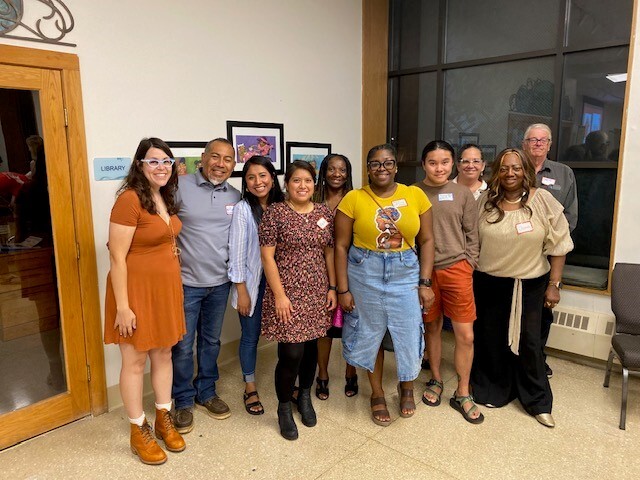
I had the opportunity to join Congresswoman Ilhan Omar's office, State Representative Esther Agbaje, and Council President Payne as we celebrated the Mpls NAACP many accomplishments which includes the recent passage of the African American Heritage Preservation Bill during this last legislative session. We also had the distinct honor of receiving a keynote speech from esteemed and legendary poet Nikki Giovanni. Congrats to the Mpls NAACP on another successful year.
Council Member Wonsley with Council President Payne, Representative Esther Agbaje, and other community leaders at the NAACP Freedom Fund Gala
CTUL, a local workers rights center, has helped to secure historic gains for Minneapolis’s workers such as the city’s $15/hr minimum wage policy, Earned Sick & Safe Time, and Wage Theft protections. This week, they held a celebration to uplift the incredible contributions of their workers to the Minneapolis Labor Movement. They also brought awareness to key funding and policy actions they are looking to secure from the City of Minneapolis in the following weeks which include the passage of a Labor Standards Board and permanent funding for the city’s co-enforcement program. I’m proud to be a supporter of their work and look forward to seeing what more they accomplish for working class people.
CM Wonsley with members of CTUL, the Minneapolis Federation of Teachers, and the East Phillips Neighborhood Institute at the CTUL Gala
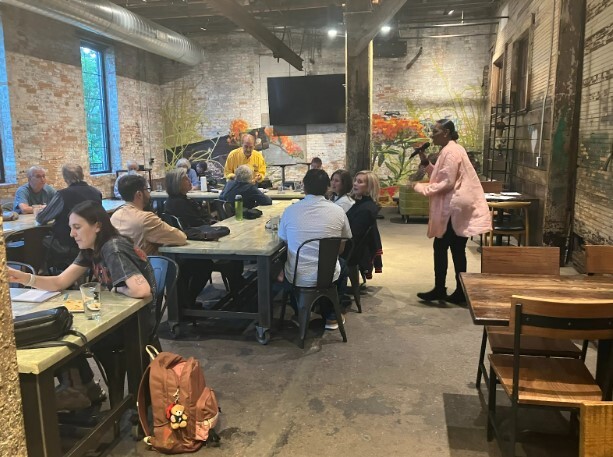
Prospect Park residents organized a community meeting to hear from the neighborhood association, Council office, and 2nd Precinct about local priorities. Thank you to the Prospect Park Association for organizing this great event and to Prospect Park residents who are always engaged and active.
CM Wonsley at the Prospect Park Community Meeting
If you’ve never voted before and need to register, now is the perfect time. If it’s been more than four years since you last voted, or you’ve moved or changed your name since you last registered, you’ll also need to re-register.
Register ahead of time
You can register to vote online. You can use this same registration link to update your current name or address on your registration.
Voters who prefer to vote by mail can now sign up using the voter registration application to have a mail ballot sent to their residence for all future elections. On either the paper or online application, select “I request to have an absentee ballot mailed to the address where I live (residence) before each election in which I am eligible to vote.”
Unsure if you are registered at your current address? You can use the online lookup tool to check your registration.
Register when you vote
You can also register to vote in person when you vote early or vote on Election Day.
You will need to show proof of residence. Certain types of ID can be your proof of residence, but there are other options that don't require an ID. Be sure to read all your options and come prepared.
The Minneapolis Elections & Voter Services Division is responsible for administering elections in the City of Minneapolis. For information about registering and voting in Minneapolis, visit the City website.
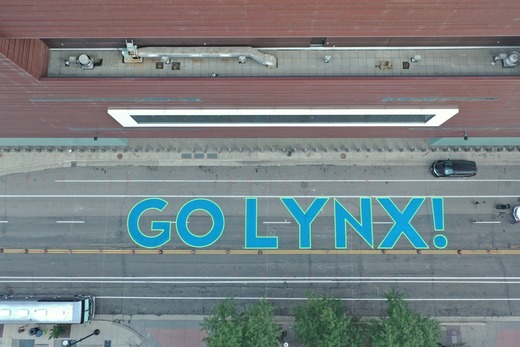
In honor of the Minnesota Lynx making it into the Western Conference playoffs, the City painted First Avenue downtown and temporarily changed street signs. Public Works crews painted the words “Go Lynx!” on First Avenue North between Fifth and Sixth streets North. The 19-foot-tall letters are painted in Lynx blue and green.
Lynx-themed street signs also appeared at the intersections of First Avenue and Sixth Street and at First Avenue and Seventh Street.
The signs and street painting will remain throughout the series.
Read more on the City website.
Go Lynx painted on First Ave N
Contact Ward 2
Visit: minneapolismn.gov/ward2
Email: ward2@minneapolismn.gov
Phone: 612-673-2202
We've moved while work is being done in City Hall. Our office is in:
Room 100, Public Service Center
250 South 4th St.
Get directions
For reasonable accommodations or alternative format please contact 311. People who are deaf or hard of hearing can use a relay service to call 311 at 612-673-3000. TTY users call 612-263-6850. Para ayuda, llame al 311. Rau kev pab, hu 311. Hadii aad caawimaad u baahantahay, wac 311. |