|
Summary: The Public Health and Safety Committee received a presentation from the administration on how the city plans to address the opioid crisis.
Background: The opioid epidemic has had an incredibly damaging impact on our city, particularly on Indigenous and Black residents. Last year, I authored a legislative directive with Council Member Payne to learn more about what investments the Health Department is making to prevent and respond to the opioid crisis. While working with the administration to develop that legislative directive, we learned that the administration had not developed a comprehensive plan to address this worsening crisis. It was my hope that this legislative directive could change that and I am proud to say that it has.
Staff gave an initial report on their opioid response work in March. The second presentation, including a strategic plan for use of the city’s opioid settlement dollars, took place this week. In 2021, nationwide settlements were reached to resolve all opioids litigation brought by states and local political subdivisions against the three largest pharmaceutical distributors. The National Opioid Settlements resulted in a multi-billion dollar settlement that is distributed between states, counties, tribes, and cities. The city of Minneapolis is receiving $18 million.
The Health Department’s key priorities are a mobile medical unit, mobile shower/restroom unit, Narcan vending machines, researching safe recovery sites, and expanding a hospital-based intervention program called First Step. You can read more about these priorities, as well as how they were developed, by watching the full presentation here starting at 0:20:00.
Staff also committed to developing a full comprehensive plan, similar to the city’s 10-year action plans around climate equity and transportation. I am strongly supportive of codifying a long-term strategic plan to prevent and respond to the opioid crisis to keep all our communities safer.
After many requests from residents, I and Council Member Chavez worked with city staff to also get a presentation update on the Helix Housing and Human Services contract. The Helix contract was a single-source contract using $1 million of the city’s opioid settlement dollars that the Mayor’s administration unilaterally implemented at the end of 2023. Since the administration of this contract, a number of residents and service providers requested that PHS leadership use our oversight authorities to receive a more comprehensive report back on the efficacy of this particular program.
During PHS, committee members raised many questions regarding how the contract was selected, whether staff explored using our standard competitive bid process to select a vendor, and if we would do so in the future to scale up our efforts. Staff informed us that the Helix contract is set to expire in November 2024, and that there has been no discussion of renewal. In regards to future contract selection plans, they will be using the opioid strategic plan that will be finalized this fall to guide their funding decisions.
I inquired if staff had the chance to speak with any Helix participants, especially those who had left the program. Staff acknowledged that while they had done site visits for Helix treatment locations, they had not done so for Helix’s housing sites and had not spoken with former or existing Helix participants as they believed the participants would not feel comfortable speaking with city staff.
Following the PHS meeting, Council Members received an email from the executive director of Helix inviting us to have a roundtable meeting to address any questions or concerns we still have. CM Chavez and I have asked for Council leadership support in coordinating a meeting. We also asked the Executive Director of Helix if we could also do a site visit, which they declined.
Lastly, my office has heard a lot of concerns from residents about the services rendered under the Helix contract, and were formally alerted of some serious allegations a few months ago. In response to that, Council Member Chavez and I met with the City Auditor, who investigates allegations of fraud, waste, and abuse, to explore potential actions. One of these actions was the presentation we received this week. Additionally, Helix has voluntarily solicited their own audit, and I look forward to the findings from that audit report.
Nevertheless, I am proud that I and a number of my colleagues consistently pushed the administration to take a more serious and intentional approach to this crisis. I am deeply encouraged by the progress that the city is making in regards to our response to the opioid epidemic and I look forward to formally considering our comprehensive opioid response plan this fall.
Key votes: No votes taken.
Summary: Council will consider a shorter-term contract extension and smaller geographic expansion of ShotSpotter while an independent evaluation is conducted.
Background: The Mayor’s administration asked the Council to approve a three-year contract extension and significant geographic expansion of the technology.
There is a national conversation in cities across the country about whether ShotSpotter is the most effective tool for reducing gun violence and improving responses to gun violence. My office and Council Member Ellison have been engaged in productive conversations with leadership from MPD and the Office of Community Safety regarding ShotSpotter and the possible contract extension. There is shared agreement around the critical need for an independent evaluation of the efficacy of this tool.
Council Member Ellison and I authored a legislative motion directing Council staff to contract out for an independent evaluation of ShotSpotter’s efficacy. MPD leadership has already been in conversation with a consultant who has done national work on this issue, and they will be utilizing that information to help shape the scope of services within this evaluation. This motion was approved 4-1 in the Administration and Enterprise Oversight (AEO) Committee, with Council Member Vetaw voting against it.
Council Member Palmisano authored a legislative directive asking MPD to present their opinions and perspectives on ShotSpotter to the Committee in 2026. This passed with unanimous support.
MPD and the Office of Community Safety will be bringing an amended ShotSpotter contract extension proposal to the next AEO Committee meeting. This extension will go through March 2026, rather than the original three-year extension they had proposed. It will also limit the geographic expansion to cover one area with a high volume of gun violence. I believe that this modified contract proposal will allow MPD to continue using their existing tools while an independent evaluation is conducted. This evaluation will allow Council to consider a longer term contract with much more data available to assess.
Key votes: The Administration and Enterprise Oversight (AEO) Committee voted 4-1 to approve Council Member Ellison and my motion for an independent evaluation of ShotSpotter. Council Member Vetaw was the only vote against. The AEO Committee voted 5-0 for Council Member Palmisano’s legislative directive to have the Frey administration present their perspectives on ShotSpotter in 2026. MPD will bring an amended ShotSpotter contract extension with reduced time period and geographic scope to the AEO Meeting on September 9th.
Summary: The Performance Management and Innovation (PMI) Department shared an update on their work so far this year, primarily establishing program evaluation metrics and developing public safety pilots.
Background: The Department of Performance Management and Innovation (PMI) presented an update on their work this year. PMI is tasked with ensuring that each of the city’s departments, divisions, and programs has clear and measurable objectives that Council can use to assess budgeting priorities. Without strong and trustworthy evaluation criteria for how effective a program is, the city runs the risk of spending taxpayer money inefficiently. With robust performance evaluation criteria, the Council can ensure that we are funding programs that are proven to be a meaningful investment in improving the lives of working class residents.
The city has not had a performance evaluation system since 2020, which has made it difficult for the Council to evaluate the efficacy of each program and budget accordingly. This has created a negative culture where the administration is encouraged to defend budget needs for programs based on anecdotes and other flexible criteria rather than on objective analysis of how much that program contributes to citywide goals.
I was encouraged to see that the PMI Department is beginning to implement a performance management system this year, including creating more robust metrics for use in considerations of the 2025 budget. They are also working with all city departments on developing performance-based contracting metrics, which is another huge area for the city to improve.
PMI is also developing three new public safety pilots to help develop preventative, responsive, and restorative services in our Safe and Thriving Communities model of public safety. Their three projects are embedded social workers within 911, traffic control response to non-injury vehicle collisions, and community safety ambassadors. These are all programs that have great potential to reduce the number of calls police are being asked to respond to and ensure that residents are receiving the appropriate response to their public safety needs.
Key votes: No votes taken.
Summary: Hennepin County presented on Solid waste management planning and considerations related to shutting down the HERC trash incinerator. City staff presented on the city’s progress towards achieving our Zero Waste Plan.
Background: The Hennepin Energy Recovery Center (HERC) is a trash incinerator in North Minneapolis. The HERC is a huge environmental justice issue because of its disproportionate health impacts on working class communities of color. I hear consistently from residents that they support shutting down the HERC and see it as a crucial element of upholding our values around equity and environmental justice.
Hennepin County has the sole authority to shut down the HERC. The County has proposed shutting down trash burning at the HERC between 2028 and 2040. Staff gave a presentation on their report and plan for the HERC shutdown. There is not currently a clear plan for how to achieve this shutdown within that time frame, let alone by 2028 or sooner. State statutes currently would limit or prohibit the County’s ability to divert waste to landfills, meaning that if they shut down the HERC without reducing the total waste stream or diverting to non-landfill alternatives would put the County out of compliance with state statutes.
Minneapolis trash is about 70% of the trash that is processed at the HERC. In 2017, the City of Minneapolis passed a Zero Waste Plan. Council Member Cashman authored a legislative directive for staff to give an update on the city’s progress towards adoption of the Zero Waste Plan, Food and Zero Waste Strategies in the Climate Equity Plan, an analysis of how to support implementation of the plans, and how the city is supporting closure of the HERC.
Staff presented on this legislative directive. This included the strategy and interventions that staff has implemented so far and priorities for 2025. Committee members asked about the possibility of implementing municipal commercial waste collection, which could significantly help streamline waste reduction efforts and data collection.
Going forward, it is crucial that the city continue to invest significantly in our Zero Waste work while working closely with the County and our partners at the state to accelerate HERC closure.
You can watch both presentations and discussion here starting at the 0:22:00 mark.
Key votes: No votes taken.
On April 14th, the Mayor published his recommended budget. Now, the Council is kicking off the 2025 budget process where we consider the Mayor’s proposal and make amendments. Here is the timeline for budget action:
- From September 9th-October 24th, Council receives presentations from each department on their proposed budget for 2025. These presentations take place at Budget Committee meetings, which the public can attend.
- There will be three public hearings for residents to provide input on their priorities. The first public hearing will be Monday, September 23 at 6:05pm. Every resident will have 2 minutes to speak.
- Council Members will submit our draft budget amendments to the Budget Chair on November 20th. A finalized packet of edited budget amendments will be published on November 27th. I will share updates on my amendments in my newsletter in the coming months.
- There will be additional public hearings in November and December.
- Council will vote on each amendment during Budget Markup sessions on December 6th and 9th, and then vote on adopting the final budget on December 10th. The Mayor can veto or approve the budget, but cannot make line-item vetoes.
Key votes: No votes taken.
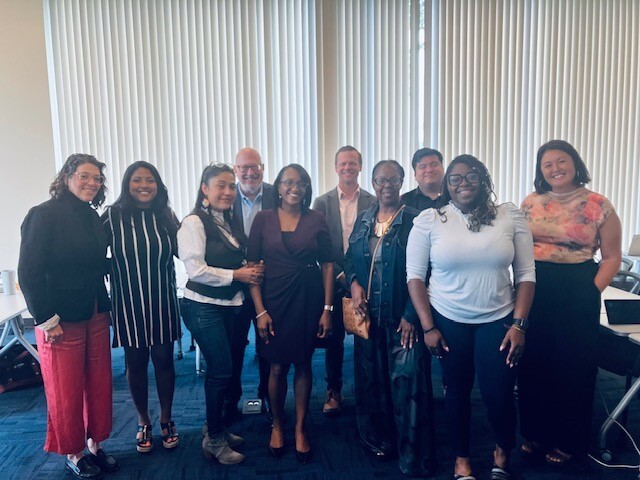
Thank you to Representative Samantha Sencer-Mura for organizing a meeting amongst city, county, state, and MPS leaders on how we can improve support for Minneapolis public schools, students, and families. I look forward to taking collaborative action in the coming months.
Meeting with city, county, state, and MPS leadership on how to increase support for MPS and MPS families.
August is National Immunization Awareness Month and the start of back-to-school season. Nearly 40% of children enrolled in Minneapolis Public Schools are behind on their childhood vaccines.
Measles is in the community, with the most cases in our state since 2017.
Talk with your healthcare provider to stay current with your child’s immunizations. This can help your family avoid missing school, activities, work, family events and vacation.
Resources
Find out more about measles from the City website.
Attorneys from our Immigration Law Unit here at Mid-Minnesota Legal Aid would like to help you reach more of them with this webinar. They explain, in English and Spanish, the new federal program starting Aug. 19, to help immigrant spouses of U.S. citizens. The application process is outlined, as well as a caution to watch out for scams. We want to be sure our immigrant communities are informed about the legitimate effort to start a pathway to citizenship and to understand there may be look-alike programs that may use this opportunity to take advantage of them.
Citizenship path for immigrant spouses (youtube.com)
You can comment on preliminary design plans for the METRO Blue Line Extension. The project will extend the Blue Line from Target Field Station through North Minneapolis to Brooklyn Park.
The project can improve the speed and reliability of transit, enhance street safety for all modes of travel, advance climate goals, and make it easier to reach resources, schools and workplaces.
Cities along the proposed route are holding public meetings to discuss the plans. Minneapolis will hold its public hearing in September:
Minneapolis public hearing 1:30 p.m. during the Climate and Infrastructure Committee meeting Thursday, Sept. 12 Public Service Center, 250 Fourth St. S., Council Chamber, Room 350
Find out how to participate in a public hearing.
You can also send your comments by email.
The project is co-led by the Metropolitan Council and Hennepin County.
Find more information on the Blue Line Extension project on the City of Minneapolis website or Metropolitan Council website.
More than 100 children are diagnosed with elevated lead levels in their blood every year. Lead poisoning is 100% preventable and can be detected with a blood test.
Children can get free testing with the City’s mobile testing lab. Upcoming events:
- Corcoran Park 3334 20th Ave. S. 10 a.m. to 2 p.m., Friday, Aug. 30
- Urban Family League Family Day 2100 Plymouth Ave. N. 11 a.m. to 6 p.m., Saturday, Aug. 31
- Mexican Independence Day Lake St. & Clinton Ave. N. Noon to 7 p.m., Sunday, Sept. 15
- Camden Fall Festival 4150 Dupont Ave. N. 1 to 3 p.m., Saturday, Oct. 19
Visit one of our child lead testing events or talk with your health care provider.
Learn about lead testing, grants to remove lead hazards in your home, hear personal stories about using City grant funds, and more on the City website.
The City Trees program is offering $30 trees now through Sept. 30. Minneapolis residents and property owners can purchase up to three trees per address. Choose from shade trees, fruit trees, flowering trees and evergreen trees.
Purchase a tree today while supplies last.
City Trees program
Since the program began in 2006, the City Trees program has provided more than 20,000 low-cost trees for planting on private property, with 7,500 trees distributed in the last five years.
Learn more about our City Trees program.
Low-cost trees for businesses
Businesses, nonprofits, organizations, and owners of properties with five or more units can also purchase $30 trees. Submit an application before Sept. 15.
Contact Ward 2
Visit: minneapolismn.gov/ward2
Email: ward2@minneapolismn.gov
Phone: 612-673-2202
We've moved while work is being done in City Hall. Our office is in:
Room 100, Public Service Center
250 South 4th St.
Get directions
For reasonable accommodations or alternative format please contact 311. People who are deaf or hard of hearing can use a relay service to call 311 at 612-673-3000. TTY users call 612-263-6850. Para ayuda, llame al 311. Rau kev pab, hu 311. Hadii aad caawimaad u baahantahay, wac 311. |