|
Dear Community,
Council had a very productive week. We referred 26 ordinances and legislative directives that had been initiated last year to the proper committees to continue our work this term. I am continuing work on six ordinances related to: pollution control annual registration fees for carbon, reducing prolonged vacancy at commercial and residential properties, increased regulation of off-duty police work, minimum wage equivalents and workers rights for rideshare drivers, and just and standardized policies for information governance. In addition to these ordinances, I have seven ongoing directives around topics including opioid response, labor enforcement in construction, police misconduct and public data, and hiring practices for public safety workers.
The Council’s Committees are also developing work plans to structure and focus our priorities to ensure a productive term advancing resident interests. These work plans will be made public and approved through the legislative process in their respective Committees throughout this spring. I look forward to continuing to work with my colleagues to advance resident priorities this term.
Sincerely,
Council Member Robin Wonsley
This week the City Council voted to overturn Mayor Frey’s veto of the resolution supporting a permanent ceasefire in Gaza and an end to US military aid to Israel. This is the first time a Council has overridden a veto by Mayor Frey. This was only possible because thousands of Minneapolis residents organized to ask the Council to use our full authority to reflect their values. I am grateful to the residents who did the hard work to move this resolution forward, some of whom have been organizing in solidarity with Palestine for decades.
Key votes: Council Members Payne, Wonsley, Ellison, Osman, Cashman, Jenkins, Chavez, Chughtai, and Chowdhury vote to override the veto.
For over a year, our offices have been working to close a loophole in our city’s $15 municipal minimum wage by including thousands of mostly Black and immigrant workers who drive for Uber and Lyft.
Drivers organized to ask that Council use our legislative authority to extend the protections of the $15 minimum wage to them. Drivers told us that their wages are extremely low and unreliable, their vehicle and fuel costs are high, and their families struggle to make ends meet. This is an unacceptable reality that Minneapolis workers face because multi-billion dollar corporations don’t want to play by the same rules as our local small business owners do.
No worker should be exempt from the city’s $15 minimum wage. That’s why we worked with city staff and national experts for the better part of last year to craft a policy that reflects national standards for driver compensation and guarantee drivers are taking home at least $15/hour:$1.40 per mile and $0.51 per minute. Council passed the policy, but Mayor Frey vetoed it, instead announcing he had made a deal with Uber to raise wages. This deal was unenforceable by the city, completely voluntary on behalf of Uber, did not apply to Lyft, and did not include public data reporting to assess the impacts. Drivers continued to show us receipts documenting low compensation and telling us that regulating rideshare companies like Uber and Lyft to pay the city’s $15/hour minimum wage would improve their lives.
Throughout the last year of discussion, Council has expressed broad support for a policy that gets drivers $15 minimum wage equivalents. We wanted to ensure absolute clarity for all policymakers and the public about what compensation proposal equates to the city’s minimum wage for drivers. So we asked city staff to do a comparative analysis of three compensation proposals: the original proposal (Model A), the Mayor’s proposal (Model B), and a flat rate proposal that came from conversations with Council Members (Model C).
The findings in the report are clear: Given the available data, Model A best equates to a $15/hour wage for drivers. The Mayor’s proposal, Model B, falls far short of the minimum wage because it fails to account for vehicle and fuel costs, which is out of alignment of national standards. The examples in the report reveal that drivers earn over 30% less per ride in Model B or Model C than in Model A.
It’s time to close the loopholes to the city’s $15 minimum wage. Uber and Lyft will claim that increasing drivers compensation will force them to raise the prices of rides, but these multi-billion dollar companies have the profit margins to both pay drivers minimum wages and keep rides affordable. We must recognize these fear-mongering tactics for what they are, and we must not allow them to stop us from passing a $15 minimum wage equivalent for drivers. The Mayor’s office is likely to continue to promote the preferred model by Uber and Lyft, which is Model B. Given the available data, Model B will essentially codify sub-minimum wages for drivers who work for rideshare companies like Uber and Lyft.
We look forward to passing Model A, the only compensation policy that gets us closest $15 minimum wage equivalents that every other worker in our city can count on. Council Members also expressed a desire for more data to continue making informed decisions. We will be advancing additional policy mandating that rideshare companies disclose their data to the city along with workers’ rights and safety protections for riders and drivers. Both drivers and riders in our city deserve protections and we look forward to delivering on both.
Key votes: On Tuesday February 13th the Business, Housing, and Zoning Committee (BHZ) will vote to set a public hearing on the minimum compensation ordinance for the BHZ Committee meeting on February 27th at 1:30pm.
Workers' Compensation, Benefits, and the law report
The Committee of the Whole (COW) received a presentation on workers’ compensation (video starting at 1:15:00). This presentation was a response to several Council Members sharing their concerns about the city’s internal practices related to workers’ compensation settlements with former MPD officers.
I have always been clear that workers’ compensation is a critical social safety net and labor right, especially for first responders. That being said, I am concerned about the lack of guardrails in place to ensure this benefit is not abused. In the last few years Minneapolis has paid out millions of dollars in workers’ compensation settlements to MPD officers who file based on having post traumatic stress disorder (PTSD). Some of these settlements have gone to employees who have a documented history of lying about events that have occurred while on city time.
I asked staff to share why the Council and the public should feel confident that we are ensuring that workers’ compensation is not being abused. The attorneys who represent the city in workers’ compensation cases emphasized that existing state statutes in addition to the overall workers compensation process makes it extremely difficult for the city to successfully litigate suspicious claims. They reiterated that without changes to state statute, the city is not in the best position to contest potentially bogus claims.
While the city attorney’s approach to workers compensation claims may have its legal limitations, I will continue to exercise Council’s authority to advocate for strong guardrails to ensure that workers’ compensation benefits are not being abused.
Key votes: No votes taken.
I am working to advance participatory budgeting in Minneapolis. Participatory budgeting is an exciting opportunity to build civic engagement and democratic participation, especially by communities that have been marginalized and young people. After receiving a presentation with a high-level overview of participatory budgeting a few weeks ago, many Council Members expressed interest in moving forward with piloting a participatory budgeting process. I authored a motion to identify specific proposals that we could implement in 2026 to give Minneapolis residents direct input on how we spend a portion of the city’s budget.
Key votes: Motion to identify specific participatory budgeting proposals passes Budget Committee and Council with unanimous support. Presentation and discussion of possible strategies will come to the Budget Committee in April.
I am advancing a charter change to strengthen our local democracy and give Minneapolis residents the power of ballot initiative and referendum, allowing them to bring policy before voters to decide on. Over 70 cities in Minnesota allow their citizens to exercise this democratic tool.
It has been two years since voters approved Question 1 and Minneapolis switched to a strong mayor system. While the city has implemented many elements of this new government structure, the focus has been about the power dynamic within City Hall. This charter change is about residents.
This week, Council advanced two items that I authored related to this issue. One is a motion directing the Policy and Research Division to research how ballot initiative processes operate in St Paul, Duluth, and other municipalities that we have used as points of comparison for other elements of government structure. That research will be presented to the Council on February 20th.
The other was a motion directing the City Attorneys to draft ordinance language for the ballot initiative Charter change. This will come before Council in March.
Key votes: Council unanimously approved my motion to conduct policy research on ballot initiative processes in comparable cities. This information will be presented to the Committee of the Whole on February 20th. Council voted 11-2 in support of drafting an ordinance to change the Charter and give Minneapolis residents the power of ballot initiative and referendum. Council Members Palmisano and Vetaw voted in opposition. The City Attorney will present a draft ordinance to the Committee of the Whole on March 4th.
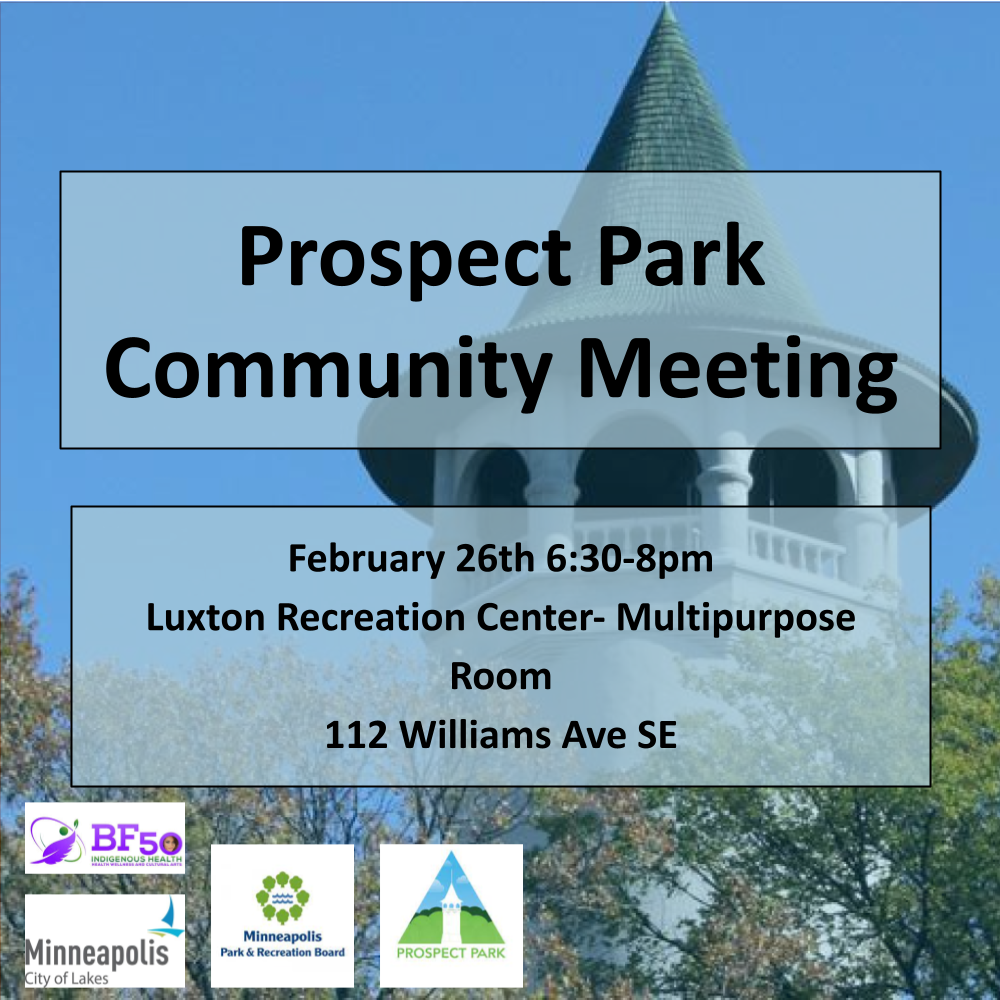
All Prospect Park residents and community members are invited to a Community Meeting co-hosted by the Ward 2 office, Prospect Park Association, and BrittFit50 Indigenous Health. There will be updates from:
- Ward 2 Council Member Robin Wonsley
- Park Board Commissioner Billy Menz
- 2nd Precinct Inspector Torborg
- 2nd Precinct Crime Prevention Specialist Teila Zoller
- Prospect Park Association leadership
We will discuss local priorities including the Witch’s Hat, Malcolm and University, Valhalla Clinic, District Energy System, Glendale, Luxton Park, the Missing Link, and more. See you there!
Prospect Park Community Meeting
February 26th 6:30-8pm
Luxton Park Recreation Center- Multipurpose Room
Last Thursday I met with the team of city staff that are working on addressing the problem property at 607 Erie St SE. Two Inspectors conducted an inspection at the property on February 1st. Based on the inspection the city considers the property vacant of renters.
During the inspection, inspectors took photographs and notes of the condition of the property. With the number of violations observed, a letter of intent to condemn placard will be posted on the property and a violation letter will be sent to the owner noting all the violations that were seen during their inspection with a due date for compliance.
I recognize this property has had a long history in the community and encourage those who observe concerning behavior to contact 311, and if using email, please copy my office, Ward2@minneapolismn.gov, so we can continue to monitor concerns as well.
Last year, residents at the Pillars of Prospect Park reached out to my office and requested that the crosswalk at Malcolm and University be re-timed to give them more time to cross. Some residents of the senior residential building were struggling to safely cross multiple lanes of traffic and light rail tracks.
My office worked with Public Works to get the crosswalk reprogrammed with this new “cheat code”. If you hold the button for 5 seconds, you get an extra 15 seconds to cross the street.
Thank you to Pillars residents for bringing this to my attention and to Public Works for helping ensure safe streets for all residents.
Several residents reached out to alert my office that the doors to the Witch’s Hat tower were open, presumably as a result of someone breaking in. The doors have been re-secured. Thank you to residents for alerting us.
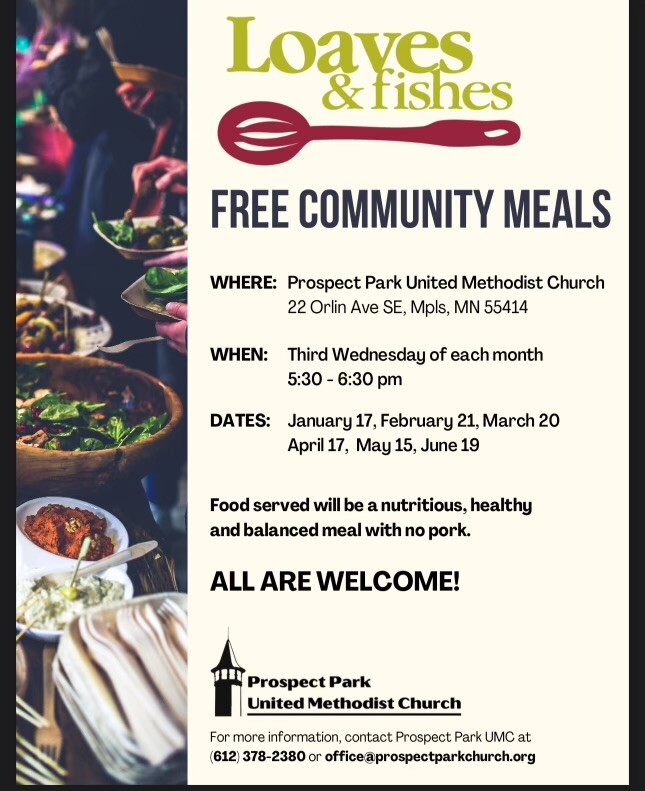
All are welcome to share a nutritious community meal at the Prospect Park United Methodist Church on the third Wednesday of each month at 5:30pm.
Email Council Member Wonsley and her staff at ward2@minneapolismn.gov
Or contact staff directly:
Policy Aide Celeste Robinson
Policy Aide Qannani Omar
Share your opinion or address an issue, use the Ward 2 contact form
|